 Magic Heidi
 MWST-Registrierung in Genf: internationale Kunden, Missionen und TVA
Was Genfer Freelancer und Kleinunternehmen zusätzlich wissen müssen: die kantonalen Anlaufstellen (Registre du commerce, OCAS), Rechnungen an internationale Organisationen und diplomatische Missionen sowie die MWST-Behandlung von Kunden im benachbarten Frankreich.
Als Freelancer oder Kleinunternehmer in Genf ist die MWST (französisch TVA) eine Bundessteuer der Eidgenössischen Steuerverwaltung (ESTV) – der Kanton Genf hat damit nichts zu tun. Schwelle, Formular, Fristen und Abrechnungsmethoden sind deshalb identisch mit dem Rest der Schweiz und im Leitfaden MWST Anmeldung Schweiz: der komplette Ablauf vollständig beschrieben.
Diese Seite behandelt das, was in Genf tatsächlich anders ist – und das ist mehr als in jedem anderen Kanton, weil der Genfer Kundenmix aussergewöhnlich ist:
- Rechnungen an internationale Organisationen (UNO, WHO, WTO, IKRK, ILO) und diplomatische Missionen
- Kunden im benachbarten Frankreich und im Grand Genève
- Der Genfer Rohstoffhandel mit weitgehend ausländischer Kundschaft
- Die kantonalen Vorstufen: Registre du commerce de Genève und OCAS/Caisse cantonale genevoise de compensation
Auf einen Blick (Genf)
- Zuständig: ESTV in Bern – nicht das Genfer Administration fiscale cantonale
- Kantonale Vorstufe: Anerkennung als indépendant durch die Genfer Ausgleichskasse, danach Eintrag im Registre du commerce
- Genfer Spezialität: Leistungen an internationale Organisationen und Missionen können von der MWST befreit sein
- Terminologie: Auf Rechnungen TVA oder MWST – nie «VAT»
Genfer Spezialfall: internationale Organisationen und Missionen
Kein anderer Kanton hat eine vergleichbare Dichte an institutionellen Kunden. Wenn Sie für die UNO, die WHO, die WTO, das IKRK oder eine ständige Mission arbeiten, gilt eine Sonderregel: Leistungen an institutionelle Begünstigte und begünstigte Personen im Sinne des Gaststaatgesetzes sind von der Schweizer MWST befreit – mit Recht auf Vorsteuerabzug.
Praktisch heisst das:
- Die Organisation legt Ihnen ein amtliches Bestätigungsdokument der zuständigen Bundesstelle vor. Ohne dieses Dokument stellen Sie die Rechnung normal mit 8,1% aus.
- Sie fakturieren ohne MWST, vermerken die Befreiung auf der Rechnung und legen die Bestätigung zu Ihren Belegen. Bei einer ESTV-Kontrolle ist sie der einzige Nachweis.
- Ihre Vorsteuer bleibt trotzdem abzugsfähig – anders als bei ausgenommenen Umsätzen. Das ist der Grund, warum sich eine freiwillige Registrierung für Genfer Dienstleister mit Kundschaft im internationalen Sektor überdurchschnittlich oft lohnt.
- Diese Umsätze zählen zur CHF 100'000-Schwelle. Wer überwiegend für internationale Organisationen arbeitet und deshalb kaum MWST fakturiert, wird trotzdem MWST-pflichtig.
Kunden in Frankreich und im Grand Genève
Die zweite Genfer Besonderheit ist die Grenze. Für Dienstleistungen an ein Unternehmen mit Sitz in Frankreich gilt das Empfängerortsprinzip: Die Leistung ist in der Schweiz nicht steuerbar, Sie fakturieren ohne MWST mit entsprechendem Vermerk, und der französische Kunde deklariert die Steuer selbst (autoliquidation). Der Umsatz zählt aber zur Schweizer Schwelle.
Umgekehrt gilt: Beziehen Sie selbst Leistungen von französischen Anbietern – Agentur, Anwalt, Software – schulden Sie ab CHF 10'000 pro Jahr die Bezugsteuer und müssen sie der ESTV melden, auch wenn Sie noch gar nicht MWST-registriert sind. Das übersehen Genfer Freelancer regelmässig.
Für Privatkunden in Frankreich (B2C) gelten andere Regeln als für Unternehmen – hier bleibt die Leistung je nach Art am Ort Ihres Sitzes steuerbar, also mit Schweizer MWST.
Welcher Satz gilt für Genfer Leistungen?
Die Sätze sind bundesweit gleich: 8,1% Normalsatz (Beratung, IT, Design, Übersetzung – der Genfer Standardfall), 2,6% reduziert, 3,8% Beherbergung. Entscheidend ist, was Sie verkaufen, nicht wo in der Schweiz Sie sitzen.
Brauchen Sie eine MWST-Registrierung in Genf? (Entscheidungsbaum)
Bei der MWST-Registrierung geht es um die Schweizer MWST-Pflicht, nicht darum, ob Sie ein Büro in Genf haben oder Kunden in Genf bedienen. Nutzen Sie diese Entscheidungslogik als Ausgangspunkt.
Schritt 1: Schätzen Sie Ihren Umsatz gegen den CHF 100'000 Schwellenwert
In vielen gängigen Szenarien müssen Sie sich registrieren, wenn Ihr Umsatz CHF 100'000 (pro Jahr) aus Leistungen übersteigt, die zum Schwellenwert zählen.
Wichtige Nuance: Für viele Unternehmen basiert der Test nicht nur auf «Genfer Umsatz» oder «Schweizer Umsatz» – oft ist er an den weltweiten Umsatz aus relevanten steuerbaren/nullbesteuerten Leistungen geknüpft. Das überrascht Expats und grenzüberschreitende Dienstleister oft.
Beispiel:
- Sie leben in Genf und arbeiten als Freelancer für Kunden in der Schweiz und im Ausland. Wenn Ihr weltweiter qualifizierender Umsatz über CHF 100'000 liegt, können Sie MWST-pflichtig werden.
Da die Frage «Was zählt dazu?» schnell technisch werden kann (steuerbar vs befreit, Leistungsort, Reverse Charge), sollten Sie Grenzfälle mit offiziellen Quellen oder einem Treuhänder abklären – besonders bei grenzüberschreitenden Kunden oder digitalen Dienstleistungen.
Schritt 2: Prüfen Sie, ob Ihre Leistungen steuerbar oder befreit sind
Nicht alle Aktivitäten werden unter der Schweizer MWST gleich behandelt.
- Wenn Sie typische steuerbare Dienstleistungen erbringen (z.B. Beratung, Design, Marketing, Softwareentwicklung), ist die MWST-Registrierung nach Erreichen des Schwellenwerts meist unkompliziert.
- Wenn Sie MWST-befreite Leistungen erbringen (bestimmte Bildung, Gesundheit, Finanzdienstleistungen usw.), ändert sich die Situation:
- Sie dürfen keine MWST berechnen
- Sie können die Vorsteuer auf damit verbundenen Kosten generell nicht zurückfordern
- Eine Registrierung kann unnötig sein oder nicht den erwarteten Nutzen bringen
Schritt 3: Überlegen Sie, ob eine freiwillige MWST-Registrierung sinnvoll ist
Wenn Sie unter dem Schwellenwert liegen, ist die Registrierung oft freiwillig. Eine freiwillige Registrierung kann klug sein – aber nur beim richtigen Geschäftsmodell.
Freiwillige Registrierung ist meist vorteilhaft, wenn:
- Die meisten Ihrer Kunden Schweizer MWST-registrierte Unternehmen (B2B) sind, die MWST zurückfordern können
- Sie nennenswerte Geschäftsausgaben mit MWST haben (Equipment, Software, Coworking, professionelle Dienstleistungen)
- Sie die Glaubwürdigkeit und Auftragsfähigkeit einer MWST-Nummer wünschen
Freiwillige Registrierung kann nachteilig sein, wenn:
- Sie hauptsächlich an Konsumenten (B2C) oder nicht-vorsteuerabzugsberechtigte Kunden verkaufen
- Ihre Preisgestaltung MWST-sensitiv ist (8,1% aufschlagen kann Conversions reduzieren, wenn Sie Ihren Nettopreis nicht senken)
- Ihre Admin-Kapazität begrenzt ist (Rechnungsvorschriften + Abrechnungen + Buchführung)
Faustregel: Wenn Ihre Kunden MWST zurückfordern können, macht Sie eine MWST-Registrierung oft nicht «teurer» – sie ändert hauptsächlich die Rechnungsmechanik. Bei B2C kann sie Ihren Endpreis direkt beeinflussen.
Wann müssen Sie sich registrieren? Warten Sie nicht bis Jahresende
Sobald Sie MWST-pflichtig werden, wird erwartet, dass Sie sich zeitnah registrieren – oft werden 30 Tage ab Eintritt der Pflicht genannt (besonders für ausländische Unternehmen). Praktisch gilt: Registrieren Sie sich, sobald Sie erkennen, dass Sie den Schwellenwert überschritten haben (oder überschreiten werden).
Praktische Timing-Beispiele (Freelancer in Genf)
- Sie unterzeichnen im März einen langen Vertrag, der klar macht, dass Sie bis September CHF 100'000 überschreiten werden
→ Registrieren Sie sich früh, damit Ihre Rechnungsstellung konsistent und konform bleibt. - Sie überschreiten den Schwellenwert unerwartet im November
→ Warten Sie nicht bis 31. Dezember. Die MWST kann ab dem Datum der Pflicht gelten, und Sie möchten keine mühsamen rückwirkenden Rechnungskorrekturen.
Wenn Ihr Umsatz nahe am Schwellenwert liegt und Sie unsicher sind, bereiten Sie Ihre Checkliste frühzeitig vor (nächster Abschnitt). Der administrative Teil ist viel einfacher, wenn Sie nicht unter Zeitdruck stehen.
Wählen Sie Ihre MWST-Abrechnungsmethode (effektiv vs Saldosteuersatz)
Die Schweiz unterscheidet üblicherweise zwischen:
1) Effektive Methode (tatsächliche Methode)
Sie berechnen MWST zum anwendbaren Satz auf Ihren Rechnungen und fordern die Vorsteuer auf qualifizierte Ausgaben zurück. Ihre MWST-Schuld ist im Wesentlichen:
Von Kunden erhobene MWST − auf Kosten gezahlte MWST
Am besten für Unternehmen, die:
- Nennenswerte MWST-belastete Ausgaben haben
- Präzise MWST-Berichterstattung wünschen
- Gemischte MWST-Sätze oder komplexere Transaktionen haben
2) Saldosteuersatz-Methode (SSS)
Statt die Vorsteuer pro Ausgabe zu berechnen, wenden Sie einen Saldosteuersatz auf Ihren Umsatz an (der Prozentsatz hängt von Ihrer Tätigkeitskategorie ab). Dies vereinfacht die Administration.
Am besten für Unternehmen, die:
- Einfachere Buchhaltung wünschen
- Relativ niedrige Vorsteuer und vorhersehbare Tätigkeit haben
- Weniger detaillierte MWST-Berechnungen bevorzugen
Zu beachten:
- Die Berechtigung und der anwendbare Saldosteuersatz hängen von Ihrer Geschäftstätigkeits-Klassifizierung ab.
- Ein Methodenwechsel kann Korrekturen oder sorgfältiges Timing erfordern – behandeln Sie ihn nicht als beiläufigen Wechsel.
Bei Unsicherheit kann ein Treuhänder meist schnell eine Methode empfehlen, basierend auf:
- Ihrem Dienstleistungstyp
- Ihrer Kostenstruktur (wie viel MWST Sie auf Ausgaben zahlen)
- Ob Sie hauptsächlich Schweizer Inlandsarbeit oder grenzüberschreitende Arbeit machen
Was Sie vor dem Start benötigen (MWST-Registrierungs-Checkliste)
Bevor Sie sich registrieren, sammeln Sie die wesentlichen Unterlagen. Das verhindert Verzögerungen und Rückfragen.
Geschäftsidentität & Details
- Ihr Firmenname und Rechtsform (z.B. Einzelunternehmen / «raison individuelle»)
- Adresse in der Schweiz (Genf) und Kontaktdaten
- Startdatum der Tätigkeit (oder geplantes Startdatum)
Umsatz- und Tätigkeitsinformationen
- Bisheriger Umsatz und eine Schätzung/Prognose für das laufende Jahr
- Beschreibung Ihrer Tätigkeit (was Sie verkaufen, an wen und wo Ihre Kunden sind)
- Ob Sie hauptsächlich B2B oder B2C fakturieren
- Grenzüberschreitende Elemente (Kunden im Ausland, Plattformen, digitale Dienstleistungen)
UID vs MWST-Nummer: Verwechseln Sie diese nicht
In der Schweiz sehen Sie oft:
- UID / IDE (Unternehmens-Identifikationsnummer; Format oft als CHE-123.456.789)
- UID‑MWST (Ihr MWST-Registrierungsstatus verknüpft mit der UID; wird als MWST-Nummer auf Rechnungen verwendet)
Sie sind verwandt, aber nicht identische Konzepte. Viele Leute bezeichnen die MWST-Nummer als «CHE-… MWST» (oder «TVA/MWST»), und das ist oft, was Kunden auf Rechnungen sehen möchten.
Falls Sie ein ausländischer Anbieter sind, der in die Schweiz verkauft
Nicht-Schweizer Unternehmen können abhängig von ihrer Situation und Umsatztests eine Schweizer MWST-Registrierung auslösen (üblicherweise an weltweiten Umsatz und Schweizer Leistungen geknüpft). Ausländische Unternehmen benötigen möglicherweise auch:
- Einen Schweizer Fiskalvertreter
- Zusätzliche Dokumentation und Koordination
Falls das auf Sie zutrifft (z.B. nicht-Schweizer SaaS- oder Digital-Service-Anbieter, der Schweizer Kunden fakturiert), holen Sie sich frühzeitig professionelle Beratung – grenzüberschreitende MWST-Fehler sind teuer zu korrigieren.
Die Reihenfolge für Genfer Selbstständige
Der Antrag läuft ausschliesslich über die Eidgenössische Steuerverwaltung (ESTV) – Genf hat keine eigene MWST-Behörde, und das Administration fiscale cantonale ist nur für Ihre Einkommens- und Vermögenssteuern zuständig. Wie Sie das Formular Feld für Feld ausfüllen, welche Bearbeitungszeiten gelten und was Sie am Ende erhalten, steht vollständig im Leitfaden zur MWST-Registrierung.
Genfer Reihenfolge:
- OCAS / Caisse cantonale genevoise de compensation: Anerkennung als indépendant. Ohne sie fehlt der Nachweis der selbstständigen Tätigkeit.
- Registre du commerce de Genève: Eintrag ab CHF 100'000 Umsatz obligatorisch, liefert die UID.
- Umsatzprognose vollständig rechnen: Umsätze mit internationalen Organisationen, französischen Kunden und Auslandsmandaten zählen mit, auch wenn darauf keine MWST anfällt.
- ESTV-Antrag einreichen und Abrechnungsmethode wählen.
Kosten: Die ESTV erhebt keine Gebühr. Kosten entstehen nur durch Ihren Zeitaufwand oder Treuhandunterstützung.
Nach Erhalt Ihrer MWST-Nummer: Was sich sofort ändert
Sobald Sie MWST-registriert sind, sollten Sie Ihre Rechnungsstellung und Buchhaltung umgehend aktualisieren.
1) Aktualisieren Sie Ihre Rechnungen (Pflichtfelder)
Während Rechnungsanforderungen je nach Transaktionstyp variieren können, sollten Ihre Rechnungen in der Praxis klar ausweisen:
- Ihren Firmennamen und Ihre Adresse
- Ihre MWST-Nummer (UID‑MWST)
- Rechnungsdatum und eindeutige Rechnungsnummer
- Beschreibung der Dienstleistungen/Produkte
- Nettobetrag, MWST-Satz (z.B. 8,1%), MWST-Betrag und Bruttototal
- Kundendaten (besonders bei B2B)
Wenn Sie sowohl mit Schweizer als auch internationalen Kunden arbeiten, benötigen Sie möglicherweise unterschiedliche Rechnungsbehandlungen je nach Leistungsort und ob MWST berechnet wird.
2) Erfassen Sie die MWST auf Ausgaben (Vorsteuer)
MWST-registrierte Unternehmen fordern oft die MWST auf qualifizierte Geschäftsausgaben zurück. Um das zuverlässig zu tun, benötigen Sie:
- Saubere Quittungen und Lieferantenrechnungen
- Korrekte Kategorisierung (geschäftlich vs privat)
- Konsistente Buchführung
3) Bereiten Sie sich auf MWST-Abrechnungen und Zahlungen vor
MWST-Abrechnungen erfolgen periodisch. Die genaue Frequenz und Berichtsdetails können von Ihrer Methode und Einrichtung abhängen. Am wichtigsten ist, eine Routine aufzubauen:
- Einnahmen- und Ausgabenaufzeichnungen abgleichen
- Netto- und MWST-Komponenten trennen
- Belege revisionssicher aufbewahren
Häufige Fehler von Genfer Freelancern (und wie Sie sie vermeiden)
Fehler 1: Denken, «Genfer Umsatz» sei der Schwellenwert
Die Schweizer MWST ist bundesweit. Die Schwellenwertanalyse basiert oft auf breiteren Regeln als «lokaler Kundenumsatz». Wenn Sie international arbeiten, klären Sie ab, ob weltweiter Umsatz in Ihrem Fall relevant ist.
Fehler 2: Zu lange mit der Registrierung warten
Wenn Sie den Schwellenwert überschreiten, kann eine verzögerte Registrierung bedeuten:
- Rechnungen müssen korrigiert werden
- Sie müssen möglicherweise rückwirkend MWST abrechnen
- Mehr Administrationszeit und höhere Beratungskosten
Fehler 3: MWST-Methode nur nach Bequemlichkeit wählen
Die Saldosteuersatz-Methode kann einfacher sein, aber sie ist nicht automatisch günstiger. Ihre beste Wahl hängt von Ihren Ausgaben, Tätigkeitstyp und Kundenmix ab.
Fehler 4: UID mit UID‑MWST verwechseln
Kunden möchten meist das MWST-Nummerformat, das die MWST-Registrierung bestätigt (UID‑MWST). Stellen Sie sicher, dass das, was Sie auf Rechnungen anzeigen, korrekt und konsistent ist.
FAQ: MWST-Registrierung in Genf (TVA / MWST)
Muss ich mich registrieren, wenn ich genau CHF 100'000 mache?
Der Schwellenwert ist ein wichtiger Auslösepunkt, aber entscheidend ist, wie das Gesetz den zählenden Umsatz definiert. Wenn Sie bei oder nahe CHF 100'000 sind, behandeln Sie es als Compliance-Grenze und bestätigen Sie Ihre spezifische Umsatzberechnung (besonders bei grenzüberschreitender Arbeit oder befreiten Leistungen).
Wird die Schweizer MWST-Registrierung vom Genfer Steueramt abgewickelt?
Nein. Die Schweizer MWST wird von der Eidgenössischen Steuerverwaltung (ESTV) auf Bundesebene verwaltet.
Wie registriere ich mich online für die MWST in der Schweiz?
Sie registrieren sich über den offiziellen ESTV-MWST-Registrierungsprozess (online-basiert). Bereiten Sie Ihre Geschäftsdaten, Umsatzprognose und Tätigkeitsbeschreibung vor, bevor Sie beginnen.
Wie lange dauert es, eine Schweizer MWST-Nummer zu erhalten?
Bei elektronischen Einreichungen kann die Bestätigung laut ESTV innerhalb weniger Tage erfolgen, wobei die Dauer je nach Komplexität und ob zusätzliche Informationen benötigt werden, variieren kann.
Sollte ich mich freiwillig registrieren, wenn ich unter CHF 100'000 bin?
Oft ja für B2B-Freelancer mit nennenswerten Ausgaben und Kunden, die MWST zurückfordern können. Oft nein für B2C-Geschäfte, wo MWST den Kundenpreis erhöhen würde. Berücksichtigen Sie Ihren Kundenmix und Ihre Marge.
Was ist der Unterschied zwischen UID und MWST-Nummer in der Schweiz?
Die UID (IDE) identifiziert das Unternehmen. Der MWST-Registrierungsstatus wird üblicherweise als UID‑MWST angezeigt, was Sie typischerweise auf Rechnungen als Ihre MWST-Nummer angeben.
Welche MWST-Methode ist für Freelancer am besten: effektiv oder Saldosteuersatz (SSS)?
- Effektiv: am besten, wenn Sie nennenswerte Vorsteuer haben oder exakte Berechnungen wünschen.
- Saldosteuersatz (SSS): am besten, wenn Sie Einfachheit wünschen und Ihre Situation die Berechtigungsregeln erfüllt.
Ein kurzer Vergleich mit einem Treuhänder (oder einem robusten Buchhaltungstool) klärt oft die richtige Wahl.
Welchen MWST-Satz sollte ich meinen Genfer Kunden berechnen?
Das hängt davon ab, was Sie verkaufen. Viele Dienstleistungen nutzen den 8,1% Normalsatz (2024+). Einige Waren/Dienstleistungen qualifizieren sich für reduzierte oder Sondersätze.
Können ausländische Freelancer oder SaaS-Anbieter eine Schweizer MWST-Registrierung auslösen?
Ja, abhängig von ihrem weltweiten Umsatz und Schweizer Leistungen. Ausländische Unternehmen benötigen möglicherweise einen Schweizer Fiskalvertreter und sollten sich frühzeitig beraten lassen.
Muss ich MWST auf Rechnungen für nicht-Schweizer Kunden hinzufügen?
Oft nicht, aber die korrekte Behandlung hängt von den Leistungsort-Regeln ab und ob der Kunde ein Unternehmen ist. Raten Sie nicht – legen Sie Regeln in Ihrem Rechnungsprozess fest.
Machen Sie die MWST-Registrierung schmerzlos: Ein einfaches System schlägt Willenskraft
MWST ist nicht schwer, weil die Regeln unmöglich sind – sie ist schwer, weil sie Prozesse hinzufügt:
- Sie brauchen saubere Rechnungen
- Sie brauchen konsistente Ausgabenerfassung
- Sie brauchen MWST-fähige Berichte zur Abrechnungszeit
Genau hier hilft leichtgewichtige Buchhaltungssoftware: Sie hält Ihre Rechnungsstellung, Ausgaben und MWST-Logik an einem Ort, damit Sie Ihre Zahlen nicht zur Abrechnungszeit neu aufbauen müssen.
Bereit, compliant zu bleiben (und jeden Monat Zeit zu sparen)?
Wenn Sie sich dem CHF 100'000 Schwellenwert nähern – oder ihn bereits erreicht haben – richten Sie jetzt Ihren MWST-Workflow ein:
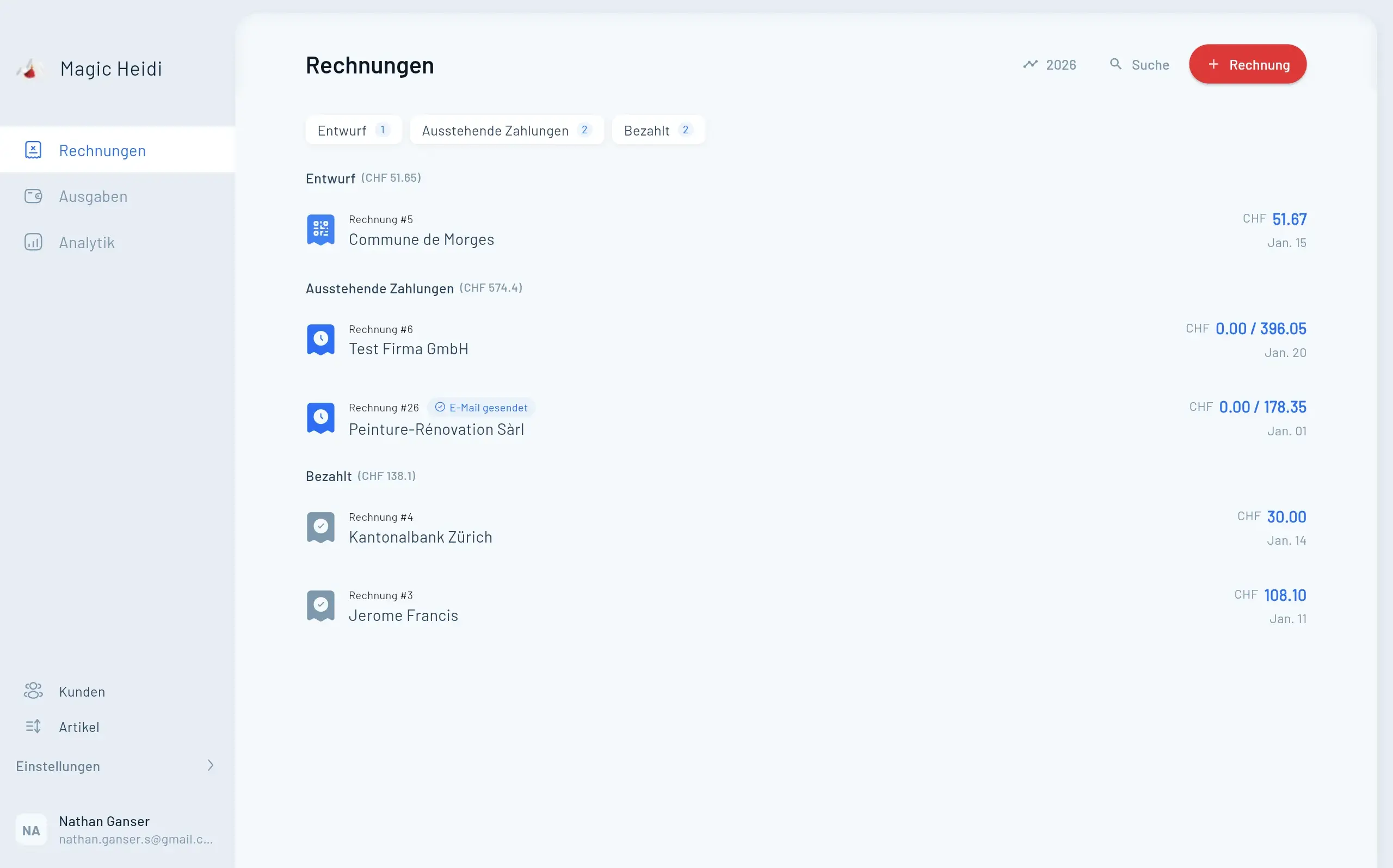
- Erstellen Sie MWST-konforme Rechnungen mit Ihrer MWST-Nummer
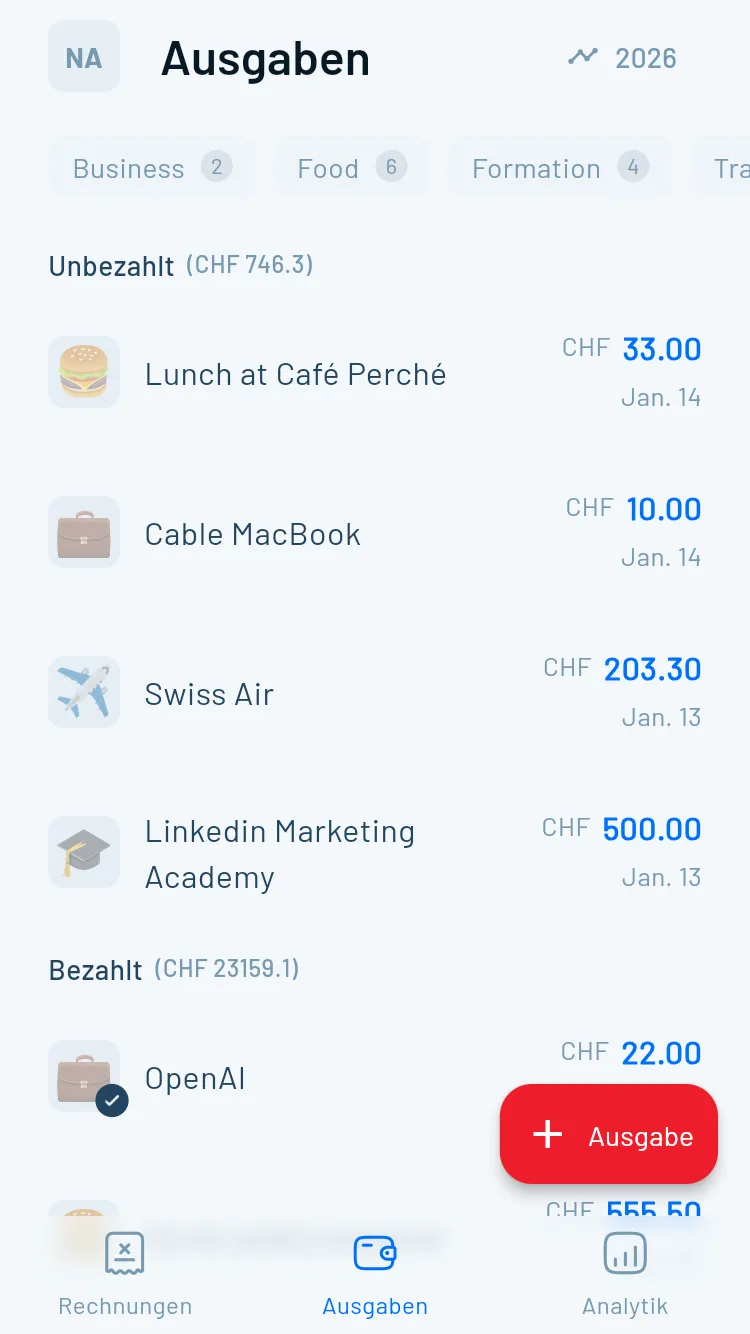
- Erfassen Sie Ausgaben und Vorsteuer automatisch
- Halten Sie alles für Ihre nächste MWST-Abrechnung organisiert
Testen Sie Magic Heidi kostenlos und richten Sie Ihre MWST-konforme Rechnungsstellung und Buchhaltung in Minuten ein – damit die Schweizer MWST nicht zum wiederkehrenden Admin-Albtraum wird.
MWST-konforme Rechnungen mit Ihrer UID‑MWST
Nach der Registrierung benötigen Ihre Rechnungen die richtigen Felder (MWST-Nummer, Sätze, Netto/MWST/Brutto-Beträge). Halten Sie es konsistent, damit Ihre nächste MWST-Abrechnung unkompliziert ist.
Erfassen Sie Ausgaben und Vorsteuer ohne Chaos
Wenn Sie MWST-registriert sind, sind saubere Quittungen und konsistente Kategorisierung wichtig. Ein einfaches System macht Vorsteuer-Erfassung und Revisionssicherheit viel einfacher.
Bereit für die Schweizer MWST ohne Admin-Kopfschmerzen?
Richten Sie jetzt MWST-konforme Rechnungsstellung und Ausgabenerfassung ein – bevor der Schwellenwert (oder der Papierkram) Sie einholt.