 Magic Heidi
 Anmeldung bei der AHV-Ausgleichskasse als Selbstständiger
Sie starten in die Selbstständigkeit? Die AHV-Anmeldung ist Ihr erster Pflichtschritt. Ohne sie drohen Nachzahlungen, Verzugszinsen und Rentenlücken.

Was ist die AHV und warum
die Anmeldung wichtig ist
Die AHV (Alters- und Hinterlassenenversicherung) bildet das Fundament des Schweizer Rentensystems. In der Romandie heisst sie AVS, in englischen Dokumenten OASI. Als Selbstständiger sind Sie selbst für Anmeldung und Beiträge verantwortlich – kein Arbeitgeber übernimmt das für Sie.
Fundament der Schweizer Rente
AHV bildet die 1. Säule der AltersvorsorgeObligatorisch für alle
Die in der Schweiz arbeiten oder lebenUmlageverfahren
Ihre Beiträge finanzieren aktuelle RentnerWarum das Ihre Zukunft betrifft
Jedes Beitragsjahr zählt für Ihre Rente. Ein fehlendes Jahr reduziert Ihr Alterseinkommen um etwa 2,3%.
Minimale Monatsrente
CHF 1'260 pro Monat in 2025
Maximale Monatsrente
CHF 2'520 pro Monat in 2025
Jahre für volle Rente
44 Beitragsjahre erforderlich
13. AHV-Rente
Zusätzliche Monatsrente ab 2026
Sind Sie wirklich selbstständig? Die offiziellen Kriterien
Vor der Anmeldung sollten Sie prüfen, ob Sie als selbstständig gelten. Die Ausgleichskasse trifft die endgültige Entscheidung, und Fehler können ernsthafte Folgen haben.
Merkmale der Selbstständigkeit
Die Behörden achten auf diese Indikatoren:
- Mehrere Auftraggeber (nicht nur einer)
- Wirtschaftliches Risiko – Sie tragen Kosten und mögliche Verluste
- Eigene Arbeitsmittel für Ihre Tätigkeit
- Freie Gestaltung – Sie entscheiden, wie Sie arbeiten
- Rechnungsstellung im eigenen Namen
- Eigene Kundenakquise durch Werbung oder Akquise
- Eigene Preisgestaltung und Verhandlung der Konditionen
Wann wird die Anmeldung obligatorisch?
Zwei Bedingungen lösen die Beitragspflicht aus:
- Alter: Ab dem 1. Januar nach Ihrem 17. Geburtstag
- Einkommen: Ab CHF 2'500 pro Jahr bei Nebentätigkeit
Unter CHF 2'500 Jahreseinkommen aus Nebenerwerb können Sie freiwillig Beiträge zahlen. Darüber ist die Anmeldung obligatorisch.
Warnsignale für Scheinselbstständigkeit
Sie arbeiten hauptsächlich für einen Auftraggeber? Die Ausgleichskasse wird Ihre Situation genau prüfen. Die Schweiz bekämpft aktiv die «Scheinselbstständigkeit».
Warnsignale, die auf ein Arbeitsverhältnis hindeuten:
- Ein Auftraggeber liefert den Grossteil Ihres Einkommens
- Der Auftraggeber bestimmt wann und wie Sie arbeiten
- Sie nutzen Geräte und Räume des Auftraggebers
- Feste Arbeitszeiten durch den Auftraggeber vorgegeben
- Kein echtes unternehmerisches Risiko auf Ihrer Seite
Die Konsequenzen sind gravierend. Bei Umklassifizierung als Angestellter muss Ihr Auftraggeber AHV-Beiträge für bis zu fünf Jahre nachzahlen – plus Zinsen. Möglicherweise muss er Sie auch rückwirkend in eine Pensionskasse aufnehmen.
Schnelle Entscheidungshilfe
Sind Sie selbstständig?
Nutzen Sie diesen Leitfaden, um Ihre nächsten Schritte vor der Anmeldung zu bestimmen.
Als Selbstständiger anmelden, wenn
Sie diese Kriterien für echte Selbstständigkeit erfüllen.
- Mit mehreren Auftraggebern arbeiten
- Rechnungen für Dienstleistungen stellen
- Geschäftsentscheide eigenständig treffen
- Wirtschaftliches Risiko für Ihre Arbeit tragen
Fachberatung einholen, wenn
Diese Situationen erfordern Expertenrat vor der Anmeldung.
- Hauptsächlich einen Auftraggeber haben
- Regelmässig vor Ort beim Kunden arbeiten
- Arbeitsmittel des Kunden nutzen
- Weisungen des Kunden eng befolgen
Andere Regeln gelten, wenn
Diese Strukturen haben separate Anmeldevorschriften.
- Sie eine AG oder GmbH besitzen
- Sie in einer Personengesellschaft sind
- Sie ein Geschäft geerbt haben
- Sie für Ihre eigene Firma arbeiten
Wann und wo anmelden
Melden Sie sich bei der Ausgleichskasse im ersten Quartal nach Aufnahme Ihrer selbstständigen Tätigkeit an. Der ideale Zeitpunkt ist, wenn Sie Ihre ersten Rechnungen stellen. Eine Anmeldung vor Arbeitsbeginn ist nicht möglich – die Kasse benötigt Tätigkeitsnachweise.

Die richtige Ausgleichskasse finden
Wo Sie sich anmelden, hängt von Ihrer Situation ab.
Mitglied eines Berufsverbands?
Melden Sie sich bei der Verbandskasse an. Viele Berufe haben eigene Ausgleichskassen.
Kein Verbandsmitglied?
Melden Sie sich bei der kantonalen Ausgleichskasse Ihres Geschäftssitzes an.
Online-Anmeldung
Die meisten Kantone bieten inzwischen digitale Anmeldung an. Sie können:
- Formulare direkt auf den Websites der kantonalen Ausgleichskassen ausfüllen
- Das offizielle Portal unter selbststaendig-erwerbend.ch nutzen
- PDF-Formulare herunterladen, ausfüllen und einreichen
Finden Sie Ihre kantonale Kasse unter ahv-iv.ch bei «Ausgleichskassen».
Der Online-Prozess ist schneller und ermöglicht das direkte Hochladen von Belegen.
Benötigte Unterlagen
Die vollständige Checkliste
Stellen Sie diese zusammen, bevor Sie Ihren Antrag starten. Die Kasse verlangt Nachweise über mehrere Auftraggeber und echte Geschäftstätigkeit.
AHV-Nummer, Ausweis, Kontaktdaten
Mindestens 2 Rechnungen erforderlich
Kundenverträge, Offerten, Kostenvoranschläge
Tätigkeitsbeschreibung, Website, Marketing
Das Anmeldeformular verstehen
Das Formular fragt Informationen in mehreren Kategorien ab:
Abschnitt Personendaten
Standard-Identifikationsangaben plus Ihre AHV-Nummer. Wenn Sie bereits in der Schweiz gearbeitet haben, sind Sie schon im System erfasst.
Tätigkeitsbeschreibung
Seien Sie präzise, aber kurz. Beschreiben Sie Ihre Tätigkeit klar – vermeiden Sie ausführliche Jobbeschreibungen. Geben Sie an:
- Ihre Hauptbranche oder Berufsbezeichnung
- Ob dies Ihre Haupt- oder Nebentätigkeit ist
- Ungefähren Beschäftigungsgrad (Prozent eines Vollzeitpensums)
| Feld | Was einzutragen ist |
|---|---|
| Startdatum | Datum Ihrer ersten Rechnung |
| Tätigkeitsbereich | Ihr Beruf oder Fachgebiet |
| Haupt-/Nebentätigkeit | Haupttätigkeit, wenn überwiegend |
| Beschäftigungsgrad | Schätzung in Prozent |
| Arbeitsort | Zuhause / eigene Räume / beim Kunden |
Arbeitsort
Wählen Sie die Option, die am besten zu Ihrem Hauptarbeitsplatz passt:
- Privatwohnung
- Eigene Geschäftsräume
- Beim Kunden vor Ort
Geschäftsbeziehungen
Dieser Abschnitt belegt Ihre echte Selbstständigkeit:
Kundeninformationen: Geben Sie mindestens zwei Kundennamen an. Fügen Sie Rechnungen oder Verträge als Nachweis bei.
Kundenakquise: Erklären Sie, wie Sie Kunden gewinnen. Legen Sie Werbematerialien oder Marketingunterlagen bei.
Zahlungskonditionen: Beschreiben Sie Ihre Vergütungsform – Stundenbasis, Projektbasis oder andere Vereinbarungen.
Rechtsform
Die meisten Freelancer wählen «Einzelunternehmen». Andere Optionen gibt es für Personengesellschaften oder geerbte Betriebe.
Hinweis: Wenn Sie eine AG oder GmbH besitzen, gelten Sie als Angestellter Ihrer eigenen Firma. Es gelten andere Anmelderegeln.
Beitragssätze 2025
Die Beiträge für Selbstständige decken AHV, IV (Invalidenversicherung) und EO (Erwerbsersatzordnung) ab. Der Gesamtsatz beträgt 10% Ihres jährlichen Nettoeinkommens.
| Komponente | Satz |
|---|---|
| AHV (Altersvorsorge) | 8,1% |
| IV (Invalidenversicherung) | 1,4% |
| EO (Erwerbsersatz) | 0,5% |
| Total | 10,0% |
Einkommensabhängige Staffelung
Tiefere Einkommen profitieren von reduzierten Sätzen.
Unter CHF 10'100
Minimum CHF 530/Jahr
CHF 10'100 – 60'500
Sinkende Skala 5,371% – 10%
Über CHF 60'500
Voller Satz von 10%
Nebeneinkommen unter CHF 2'500
Von Anmeldepflicht befreit
Zahlungsrhythmus
Erstes Jahr: Basierend auf Ihrer Einkommensschätzung (Selbstdeklaration).
Folgejahre: Vierteljährliche Akontozahlungen basierend auf dem Vorjahreseinkommen.
Schlussabrechnung: Nach der Steuerveranlagung berechnet die Kasse die effektiven Beiträge. Sie erhalten eine Nachforderung für allfällige Differenzen – oder eine Rückerstattung bei Überzahlung.
Budget-Warnung: Nach einem erfolgreichen Jahr kann Ihre nächste AHV-Rechnung deutlich höher ausfallen. Legen Sie das ganze Jahr über Rücklagen an.
Neu seit 2025: Inkasso per Konkurs
Seit dem 1. Januar 2025 erfolgt das Inkasso unbezahlter Beiträge bei im Handelsregister eingetragenen Selbstständigen per Konkurs und nicht mehr per Pfändung. Zahlungsrückstände bei der Ausgleichskasse sind damit deutlich riskanter geworden – ein Grund mehr, die Akontozahlungen konsequent einzuplanen.
Steuervorteile Ihrer Beiträge
Die gute Nachricht: Alle AHV/IV/EO-Beiträge sind vollständig steuerlich absetzbar – auf Bundes-, Kantons- und Gemeindeebene.
Zusätzliche Einsparungen durch Säule 3a
Selbstständige ohne Pensionskasse (2. Säule) können höhere steuerbegünstigte Vorsorgebeiträge leisten:
| Situation | Maximaler Jahresbeitrag |
|---|---|
| Mit 2. Säule | CHF 7'258/Jahr |
| Ohne 2. Säule | Bis 20% des Nettoeinkommens, max. CHF 36'288/Jahr |
Diese Beiträge reduzieren Ihr steuerbares Einkommen und bauen gleichzeitig Ihre Altersvorsorge auf.
Nach der Anmeldung: Wie geht es weiter?
Die Ausgleichskasse prüft Ihren Antrag und die eingereichten Unterlagen. Sie bestätigt, ob Sie als selbstständig gelten – in der Regel innert weniger Wochen.
Ihre laufenden
Verpflichtungen
Nach der Anmeldung müssen Sie diese Pflichten erfüllen, um konform zu bleiben.
Vierteljährliche Zahlungen
Akontozahlungen basierend auf geschätztem Einkommen.
- Fällig jedes Quartal
- Basierend auf Vorjahr
- Jährlich angepasst
- Schlussabrechnung nach Steuer
Änderungen melden
Informieren Sie die Kasse bei wesentlichen Einkommensänderungen.
- Einkommenssteigerungen
- Einkommensrückgänge
- Geschäftsänderungen
- Adressänderungen
Unterlagen aufbewahren
Dokumentation für Prüfungen und Steuererklärung bereithalten.
- Alle Rechnungen
- Spesenbelege
- Kundenverträge
- Kontoauszüge
Wofür Sie nicht versichert sind
Selbstständigkeit bedeutet, gewisse Schutzlücken zu akzeptieren. Anders als Angestellte haben Sie für diese Situationen keinen automatischen Schutz und müssen möglicherweise private Versicherungen abschliessen.
Keine Arbeitslosenversicherung
Kein Anspruch bei AuftragsmangelKeine obligatorische Unfallversicherung
Private Absicherung empfohlenKeine obligatorische 2. Säule
Freiwillig, aber empfehlenswertSpezialfälle
Arbeiten nach dem Rentenalter
Nach Erreichen des Referenzalters (65 für Männer, schrittweise Erhöhung auf 65 für Frauen bis 2029) können Sie mit diesen Regeln weiterarbeiten:
- Steuerfreier Freibetrag von CHF 16'800/Jahr
- Beiträge über diesem Betrag zählen nun zum Schliessen von Rentenlücken
- Sie können auf den Freibetrag verzichten, um Rentengutschriften zu maximieren
Ausländer in der Schweiz
- C-Ausweis-Inhaber: Können sich ohne Einschränkungen selbstständig machen
- B-Ausweis-Inhaber: Benötigen kantonale Bewilligung für Selbstständigkeit
Handelsregisterpflicht
Der Selbstständigenstatus kommt von der Ausgleichskasse, nicht vom Handelsregister. Die Eintragung wird jedoch obligatorisch, wenn Ihr Jahresumsatz CHF 100'000 übersteigt.
Häufig gestellte Fragen
Kann ich mich vor Tätigkeitsbeginn anmelden?
Nein. Die Ausgleichskasse verlangt Nachweise über tatsächliche Arbeit – Rechnungen, Verträge oder Belege. Melden Sie sich an, sobald Sie Ihre Tätigkeit aufgenommen haben.
Was, wenn ich anfangs nur einen Kunden habe?
Das wirft Fragen zur echten Selbstständigkeit auf. Dokumentieren Sie Ihre Akquisebemühungen und diversifizieren Sie schnell. Die Kasse kann Sie trotzdem anerkennen, wenn Sie unternehmerisches Risiko und Unabhängigkeit nachweisen.
Brauche ich einen Treuhänder für die Anmeldung?
Nicht erforderlich, aber eine Buchhaltungssoftware hilft, das Einkommen für die Beitragsberechnung genau zu erfassen. Saubere Unterlagen liefern auch die Nachweise, die die Kasse verlangt.
Wie lange dauert die Bewilligung?
Typischerweise 2-4 Wochen nach Einreichung vollständiger Unterlagen. Fehlende Dokumente verzögern den Prozess.
Was passiert, wenn ich mich nicht anmelde?
Sie schulden Beiträge plus Verzugszinsen. Rentenlücken häufen sich an. In schweren Fällen drohen Strafen.
Was passiert, wenn ich Anstellung und Selbstständigkeit kombiniere?
Sie zahlen in beiden Fällen Beiträge. Ihre selbstständige Tätigkeit gilt dann als Nebentätigkeit, und die Beiträge werden zusätzlich zu denen Ihrer Anstellung erhoben.
Kann ich die Ausgleichskasse wechseln?
Bei einem Umzug in einen anderen Kanton melden Sie sich bei der neuen Kantonalkasse an. Die Übertragung erfolgt nach der Meldung automatisch.
Der nächste Schritt
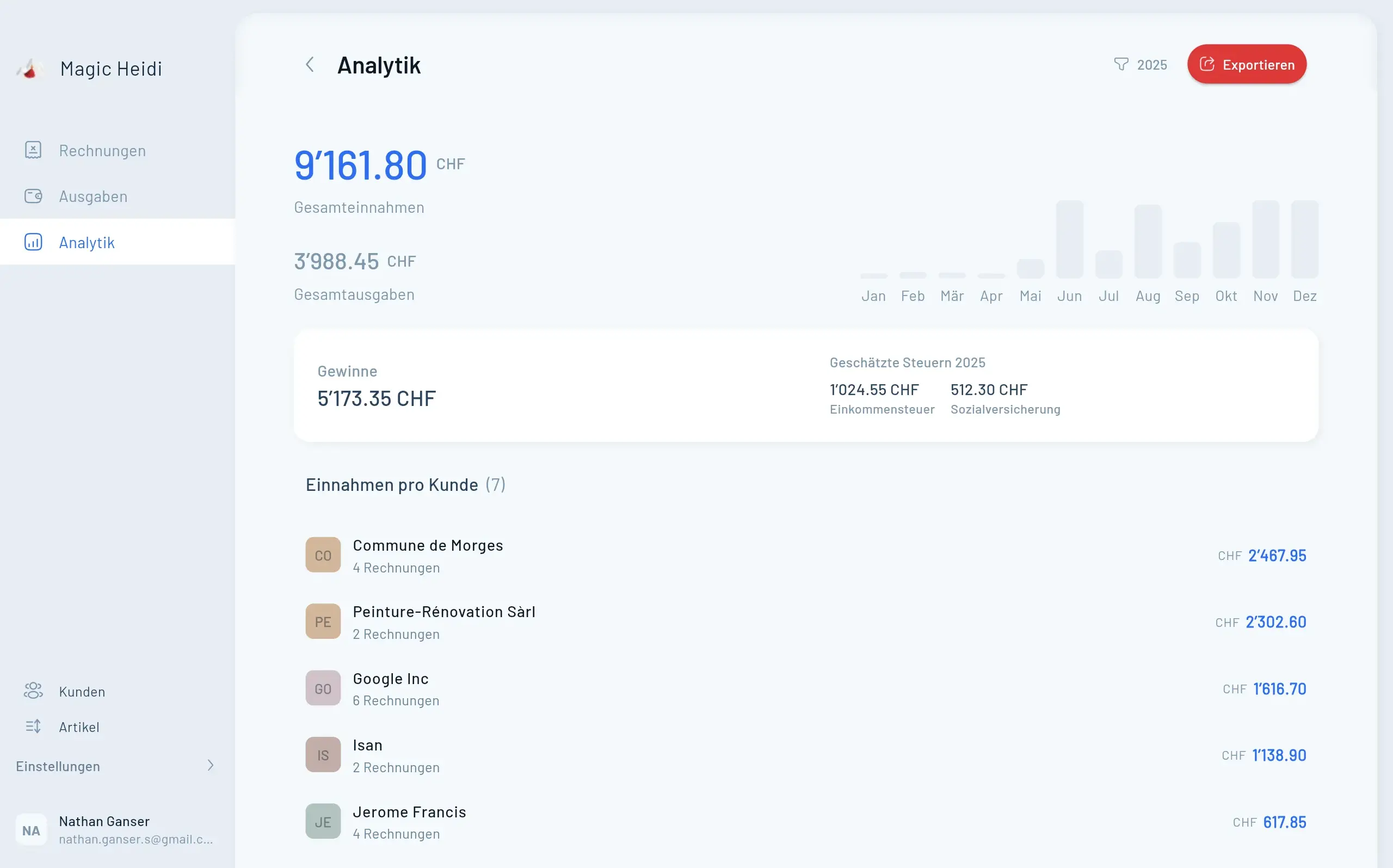
Erfassen Sie Ihr Freelance-Einkommen von Anfang an korrekt. Magic Heidi hilft Ihnen, Rechnungen zu verwalten, Ausgaben zu überwachen und die Unterlagen zu führen, die Sie für AHV-Beiträge und Steuerabzüge benötigen.