 Magic Heidi
 Zeiterfassung für Schweizer Freelancer: Zeit erfassen, korrekt abrechnen
Sie haben gerade ein Projekt für drei verschiedene Kunden abgeschlossen. Wie viele Stunden haben Sie tatsächlich gearbeitet? Wenn Sie raten, verschenken Sie Geld.
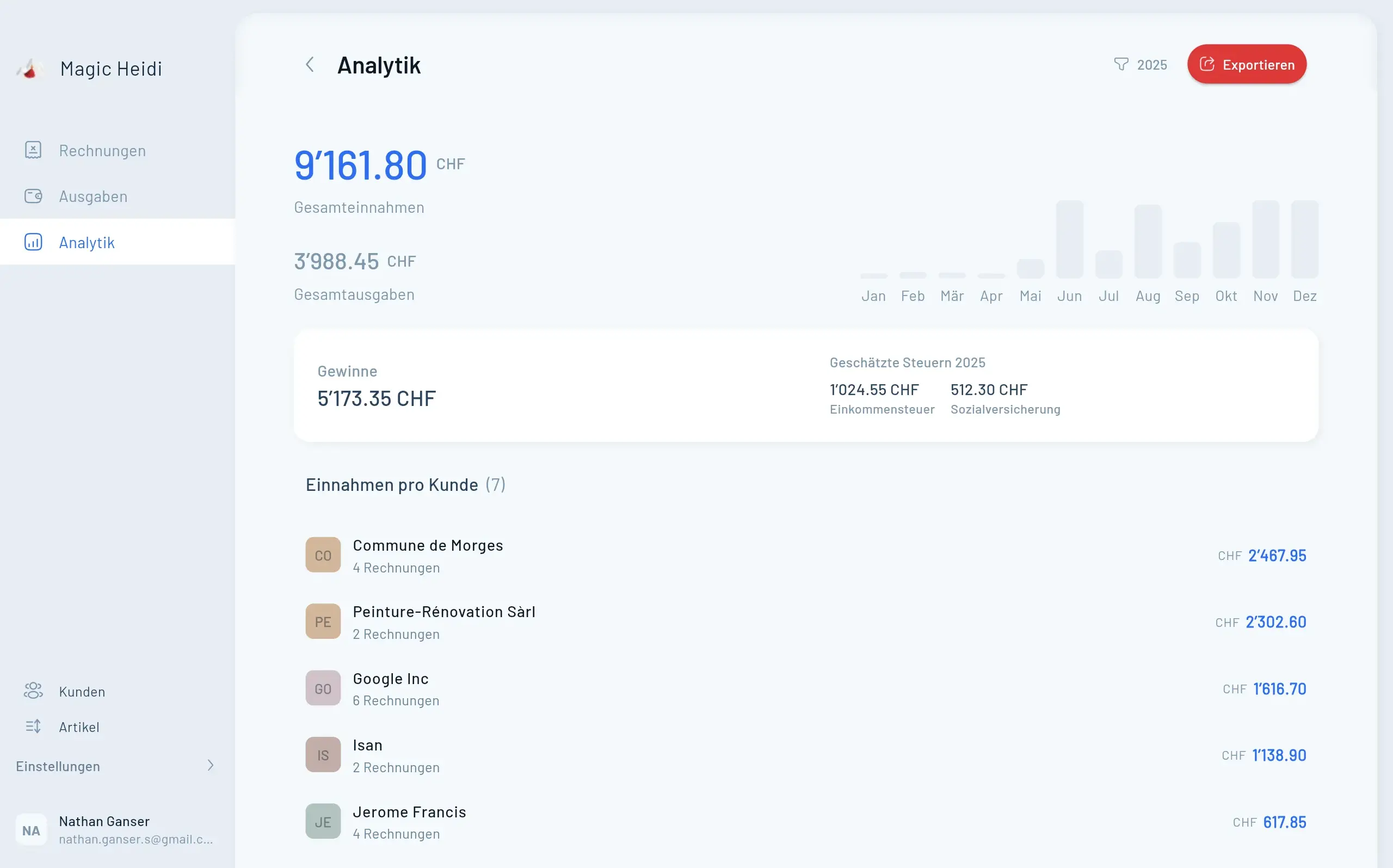
Zeiterfassung bedeutet mehr als nur Stunden aufschreiben – es geht darum, Ihr Geschäft zu verstehen, präzise abzurechnen und strategische Entscheidungen zu treffen, wo Ihre Energie hinfliesst. Für Schweizer Freelancer, die mehrere Kunden, Währungen und kantonale Anforderungen jonglieren, wird Zeiterfassung zum Wettbewerbsvorteil.
Dieser Leitfaden deckt alles ab: eine kostenlose Vorlage für den Start, Schweizer Besonderheiten und wann sich der Umstieg auf digitale Tools lohnt. Ob Sie in Zürich in CHF oder für französische Kunden in EUR abrechnen – hier finden Sie praxisnahe Tipps, die wirklich funktionieren.
Sie suchen eine Arbeitsrapport Vorlage? Dann sind Sie hier falsch. Diese Seite behandelt die laufende Zeiterfassung über mehrere Kunden und Projekte hinweg. Wenn Sie pro Einsatz auch Material, Zusatzaufwand und eine Kundenunterschrift dokumentieren müssen, brauchen Sie ein anderes Dokument — die passende Vorlage samt Muster zum Kopieren finden Sie unter Arbeitsrapport Schweiz: Vorlage & Muster.
Müssen Schweizer Freelancer Zeit erfassen?
Klären wir die Verwirrung: Zeiterfassung ist für die meisten Schweizer Freelancer nicht gesetzlich vorgeschrieben.
Artikel 46 des Schweizer Arbeitsgesetzes (ArG) verpflichtet Arbeitgeber, Arbeits- und Ruhezeiten von Arbeitnehmern zu erfassen. Wenn Sie selbständig sind, gelten für Sie nicht dieselben Arbeitszeitbeschränkungen. Sie organisieren Ihren Zeitplan frei.
Trotzdem sollten Sie Ihre Zeit erfassen. Hier ist der Grund:
MWST-Abrechnung: Sobald Sie CHF 100'000 Jahresumsatz überschreiten, sind Sie mehrwertsteuerpflichtig. Genaue Zeitaufzeichnungen stützen Ihre Steuererklärung und helfen, Ihr gemeldetes Einkommen gegenüber den Kantonen zu belegen.
Kundenvertrauen: Schweizer Kunden erwarten Präzision. Detaillierte Stundenblätter demonstrieren Professionalität und verhindern Abrechnungsstreitigkeiten von vornherein.
Business Intelligence: Was Sie nicht messen, können Sie nicht optimieren. Zeitdaten zeigen, welche Kunden profitabel sind, welche Projekte Ressourcen verschlingen und wo Sie Ihr Marketing fokussieren sollten.
Begründung Ihrer Preise: Wenn ein Kunde Ihre Rechnung hinterfragt, beenden detaillierte Zeitaufzeichnungen die Diskussion. Sie haben 23.5 Stunden gearbeitet, nicht "etwa eine Woche".
AHV-Beiträge: Selbständigerwerbende mit einem Jahreseinkommen über CHF 2'500 müssen ihr Einkommen deklarieren und Sozialversicherungsbeiträge zahlen. Genaue Zeiterfassung stützt Ihre Einkommensdeklarationen.
Falls Sie Mitarbeitende beschäftigen oder in bestimmten Strukturen arbeiten, gelten andere Regeln. Im Zweifelsfall konsultieren Sie Ihr kantonales Arbeitsinspektorat.
Warum die meisten Freelancer zu wenig erfassen
(und Geld verlieren)
Studien zeigen, dass Unternehmen mit strukturierter Zeiterfassung bis zu 30% effizienter arbeiten. Dennoch verlassen sich die meisten Freelancer auf ihr Gedächtnis oder grobe Schätzungen.
Vergessene Stunden
Das 30-minütige Kundentelefonat am Samstag? Die Korrektur, die Sie vor dem Abendessen eingeschoben haben? Das summiert sich auf Tausende Franken jährlich.Unterpreisgestaltung
Ohne Daten raten Sie bei Projektkosten. Ihr CHF 5'000-Angebot wird zu 80 Stunden Arbeit – CHF 62.50 pro Stunde vor Steuern und Gemeinkosten.Burnout-Blindheit
Sie fühlen sich überfordert, aber können nicht genau sagen warum. Zeitdaten zeigen: Sie verbringen 15 Stunden wöchentlich mit nicht verrechenbarer Administration.Verpasste Steuerabzüge
Genaue Aufzeichnungen stützen legitime Geschäftsausgaben und schützen Sie bei Prüfungen.Arten von Zeiterfassungsvorlagen für Schweizer Freelancer
Wählen Sie Ihre Vorlage nach Arbeitsmuster, nicht nach Vorlieben. Das funktioniert wirklich:
Tägliche Stundenblätter
Ideal für Freelancer mit vielen kurzen Aufgaben, Stundenabrechnung oder Kunden, die detaillierte Aktivitätsprotokolle verlangen. Erfasst jede Arbeitssitzung mit Start-/Endzeiten, Pausen und Verrechenbarkeit.
Wöchentliche Stundenblätter
Perfekt für Freelancer mit laufenden Kunden oder Retainer-Vereinbarungen. Bietet umfassende Erfassung ohne tägliche Detailtiefe. Funktioniert für den typischen Schweizer Freelancer mit 3-5 aktiven Kunden.
Monatliche Stundenblätter
Ideal für projektbasierte Freelancer mit Meilenstein-Abrechnung. Gibt das Gesamtbild für Stunden pro Kunde und saisonale Muster. Perfekt für die AHV-Einkommensdokumentation.
Kostenlose Zeiterfassungsvorlage (Schweiz-optimiert)
Wir haben eine Vorlage speziell für Schweizer Freelancer erstellt. Einfache Formeln, keine Makros, keine Komplexität. Einfach unkomplizierte Zeiterfassung, die auf jedem Gerät funktioniert.
- 💱Mehrere Währungen
CHF/EUR-fähig
- ⏱️Automatische Pausen
Nach Schweizer Praxis
- 📋Verrechenbarkeit
Separate Spalten für alle Stunden
- 🧮MWST-konforme Struktur
Schweizer Steuerkonformität integriert
- Rechnung #3
Magic Heidi
CHF 500
Jan 29
- Rechnung #2
Webbiger LTD
CHF 2000
Jan 24
- Rechnung #1
John Doe
CHF 600
Jan 20
So nutzen Sie Ihre Zeiterfassung effektiv
Eine Vorlage funktioniert nur, wenn Sie sie auch nutzen. So geht's:
1. Erfassen Sie in Echtzeit
Warten Sie nicht bis Freitag, um Ihre Woche zu rekonstruieren. Wenn Sie mit der Arbeit beginnen, notieren Sie die Zeit. Wenn Sie fertig sind, erfassen Sie es sofort.
Realitätscheck: Sie werden nicht perfekt sein. Manche Wochen werden Sie vergessen. Das ist okay – machen Sie einfach weiter. Selbst 80% Genauigkeit schlägt 100% Raten.
2. Unterscheiden Sie verrechenbar vs. nicht verrechenbar
Nicht alle Stunden kommen auf die Rechnung, aber Sie sollten alles erfassen:
Verrechenbar: Kundenarbeit, vom Kunden angeforderte Meetings, Revisionen im Rahmen, genehmigte Recherche.
Nicht verrechenbar: Offerten, Administration, eigene Weiterbildung, Networking, interne Tool-Einrichtung.
Warum nicht verrechenbare Zeit erfassen? Weil es trotzdem Arbeit ist. Wenn Sie 10 Stunden wöchentlich für Offerten und Admin aufwenden, erfordert Ihre "40-Stunden-Woche" tatsächlich 50 Stunden. Das beeinflusst Ihre Preisstrategie.
3. Verwenden Sie konsistente Projektkürzel
Erstellen Sie ein einfaches System:
- Kundenkürzel + Projekttyp (z.B. "ZH-WEB" für Zürcher Kunde Website)
- Halten Sie Kürzel unter 10 Zeichen
- Dokumentieren Sie Ihr System für Konsistenz
Das ist wichtig, wenn Sie monatliche Daten auswerten. "Wie viel Zeit habe ich dieses Quartal für Websites vs. Beratung aufgewendet?" wird beantwortbar.
4. Wöchentliche Überprüfung
Jeden Freitagnachmittag (oder Montagmorgen) überprüfen Sie Ihr Stundenblatt:
- Fühlen sich die Stunden korrekt an?
- Haben Sie Sitzungen vergessen?
- Welcher Kunde hat mehr Zeit beansprucht als erwartet?
- Was können Sie nächste Woche optimieren?
Diese 15-minütige Überprüfung verhindert Überraschungen am Monatsende und hilft, Probleme früh zu erkennen. Der Kunde, der "nur schnelle Anpassungen" braucht? Ihre Daten zeigen: 6 Stunden letzte Woche.
5. Sichern Sie Ihre Daten
Excel-Dateien werden beschädigt. Computer stürzen ab. Cloud-Speicher wird versehentlich gelöscht.
Speichern Sie Ihr Stundenblatt an mehreren Orten:
- Lokaler Computer
- Cloud-Speicher (Google Drive, Dropbox)
- Monatlicher PDF-Export fürs Archiv
Schweizer Steuerbehörden können Geschäftsunterlagen 5 Jahre zurück anfordern. Schützen Sie sich.
Wann von Vorlagen auf digitale Tools umsteigen?
Vorlagen sind perfekt für den Anfang. Aber wenn Ihr Freelance-Geschäft wächst, bemerken Sie Reibungspunkte: Wechseln zwischen Stundenblatt und Rechnungssoftware, manuelle Berechnungen für verschiedene Kundenpreise, vergessen den Timer zu starten/stoppen, kein mobiler Zugang beim Arbeiten im Café.
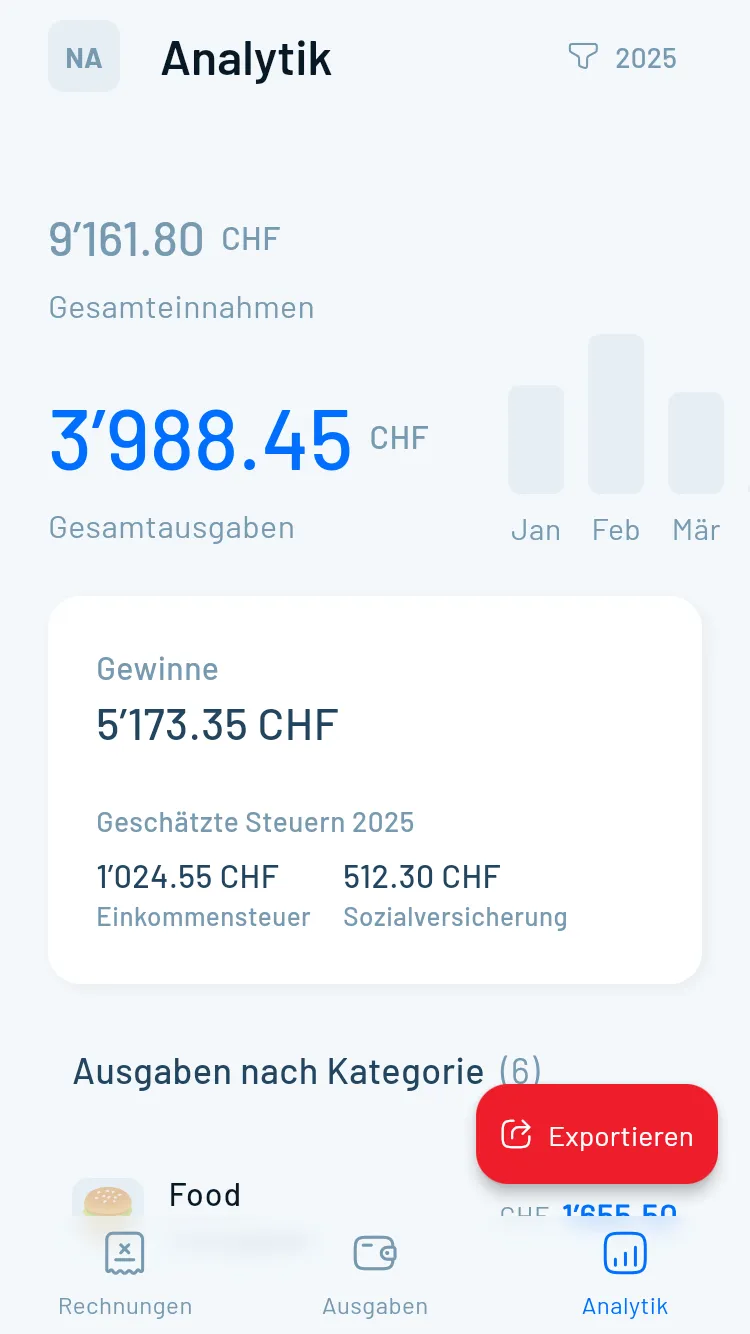
Was Schweizer Freelancer wirklich brauchen
Nicht alle Zeiterfassungstools verstehen den Schweizer Markt. Achten Sie auf diese essentiellen Funktionen:
Automatische QR-Rechnung
Ihre erfassten Stunden sollten sich direkt in Schweizer QR-Rechnungen umwandeln. Manueller Transfer verdoppelt Ihre Arbeit und führt zu Fehlern.
- Direkte Stunden-zu-Rechnung-Konvertierung
- Schweizer QR-Rechnung-Konformität
- Multi-Tarif-Berechnungen
- Automatische MWST-Anwendung
Mehrwährung & Schweizer MWST
Arbeiten Sie mit EU-Kunden? Sie brauchen korrekte EUR-Handhabung mit Wechselkursverfolgung und Schweizer MWST-Sätzen (7.7% Standard, 2.5% reduziert, 3.7% Beherbergung).
- CHF- und EUR-Unterstützung
- Wechselkursverfolgung
- Automatische MWST-Berechnung
- Dienstleistungsbasierte MWST-Regeln
Mobil & Auswertungen
Erfassen Sie Zeit von überall – Kundenmeetings, Coworking-Spaces oder Ihrem Küchentisch. Sehen Sie, welche Kunden und Projekttypen wirklich Geld bringen.
- Mobile Apps mit Offline-Modus
- Projekt-Rentabilitätsanalyse
- Mehrsprachig (DE/FR/IT/EN)
- Echtzeit-Reporting
Schweiz-spezifische Zeiterfassungs-Aspekte
Das Verständnis von Schweizer Arbeitskultur, kantonalen Unterschieden und realistischen verrechenbaren Stunden macht den Unterschied zwischen Raten und Wissen über Ihr Geschäft.
Zürich ≠ Genf ≠ Tessin
60-75% verrechenbar ist normal
Schweizer Arbeitskultur erwartet sie
DE/FR/IT-Terminologie zählt
Die 70%-Realität der verrechenbaren Zeit
Schweizer Freelancer erreichen typischerweise 60-75% verrechenbare Zeit. Wenn Sie 40 Stunden wöchentlich arbeiten, erwarten Sie 24-30 Stunden auf der Rechnung.
Der Rest? Offerten, Rechnungsstellung, Steuern, Weiterbildung, Admin. Erfassen Sie alles, damit Sie entsprechend kalkulieren.
Beispiel: Sie wollen CHF 90'000 netto jährlich. Bei 48 Arbeitswochen à 40 Stunden (1'920 Stunden) mit 70% verrechenbarer Zeit = 1'344 verrechenbare Stunden. Sie brauchen CHF 67/Stunde. Aber das beinhaltet nicht MWST, AHV, Steuern oder Overhead. Ihr Kundenpreis sollte CHF 100-120/Stunde sein.
Pausenregelungen
Obwohl Sie als Freelancer nicht gesetzlich verpflichtet sind, Pausen zu machen, erwartet die Schweizer Arbeitskultur sie. Wenn Sie Zeit für arbeitnehmerähnliche Verträge erfassen oder vor Ort arbeiten:
- 15 Minuten bei 5.5+ Stunden
- 30 Minuten bei 7+ Stunden
- 60 Minuten bei 9+ Stunden
Erfassen Sie Pausen separat von der Arbeitszeit für Klarheit.
Abrechnung in mehreren Sprachen
Ihr deutschsprachiger Zürcher Kunde erwartet "Arbeitszeiterfassung." Ihr französischsprachiger Genfer Kunde will "Feuille de temps." Ihre Vorlage sollte professionelle Terminologie in den Kundensprachen unterstützen.
Zeiterfassungs-Fehler, die Sie vermeiden sollten
Lernen Sie aus den Fehlern anderer, statt sie selbst zu machen.
Sammelerfassung am Monatsende
Sie denken, Sie werden sich erinnern. Werden Sie nicht. Erfassen Sie täglich. Selbst grobe Echtzeit-Notizen schlagen präzise spätere Schätzungen.
Nur verrechenbare Stunden erfassen
Sie arbeiten 50 Stunden, rechnen aber nur 30 ab. Erfassen Sie alles. Kennzeichnen Sie verrechenbar oder nicht verrechenbar. Überprüfen Sie monatliche Verhältnisse.
Falsche Vorlagen-Granularität
Passen Sie die Vorlage an die Abrechnungsstruktur an. Stundenkunden = tägliche/wöchentliche Erfassung. Retainer-Kunden = wöchentliche/monatliche Erfassung.
Kein Backup-System
Cloud-Speicher + regelmässige Exporte. Nicht verhandelbar. Schweizer Steuerbehörden können Unterlagen 5 Jahre zurück anfordern.
Inkonsistente Projektbenennung
Dokumentieren Sie Ihre Namenskonventionen. Nutzen Sie sie konsequent. Überprüfen Sie monatlich auf Konsistenz.
Über Zeiterfassung hinaus: Was die Daten verraten
Gute Zeiterfassung transformiert Ihr Freelance-Geschäft. Sie werden mit Selbstvertrauen kalkulieren, schlechte Kunden kündigen, Ihren Kalender optimieren, Preiserhöhungen begründen, Kapazitäten planen und saisonale Muster verstehen.
Häufig gestellte Fragen
Brauche ich Zeiterfassung, wenn ich Fixpreise berechne?
Ja, für interne Zwecke. Fixpreis-Projekte werden nur dann profitabel, wenn Sie genau kalkulieren. Historische Zeitdaten machen das möglich. Ohne sie raten Sie – und verlieren wahrscheinlich Geld.
Wie handhabe ich Zeiterfassung über Schweizer Kantone hinweg?
Notieren Sie den Kanton in Ihrem Projektkürzel oder den Kundennotizen. Hilfreich für Steuerzwecke, wenn Sie viel in mehreren Kantonen arbeiten oder Fragen zu Wohnsitz vs. Arbeitsort haben.
Kann ich Zeit für mehrere Kunden in einer Vorlage erfassen?
Absolut. Erstellen Sie separate Abschnitte pro Kunde oder nutzen Sie Filter in Excel/Google Sheets. Alternativ führen Sie individuelle Kundenvorlagen und fassen monatlich zusammen.
Was, wenn ich vergesse, eine Arbeitssitzung zu erfassen?
Fügen Sie sie hinzu, sobald Sie sich erinnern, mit einer Notiz. 'Ca. 2.5 Stunden, nachträglich erfasst' ist besser als nichts. Lassen Sie sich nicht von Perfektionismus lähmen.
Wie lange sollte ich meine Zeiterfassung aufbewahren?
Schweizer Steuerbehörden können 5 Jahre zurück prüfen. Bewahren Sie Unterlagen mindestens so lange auf, idealerweise 10 Jahre für vollständigen Schutz.
Sollte ich mein Stundenblatt mit Kunden teilen?
Bei Stundenabrechnung: ja, mit Rechnungen. Bei Fixpreisen: nur auf Anfrage. Manche Kunden schätzen Transparenz, andere wollen einfach Ergebnisse.
Wie erfasse ich Zeit, wenn Arbeit und Privatleben verschwimmen?
Schaffen Sie klare Grenzen. Nutzen Sie eine Timer-App, die Sie manuell starten/stoppen. Wenn Sie den Arbeitslaptop schliessen, stoppen Sie den Timer. Die Schweizer Arbeitskultur schätzt den 'Feierabend' – respektieren Sie ihn.
Was ist mit nicht verrechenbarer Kundenzeit (E-Mails, kurze Fragen)?
Erfassen Sie sie separat. Wenn nicht verrechenbare Kundenzeit 10% der verrechenbaren Zeit übersteigt, berechnen Sie zu wenig. Entweder verrechnen Sie Kommunikation oder kalkulieren Sie sie in Ihre Preise ein.
Übernehmen Sie heute die Kontrolle über Ihr Freelance-Geschäft
Starten Sie einfach: Laden Sie unsere kostenlose Vorlage herunter, erfassen Sie diese Woche, überprüfen Sie am Freitag. Sie werden sofort Muster, vergessene Stunden und Optimierungsmöglichkeiten erkennen. Wenn Ihr Geschäft wächst, steigen Sie auf integrierte Tools um, die speziell für Schweizer Freelancer entwickelt wurden.