 Magic Heidi
 5 Finanzkennzahlen für mehr Freelancer-Profitabilität
Als Freelancer in der Schweiz tragen Sie viele Hüte. Designer, Marketer, Buchhalter, CEO. Hier sind die Zahlen, die Ihre Rentabilität wirklich beeinflussen.
Warum die meisten Freelancer Effizienz falsch verstehen
Der typische Ansatz? Kontostand prüfen. Wenn Geld reinkommt, läuft's. Das ist eine Falle. Ein Freelancer mit CHF 150'000 Jahresumsatz fühlt sich vielleicht erfolgreich. Aber nach Steuern, Sozialversicherungen (ca. 30%) und Betriebskosten (20-40%) bleiben CHF 45'000-75'000 übrig. Das ist eine riesige Spanne—und der Unterschied liegt in der Effizienz.
Profitable Arbeit erkennen
Wissen, welche Kunden wirklich Geld bringenZeitfresser identifizieren
Bevor sie Ihre Margen ruinierenGenau planen
Für Steuern und magere MonateGewinnmarge
Der Prozentsatz des Umsatzes, der nach allen Ausgaben übrig bleibt. Umsatz bedeutet nichts ohne Gewinn.
Die Formel:
Gewinnmarge = (Umsatz - Alle Ausgaben) / Umsatz × 100
Schweizer Freelancer-Benchmarks
| Leistungsniveau | Nettogewinnmarge |
|---|---|
| Kritisch | Unter 15% |
| Durchschnitt | 15-25% |
| Gut | 25-35% |
| Exzellent | 35-45% |
Praxisbeispiel: Eine Texterin aus Basel fakturiert CHF 8'000 monatlich. Ihre Ausgaben:
- Steuern und AHV/IV: CHF 2'400 (30%)
- Software und Tools: CHF 200
- Coworking Space: CHF 400
- Versicherungen: CHF 300
- Marketing: CHF 200
Gesamtausgaben: CHF 3'500 | Nettogewinn: CHF 4'500 | Marge: 56%
Das ist exzellent. Aber sie weiss das nur, weil sie jeden Franken erfasst.
Versteckte Kosten kürzen
Prüfen Sie jedes Abo. Das CHF 50/Monat-Tool, das Sie vergessen haben? Das sind CHF 600 jährlich, die Ihre Marge fressen.
Preise strategisch erhöhen
Eine 10% Preiserhöhung bei gleichen Ausgaben kann Ihre Marge um 15-20% steigern.
Ähnliche Arbeit bündeln
Ständiges Wechseln zwischen Aufgaben kostet Effizienz. Gruppieren Sie ähnliche Tätigkeiten.
Auslastungsrate: Der versteckte Multiplikator
Der Prozentsatz Ihrer Arbeitszeit, der verrechenbar ist. Wenn Sie 40 Stunden wöchentlich arbeiten, aber nur 20 verrechnen, beträgt Ihre Auslastung 50%. Die Hälfte Ihrer Zeit generiert null Umsatz.
Auslastungs-Benchmarks
Die meisten Freelancer ignorieren diese Kennzahl—dabei ist sie wohl die wichtigste.
| Leistungsniveau | Auslastungsrate |
|---|---|
| Bedenklich | Unter 50% |
| Durchschnitt | 50-60% |
| Gut | 60-70% |
| Top-Performer | 70-80% |
Hinweis: Über 80% führt typischerweise zu Burnout. Nachhaltige Verrechnung liegt bei ca. 32-36 Stunden wöchentlich.
Praxisbeispiel: Ein Webentwickler aus Lausanne trackt seine Zeit:
- Kundenarbeit: 28 Stunden/Woche
- Admin und E-Mails: 6 Stunden/Woche
- Marketing und Networking: 4 Stunden/Woche
- Weiterbildung: 2 Stunden/Woche
Auslastung: 70% — Gut, aber wenn er Admin durch bessere Systeme auf 4 Stunden reduziert, gewinnt er 2 verrechenbare Stunden wöchentlich—CHF 200-400 extra bei üblichen Stundensätzen.
Rechnungsstellung automatisieren
Manuelle Rechnungen kosten Stunden monatlich. Tools wie Magic Heidi generieren QR-Rechnungen automatisch.
Grenzen setzen
Legen Sie feste Zeiten für E-Mails fest. Ständige Unterbrechungen zerstückeln verrechenbare Stunden.
Vorlagen standardisieren
Erstellen Sie wiederverwendbare Offerten und Verträge. Jede Offerte von Grund auf ist nicht verrechenbare Zeit.
Selektiv sein
Pflegeintensive Kunden mit kleinen Budgets ruinieren die Auslastung. Lernen Sie, Nein zu sagen.
Effektiver Stundensatz
Was Sie tatsächlich pro gearbeiteter Stunde verdienen—inklusive nicht verrechenbarer Zeit. Ihr offizieller Satz ist Wunschdenken. Ihr effektiver Satz ist Realität.
Die Formel:
Effektiver Stundensatz = Gesamteinkommen / Gesamte Arbeitsstunden
Ihren wahren Stundensatz berechnen
Ein Grafikdesigner mit CHF 120/Stunde. Monatlich:
- Verrechenbare Stunden: 80
- Nicht verrechenbare Stunden: 40
- Total Stunden: 120
- Monatsumsatz: CHF 9'600
Effektiver Stundensatz: CHF 80/Stunde
Das sind 33% weniger als der offizielle Satz. Jetzt verstehen Sie, warum diese Kennzahl wichtig ist.
So verbessern Sie sich
- Auslastung erhöhen — Höhere Auslastung = höherer effektiver Satz
- Offiziellen Satz erhöhen — Alle Kosten einrechnen plus 20-30% Gewinnmarge
- Leistungen paketieren — Festpreispakete lassen Sie mehr verdienen, je schneller Sie werden
Projektgewinnmarge: Die versteckte Wahrheit
Manche Projekte fressen Gewinn, andere generieren ihn. Ohne Tracking auf Projektebene können Sie nicht unterscheiden, welche.

Die Geschichte von zwei Projekten
Beide fühlen sich im Moment 'gut' an. Nur eines bringt Ihr Geschäft wirklich voran.
Projekt A: Website-Redesign
- Umsatz: CHF 5'000
- Zeitaufwand: 50 Stunden
- Effektiver Satz: CHF 100/Stunde
- Projektmarge: ✅ Hoch
Projekt B: Laufende Content-Pflege
- Monatsumsatz: CHF 1'500
- Zeitaufwand: 25 Stunden
- Effektiver Satz: CHF 60/Stunde
- Projektmarge: ⚠️ Niedrig
Projekt B drückt die Gesamtrentabilität. Tracken Sie das, können Sie nachverhandeln oder unprofitable Arbeit beenden.
So verbessern Sie Projektmargen
- Zeit gewissenhaft erfassen — Was Sie nicht messen, können Sie nicht verbessern
- Puffer einplanen — 20-30% Puffer zu Offerten hinzufügen
- Mindestprojektgrössen festlegen — Kleine Projekte haben denselben Adminaufwand wie grosse
Kapitalrendite (ROA)
Wie effizient Ihre Geschäftsaktiven Gewinn generieren. Besonders relevant für Freelancer mit grösseren Ausrüstungsinvestitionen.
Die Formel:
ROA = Nettoeinkommen / Gesamtaktiven × 100
Wann ROA relevant ist
Die meisten Freelancer sind «Asset-light» Unternehmen. Ein Übersetzer mit Laptop braucht keine komplexe ROA-Analyse.
Aber wenn Sie CHF 20'000+ in Ausrüstung investiert haben, wird ROA relevant.
Beispiel: Ein Fotograf aus Zürich besitzt:
- Kamera und Objektive: CHF 15'000
- Computer und Software: CHF 5'000
- Studioausrüstung: CHF 10'000
- Gesamtaktiven: CHF 30'000
Jährliches Nettoeinkommen: CHF 60'000
ROA = 200% — Das ist exzellent.
| Geschäftstyp | Guter ROA |
|---|---|
| Asset-intensiv (Studios, Ausrüstung) | 15-30% |
| Asset-light (Beratung, Texten) | 30%+ |
| Software-basiert | 50%+ |
Schweiz-spezifische
Besonderheiten
Ein Freelance-Business in der Schweiz zu führen bringt einzigartige Faktoren mit sich, die alle diese Kennzahlen beeinflussen.
Obligatorisch ab CHF 100'000 jährlich
Rechnen Sie mit ~30% vom Bruttoeinkommen
Bis zu 20% des Nettoeinkommens steuerlich absetzbar
Büro, Ausrüstung, Software, Versicherungen
Häufige Fehler, die Ihre Rentabilität ruinieren
Vermeiden Sie diese Fallen, die Schweizer Freelancern jedes Jahr Gewinne kosten.
Zu niedrige Preise
Unbezahlte Ferien, Adminzeit und Risiko vergessenNicht verrechenbare Zeit ignorieren
Wenn Sie es nicht tracken, können Sie es nicht reduzierenSchlechte Ausgabenerfassung
Schuhkarton-Buchhaltung kostet Geld und AbzügeKeine Reserven
Halten Sie 6 Monate Kosten als PufferAlles erfassen mit KI-gestützten Tools
Papierbelege sind der Feind der Freelancer. Verloren. Verblasst. Vergessen. Fotografieren Sie den Beleg — Magic Heidis KI extrahiert Datum, Betrag, MWST, Kategorie und Anbieter automatisch. Keine manuelle Dateneingabe mehr.

Magic Heidi:
Einfaches Finanz-Tracking
Anders als allgemeine Buchhaltungssoftware konzentriert sich Magic Heidi auf das, was Freelancer wirklich brauchen—ohne Komplexität.
Schweizer Rechnungen
Erstellen Sie professionelle QR-Rechnungen nach Schweizer Standard.
- Automatische QR-Code-Generierung
- Schnellere Kundenzahlungen
- Professionelle Vorlagen
- Mehrwährungsunterstützung
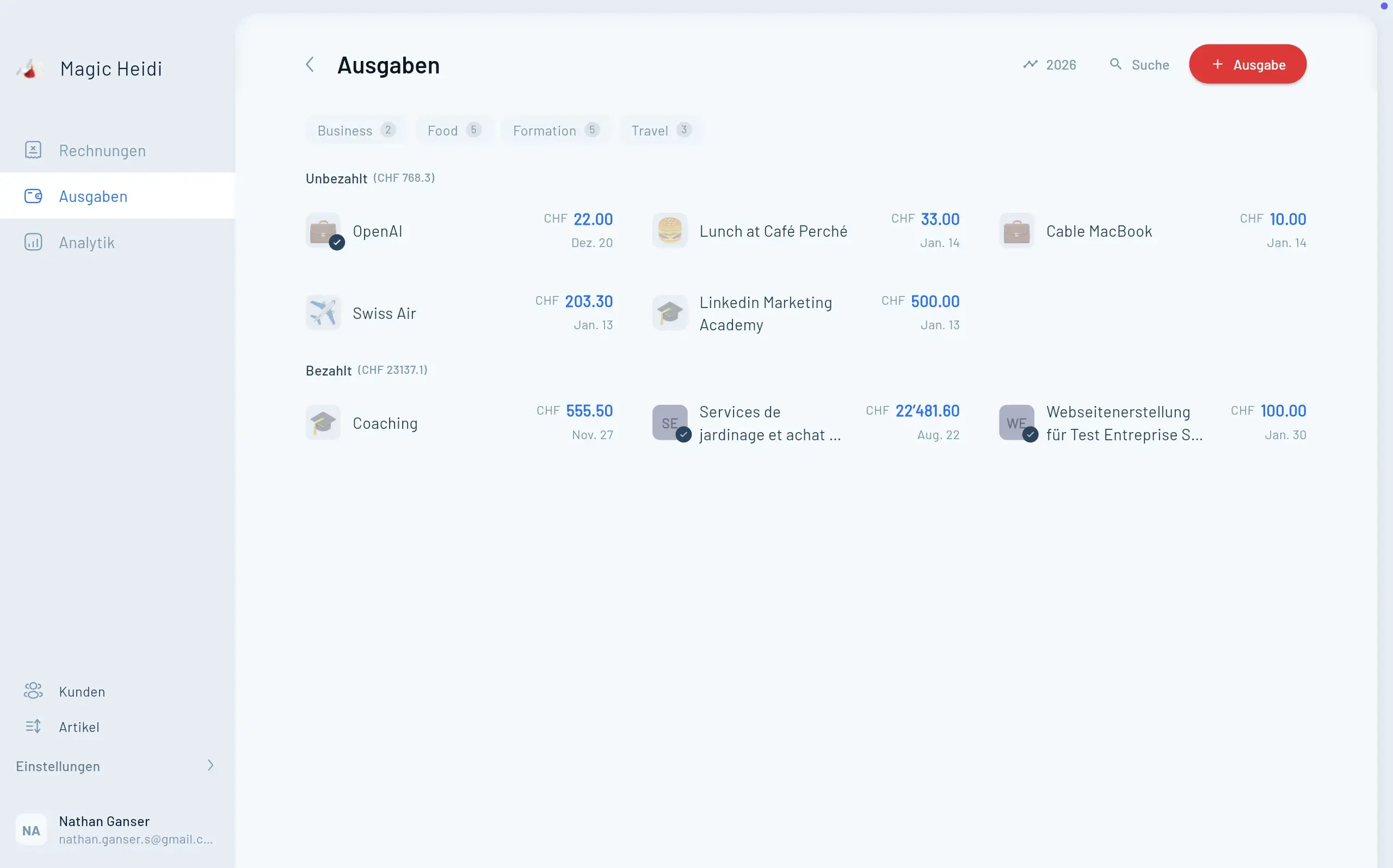
KI-Belegerfassung
Erfassen Sie jede absetzbare Ausgabe sofort mit intelligenter Belegscanning.
- Foto-zu-Daten-Extraktion
- Automatische Kategorisierung
- MWST-Erkennung
- Steuerfertige Berichte
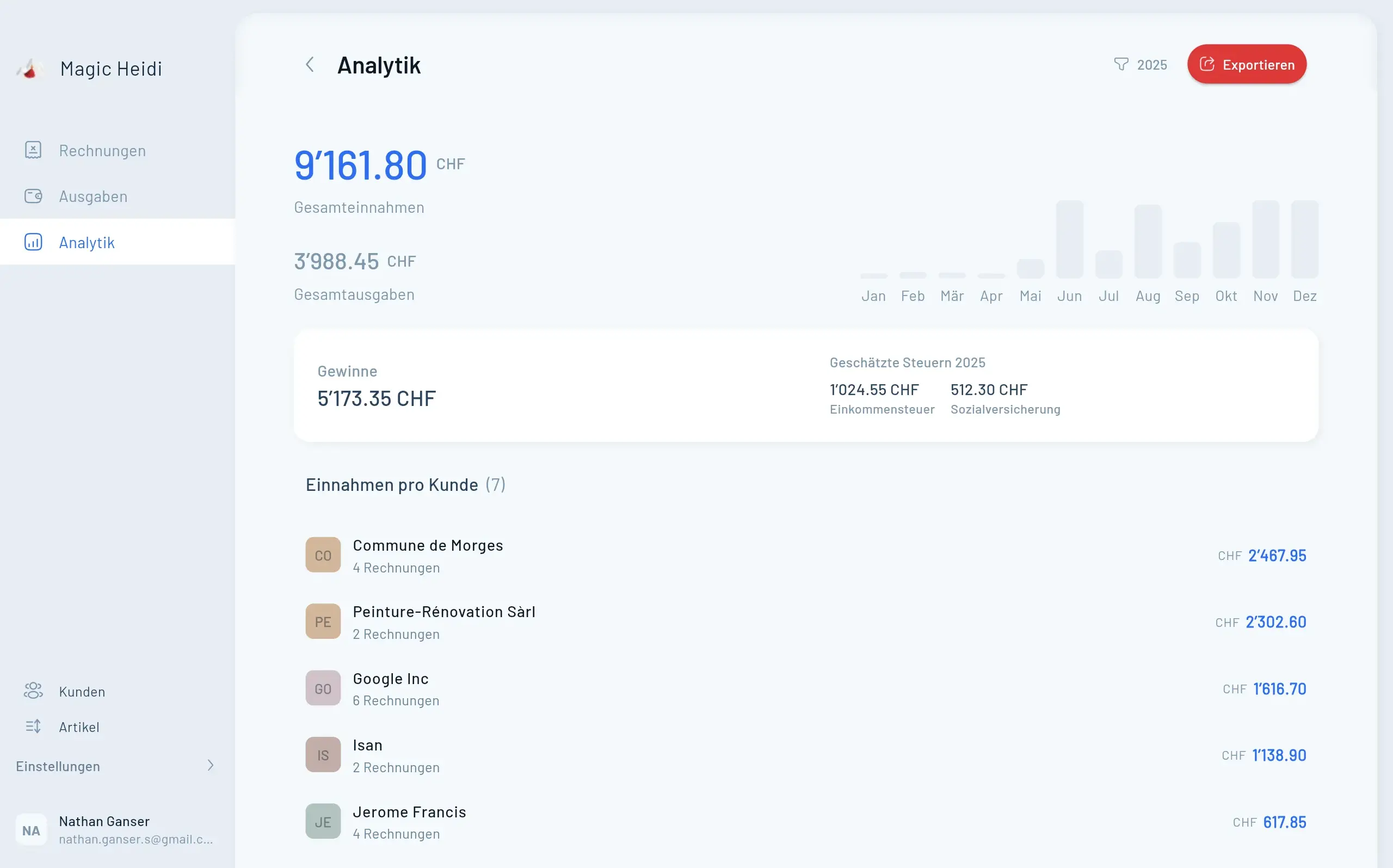
Finanzielle Einblicke
Verfolgen Sie die Kennzahlen, die für Ihre Freelancer-Rentabilität wichtig sind.
- Gewinnmargen-Tracking
- Umsatzanalysen
- Ausgabenaufschlüsselung
- Geräteübergreifende Synchronisation
Ihr 30-Tage Effizienz-Boost
Fünf Kennzahlen zu tracken klingt überwältigend. So starten Sie.
Woche 1: Ausgaben
Richten Sie Ausgabenerfassung ein. Jeder Kauf, jedes Abo. Nutzen Sie eine App, um Belege sofort zu erfassen.
Woche 2: Zeit
Beginnen Sie mit Zeiterfassung. Tracken Sie alle Stunden—verrechenbar und nicht verrechenbar. Noch nicht bewerten, nur messen.
Woche 3: Berechnen
Berechnen Sie Ihre aktuellen Kennzahlen. Gewinnmarge, Auslastung, effektiver Stundensatz. Schreiben Sie sie auf.
Woche 4: Verbessern
Identifizieren Sie eine Verbesserung. Ein Abo kündigen? Preise erhöhen? Einen Zeitfresser eliminieren?
Häufig gestellte Fragen
Welche Gewinnmarge sollten Schweizer Freelancer anstreben?
Streben Sie 25-40% Nettogewinnmarge nach allen Ausgaben inklusive Steuern und Sozialversicherungen an. Unter 20% deutet auf Preis- oder Effizienzprobleme hin.
Wie berechne ich die Auslastung bei schwankenden Stunden?
Verwenden Sie Monatsdurchschnitte. Erfassen Sie total gearbeitete und verrechnete Stunden, dann berechnen Sie den Prozentsatz. Streben Sie konstant 60-70% an.
Ist ROA wirklich relevant für Freelancer?
Nur wenn Sie bedeutende Aktiven haben (CHF 10'000+). Für die meisten Dienstleistungs-Freelancer sind Gewinnmarge und Auslastung wichtiger.
Wie oft sollte ich diese Kennzahlen prüfen?
Monatlich für Gewinnmarge, Auslastung und effektiven Satz. Quartalsweise für ROA und Projektmargen. Jährliche Tiefenanalyse vor der Steuersaison.
Was ist ein guter effektiver Stundensatz in der Schweiz?
Hängt von Ihrem Bereich ab. Generell ist CHF 80-150/Stunde effektiver Satz gesund für erfahrene Fachleute. Unter CHF 60 deutet auf zu niedrige Preise oder schlechte Auslastung hin.
Übernehmen Sie die Kontrolle über Ihre Freelance-Finanzen
Die Freelancer, die im wettbewerbsintensiven Schweizer Markt erfolgreich sind, tracken was zählt und optimieren unermüdlich. Starten Sie mit einer Kennzahl. Meistern Sie sie. Dann fügen Sie die nächste hinzu.