 Magic Heidi
 SumUp für Schweizer Freelancer: Die richtige Wahl?
Der komplette Guide zu mobiler Kartenzahlung in der Schweiz. Preisvergleich, Funktionen und Integration in Ihren Buchhaltungs-Workflow.

Als Schweizer Freelancer kennen Sie das: Ein Kunde möchte mit Karte zahlen, aber Sie haben nur Ihre Bankverbindung parat. Oder schlimmer – Sie verlieren einen Auftrag, weil Sie vor Ort keine Zahlung annehmen können.
Kartenzahlung ist eine dieser unspektakulären Verwaltungsaufgaben, die über Erfolg oder Misserfolg Ihres Freelance-Business entscheiden können. Traditionelle Schweizer Zahlungsterminals kommen mit saftigen Monatsgebühren und langfristigen Verträgen. Aber gibt es einen einfacheren Weg?
Hier kommt SumUp ins Spiel – die mobile Zahlungslösung, die bei kleinen Unternehmen und Freelancern in ganz Europa beliebt geworden ist. Aber funktioniert sie wirklich gut in der einzigartigen Schweizer Zahlungslandschaft? Und wie lässt sie sich in Ihren Buchhaltungs-Workflow integrieren?
Das klären wir jetzt.
Was SumUp Schweizer Freelancern bietet
SumUp bietet mobile Kartenleser und Zahlungsabwicklung für kleine Unternehmen. Keine Monatsgebühren. Keine langfristigen Verträge. Nur Transaktionsgebühren pro Zahlung.
Mobile Kartenleser
Verbindung mit Smartphone oder eigenständig nutzbarAlle gängigen Karten
Visa, Mastercard und andere grosse KartenmarkenSchnelle Auszahlung
Geld auf Ihrem Bankkonto innerhalb von 2-3 WerktagenEinfaches Dashboard
Online-Rechnungstools und AuswertungenSumUp Preise in der Schweiz (2026 Update)
Schluss mit der Verwirrung bei SumUp-Preisen. Online finden Sie verschiedene Zahlen – hier ist, was aktuell in der Schweiz gilt:
Standard Pay-As-You-Go Modell
Transaktionsgebühren:
- 1,5% für Debitkarten-Transaktionen
- 2,5% für Kreditkarten-Transaktionen (Visa/Mastercard)
- Keine monatliche Abogebühr
- Keine versteckten Kosten
Hardware-Kosten:
- SumUp Air (Basis-Kartenleser): CHF 99 einmaliger Kauf
- SumUp 3G (mit integrierter SIM und Drucker): Höhere Anschaffungskosten
- Keine Mietgebühren – das Gerät gehört Ihnen
Rechenbeispiel: Bei CHF 3'000 monatlichen Transaktionen (50/50 Debit/Kredit) zahlen Sie ca. CHF 60 an Gebühren.
SumUp One Abo-Modell
Bei höheren Umsätzen bietet SumUp ein Abo-Modell:
«Bezahlungen Plus» Preise:
- 0,99% für Schweizer Konsumentenkarten
- 1,99% für andere Karten
- CHF 29 monatliche Abogebühr
Break-even-Punkt: Lohnt sich ab ca. CHF 3'000 monatlich, hauptsächlich Kreditkarten-Transaktionen.
Fazit: Für die meisten Freelancer mit unter CHF 5'000 monatlichen Kartenzahlungen funktioniert das Standardmodell besser. Keine Fixkosten bedeutet: Sie zahlen nur, wenn Sie auch bezahlt werden.
Die grosse Schweizer Lücke: Kein TWINT oder PostFinance
Das müssen Sie vorab wissen: SumUp unterstützt weder TWINT noch PostFinance Card – zwei der beliebtesten Zahlungsmethoden der Schweiz.
Fehlendes TWINT
Keine Unterstützung für die beliebteste Schweizer Mobile-Payment-Methode
Kein PostFinance
Keine Akzeptanz von PostFinance-Karten, noch immer weit verbreitet
Internationale Karten OK
Visa und Mastercard funktionieren einwandfrei
Kennen Sie Ihre Kunden
Verstehen Sie Ihre Kundenbasis vor der Entscheidung
Was das für Sie bedeutet:
Wenn Ihre Kunden hauptsächlich Schweizer Konsumenten sind, die diese lokalen Zahlungsmethoden bevorzugen, ist SumUp möglicherweise nicht die beste Wahl. Internationale Karten akzeptieren Sie problemlos, aber Sie verpassen Kunden, die nur TWINT oder PostFinance nutzen.
Wann SumUp trotzdem funktioniert:
- Sie haben internationale oder Firmenkunden, die typischerweise Visa/Mastercard nutzen
- Sie bieten Dienstleistungen an, bei denen Kunden Kreditkarten erwarten
- Sie arbeiten an Events oder Märkten neben anderen Zahlungsmethoden
- Ihre Transaktionsvolumen sind zu klein für traditionelle Terminals mit Monatsgebühren
Der Schlüssel ist, Ihre Kundenbasis zu kennen, bevor Sie sich festlegen.
SumUp Hardware-Optionen erklärt
SumUp bietet verschiedene Kartenleser-Modelle. Hier ist, was für Schweizer Freelancer wichtig ist:
SumUp Air (Solo Lite)
Ideal für: Mobile Freelancer, die immer ihr Smartphone dabei haben
- Verbindet sich via Bluetooth mit Ihrem Handy oder Tablet
- Günstigste Option ab CHF 99
- Kompakt und tragbar
- Benötigt die Internetverbindung Ihres Handys
- Akku reicht für 500 Transaktionen
Perfekt wenn Sie: Berater sind und Kunden in deren Büros besuchen, Fotograf an Events, Yogalehrer beim Kassieren von Kursgebühren.
SumUp Solo
Ideal für: Profis, die ein eigenständiges Gerät wollen
- Funktioniert unabhängig – kein Handy nötig
- Integrierte 4G-SIM-Karte (unlimitierte Daten inklusive)
- Touchscreen-Oberfläche
- Belegdruck via Bluetooth-Drucker (separat erhältlich)
- Professionelleres Erscheinungsbild
Perfekt wenn Sie: Kunsthandwerker auf Wochenmärkten sind, mobiler Handwerker, oder die Abhängigkeit vom Smartphone minimieren wollen.
SumUp 3G mit Drucker
Ideal für: Unternehmen, die gedruckte Belege benötigen
- Integrierter Belegdrucker
- Eingebaute SIM-Karte für Konnektivität
- Schwerer und sperriger als andere Optionen
- Höhere Anschaffungskosten
Perfekt wenn Sie: Gedruckte Belege ausstellen müssen, auf Märkten verkaufen wo Kunden Papierbelege erwarten, höhere Volumina verarbeiten.
Unsere Empfehlung für die meisten Freelancer: Starten Sie mit dem Air. Mit CHF 99 ist das Risiko gering. Sie können jederzeit upgraden, wenn sich Ihre Bedürfnisse ändern.
Wie SumUp im Vergleich zu Alternativen abschneidet
Ein ehrlicher Blick auf SumUp im Schweizer Markt
| Funktion | SumUp | Worldline | Bank-Terminal |
|---|---|---|---|
| Monatsgebühr | CHF 0 | CHF 20-30 | CHF 30-50 |
| Transaktionsgebühr | 1,5-2,5% | 1,7% | 2,5-3,5% |
| TWINT-Support | ✗ Nein | ✓ Ja | ✓ Ja |
| PostFinance Card | ✗ Nein | ✓ Ja | ✓ Ja |
| Vertrag | ✓ Keine Bindung | 12-36 Monate | 12-36 Monate |
| Einrichtungszeit | Am selben Tag | 3-5 Tage | 1-2 Wochen |
| Hardware-Kosten | CHF 99 | CHF 150+ | CHF 200+ |
Das Fazit zu Alternativen:
SumUp vs. Worldline (früher SIX Payment Services)
- Wenn Sie TWINT brauchen oder über CHF 10'000 monatlich verarbeiten, ziehen Sie Worldline in Betracht
- Wenn Sie Flexibilität und niedrige Fixkosten wollen, gewinnt SumUp
SumUp vs. Traditionelle Bank-Terminals
- Für Freelancer mit variablem Einkommen oder saisonaler Arbeit ist SumUps vertragsloses Modell weit passender
- Traditionelle Terminals machen nur Sinn für etablierte Unternehmen mit konstant hohen Volumina
SumUp mit Magic Heidi nutzen: Der komplette Workflow
Die praktische Realität: SumUp und Magic Heidi haben keine direkte API-Integration. Aber Sie können beide absolut effektiv zusammen nutzen.
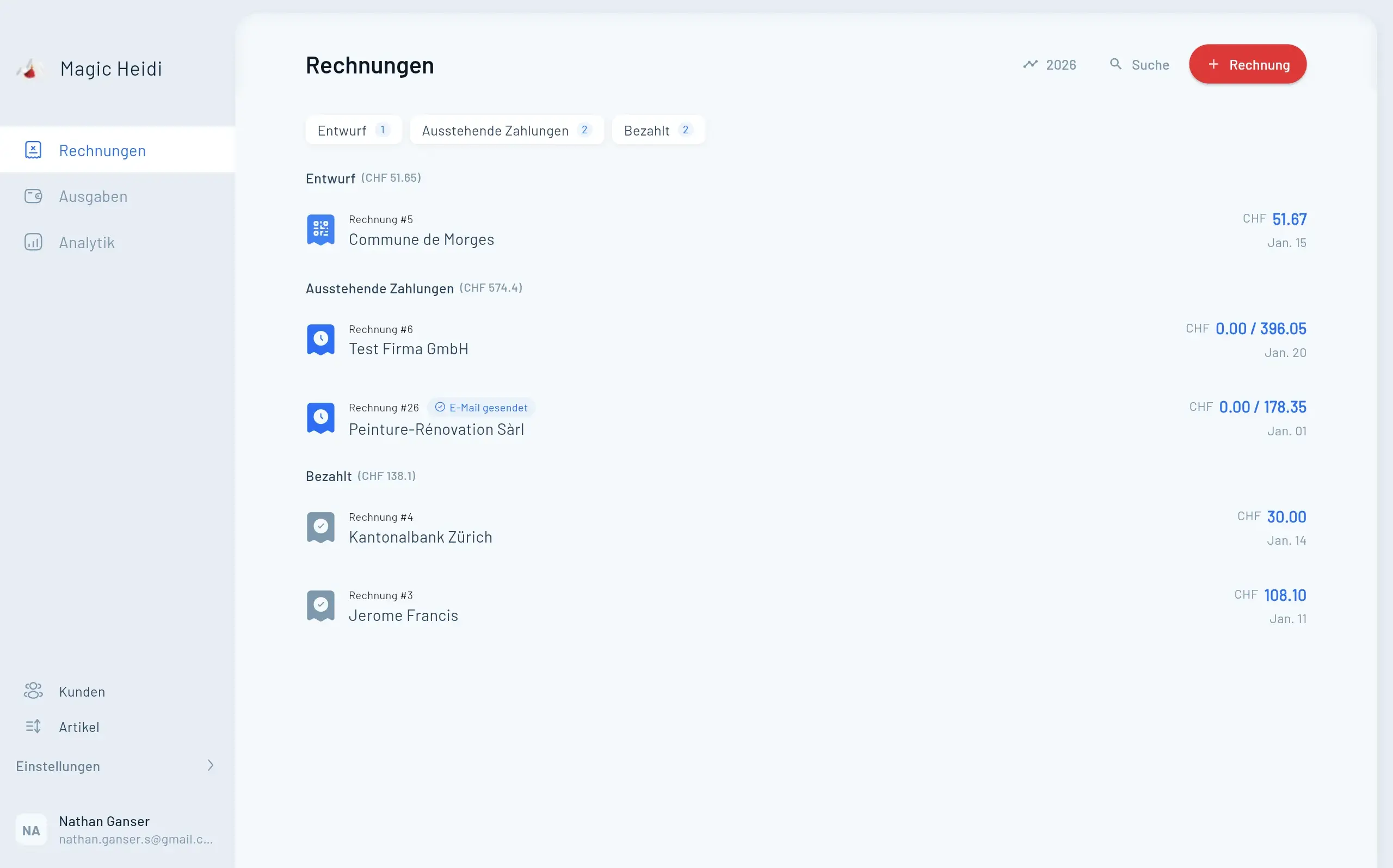
Kompletter Zahlung-zu-Buchhaltung Workflow
Ein einfacher Vier-Schritte-Prozess für organisierte und MwSt-konforme Finanzen
Schritt 1: Zahlung mit SumUp abwickeln
Akzeptieren Sie Kartenzahlungen vor Ort oder via Zahlungslink. Geld auf Ihrem Konto innerhalb von 2-3 Tagen.
- Betrag auf Ihrem SumUp-Terminal eingeben
- Kunde tippt oder steckt seine Karte
- Transaktion wird sofort abgeschlossen
- Geld erscheint auf Ihrem Bankkonto innerhalb von 2-3 Tagen
Schritt 2: In Magic Heidi erfassen
Zwei einfache Optionen: Manuelle Erfassung für gelegentliche Transaktionen oder automatischer Bankimport für regelmässige Nutzung.
- Kundenrechnung erstellen oder finden
- Rechnung als bezahlt markieren
- Oder KI-gestützten Kontoauszug-Import nutzen
- Eingehende Überweisungen automatisch zuordnen
Schritt 3: MwSt-Konformität
Magic Heidi übernimmt automatisch die Schweizer MwSt-Anforderungen, damit Sie mühelos konform bleiben.
- Berechnet automatisch Schweizer MwSt mit 7,7%
- Verfolgt Ihren Jahresumsatz zur CHF 100'000-Grenze
- Erstellt MwSt-konforme Rechnungen
- Bereitet Quartals-MwSt-Abrechnungen vor
Schritt 4: Finanzreporting
Volle finanzielle Transparenz. Magic Heidi ergänzt, was SumUp nicht bieten kann.
- Komplette Gewinn-/Verlustrechnung
- KI-Ausgabenverfolgung via Belegscan
- Multi-Währungs-Support
- Projektbasierte Buchhaltung
Der Workflow in der Praxis: Betrachten Sie SumUp als Ihr Zahlungseinzugs-Tool und Magic Heidi als Ihre Finanz-Kommandozentrale. SumUp bringt Ihnen schnell Geld; Magic Heidi hält Ihre Bücher sauber und konform.
Echte Freelancer-Szenarien
Schauen wir uns an, wann SumUp Sinn macht – und wann nicht.
Szenario 1: Mobiler Berater (IT, Business, Design)
Profil: Sie besuchen Firmenkunden in deren Büros, stellen CHF 2'000-5'000 pro Projekt in Rechnung, gelegentlich Sofortzahlungswünsche.
SumUp Eignung: ✓ Ausgezeichnet
- Air in der Laptoptasche mitnehmen
- Zahlung direkt nach Präsentationen akzeptieren
- Keine Monatsgebühren in ruhigen Monaten
- Professionelles Auftreten
Magic Heidi Mehrwert: Rechnung vor oder nach Meetings erstellen, Projektzeit und Ausgaben tracken, Vorbereitung auf MwSt-Registrierung bei Wachstum.
Szenario 2: Kunsthandwerker auf Wochenmärkten
Profil: Schmuckdesigner, Töpfer oder Kunsthandwerker an Wochenendmärkten. Durchschnittlicher Verkauf: CHF 50-200. Mix aus Bar- und Kartenzahlungen.
SumUp Eignung: ⚠ Gut mit Einschränkungen
- Solo-Terminal funktioniert eigenständig
- Akzeptiert Karten von Touristen und Einheimischen
- Problem: Viele Schweizer Kunden bevorzugen TWINT
- Erwägen Sie, einen TWINT-QR-Code neben SumUp bereitzuhalten
Magic Heidi Mehrwert: Markteinnahmen vs. Ausgaben tracken, Materialkosten verwalten, MwSt handhaben wenn Sie die Grenze überschreiten.
Szenario 3: Fitness-Instruktor oder Therapeut
Profil: Yogakurse, Personal Training, Massage-Therapie. Monatsabos plus Einzelsessions. Schweizer Privatkunden.
SumUp Eignung: ⚠ Eingeschränkt
- Viele Kunden bevorzugen TWINT oder Lastschrift
- Kreditkarten funktionieren für Touristen und Expats
- Als Backup-Zahlungsmethode in Betracht ziehen
Magic Heidi Mehrwert: Wiederkehrende Rechnungsautomatisierung, Session-Tracking, Ausgabenverwaltung für Equipment und Raummiete.
Szenario 4: B2B-Dienstleister (Elektriker, Sanitär, Handwerker)
Profil: Vor-Ort-Services für Hausbesitzer und Firmen. Rechnungen CHF 500-3'000 pro Auftrag. Ältere Kundendemografie.
SumUp Eignung: ⚡ Moderat
- Super für Hausbesitzer, die mit Kreditkarte zahlen
- Solo mit Drucker liefert professionelle Belege
- Lücke: PostFinance Card noch immer beliebt bei älteren Schweizer Kunden
Magic Heidi Mehrwert: Offerte-zu-Rechnung-Workflow, Ausgabenverfolgung für Material, projektbasierte Buchhaltung, MwSt-konforme Rechnungen.
Das Muster: SumUp funktioniert am besten für Freelancer mit internationalen Kunden, mobiler Arbeit oder Kreditkarten-affinen Kunden. Weniger ideal, wenn Ihre Kundenbasis stark TWINT oder PostFinance nutzt.
Schweizer MwSt-Anforderungen für Freelancer (2026)
Wenn Sie als Schweizer Freelancer Zahlungen verarbeiten, müssen Sie die MwSt-Pflichten kennen.
CHF 100'000 Grenze
MwSt-Registrierung obligatorisch bei Überschreitung des Jahresumsatzes
7,7% Normalsatz
Gilt für die meisten Dienstleistungen und Produkte
Quartalsabrechnungen
MwSt-Abrechnungen alle drei Monate einreichen
30-Tage-Frist
Steuerbehörden innerhalb von 30 Tagen nach Grenzüberschreitung benachrichtigen
Die CHF 100'000 Grenze
Hauptregel: Sie müssen sich für die MwSt registrieren, wenn Ihr Jahresumsatz CHF 100'000 übersteigt.
Wichtige Details:
- Gilt für den Gesamtumsatz, nicht den Gewinn
- Beinhaltet alle Geschäftseinnahmen aus Schweizer Quellen
- Sie haben 30 Tage Zeit, die Eidgenössische Steuerverwaltung nach Grenzüberschreitung zu informieren
- Nicht-Registrierung kann zu rückwirkenden Steuerforderungen und Bussen führen
MwSt-Sätze in der Schweiz
Normalsatz: 7,7% (die meisten Dienstleistungen und Produkte)
Reduzierte Sätze:
- 2,5% für Grundbedarfsgüter (Lebensmittel, Bücher, Medikamente)
- 3,7% für Beherbergungsleistungen
Als Freelancer: Die meisten Beratungs-, Kreativ- und professionellen Dienstleistungen fallen unter den Normalsatz von 7,7%.
MwSt-Konformitätsanforderungen
Nach der Registrierung müssen Sie:
- MwSt auf alle Rechnungen aufschlagen (mit erforderlichen Angaben: MwSt-Nummer, Sätze, Beträge)
- Quartalsabrechnungen einreichen bei der Eidgenössischen Steuerverwaltung
- Erhobene MwSt abführen abzüglich abzugsfähiger Vorsteuer
- Detaillierte Aufzeichnungen führen aller Einnahmen und Ausgaben
Genau hier wird Magic Heidi unverzichtbar:
- Fügt automatisch MwSt zu Rechnungen mit korrekten Sätzen hinzu
- Verfolgt Ihren Umsatz zur CHF 100'000-Grenze
- Warnt Sie, wenn Sie sich der Registrierungspflicht nähern
- Erstellt MwSt-Abrechnungen im Schweizer Format
- Unterstützt sowohl effektive Methode als auch Saldosteuersatz
- Mehrsprachige Oberfläche (Deutsch, Französisch, Italienisch, Englisch)
Mit SumUp allein: Sie haben Transaktionsaufzeichnungen, müssen aber alles andere manuell tracken.
Mit Magic Heidi: MwSt-Konformität wird fast automatisch.
Loslegen: Ihre Implementierungs-Checkliste
Bereit, SumUp mit Magic Heidi auszuprobieren? Hier ist Ihr Schritt-für-Schritt-Plan:
Woche 1: Setup-Phase
Hardware bestellen und Konten konfigurieren
- SumUp-Kartenleser-Modell wählen (Air für die meisten Freelancer)
- SumUp-Konto erstellen und Geschäftsdaten registrieren
- Für Magic Heidi Gratis-Test anmelden
- Bankkonto mit beiden Plattformen verbinden
Woche 2: Integration und Test
Ihren kompletten Workflow End-to-End testen
- Eine Rechnung in Magic Heidi erstellen
- Eine kleine Testzahlung via SumUp verarbeiten
- Kontoauszug in Magic Heidi importieren
- Transaktion mit Ihrer Rechnung abgleichen
Woche 3: Launch
Beide Tools in Ihrem täglichen Workflow nutzen
- Kundenzahlungen mit SumUp verarbeiten
- Rechnungen über Magic Heidi erstellen
- Ausgaben sofort mit KI scannen
- Finanz-Dashboard wöchentlich prüfen
Laufend: Monatliche Pflege
Finanzen mit minimalem Aufwand organisiert halten
- Alle Transaktionen am Monatsende prüfen
- SumUp-Zahlungen mit Kontoauszügen abgleichen
- MwSt-Berechnungen und Umsatz kontrollieren
- Für quartalsweise MwSt-Abrechnung vorbereiten falls zutreffend
Der Schlüssel zum Erfolg: Starten Sie einfach. Verkomplizieren Sie Ihr Setup nicht. Sowohl SumUp als auch Magic Heidi sind intuitiv gestaltet – widerstehen Sie dem Drang, zu viel anzupassen, bevor Sie Ihren tatsächlichen Workflow verstehen.
Kosten-Nutzen-Analyse: Lohnt sich SumUp?
Rechnen wir das für einen typischen Schweizer Freelancer durch.
Szenario: Freiberuflicher Berater
Monatliche Kartenzahlungsakzeptanz:
- CHF 4'000 an Kartentransaktionen
- 60% Debitkarten, 40% Kreditkarten
SumUp-Kosten:
- Debit: CHF 2'400 × 1,5% = CHF 36
- Kredit: CHF 1'600 × 2,5% = CHF 40
- Monatliche Gesamtgebühr: CHF 76
Alternative: Traditionelles Schweizer Bank-Terminal
- Monatliche Miete: CHF 35
- Debitkarten: CHF 2'400 × 2,0% = CHF 48
- Kreditkarten: CHF 1'600 × 3,0% = CHF 48
- Monatliche Gesamtkosten: CHF 131
Jährliche Ersparnis mit SumUp: CHF 660
Aber bedenken Sie: Das berücksichtigt nicht TWINT-Transaktionen, die Sie möglicherweise verlieren, weil Sie sie nicht akzeptieren können.
Wann SumUp teuer wird
Break-even-Punkt: Wenn Sie über CHF 8'000-10'000 monatlich verarbeiten, werden traditionelle Acquirer oft kosteneffizienter, besonders wenn Sie TWINT-Support brauchen.
Der Flexibilitätswert: Selbst wenn SumUp etwas mehr kostet, ist die vertragslose Flexibilität etwas wert. In ruhigen Monaten zahlen Sie nur Transaktionsgebühren. Traditionelle Terminals belasten Sie unabhängig davon.
Häufige Fragen beantwortet
Kann ich SumUp für Online-Zahlungen nutzen?
Ja. SumUp bietet Zahlungslinks und einen einfachen Online-Shop-Builder. Erstellen Sie einen Zahlungslink, senden Sie ihn an Ihren Kunden, und dieser kann via Browser bezahlen. Die Transaktion erscheint in Ihrem SumUp-Dashboard genau wie Vor-Ort-Zahlungen.
Was passiert, wenn ein Kunde eine Zahlung anficht?
SumUp handhabt Chargebacks gemäss Kartennetzwerk-Regeln. Wenn ein Kunde eine Abbuchung anficht, informiert SumUp Sie und kann den strittigen Betrag bis zur Klärung einfrieren. Bewahren Sie gute Aufzeichnungen der erbrachten Leistungen auf – Magic Heidis Rechnungs- und Projektnotizen helfen hier.
Kann ich American Express oder andere Karten akzeptieren?
SumUp akzeptiert hauptsächlich Visa und Mastercard. American Express-Akzeptanz variiert je nach Region und bringt typischerweise höhere Gebühren mit sich. Prüfen Sie Ihr SumUp-Dashboard für verfügbare Kartentypen in der Schweiz.
Wie schnell bekomme ich mein Geld?
Standard-Auszahlung ist 2-3 Werktage auf Ihr Schweizer Bankkonto. Das ist tatsächlich schneller als viele rechnungsbasierte Workflows, bei denen Kunden 30+ Tage brauchen um zu zahlen.
Was wenn ich die MwSt-Grenze überschreite?
Magic Heidi verfolgt Ihren Jahresumsatz und warnt Sie, wenn Sie sich CHF 100'000 nähern. Nach der MwSt-Registrierung hinterlegen Sie Ihre MwSt-Nummer in Magic Heidi, aktivieren MwSt auf allen zukünftigen Rechnungen und nutzen Magic Heidis MwSt-Reporting-Tools für Quartalsabrechnungen. Ihre SumUp-Transaktionen werden in Ihren MwSt-Abrechnungen berücksichtigt.
Kann ich SumUp in allen Schweizer Sprachregionen nutzen?
Absolut. SumUp funktioniert identisch in der Deutschschweiz, Romandie und im Tessin. Magic Heidi bietet volle Mehrsprachigkeit, sodass Ihre Rechnungen der Sprachpräferenz Ihrer Kunden entsprechen können.
Wie ist das mit Währung für internationale Kunden?
SumUp akzeptiert Zahlungen in wichtigen Währungen mit automatischer Umrechnung. Allerdings fallen Umrechnungsgebühren an (typischerweise 2-3% über der Basis-Transaktionsgebühr). Bei häufigen internationalen Transaktionen prüfen Sie, ob das kosteneffizient ist.
Das Fazit: Wer sollte SumUp nutzen?
Die richtige Entscheidung für Ihr Freelance-Business treffen
✓ Perfekt für
Unter CHF 5'000 monatlich, mobile Profis, saisonale Arbeit, keine Verträge
✓ Gut für
Internationale Kunden, Firmenkunden, Kreditkartennutzer, tiefe Fixkosten
✗ Alternativen prüfen
TWINT-bevorzugende Kunden, hohe Volumina (CHF 10'000+), Sofortauszahlung nötig
💡 Magic Heidi Vorteil
Professionelle Buchhaltung unabhängig vom Zahlungsanbieter. Für Schweizer Freelancer gebaut.
Bereit, Ihre Freelance-Finanzen zu vereinfachen?
Starten Sie mit Magic Heidis Gratis-Test. Richten Sie Ihr komplettes Rechnungs- und Buchhaltungssystem in Minuten ein. Keine Kreditkarte nötig, keine Verpflichtung. Sobald Ihre Rechnungsstellung läuft, evaluieren Sie, ob SumUp zu Ihren Zahlungsakzeptanz-Bedürfnissen passt.

Das moderne Freelance-Business läuft mit smarten Tools, nicht komplizierten Verträgen. Sowohl SumUp als auch Magic Heidi geben Ihnen diese Flexibilität – jetzt können Sie wählen, was für Ihre spezifische Situation am besten funktioniert.
Dieser Artikel bietet allgemeine Informationen über Zahlungsabwicklung und Buchhaltung für Schweizer Freelancer. Steuervorschriften ändern sich regelmässig – konsultieren Sie einen qualifizierten Schweizer Steuerberater für Ihre spezifische Situation.