 Magic Heidi
 Schweizer MwSt für Selbstständige: Der komplette Ratgeber 2025
Die CHF 100'000-Schwelle überschritten? Sie haben 30 Tage Zeit, sich bei der ESTV anzumelden, bevor Strafen drohen. Die Schweizer MwSt-Regeln haben sich im Januar 2025 stark geändert—dieser Ratgeber erklärt alles Wichtige.

Was sich im Januar 2025 geändert hat
Papierabrechnungen gibt es nicht mehr. Das ePortal ist jetzt Pflicht. Und neue Plattformbesteuerungsregeln betreffen alle, die über Marktplätze verkaufen. Ignorieren Sie diese Änderungen auf eigene Gefahr.
Pflicht-ePortal
Papier-MwSt-Formulare existieren nicht mehrJährliche Abrechnung
Neue Option für Unternehmen unter CHF 5 Mio.Plattformbesteuerung
Marktplätze können Ihre MwSt übernehmenMwSt-Sätze in der Schweiz (2025-2026)
Die Schweiz verwendet drei MwSt-Sätze. Das verrechnen Sie Ihren Kunden:
| Satz | Prozentsatz | Was er abdeckt |
|---|---|---|
| Normal | 8.1% | Die meisten Waren und Dienstleistungen (Autos, Uhren, Alkohol, Beratung) |
| Reduziert | 2.6% | Lebensmittel, Medikamente, Bücher, Zeitungen |
| Sonder | 3.8% | Hotelübernachtungen (inkl. Frühstück) |
Wichtig: Der Bundesrat hat eine MwSt-Erhöhung um 0.7 Prozentpunkte zur Finanzierung der 13. AHV-Rente vorgeschlagen. Bei Genehmigung steigen die Sätze auf 8.8% (Normal), 2.8% (Reduziert) und 4.2% (Sonder). Ein Umsetzungsdatum steht noch nicht fest.
Müssen Sie sich für die MwSt registrieren?
Die Hauptschwelle ist klar: CHF 100'000 Jahresumsatz löst die Registrierungspflicht aus. Aber mehrere Ausnahmen überraschen Selbstständige immer wieder.
CHF 100'000 steuerbarer Jahresumsatz
CHF 10'000+ aus dem Ausland löst MwSt aus
CHF 250'000 für Sport-/Kulturvereine
Anmelden, sobald Schwelle absehbar ist
Die 30-Tage-Frist
Sobald Sie absehen können, dass Sie die Schwelle überschreiten, haben Sie 30 Tage Zeit zur Anmeldung bei der ESTV. Nicht 30 Tage nach der Überschreitung—30 Tage, nachdem es absehbar wird.
Verpassen Sie diese Frist, drohen Nachsteuern plus Verzugszinsen auf alle Umsätze, die hätten versteuert werden müssen.
Mitten im Jahr gestartet?
Rechnen Sie anteilig. Wenn Sie im Juli starten und bis Dezember CHF 60'000 erwarten, sind Sie auf Kurs für CHF 120'000 jährlich. Das heisst: jetzt anmelden.
Die Auslandseinkäufe-Regel
Kaufen Sie jährlich mehr als CHF 10'000 an Waren oder Dienstleistungen aus dem Ausland? Dann sind Sie MwSt-pflichtig—auch wenn Ihr Inlandsumsatz unter der Schwelle bleibt.
Das betrifft Berater mit ausländischen Software-Abos, Designer, die Stock-Material kaufen, und alle mit bedeutenden internationalen Lieferanten.
Freiwillige Registrierung: Wann sie Sinn macht
Unter CHF 100'000? Sie können sich trotzdem freiwillig registrieren. Hier erfahren Sie, warum manche Selbstständige das tun—und warum andere nicht.

Ihre Optionen abwägen
Freiwillige MwSt-Registrierung
Eine Registrierung lohnt sich typischerweise für B2B-Dienstleister mit hohen Geschäftsausgaben. Für Freelancer mit Privatkunden bringt sie selten Vorteile.
Vorteile
Benefits, die eine freiwillige Registrierung für bestimmte Geschäftstypen attraktiv machen.
- Vorsteuerabzug auf alle Geschäftsausgaben
- Professionelle Glaubwürdigkeit bei B2B-Kunden
- Zukunftssicherheit bei Annäherung an die Schwelle
- 8.1% Rückerstattung auf Gerätekäufe
Nachteile
Zu bedenkende Nachteile, bevor Sie sich freiwillig ins MwSt-System begeben.
- Quartals- oder halbjährliche Abrechnungspflicht
- 8.1% Preiserhöhung vs. nicht-registrierte Konkurrenz
- Mindestens 3 Jahre Bindungsdauer
- Komplexe Rechnungs- und Aufzeichnungspflichten
Ideal für
Freiwillige Registrierung funktioniert am besten in bestimmten Situationen.
- B2B-Dienstleister
- Hoher Anteil Geschäftsausgaben
- Ausrüstungsintensive Betriebe
- Annäherung an CHF 100K-Schwelle
Effektiv vs. Saldosteuersatz: Klug wählen
Die Schweiz bietet zwei Methoden zur Berechnung Ihrer MwSt-Schuld. Sie sind drei Jahre gebunden.
| Faktor | Effektive Methode | Saldosteuersatz |
|---|---|---|
| Komplexität | Hoch | Tief |
| Abrechnungsfrequenz | Quartalsweise | Halbjährlich |
| Vorsteuer-Tracking | ✓ Erforderlich | ✗ Nicht erforderlich |
| Am besten wenn Ausgaben | Hoch (>30% des Umsatzes) | Tief |
| Berechnung | MwSt eingenommen − MwSt bezahlt | Pauschalbranchensatz × Umsatz |
Beispiel Effektive Methode
Sie stellen CHF 10'810 in Rechnung (CHF 10'000 + 8.1% MwSt) und bezahlen CHF 2'162 MwSt auf Geschäftsausgaben.
Sie schulden: CHF 810 − CHF 162 = CHF 648 an die ESTV
Beispiel Saldosteuersatz
Ein Web-Berater nutzt den Saldosteuersatz von 6.1%. Bei CHF 100'000 Umsatz:
Er zahlt einfach: CHF 100'000 × 6.1% = CHF 6'100 MwSt. Fertig.
Voraussetzungen für Saldosteuersatz:
- Jährlicher steuerbarer Umsatz unter CHF 5'024'000
- Jährliche MwSt-Schuld unter CHF 108'000
Neu 2025: Die ESTV hat die Saldosteuersätze nach Branche per 1. Januar 2025 aktualisiert. Prüfen Sie Ihren spezifischen Satz im ESTV-Portal vor der Abrechnung.
So reichen Sie Ihre MwSt-Abrechnung ein
Mit dem jetzt obligatorischen ePortal hier der komplette Schritt-für-Schritt-Prozess zur elektronischen Einreichung Ihrer MwSt-Abrechnungen.
Der 4-Schritte-Abrechnungsprozess
Folgen Sie diesem Prozess für eine reibungslose, konforme MwSt-Abrechnung
Schritt 1: Unterlagen sammeln
Verkaufsrechnungen, Einkaufsrechnungen mit MwSt, Kontoauszüge
Schritt 2: ePortal aufrufen
Login auf estv.admin.ch mit Geschäftszugangsdaten
Schritt 3: Zahlen eingeben
Umsatz nach Satz, Vorsteuer, Spezialfälle
Schritt 4: Einreichen & Zahlen
60 Tage nach Periodenende—nicht verpassen
Abrechnungsfristen (Quartalsabrechner)
| Periode | Umfasst | Fälligkeitsdatum |
|---|---|---|
| Q1 | Januar - März | 31. Mai |
| Q2 | April - Juni | 31. August |
| Q3 | Juli - September | 30. November |
| Q4 | Oktober - Dezember | 28. Februar |
Ab Mai 2026: Der vereinfachte Dienst "MwSt-Abrechnung easy" wird eingestellt. Nur noch "MwSt-Abrechnung pro" bleibt verfügbar.
7 MwSt-Fehler, die Probleme auslösen
Diese häufigen Fehler führen zu Prüfungen, Strafen und rückwirkenden Steuernachforderungen. Vermeiden Sie sie unbedingt.
MwSt ohne Registrierung
MwSt fakturieren ohne Anmeldung = BetrugAnmeldefrist verpasst
Rückwirkende Steuern plus VerzugszinsenBrutto vs. Netto verwechselt
Schwelle ist Umsatz ohne MwStAlle 7 kritischen Fehler
1. MwSt verrechnen ohne Registrierung
Sie stellen Kunden Rechnungen mit MwSt aus, sind aber nicht registriert. Die ESTV betrachtet das als Betrug. Erst registrieren, dann verrechnen.
2. Nicht registrieren, obwohl Pflicht besteht
Das gegenteilige Problem. Sie überschreiten CHF 100'000, fakturieren aber weiter ohne MwSt. Die ESTV wird es irgendwann bemerken—und rückwirkend mit Zinsen nachfordern.
3. Brutto- und Nettoumsatz verwechseln
Die CHF 100'000-Schwelle bezieht sich auf steuerbaren Umsatz ohne MwSt. Manche Selbstständige rechnen fälschlicherweise die MwSt in ihre Schwellenberechnung ein.
4. Die Auslandseinkäufe-Regel übersehen
Die CHF 10'000-Schwelle für ausländische Leistungen überrascht viele. Erfassen Sie Ihre internationalen Abos, Zahlungen an ausländische Auftragnehmer und importierte Waren.
5. Falschen Satz anwenden
- Hotelübernachtungen: 3.8%
- Lebensmittel: 2.6%
- Die meisten Dienstleistungen: 8.1%
Der falsche Satz bedeutet entweder Überbelastung der Kunden oder Unterzahlung an die ESTV.
6. Mangelhafte Dokumentation
Keine Rechnung? Kein Abzug. Die ESTV verlangt ordentliche Dokumentation für jeden Vorsteuerabzug. "Ich erinnere mich, dass ich es gekauft habe" zählt nicht.
7. Verspätete Abrechnungen
Die 60-Tage-Frist ist nicht verhandelbar. Verspätete Einreichung löst automatisch Verzugszinsen und mögliche Strafen bei Wiederholungstätern aus.
Kluge MwSt-Strategien für Selbstständige
Legale Wege zur Optimierung Ihrer MwSt-Position
Transportkosten bündeln
Ist das Produkt 70%+ der Rechnung, gilt dessen MwSt-Satz auch für den Versand
Landwirtschafts-MwSt geltend machen
2.6% fiktive Vorsteuer auf Einkäufe von nicht registrierten Bauern
Registrierungszeitpunkt planen
Rechnungstiming bei Annäherung an die Schwelle bedenken
Saldosteuersätze prüfen
Branchensätze haben sich Januar 2025 geändert—jährlich prüfen
Häufig gestellte Fragen
Was ist die MwSt-Registrierungsschwelle in der Schweiz?
CHF 100'000 steuerbarer Jahresumsatz. Überschreiten Sie diesen Betrag, müssen Sie sich innerhalb von 30 Tagen anmelden, sobald dies absehbar ist.
Kann ich 2025 MwSt-Abrechnungen auf Papier einreichen?
Nein. Seit 1. Januar 2025 müssen alle MwSt-Abrechnungen elektronisch über das ESTV-ePortal eingereicht werden.
Was ist der Unterschied zwischen effektiver Methode und Saldosteuersatz?
Die effektive Methode berechnet tatsächlich eingenommene MwSt minus bezahlte MwSt auf Ausgaben. Der Saldosteuersatz wendet einen pauschalen Branchensatz auf den Gesamtumsatz an, ohne einzelne Vorsteuern zu erfassen.
Wie oft muss ich MwSt-Abrechnungen einreichen?
Quartalsweise bei der effektiven Methode, halbjährlich beim Saldosteuersatz. Neu 2025: Unternehmen unter CHF 5'005'000 Umsatz können eine jährliche Abrechnung beantragen.
Muss ich mich registrieren, wenn ich nur an ausländische Kunden verkaufe?
Exportverkäufe sind von der Steuer befreit, können aber trotzdem zur CHF 100'000-Schwelle zählen. Sie können jedoch die Vorsteuer auf Ihre Schweizer Geschäftsausgaben zurückfordern, wenn Sie registriert sind.
Was passiert, wenn ich die Anmeldefrist verpasse?
Die ESTV wird Nachsteuern auf alle Umsätze erheben, die hätten versteuert werden müssen, plus Verzugszinsen. Bei vorsätzlicher Nichtbeachtung können Strafen anfallen.
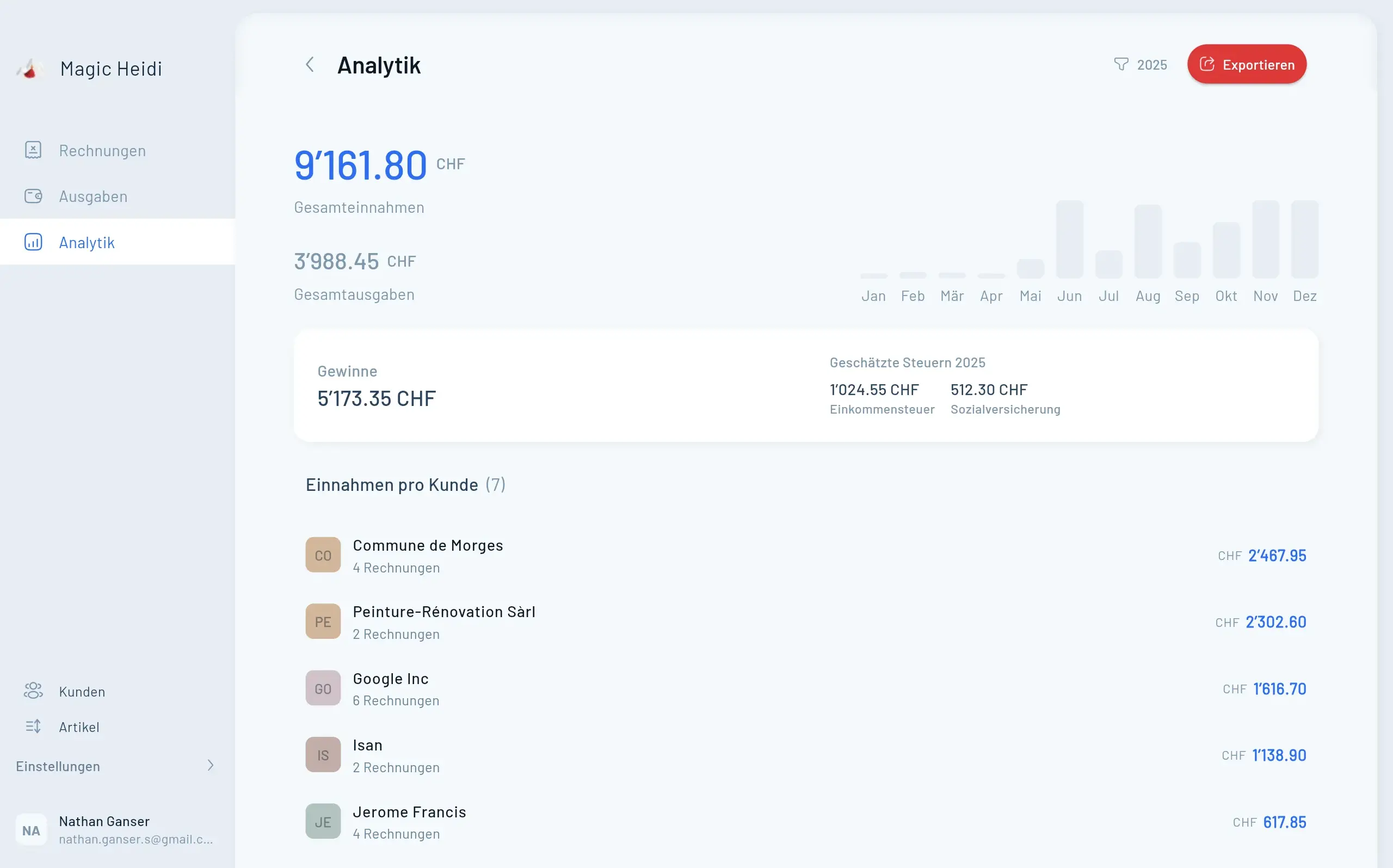
Übernehmen Sie die Kontrolle über Ihre MwSt
MwSt-Compliance muss nicht Ihre Wochenenden auffressen. Das richtige System erfasst Ausgaben automatisch, warnt bei Schwellennäherung und erstellt abrechnungsfertige Reports.
MwSt-Management, das sich selbst erledigt
Magic Heidis MwSt-Management übernimmt die Komplexität, damit Sie sich auf Ihre eigentliche Arbeit konzentrieren können. Jede Rechnung und Ausgabe fliesst direkt in Ihre MwSt-Berechnungen—ohne Tabellenkalkulations-Akrobatik.