 Magic Heidi
 Schweizer MWST-Methoden: Die richtige Wahl für Ihr Unternehmen
Die falsche MWST-Methode kostet Schweizer Unternehmen jährlich Tausende Franken. Nicht an Steuern—sondern an verschwendeten Arbeitsstunden. Dieser Ratgeber erklärt alle MWST-Abrechnungsmethoden in der Schweiz für 2025.

Januar 2025 brachte grosse Änderungen.
Sind Sie auf dem neuesten Stand?
Die MWSTG-Revision vom Januar 2025 führte neue jährliche Abrechnungsoptionen ein, aktualisierte Schwellenwerte und änderte die Regeln für Saldosteuersätze. Wenn Sie noch mit Informationen von 2023 arbeiten, treffen Sie Entscheidungen auf veralteter Basis.
Jährliche Abrechnung
Neue Option für Unternehmen unter CHF 5 Mio.Einfacherer Wechsel
Methodenwechsel zu jedem KalenderjahrObligatorische E-Einreichung
Papierformulare nicht mehr akzeptiertSchweizer MWST-Sätze 2025-2026
Bevor wir zu den Methoden kommen, hier die aktuellen Sätze, die gegenüber 2024 unverändert blieben.
Normalsatz
8,1% — Die meisten Waren und Dienstleistungen
Reduzierter Satz
2,6% — Lebensmittel, Bücher, Zeitungen, Medikamente
Sondersatz
3,8% — Beherbergungsleistungen
Registrierungsschwelle
CHF 100'000 Jahresumsatz
Die zwei MWST-Berechnungsmethoden
Jedes mehrwertsteuerpflichtige Unternehmen in der Schweiz nutzt eines von zwei Systemen zur Berechnung der Steuerschuld. Diese bilden das Fundament—alles andere baut darauf auf.
Effektive Methode: Vorsteuerabzug
Dies ist der Standardansatz. Sie erfassen die MWST auf allem: MWST auf jeden Verkauf erheben (Umsatzsteuer), MWST auf jeden Geschäftseinkauf verfolgen (Vorsteuer) und die Differenz bezahlen.
Beispiel Effektive Methode
Sie stellen CHF 108'100 inkl. 8,1% MWST in Rechnung. Ihre Umsatzsteuer beträgt CHF 8'100.
Sie haben CHF 32'430 für Geschäftsmaterial inkl. MWST ausgegeben. Ihre Vorsteuer beträgt CHF 2'430.
Geschuldete MWST: CHF 8'100 - CHF 2'430 = CHF 5'670
Geeignet für:
- Unternehmen mit erheblichen abzugsfähigen Ausgaben
- Firmen mit komplexen Lieferketten
- Exporteure, die vom Vorsteuerabzug profitieren
- Alle Unternehmen über den SSS-Schwellenwerten
Saldosteuersatz-Methode: SSS vereinfacht
Dieser vereinfachte Ansatz verwendet einen Pauschalsatz basierend auf Ihrer Branche. Kein Verfolgen der Vorsteuer auf Einkäufe—wenden Sie Ihren branchenspezifischen Satz auf den Gesamtumsatz an und zahlen Sie diesen Betrag.

SSS-Beispiel
Ein Architekt mit SSS-Satz von 6,2% erzielt CHF 400'000 (inkl. MWST) pro Semester.
Geschuldete MWST: CHF 400'000 × 6,2% = CHF 24'800
Das war's. Keine Notwendigkeit, die MWST auf Büromaterial, Software oder Ausrüstung zu verfolgen.
Voraussetzungen (2025)
- Jährlicher steuerbarer Umsatz: Maximal CHF 5,024 Millionen
- Jährliche MWST-Schuld: Maximal CHF 108'000
- Schweizer Unternehmen (ausländische Firmen verloren den SSS-Zugang 2025)
Beispiele SSS-Sätze nach Branche
| Branche | Satz |
|---|---|
| Lebensmittel-Lieferdienste | 0,1% |
| Reisebüros | 2,1% |
| Sportartikel-Vermietung | 3,0% |
| Marketing-Dienstleistungen | 5,9% |
| Architekten | 6,2% |
| Übersetzungsbüros | 6,8% |
Was sich 2025 änderte:
Wichtige MWSTG-Updates
Die Revision vom Januar 2025 brachte wesentliche Änderungen, die Ihre MWST-Verwaltung betreffen.
Neue jährliche Abrechnungsoption
Unternehmen unter CHF 5,005 Millionen Umsatz können jetzt jährliche Abrechnungen beantragen. Eine Einreichung pro Jahr statt vier oder zwei.
- Weniger Papierkram
- Weniger Fristen
- Reduzierter Verwaltungsaufwand
- Antrag über ESTV-E-Portal
Mehrere SSS-Sätze erlaubt
Unternehmen müssen nun den passenden SSS-Satz auf jede Tätigkeit anwenden, die mehr als 10% des gesamten steuerbaren Umsatzes ausmacht.
- Keine Obergrenze für Anzahl Sätze
- Satz pro Tätigkeitsart anwenden
- Genauere Berechnungen
- Spiegelt echten Geschäftsmix wider
Einfacherer Methodenwechsel
Früher war eine 3-jährige Wartezeit erforderlich. Jetzt können Sie zu Beginn jedes neuen Kalenderjahres wechseln.
- Wechsel an jedem 1. Januar
- Keine Wartezeit
- Antrag vor Jahresende einreichen
- ESTV bestätigt Berechtigung
Obligatorische elektronische Einreichung
Alle MWST-Registrierungen und Abrechnungen müssen über das E-Portal der Eidgenössischen Steuerverwaltung erfolgen. Papierformulare werden nicht mehr akzeptiert.
- Nur Online-Registrierung
- Abrechnungen digital einreichen
- Bestätigungen elektronisch erhalten
- Ausländische Firmen von SSS ausgeschlossen
Vereinbartes vs. vereinnahmtes Entgelt
Innerhalb jeder Berechnungsmethode wählen Sie, wann Sie die MWST deklarieren. Dies beeinflusst Ihren Cashflow erheblich.
Vereinbartes Entgelt
Rechnungsbasiert: MWST deklarieren bei Rechnungsstellung—unabhängig vom Zahlungsstatus. Sie zahlen MWST vor Zahlungseingang.
Vereinnahmtes Entgelt
Zahlungsbasiert: MWST deklarieren bei tatsächlichem Geldfluss. Besserer Cashflow, besonders bei säumigen Kunden.
Vereinbartes Entgelt (Rechnungsbasiert)
Szenario: Sie versenden eine Rechnung über CHF 10'810 am 15. März. Ihre Quartalsabrechnung für Januar-März enthält diese CHF 810 Umsatzsteuer. Auch wenn der Kunde erst am 20. Mai zahlt.
✅ Entspricht der Standard-Debitorenbuchhaltung ✅ Erforderlich für die meisten mittleren und grossen Unternehmen
❌ Sie zahlen MWST vor Zahlungseingang ❌ Forderungsausfälle erfordern nachträgliche Korrekturen
Vereinnahmtes Entgelt (Zahlungsbasiert)
Szenario: Gleiche Rechnung über CHF 10'810, versandt am 15. März. Kunde zahlt am 20. Mai. Diese MWST erscheint in Ihrer Q2-Abrechnung, nicht Q1.
✅ MWST nur auf tatsächlich erhaltenes Geld zahlen ✅ Keine Korrektur bei Forderungsausfällen nötig ✅ Besseres Cashflow-Management
Geeignet für: Kleinunternehmen ohne formelles Debitorenmanagement. Freiberufler und Einzelunternehmer.
Welche Methode passt zu Ihrem Unternehmen?
Nutzen Sie diesen Vergleich zur Wahl zwischen Effektiver Methode und SSS.
| Kriterium | Effektive Methode | SSS-Methode |
|---|---|---|
| Ideal bei Ausgaben | ✓ Hohe Ausgaben (30%+ vom Umsatz) | ✓ Minimale Ausgaben |
| Komplexität | Mehr Erfassungsaufwand" | ✓ Einfachere Berechnung |
| Exporteure | ✓ Vorteile durch Vorsteuerabzug | ✗ Kein Abzug |
| Umsatzlimit | ✓ Kein Limit | Max. CHF 5,024 Mio." |
| MWST-Schuldlimit | ✓ Kein Limit | Max. CHF 108'000" |
| Ausländische Firmen | ✓ Erlaubt | ✗ Nicht erlaubt (2025) |
Gleiches Unternehmen, verschiedene Methoden
Ein Vergleich: Marketingberater mit CHF 200'000 Jahresumsatz und CHF 30'000 Geschäftsausgaben (beides inkl. MWST).

Berechnung Effektive Methode
- Umsatz: CHF 200'000 ÷ 1,081 = CHF 185'013 netto
- Umsatzsteuer: CHF 14'987
- Ausgaben: CHF 30'000 ÷ 1,081 = CHF 27'752 netto
- Vorsteuer: CHF 2'248
- Geschuldete MWST: CHF 14'987 - CHF 2'248 = CHF 12'739
SSS-Berechnung (5,9% Satz für Marketing)
- Umsatz × Satz: CHF 200'000 × 5,9% = CHF 11'800
Ergebnis: SSS spart in diesem Szenario CHF 939 jährlich.
⚠️ Aber drehen Sie die Zahlen um—CHF 200'000 Umsatz, CHF 80'000 Ausgaben—und die effektive Methode gewinnt deutlich. Rechnen Sie immer für Ihre spezifische Situation durch.
Fristen, die Sie nicht verpassen dürfen
MWST-Abrechnungen und Zahlungen sind innerhalb von 60 Tagen nach Periodenende fällig. Frist verpasst? Verzugszinsen beginnen sofort.
Q1-Frist
Periode endet 31. März → Fällig 30. Mai
Q2-Frist
Periode endet 30. Juni → Fällig 29. August
Halbjährlich H1
Periode endet 30. Juni → Fällig 29. August
Jährlich
Periode endet 31. Dez. → Fällig 1. März
Häufige Fehler, die Sie vermeiden sollten
Diese Fehler kosten Schweizer Unternehmen jedes Jahr Zeit und Geld. Stellen Sie sicher, dass Sie sie nicht machen.
Keine Berechnung durchgeführt
SSS wählen ohne die effektive Methode vorher durchzurechnenFalsche Entgelt-Methode
Vereinbartes Entgelt bei unzuverlässigen, säumigen Kunden60-Tage-Regel verpassen
Verzugszinsen summieren sich schnell—Kalendererinnerungen setzenSo wechseln Sie die Methode
Nach den 2025er-Regeln ist der Wechsel einfacher:
- Zeitpunkt: Reichen Sie Ihren Antrag vor dem neuen Kalenderjahr ein
- Wo: Über das E-Portal der ESTV
- Bearbeitung: ESTV prüft und bestätigt die Berechtigung
- Startdatum: Änderungen gelten ab 1. Januar
Für SSS-Anträge benötigen Sie typischerweise 3 Jahre Betriebsgeschichte unter der effektiven Methode—es sei denn, Ihr Berufsverband hat bereits genehmigte Branchensätze.
MWST-Verwaltung vereinfachen mit den richtigen Tools
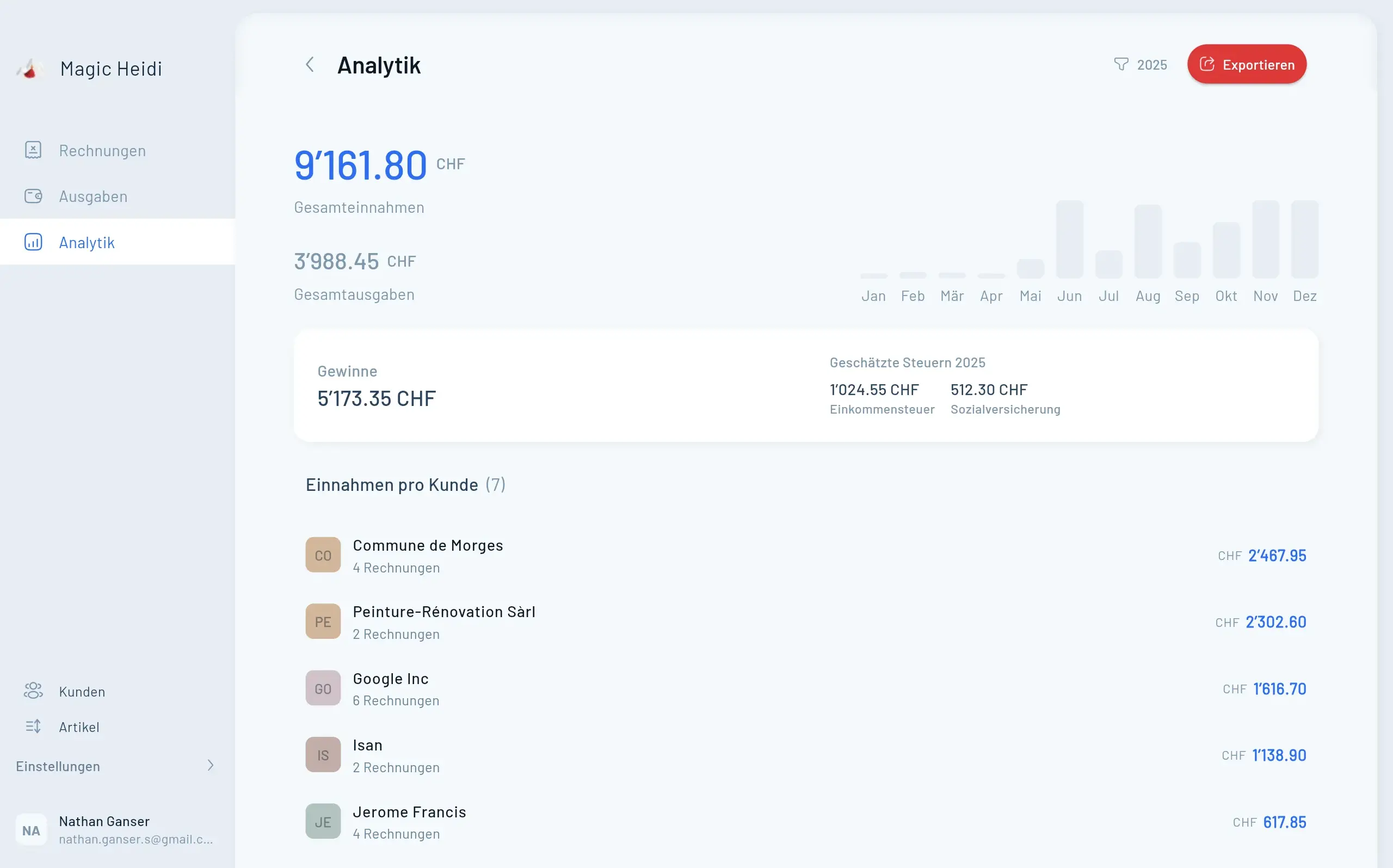
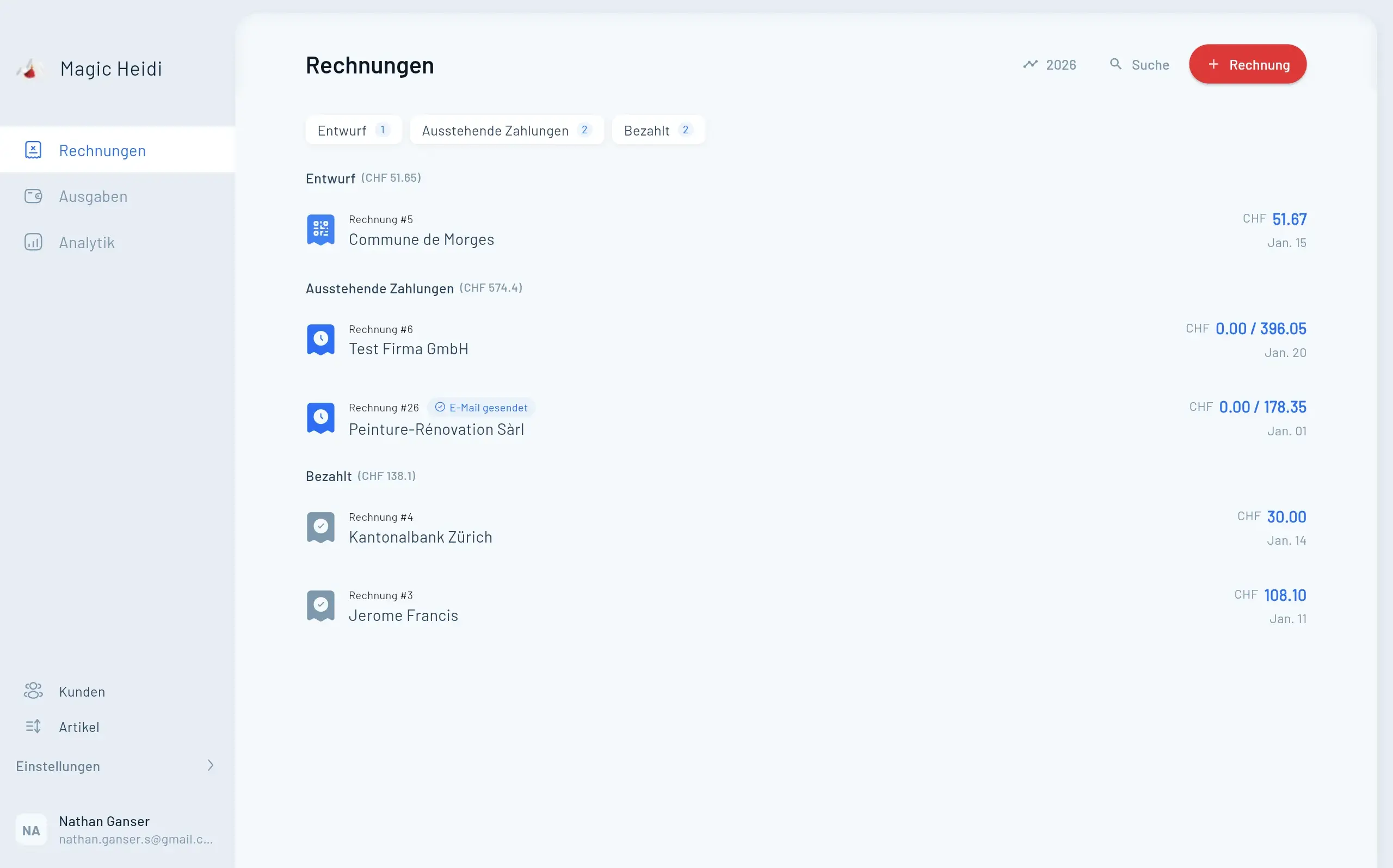
MWST-Compliance verursacht reale Kosten—selbst wenn die Rechnung null ergibt. Jede erfasste Rechnung, jede eingereichte Abrechnung, jede überwachte Frist kostet Zeit. Magic Heidi automatisiert MWST-Berechnungen, überwacht Fristen und erstellt konforme Abrechnungen.
Häufig gestellte Fragen
Kann ich mich freiwillig für die MWST registrieren unter CHF 100'000 Umsatz?
Ja. Die freiwillige Registrierung ermöglicht den Vorsteuerabzug auf Geschäftseinkäufe. Nützlich bei hohen Gründungskosten oder B2B-Kunden, die MWST-registrierte Lieferanten bevorzugen.
Was passiert, wenn ich die SSS-Schwellenwerte während des Jahres überschreite?
Sie müssen zu Beginn des folgenden Kalenderjahres zur effektiven Methode wechseln. Die ESTV überwacht dies.
Zeige ich den SSS-Satz auf meinen Rechnungen?
Nein. Zeigen Sie immer den gesetzlichen Satz (8,1%, 2,6% oder 3,8%) auf Rechnungen. Der SSS-Satz ist nur für Ihre interne Berechnung.
Wie lange muss ich MWST-Unterlagen aufbewahren?
10 Jahre ab Ende des Geschäftsjahres, auf das sie sich beziehen.
Kann ich verschiedene Methoden für verschiedene Geschäftstätigkeiten verwenden?
Nein. Sie wählen eine Berechnungsmethode (effektiv oder SSS) für das gesamte Unternehmen. Aber bei SSS können verschiedene Tätigkeiten unterschiedliche Branchensätze verwenden.
Konzentrieren Sie sich auf Ihr Geschäft, nicht auf MWST-Papierkram
Ob Sie die effektive Methode oder SSS, vereinbartes oder vereinnahmtes Entgelt nutzen—Magic Heidi übernimmt die Komplexität automatisch.