Legal Guide 2026

Invoice Without Registering:
Legal Thresholds Explained

Can you invoice clients without a business license? Yes—and it's completely legal. Learn exactly when registration becomes mandatory and how to stay compliant from your first invoice.

Professional invoicing without business registration

Can You Invoice Clients Without Registering a Business?

Yes—and it's completely legal.

If you're doing freelance work, running a side hustle, or providing occasional services, you don't need a registered company to invoice clients. In most countries, you can bill for your work as an individual (sole proprietor) without formal business registration.

But there's a threshold. Once your income reaches certain levels, registration requirements kick in. These thresholds vary significantly by country—and they're changing in 2026.

This guide explains exactly when you need to register as self-employed, how to invoice legally before that point, and what happens when you cross the threshold.

Income Thresholds:
When Registration Becomes Mandatory

Different countries have different rules. Here's what triggers self-employment registration in major markets in 2026.

📊 2026 Updated
Tax Compliant
📋 Legal Framework
🔍 Verified Info
🇺🇸
United States: $400

Tax filing required once net earnings reach $400 annually, even as side income

🇬🇧
United Kingdom: £1,000

Tax-free trading allowance. Registration required above this threshold

🇨🇭
Switzerland: CHF 2,300

Plus multiple business criteria like multiple clients and infrastructure

🌍
VAT Thresholds

£90K UK, CHF 100K Switzerland for mandatory VAT registration

Detailed Threshold Breakdown

United States: $400 Threshold

You must file a tax return and pay self-employment tax once your net earnings reach $400 annually. This applies even if it's side income alongside a full-time job.

Note the distinction: $400 is the tax filing threshold. You don't need to register a formal business structure (LLC, corporation) until much later—or ever, if you're comfortable operating as a sole proprietor.

2026 Update: The IRS 1099-K reporting threshold increases from $600 to $2,000 for payment platforms like PayPal, Venmo, and Cash App. This affects when your income gets automatically reported, not when you owe taxes.

United Kingdom: £1,000 Trading Allowance

The UK offers a £1,000 tax-free trading allowance for self-employment and property income. Below this threshold, you don't need to register with HMRC or file a Self Assessment tax return.

Once you exceed £1,000 gross income from self-employment, you must register as self-employed and file annual returns.

2026 Update: Starting April 2026, individuals with combined self-employment and property income above £50,000 must follow Making Tax Digital (MTD) rules, requiring quarterly digital reporting.

Switzerland: CHF 2,300 Threshold (Plus Additional Criteria)

Switzerland uses CHF 2,300 annual income as the baseline threshold. Below this amount, you report income on your personal tax return without separate self-employment status.

However, Switzerland evaluates multiple criteria beyond just income:

  • Working for multiple clients (single-client arrangements typically count as employment)
  • Using your own infrastructure and equipment
  • Issuing invoices in your own name
  • Assuming economic risk (investments, collection risk, business expenses)
  • Organizing your work independently

VAT Registration: At CHF 100,000 annual turnover, VAT registration becomes mandatory.

Quick Comparison Table

CountryIncome ThresholdTax RegistrationBusiness Structure Required
United States$400 net incomeYes, self-employment taxNo (auto sole proprietor)
United Kingdom£1,000 gross incomeYes, Self AssessmentNo
SwitzerlandCHF 2,300 + criteriaYes, AVS/AI contributionsDepends on criteria
Professional Invoicing

Create Legal Invoices Without a Company

Your invoice doesn't require a company logo or registered business name. It just needs specific elements to be legally valid and professional.

Professional invoice template for individuals

Required Invoice Information

Your Details:

  • Full legal name (or registered business name if you have one)
  • Personal address or business address
  • Contact information (phone, email)
  • Tax identification number (varies by country—SSN in US, UTR in UK, etc.)

Client Details:

  • Client's full name or company name
  • Client's address
  • Company registration number (if invoicing a business)

Transaction Details:

  • Unique invoice number (sequential: INV-001, INV-002, etc.)
  • Invoice date
  • Due date or payment terms
  • Clear description of services or products
  • Quantity and rate (hourly rate, project fee, etc.)
  • Subtotal
  • Tax if applicable (VAT, sales tax)
  • Total amount due

Payment Information:

  • Accepted payment methods
  • Bank account details or payment platform
  • Late payment terms (optional but recommended)

Payment Methods for Individual Invoicing

You can accept payments through:

  • Bank transfers (most professional for larger amounts)
  • Payment platforms (PayPal, Stripe, Wise) - note 1099-K reporting thresholds
  • Digital wallets (Venmo, Cash App) - now subject to reporting requirements
  • Checks (still common in US for certain industries)
  • Cash (must still be documented and reported)

Critical point: Regardless of payment method, all income must be tracked and reported for tax purposes.

Common Scenarios

Do You Need to Register?
10 Real-World Examples

See how registration requirements apply to different types of freelance and side income situations.

Babysitter ($2,000/year)

Working for one family. US: Tax filing needed. UK: No registration (under £1K). Switzerland: No (single client, dependent relationship).

  • Can invoice family directly
  • Must report income on tax return (US)
  • Single-client relationship considerations
  • Below most registration thresholds

Graphic Designer ($8,000/year)

Three regular clients. Registration needed in all jurisdictions. Multiple clients and regular income triggers self-employment status.

  • Multiple clients = genuine self-employment
  • Register but can stay sole proprietor
  • No LLC/limited company required yet
  • Track all income and expenses carefully

Musician ($1,500/year)

Five concerts annually. US: Yes. UK: Maybe (depends if over £1K). Switzerland: Likely no (irregular, low income).

  • Performance income is self-employment
  • Report it on tax return
  • Formal registration may not be necessary
  • Keep records of all performances

Online Tutor ($3,500/year)

Platform-based tutoring. Registration needed. Platform income generates tax forms in most countries.

  • Platform reports your earnings
  • Definitely reportable income
  • Likely triggers registration requirements
  • Track platform fees as expenses

Uber/Delivery Driver ($12,000/year)

Gig economy work. Yes, definitely register. You're legally self-employed even if platform suggests otherwise.

  • Platforms report your earnings
  • Self-employed status in all jurisdictions
  • { "Switzerland": "Driver status contested—verify locally" }
  • Significant tax implications

Hobby Beekeeper ($600/year)

Selling honey, under 10kg. US: Yes (tax filing). UK: No. Switzerland: No (clearly hobby activity).

  • Small-scale hobby exemptions vary
  • US requires reporting over $400
  • Track costs and sales
  • May transition to business later

Freelance Writer ($35,000/year, one client)

80% income from single client. Register, but verify employment classification. High client dependency may trigger employment relationship.

  • Registration definitely required
  • Risk of employment misclassification
  • Client might need to treat as employee
  • Consider diversifying client base

Etsy Shop ($4,500/year)

Side hustle e-commerce. Registration needed. E-commerce platforms track and report all transactions.

  • Platforms report to tax authorities
  • Definitely self-employment income
  • Track product costs and fees
  • Consider VAT implications if growing

International Consultant ($50,000/year)

Remote work, multiple countries. Absolutely register. International adds complexity.

  • Tax treaties and withholding considerations
  • VAT/sales tax obligations vary by client location
  • Potentially multiple registrations needed
  • Currency conversion tracking required

Digital Nomad (Variable income)

Freelancing while traveling. Register where tax resident. Multi-country time = complex tax situation.

  • Register in country of tax residency
  • Track time in each country
  • Avoid dual taxation issues
  • Consult international tax professional

Beyond Income: Other Factors That Trigger Registration

Income isn't the only consideration. These situations often require registration regardless of earnings:

You Have Multiple Regular Clients

Working for 5+ clients regularly suggests genuine self-employment rather than casual income. Most jurisdictions expect registration.

You're Investing in Equipment or Infrastructure

Purchasing a professional camera, machinery, tools, or renting office space indicates serious business activity. These investments suggest you're assuming economic risk—a key marker of self-employment.

You Have a Business Name and Branding

If you're operating under a brand name (even a personal brand), creating business cards, running a website, or advertising services, you're presenting as a business. Registration becomes appropriate.

You Need Credibility with Larger Clients

Many corporate clients won't work with completely unregistered individuals. They require business registration numbers, insurance, and formal invoicing for their compliance departments.

You Want Liability Protection

As an unregistered individual, your personal assets (home, savings, car) can be claimed against business debts or lawsuits. Registration as an LLC or limited company creates legal separation.

Income Milestones

When Should You Transition to Formal Registration?

Use these income milestones as guidelines for when to level up your business structure and systems.

  • 🌱
    $0 - $2,000: Test the Waters

    Invoice as individual, track carefully, report on personal tax return. No registration necessary (except US over $400).

  • 📈
    $2,000 - $10,000: Establish Systems

    Register as self-employed if required. Set up business bank account, implement bookkeeping, consider quarterly taxes.

  • 🛡️
    $10,000 - $30,000: Consider Protection

    Evaluate LLC/limited company formation, review insurance needs, potentially hire accountant, optimize tax structure.

  • 🏢
    $30,000+: Formalize Structure

    Strong recommendation to incorporate. Professional accounting support, tax optimization, comprehensive insurance coverage.

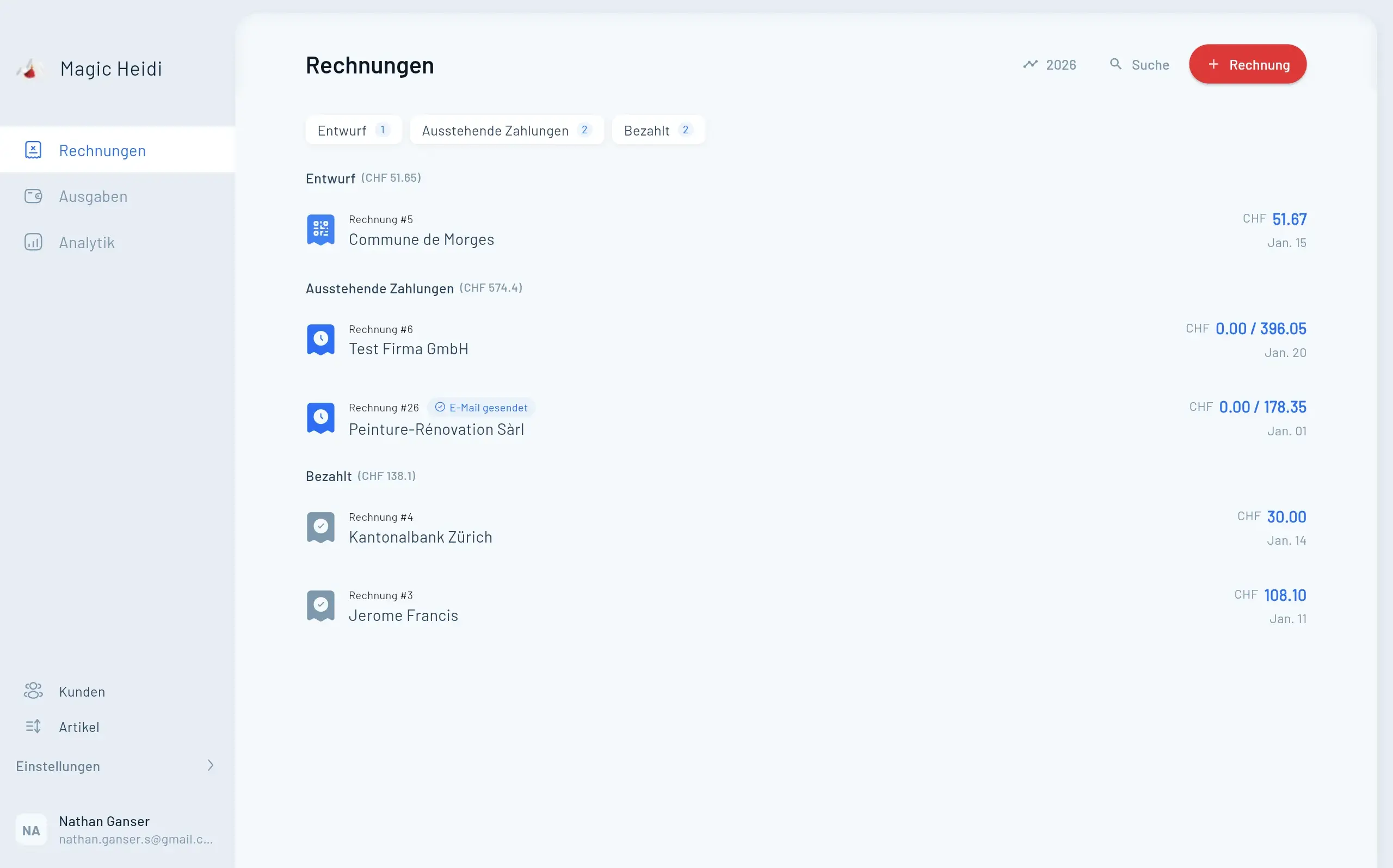
Invoices
  • Invoice #3

    Magic Heidi

    CHF 500

    Jan 29

  • Invoice #2

    Webbiger LTD

    CHF 2000

    Jan 24

  • Invoice #1

    John Doe

    CHF 600

    Jan 20

Tax Implications by Income Level

Below Threshold Income

You still report all income on your personal tax return, even if below registration thresholds. It's added to other income sources and taxed at your marginal rate.

No separate self-employment tax in most cases (UK, Switzerland).

US exception: If you earn even $1 from self-employment, technically reportable. Over $400, you pay self-employment tax (15.3% for Social Security and Medicare).

Above Threshold Income

Once registered as self-employed:

United States:

  • File Schedule C (business income/expenses) with Form 1040
  • Pay self-employment tax (15.3% on 92.35% of net income)
  • Make quarterly estimated tax payments
  • Can deduct business expenses to reduce taxable income

United Kingdom:

  • Register for Self Assessment with HMRC
  • File annual tax return (deadline: January 31)
  • Pay income tax on profits plus Class 2 and Class 4 National Insurance
  • Can claim allowable business expenses

Switzerland:

  • Register with cantonal compensation fund
  • Pay AVS/AI/APG contributions (10%+ depending on income level)
  • LPP (second pillar pension) optional but recommended
  • Declare income on annual tax return
  • Quarterly or annual contribution payments depending on canton

What Information You Need for Tax Filing

Keep these records from day one, regardless of registration status:

Income Records

  • All invoices sent
  • Payment confirmations
  • Bank statements showing deposits
  • Platform statements (Upwork, Fiverr, etc.)
  • 1099 forms (US) or equivalent

Expense Records

  • Receipts for business purchases
  • Software subscriptions
  • Equipment purchases
  • Travel expenses (if business-related)
  • Home office calculations (if applicable)
  • Professional development/training
  • Insurance premiums

Mileage Logs

  • Date, destination, purpose, miles driven
  • Only for business trips (client meetings, business errands)

Documentation of Business Use

  • Percentage of home used for business
  • Business vs. personal use of equipment
  • Time logs for projects
Professional Tools

Invoice Professionally From Day One

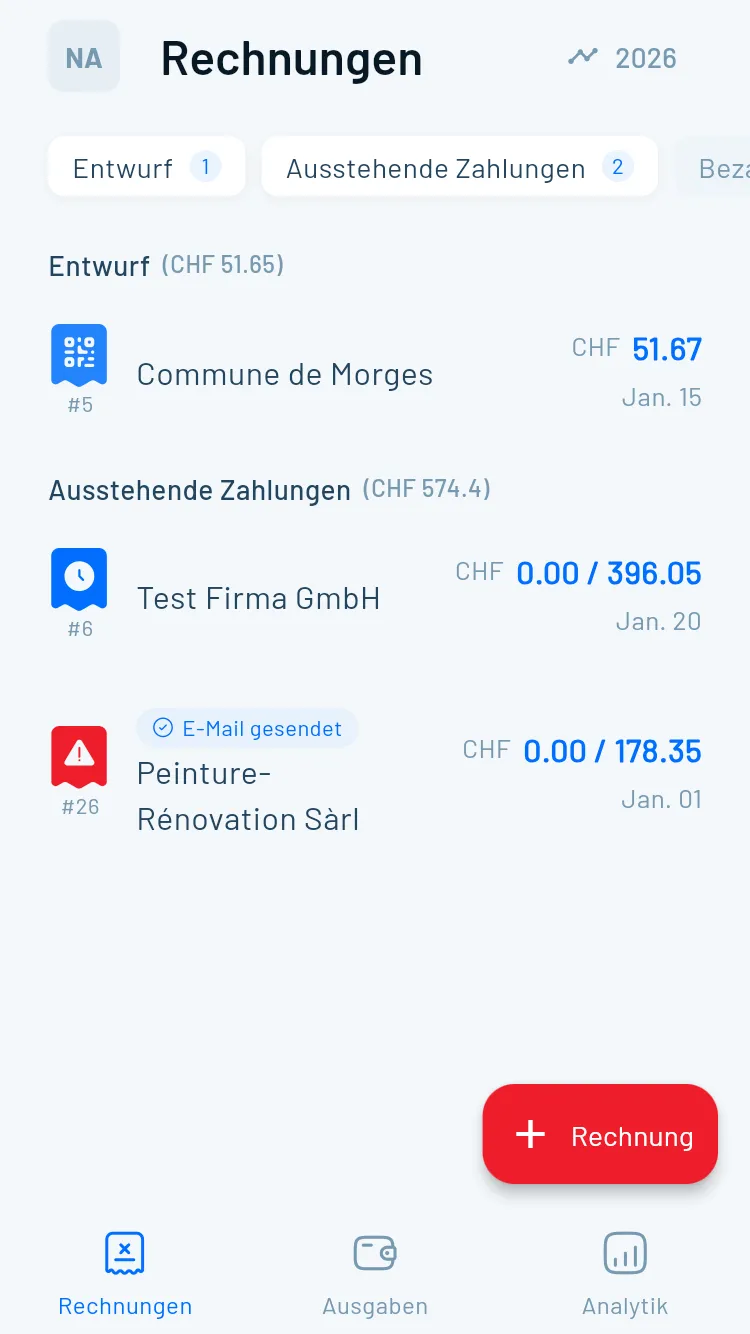
Use invoicing tools designed for freelancers and individuals who haven't registered companies yet. Create legally compliant invoices without business registration numbers.

Magic Heidi invoicing for unregistered freelancers

Invoicing Tools That Don't Require Business Registration

Several platforms specifically serve freelancers and individuals who haven't registered companies:

Magic Heidi enables Swiss and international freelancers to create professional invoices without company registration. The platform handles:

  • Legally compliant invoice generation
  • Income tracking for tax reporting
  • Expense management with AI scanning
  • Multi-currency invoicing for international clients

Key advantage: Purpose-built for the "testing phase" when you're earning but not yet formally established.

Other solutions include:

  • Invoice generation tools with personal name options
  • Payment platforms accepting individuals
  • Accounting software with sole proprietor templates

Avoid: Platforms requiring business registration numbers or EINs before you're ready.

Step-by-Step: Creating Your First Invoice

1. Choose Your Tool

Use invoicing software (like Magic Heidi) or create a template in Word/Google Docs. Handwritten invoices are technically legal but look unprofessional.

2. Add Your Information

Your legal name and current address. You can add "freelance profession" below your name if desired.

3. Add Client Information

Complete business name and address. If invoicing an individual, their full name and address.

4. Create Invoice Number

Start with INV-001 or include date: INV-2026-001. Be sequential—gaps raise red flags in audits.

5. Describe the Work

Be specific: "Web design services for homepage redesign, 15 hours @ $75/hour" not just "design services."

6. Calculate Total

Show subtotal, any applicable tax, and final total. Be clear about currency if working internationally.

7. Set Payment Terms

"Payment due within 30 days" or "Due upon receipt" depending on your arrangement.

8. Include Payment Instructions

Bank transfer details, PayPal email, or other payment method with clear instructions.

9. Send Professionally

PDF format via email. Keep copy for your records. Track whether paid.

10. Record Everything

Log in spreadsheet or accounting software immediately. You'll need this for taxes.

Common Questions

Frequently Asked Questions

Can I invoice without any business registration?

Yes. As an individual, you're automatically a sole proprietor in most jurisdictions. You can invoice using your personal name without registering a formal business structure.

Do I need a tax ID number to invoice?

Depends on country. In the US, you can use your Social Security Number initially (though getting an EIN is recommended for privacy). In the UK, you'll need a UTR (Unique Taxpayer Reference) once registered for Self Assessment.

What if I only did one freelance job for $200?

You still must report it on your tax return. In the US, even $200 is technically reportable income. Whether it triggers registration requirements depends on your total annual self-employment income.

Can I use my personal bank account for business payments?

Yes, initially. However, opening a separate business account (even as sole proprietor) makes bookkeeping cleaner and protects you in audits by showing clear separation between personal and business transactions.

Do I charge sales tax or VAT on my invoices?

Depends on your location, your client's location, and your registration status. Generally, once you exceed VAT thresholds (£90,000 UK, CHF 100,000 Switzerland), you must register and charge it. US sales tax varies by state and what you're selling.

What happens if I forget to report freelance income?

If caught, you'll owe back taxes, interest, and penalties. The IRS, HMRC, and Swiss tax authorities receive reports from payment platforms and clients who deduct your services as expenses—they'll likely notice discrepancies.

How do quarterly taxes work for freelancers?

In the US, if you expect to owe $1,000+ in taxes, you must make quarterly estimated payments (April, June, September, January). Calculate based on expected annual income, or use previous year as baseline.

Should I register a business name?

Not necessary initially. You can operate as 'Jane Smith' rather than 'Jane Smith Consulting LLC.' Register a formal business name (DBA/trading name) when you want branding separation or professional credibility.

Do I need business insurance before invoicing?

Not legally required for most professions, but highly recommended once working regularly. Professional liability insurance protects you from claims of negligence or errors in your work.

Can I invoice international clients as an individual?

Yes, but understand cross-border tax implications. You may need to deal with withholding taxes, VAT reverse charges, or treaty provisions. Consider using platforms like Wise for international payments to simplify currency conversion.

When should I hire an accountant?

When your income reaches $15,000-20,000 annually, tax optimization opportunities start outweighing accountant costs. Also consider hiring one if you have complex situations (multiple income sources, international clients, significant expenses).

What's the difference between gross and net income for thresholds?

Gross = total revenue before expenses. Net = profit after deducting business expenses. US uses net income for the $400 threshold. UK uses gross income for the £1,000 allowance.

2026 Regulatory Changes to Know

US: 1099-K Reporting Threshold Increase

The threshold increases from $600 to $2,000 for 2026, then adjusts for inflation starting 2027. This affects when payment platforms automatically report your income to the IRS, not when you owe taxes.

What it means: Fewer automatic reports, but you still must report all income.

UK: Making Tax Digital Expansion

From April 2026, MTD for Income Tax Self Assessment (ITSA) becomes mandatory for those with income over £50,000 from self-employment and property combined.

What it means: Quarterly digital reporting requirements. Plan to use compatible software if you're approaching this threshold.

Switzerland: Digital Service Changes

No major threshold changes expected for 2026, but digital service providers face increasing scrutiny around employment vs. independent contractor classifications.

What it means: Platform workers (Uber, delivery) should verify status with cantonal authorities.

Take Action

Your Next Steps Based on Income

Choose the path that matches your current income level and business goals.

Earning Under $2,000

Testing Phase

Build foundations while staying compliant with minimal overhead.

  • Create invoices using your personal name
  • Track all income and expenses carefully
  • Report income on personal tax return
  • Use simple tools like Magic Heidi for professional invoices
  • Save 25-30% of earnings for taxes
Starting freelance invoicing
Approaching Thresholds

Preparation Phase

Get ready for registration with proper systems in place.

  • Research registration requirements for your location
  • Set up separate business bank account
  • Implement proper bookkeeping system
  • Register as self-employed when required
  • Consider quarterly tax payments
  • Consult tax professional for optimization
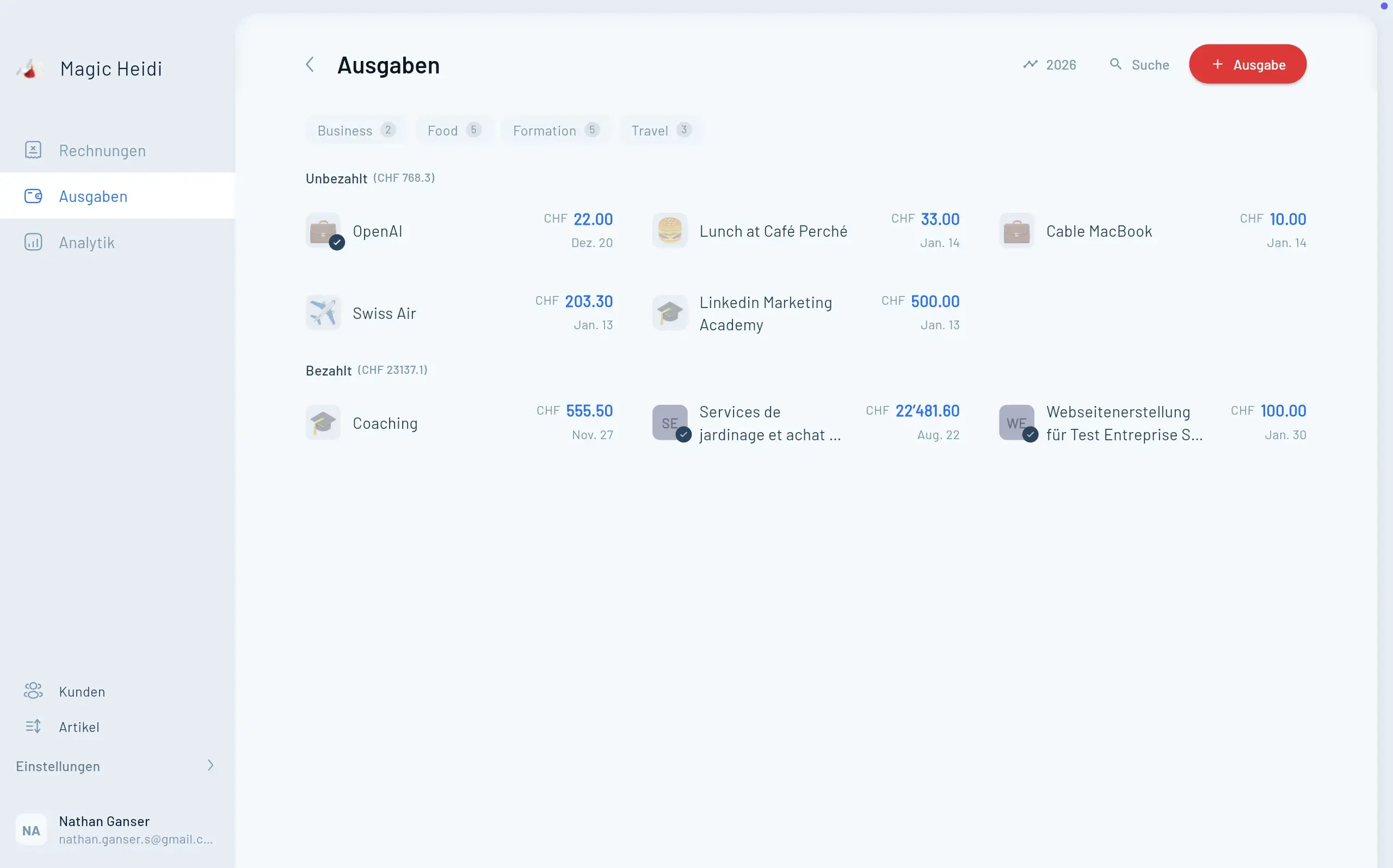
Professional expense tracking
Earning $10,000+

Growth Phase

Formalize your structure and optimize for sustainable growth.

  • Definitely register if you haven't
  • Evaluate business structure (LLC vs. sole proprietor)
  • Get professional liability insurance
  • Hire accountant or tax advisor
  • Optimize tax strategy
  • Consider retirement contributions (tax-advantaged)
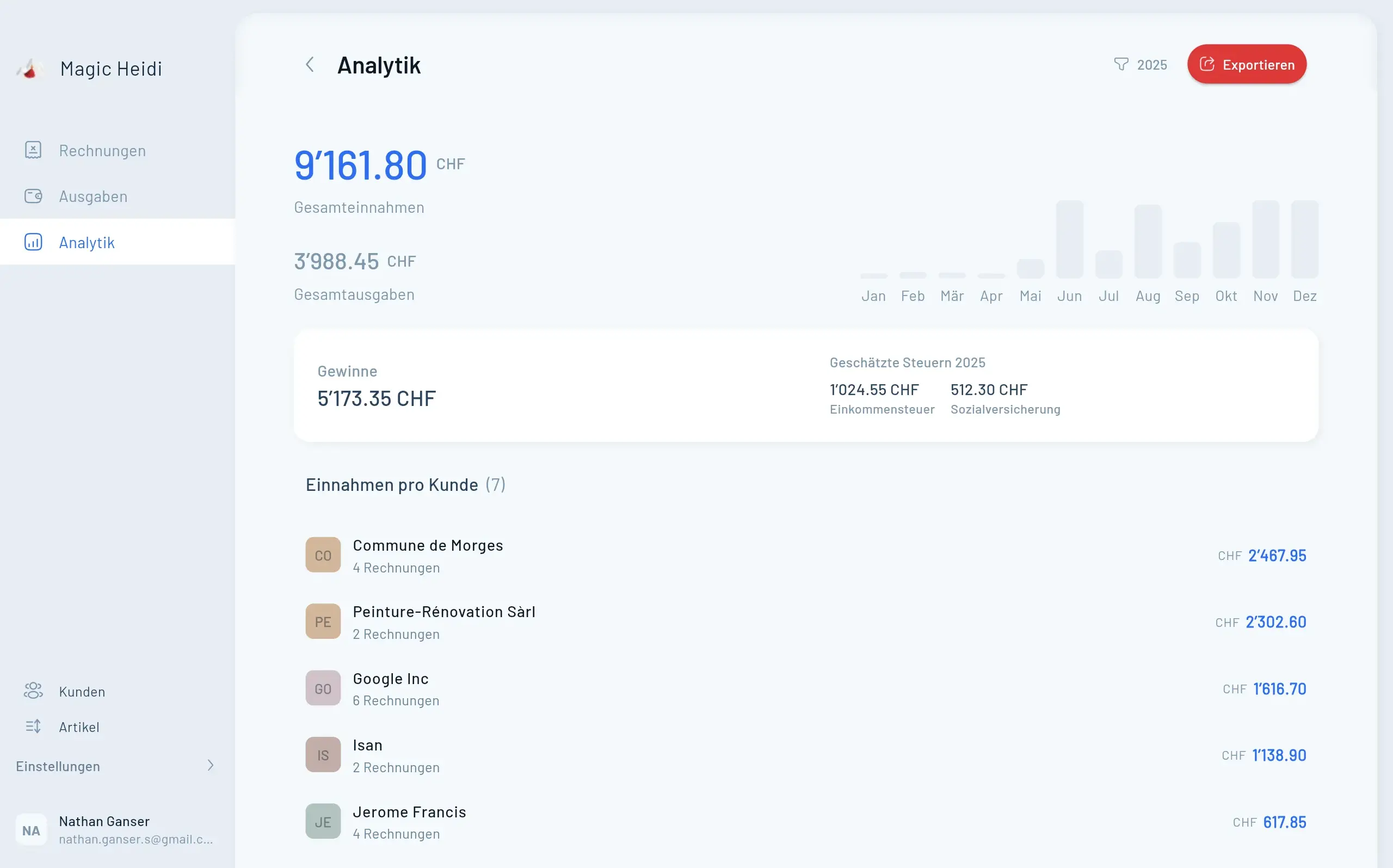
Business analytics and growth

Start Invoicing Professionally Today

You don't need a registered company to present professionally. Clean, detailed invoices show you take your work seriously—even if you're just testing a side hustle.


Remember: Invoicing without registration is legal and common. What's not optional is reporting your income accurately. Start organized, stay compliant, and transition to formal structures as your income grows.

The threshold isn't a barrier—it's a milestone showing your work is gaining traction.

Related resources: