 Magic Heidi
Further reading:
Last updated: April 2026.
When people search for Buchungsbeleg in Switzerland, they’re usually trying to solve a practical problem: which documents prove a transaction, what has to be on them, and when is a scan or replacement document still acceptable?
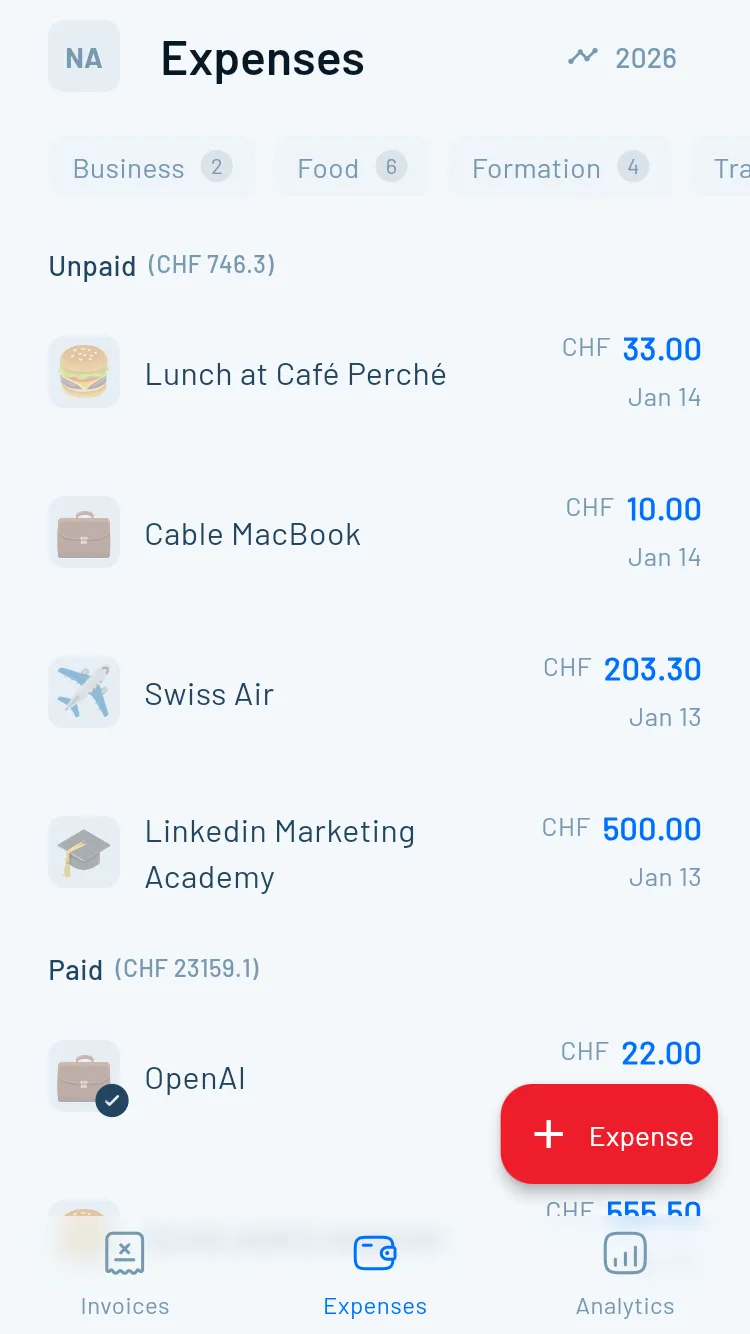
Short answer: a Buchungsbeleg is the document you use to prove a business transaction and link it to a booking entry.
In Switzerland this can be:
The important part is not the file type, but that a knowledgeable third party can still understand what happened, when, for how much, and which entry the document supports.
If you want to understand the chronological side of bookkeeping (what happened when), read also: Buchungsjournal Switzerland.
Most people don’t struggle with the definition. They struggle with edge cases: bank statements, missing receipts, scans, and how to keep things reviewable.
It’s the proof behind a bookkeeping entry. Without a document trail, bookkeeping becomes hard to verify, especially for VAT topics, year-end, or fiduciary review.
For example a supplier invoice, receipt, card slip, or bank confirmation.
For example a customer invoice, credit note, or a documented correction.
A document number or identifier that links document and entry.
Good bookkeeping lets you go from document to entry and back.
In practice, more documents count than people expect. A supportive set typically includes:
Sometimes it helps, but it’s often not sufficient on its own. A statement proves the cash flow; it doesn’t always prove what the transaction was for.
A common approach is:
It’s strongly recommended. A simple numbering system makes it dramatically easier to:
Electronic storage can be acceptable in Switzerland if you ensure readability and traceability over the full retention period. If your process is still messy, keeping originals longer is the safer choice. A dedicated archive helps here: Magic Heidi Archiv is built to the GeBüV requirements, and archived documents cannot be changed or deleted during the 10 years. See also digital archiving in Switzerland.
A replacement document can be a last resort. It should be used sparingly, clearly labelled, and documented so it explains the transaction and why the original is missing. How to do this step by step, what belongs on the document and what a completed template looks like is shown in our guide to creating a replacement receipt (Eigenbeleg).
Most document problems come from weak links between entries and receipts, or from storing files without structure.
A payment shows money moved; it may not explain the full business reason
Without references, every follow-up question becomes slow
Photos in email and downloads are not a reliable archive
They fade, and later you lose the evidence
Further reading:
Last updated: April 2026.
Often yes, but not only invoices count. Receipts, bank confirmations, customer invoices, credit notes, and other documents can also be supporting documents if they make the transaction provable and understandable.
Typically 10 years. The key requirement is that documents remain readable and retrievable for the full retention period.
Not always. It proves the payment flow, but often you also need the invoice, receipt, or contract to explain the transaction.
In principle yes, if your process ensures integrity, readability, and traceability.
An internal document created when the original is missing. It can help explain a transaction, but it’s weaker than the original evidence and should be used only when necessary.
Magic Heidi helps you capture expenses and keep receipts connected to transactions so your Swiss bookkeeping stays explainable.