
Freelancer Pension Guide

LPP for Freelancers in Switzerland: Should You Join the Second Pillar?

As a freelancer in Switzerland, you're not required to join the LPP (occupational pension plan). But should you? This decision could save you 30% or more in taxes while building retirement security and disability coverage.

Swiss Freelancer Planning Pension

Quick Answer: Do Freelancers Need to Pay LPP?

Unlike employees earning over CHF 22,680 annually, self-employed individuals can choose whether to participate in the second pillar. Understanding your options is crucial for long-term financial security.

💰

Tax Savings Up to 30%

Every LPP contribution reduces your taxable income
🛡️

Disability Protection

Income security if you can't work
👨‍👩‍👧

Family Coverage

Survivor benefits for your loved ones

No, LPP (also called BVG) is voluntary for self-employed individuals.

Only your AHV/AVS (first pillar) contributions are mandatory. These vary between 5.371% and 10% of your income, including disability insurance (IV) and loss of earnings (EO).

However, choosing not to join LPP means you'll rely solely on the first pillar for retirement, disability, and survivor benefits—which may not be sufficient.

Swiss Pension System

Understanding Switzerland's Three-Pillar Pension System

Switzerland's pension system combines three pillars to ensure retirement security. Here's how they work for freelancers.

Pillar 1: AHV/AVS

Mandatory for all. Contribution: 5.371% to 10% of income. Covers basic retirement, disability, and loss of earnings. Maximum pension: ~CHF 2,450/month.

Pillar 2: LPP/BVG

Required for employees earning CHF 22,680+. Optional for self-employed. Covers occupational pension, disability benefits, and survivor benefits.

Pillar 3: Private Pension

Optional. Pillar 3a offers tax-privileged savings with contribution limits. Best for long-term retirement planning with tax deductions.

Why Choose LPP

Why Freelancers Consider
Voluntary LPP

Four compelling reasons to join the second pillar as a self-employed professional.

Substantial Tax Savings

All LPP contributions are fully tax-deductible. With Swiss tax rates reaching 30% or higher, every franc you contribute saves you 30 cents in taxes.

  • Example: CHF 15,000 contribution = CHF 4,500 tax savings (at 30% rate)
  • Higher tax rates = bigger savings
  • Reduces taxable income immediately
  • Better than most investment returns

Disability Protection (The Hidden Risk)

This is where LPP provides the most value for freelancers. If you become unable to work, LPP provides crucial income security.

  • With LPP: 60-70% of insured income as disability pension
  • Without LPP: Only basic first pillar coverage
  • Disability strikes younger people more often than expected
  • Freelancers bear this risk alone without employer coverage

Survivor Benefits for Your Family

LPP provides comprehensive protection for your loved ones in case of death.

  • Widow's/widower's pensions
  • Children's pensions
  • Lump-sum death benefits
  • First pillar alone typically inadequate

Your Capital, Your Property

Unlike the first pillar (where contributions fund current retirees), your LPP capital belongs to you.

  • Minimum interest rate: 1.25% (2025)
  • Capital remains yours regardless of system changes
  • Can be withdrawn under specific conditions
  • Builds real retirement assets

LPP Contribution Limits for Freelancers (2025-2026)

When you join LPP voluntarily, you have flexibility:

Upper limit of the mandatory LPP salary: CHF 90,720 (2025 and 2026); funds may insure more

Maximum contribution rate: 25% of your income

The exact amounts depend on your pension fund's plan. You can adjust your insured salary and contribution percentage within these limits, allowing you to optimize for tax savings, risk coverage, or retirement savings based on your needs.

Pillar Comparison

Pillar 2 vs. Pillar 3a: Which Should You Choose?

Many freelancers wonder whether voluntary LPP or Pillar 3a makes more sense. Here's how they compare for self-employed professionals.

FeatureVoluntary LPP (Pillar 2)Pillar 3a
Max ContributionUp to 25% of your income, depending on the fund's planCHF 36,288/year (without LPP) or CHF 7,258/year (with LPP)
Tax Deductible✓ Yes, 100%✓ Yes, 100%
Disability Coverage✓ Yes, customizable✗ No (separate insurance needed)
Survivor Benefits✓ Yes, included✗ No (separate insurance needed)
FlexibilityLess flexible, annual commitmentsMore flexible, voluntary contributions
WithdrawalAt retirement or specific conditionsAt retirement, home purchase, or emigration
Best ForHigh earners, risk coverage needsFlexibility, investment control
Decision Framework

When to Choose Pillar 3a

Pillar 3a works best for freelancers in specific situations.

Starting Out

You're Just Starting Your Freelance Journey

In your first few years of self-employment, Pillar 3a offers flexibility. Choose a bank account (not insurance) so you can:

  • Skip contributions in lean years
  • Avoid buy-back penalties
  • Maintain financial flexibility
  • Adjust to variable income
Freelancer Working
Lower Income

You Earn Under CHF 150,000

Pillar 3a provides sufficient tax optimization without the complexity of LPP administration.

  • Simpler to manage
  • Lower administrative burden
  • Adequate tax benefits at this income level
  • Easy to get started
Simple Administration
Investment Control

You Want Investment Flexibility

Many Pillar 3a providers offer investment accounts with stock market exposure, potentially higher returns than LPP's 1.25% minimum interest.

  • Choice of investment strategies
  • Potential for higher returns
  • Control over asset allocation
  • Switch between providers easily
Investment Growth
High Earners

When to Choose Voluntary LPP

Voluntary LPP makes sense for established freelancers with specific needs.

High Income (CHF 150,000+)

Only LPP allows you to contribute up to CHF 22,680 annually—far exceeding Pillar 3a's limits.

Disability Risk Concerns

LPP provides significantly better disability coverage than relying on first pillar IV alone.

Family Protection

If you have dependents, LPP's widow/widower pensions and death benefits provide crucial financial security.

Structured Savings

If you lack better investment vehicles, LPP's guaranteed minimum interest and tax deductions make it a strong option.

Where Can Freelancers Join LPP?

You have three main options:

1. Professional Association Pension Funds

Many industries have specialized pension funds for doctors, lawyers, architects, artists, and other regulated professions.

Advantages: Industry-specific understanding, potentially better terms for your profession

2. Collective Foundations

If you employ others, you can join a collective foundation together with your employees. Many insurance companies (AXA, Swiss Life, Generali) offer collective foundation solutions.

Advantages: Simplified administration, competitive rates, comprehensive services

3. Stiftung Auffangeinrichtung BVG (Substitute Occupational Benefit Institution)

The government's backup option for those who can't join elsewhere.

Website: aeis.ch

Caution: Generally considered expensive for the services provided. Most freelancers find better value with professional associations or collective foundations. Best used as a last resort if other options aren't available.

Transitioning to Self-Employment

What Happens to Your LPP When You Become Self-Employed?

If you're transitioning from employment to freelancing, you can withdraw your LPP capital under specific conditions. This creates important strategic opportunities for new freelancers.

Swiss Business Transition

Eligibility Requirements

  • You must register as self-employed
  • Request withdrawal within one year of starting self-employment
  • Withdrawal must be complete (no partial withdrawals allowed)

Tax Implications

LPP withdrawals are taxed separately from ordinary income at approximately one-fifth (1/5) your normal tax rate—a significant tax advantage.

Example: If your normal tax rate is 30%, your LPP withdrawal might be taxed at just 6%.

Strategic Considerations

Before withdrawing, consider:

  • Your capital needs: Do you need this money to invest in your business?
  • Your age: Closer to retirement? Keeping it may make more sense
  • Your risk coverage: Once withdrawn, you lose disability and survivor coverage unless you arrange new insurance
  • Tax timing: The withdrawal year matters for tax optimization

Many new freelancers withdraw their LPP to fund business development. Others prefer joining voluntary LPP to maintain coverage and tax benefits.

2026 Updates

New Pension Developments in 2026

Important changes coming to Switzerland's pension system that affect freelancers.

13th AHV Pension Payment

Starting in 2026, pensioners will receive a 13th AHV payment annually, paid together with the December pension. This doesn't affect freelancers' contribution requirements but increases retirement income.

Retroactive Pillar 3a Contributions

Beginning in 2026, you can make retroactive Pillar 3a contributions for up to ten years back. However, this only applies to contribution years from 2025 onward. Creates planning opportunities for freelancers with variable income.

Common Questions

Common Questions About LPP for Freelancers

Can I have both voluntary LPP and Pillar 3a?

Yes, but your Pillar 3a contribution limit drops to CHF 7,258 annually (from CHF 36,288 without LPP). This combination works best for high earners seeking maximum tax deductions and comprehensive risk coverage.

What if my income varies significantly year to year?

Pillar 3a offers more flexibility since contributions are optional annually. With LPP, you commit to contribution levels, though you can adjust them. Many freelancers start with Pillar 3a and add voluntary LPP once income stabilizes.

Do I lose unemployment insurance as a freelancer?

Yes. Self-employed individuals cannot contribute to unemployment insurance and won't receive unemployment benefits if business income stops. This makes disability coverage through LPP even more important—it's one risk you can insure.

How does voluntary LPP affect my taxes?

Every franc contributed to LPP reduces your taxable income. With Swiss tax rates ranging from 20% to 40% depending on location and income, the savings are substantial. Always deduct LPP contributions when filing your tax return.

Can I withdraw LPP for home purchase?

Yes, you can withdraw LPP capital for home purchase in Switzerland, just like employees. This applies to down payment for primary residence, repayment of mortgage debt, or purchase of property ownership shares. Restrictions apply, and you must repay before retirement or when selling the property.

What happens to my LPP if I leave Switzerland?

If you leave Switzerland permanently and move outside the EU/EFTA, you can withdraw your entire LPP capital. If moving within the EU/EFTA, you can withdraw the portion above mandatory minimum benefits. Tax implications vary by destination country.

Decision Framework

How to Decide: A Framework for Freelancers

Use these guidelines to determine the best pension strategy for your situation.

Choose Pillar 3a If:

You're in your first 1-3 years of self-employment • Your annual income is below CHF 100,000 • You want maximum flexibility • You're comfortable managing disability risk separately • You prefer investment control

Choose Voluntary LPP If:

You earn over CHF 150,000 annually • Disability coverage is a priority • You have dependents needing survivor benefits • You want maximum tax deductions (beyond Pillar 3a limits) • You prefer structured retirement savings

Choose Both If:

You earn significantly over CHF 150,000 • You want maximum tax optimization • You need comprehensive risk coverage • You can afford both contributions comfortably

Magic Heidi for Freelancers

How Magic Heidi Supports Your Freelance Journey

Navigating Swiss pension regulations as a freelancer can be complex. Magic Heidi simplifies invoicing and bookkeeping for independent professionals, so you can focus on your business.

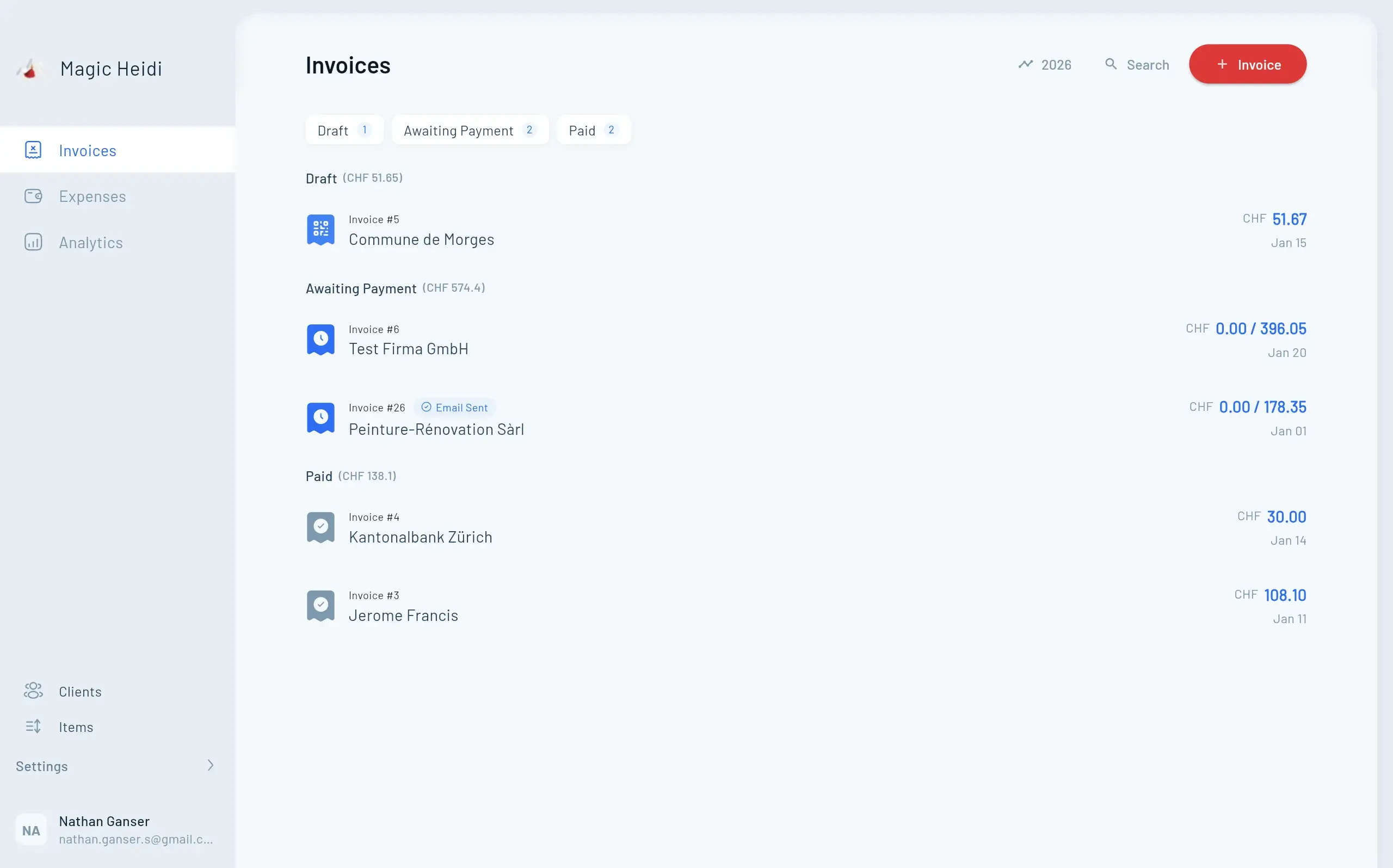
Magic Heidi Dashboard

Magic Heidi is an invoicing and bookkeeping app, not a pension adviser. It keeps your invoices, expenses and income figures in order, so you have the numbers at hand when you discuss pension options with a pension fund or adviser.

Explore Magic Heidi Features →

Your Action Plan

  1. Calculate your tax rate: Understand your potential savings from LPP or Pillar 3a contributions
  2. Assess your risk tolerance: Consider your disability risk, family situation, and need for survivor benefits
  3. Research providers: Compare professional association funds, collective foundations, and their offerings
  4. Run the numbers: Calculate contribution scenarios for both Pillar 2 and Pillar 3a at your income level
  5. Consult a specialist: For high earners or complex situations, professional pension advice pays for itself in tax savings
  6. Make your decision: Choose the option that balances tax benefits, risk coverage, and flexibility for your situation

Remember: The best pension strategy is the one you'll actually implement. Starting with Pillar 3a and adding voluntary LPP later is perfectly valid. What matters most is that you're building retirement security beyond the first pillar's basic coverage.

Take Action: Next Steps for Your Pension Strategy

The deadline to join voluntary LPP or make Pillar 3a contributions is December 31st each year. Don't miss out on this year's tax deductions—the decision you make today shapes your financial security tomorrow.