
Digital fiduciary in Lausanne: The complete guide

Digital fiduciary services have changed bookkeeping, value added tax and compliance for Lausanne businesses. With the wide choice of fiduciary firms in Lausanne, it pays to choose your partner carefully.

Modern Swiss office in Lausanne

This guide explains what makes Swiss digital fiduciaries special, what their costs depend on and how to find one that fits your business needs.

What is a digital fiduciary?

A digital fiduciary uses cloud-based software and automation for your bookkeeping, taxes and compliance – with real-time access to your financial data instead of monthly reports.

The key difference: Traditional fiduciaries work with paper documents and give advice after the closing. Digital fiduciaries use AI-assisted platforms with real-time insights, automated bank imports and instant document exchange through secure portals.

That is not just faster – it changes the quality of your information. You see your liquidity today, not last month.

Core services

What digital fiduciaries really deliver

Swiss digital fiduciaries take on comprehensive bookkeeping, compliance and strategic advice – all through modern cloud platforms.

Company formation & registration

Setting up your AG, GmbH or sole proprietorship with full commercial register compliance.

  • Commercial register filings
  • Preparation of articles of association
  • Advice on legal form
  • Coordination of registration

Bookkeeping & financial reports

Daily transaction entry with automated bank imports and real-time dashboards.

  • Automated bookkeeping
  • Bank reconciliation
  • Real-time financial dashboards
  • Statutory annual financial statements

VAT & tax management

Complete VAT handling, federal and cantonal taxes with strategic planning.

  • Quarterly or annual VAT returns
  • VAT registration from CHF 100'000
  • Federal and cantonal tax returns
  • Tax optimisation strategies

Payroll & social insurance

Comprehensive payroll administration including work permits and Swiss social contributions.

  • Monthly payroll
  • AHV/IV/EO contributions
  • Work permit applications
  • Social insurance compliance
Compliance

Swiss compliance: What you need to know

Key rules for Lausanne businesses.

Annual VAT settlement

Since 2025, businesses with annual revenue of up to CHF 5'005'000 can apply to settle annually instead of quarterly (Art. 35 VAT Act, MWSTG).

QR-bill requirements

Since November 2025, only structured addresses are permitted on QR-bills. Current invoicing software takes this into account.

Retention rules

10-year retention obligation for business books, receipts and annual reports under the Swiss Code of Obligations.

Key VAT thresholds

  • Registration obligation: CHF 100'000 annual revenue
  • Standard rate: 8.1%
  • Reduced rate: 2.6% (food, books, medicines)
  • Accommodation rate: 3.8%

Based on your revenue, digital fiduciaries can assess whether annual settlement makes sense for you.

Costs: What the price depends on

Digital fiduciary prices in Lausanne are typically based on hourly rates or monthly packages. There are no universal rates – get several quotes and compare what is included.

📊 Transaction volume
👥 Number of employees
🏭 Industry requirements
📱 Software integration
⏱️
Hourly rates

Billed by effort, depending on complexity and seniority

📦
Monthly packages

Fixed price per month for small businesses with basic services

🏢
SME solutions

Tailored packages for larger companies with payroll, VAT and closing

💡
Digital savings

Automation lowers the effort compared with traditional firms

What influences your fiduciary costs

Transaction volume: More bookings mean more work. A consulting firm with 50 monthly transactions costs less than a restaurant with 500.

Number of employees: Payroll complexity grows with team size. One employee is simple; 20 employees require sophisticated management.

Industry requirements: Restaurants have different compliance requirements from consulting firms. Industry-specific expertise comes at a price.

Your preparation: Well-organised records save time and money. Clean bank statements and categorised receipts reduce billable hours.

Software integration: If you already use compatible tools, integrations reduce manual work and lower costs.

Thanks to automation, digital fiduciaries can often work more cheaply than traditional firms – but the bigger savings come from better financial transparency, which prevents costly mistakes.

Comparison

Digital vs. traditional fiduciaries

Understand the key differences between traditional and digital fiduciary services.

FeatureDigital fiduciaryTraditional fiduciary
Speed & accessReal-time dashboards, instant updatesMonthly reports, 2-4 weeks delay
Data quality✓ Real-time insightsHistorical reports only
CollaborationCloud platform, mobile apps, instant messagingEmail attachments, phone, scheduled meetings
Pricing✓ Fixed monthly rates, transparentHourly rates, possible surprises
Document managementScan with your phone, automatic categorisationPaper folders, physical storage
Cost savings✓ Usually cheaper thanks to automationMarket-standard rates
Selection guide

How to choose your digital fiduciary

Eight key criteria for evaluating your bookkeeping partner in Lausanne.

Professional qualifications

Check association memberships

Look for EXPERTsuisse or TREUHAND|SUISSE membership – a sign of professional standards and continuing education.

  • Swiss Association of Experts in Audit, Tax and Fiduciary (EXPERTsuisse)
  • Swiss Fiduciary Association (TREUHAND|SUISSE)
  • Continuing education obligations
  • Compliance with professional standards

Swiss professional standards
Industry experience

Sector-specific expertise matters

Every industry has its quirks. A fiduciary with experience in your sector understands your specific challenges.

  • Restaurant and hospitality experts understand inventory and cash management
  • Tech startup experts know IP valuation and R&D deductions
  • Retail professionals master multi-channel reconciliation
  • Ask how many similar businesses they serve
Industry-specific bookkeeping
Technology stack

Modern, Switzerland-compliant platforms

Your fiduciary should use software that integrates with Swiss banks, produces compliant QR-bills and offers real-time access.

  • bexio, CashCtrl, Banana Accounting or Topal Solutions
  • Swiss bank integrations (PostFinance, UBS, Raiffeisen)
  • Compliant QR-bill creation
  • Client portal with mobile apps
Digital bookkeeping platform
Further selection criteria

Additional evaluation factors

Language skills

French is essential in Lausanne. German and English are valuable for inter-cantonal and international work.

Scope of services

Clarify what is included: company formation, payroll, work permits, tax negotiations, audit support.

Response time

Ask about response times in the portal (24-48 hours?), emergency support and frequency of review meetings.

Security standards

Check two-factor authentication, data encryption, Swiss server location, backup frequency, insurance coverage.

Warning signs to watch for

❌ No clear price structure - Vague quotes lead to billing surprises
❌ Reluctance to explain technology - You should understand the tools you will use
❌ No professional association memberships - Missing qualifications signal lower standards
❌ Limited industry references - Lack of relevant experience is risky
❌ Vague response time commitments - You need reliable communication
❌ No written service contract - Everything should be documented
❌ Pressure to commit immediately - Professional providers do not use aggressive sales tactics

Important questions to ask

  1. "How many clients from my industry do you currently serve?"
  2. "What is your average response time to portal messages?"
  3. "Walk me through your onboarding process – how long does it take?"
  4. "What happens if I want to switch fiduciaries later?"
  5. "How do you handle VAT audits or tax disputes?"
  6. "Which reports can I access in real time vs. monthly?"
  7. "Do you offer fixed prices or hourly billing?"
  8. "Which software do you use, and do I have direct access?"
  9. "How do you handle data backup and security?"
  10. "Can you provide references from similar businesses?"
DIY alternative

When you might not need a fiduciary

Digital tools have made DIY bookkeeping practical for some businesses. Here is when self-service makes sense.

DIY criteria

Self-service bookkeeping is suitable if you:

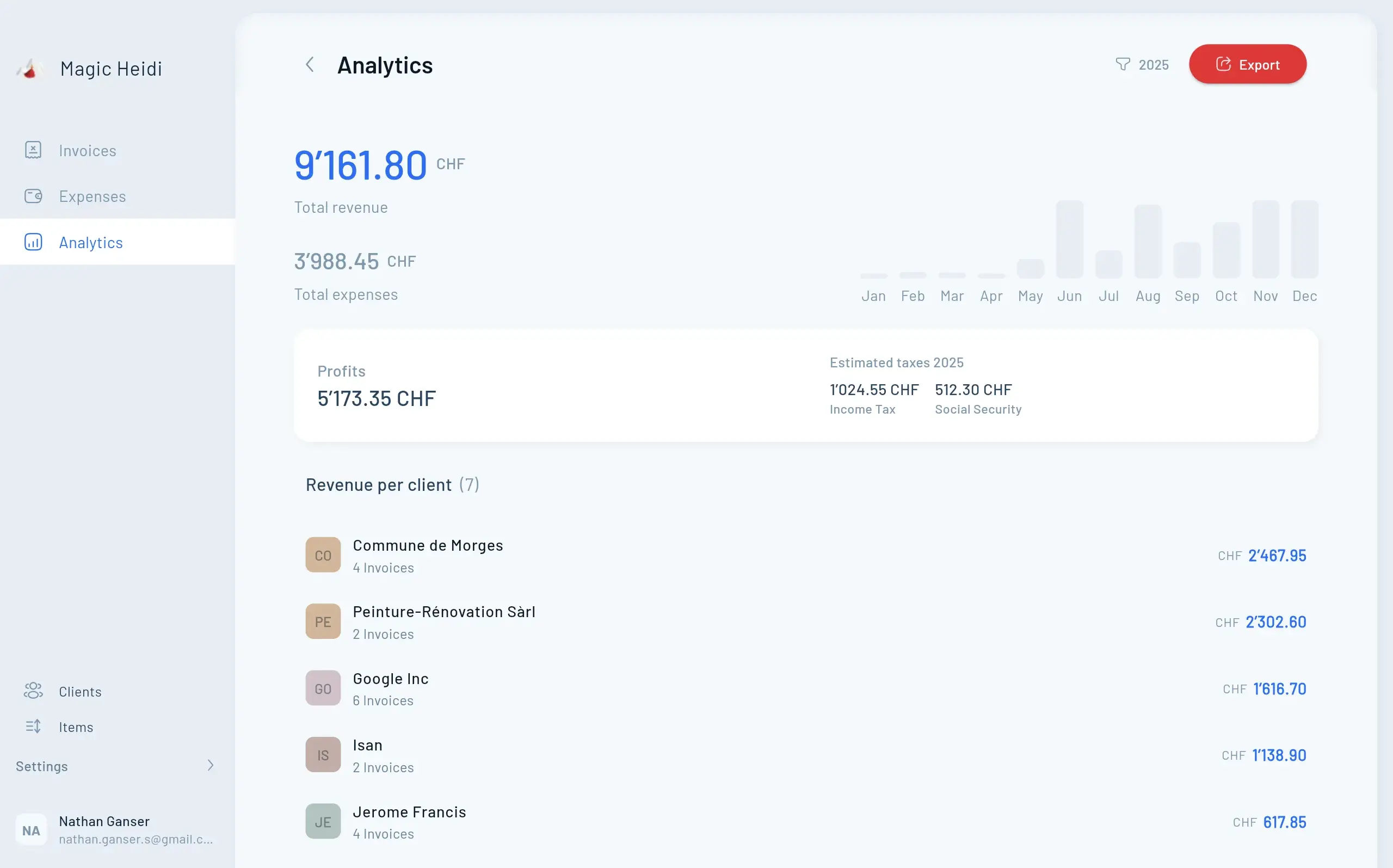
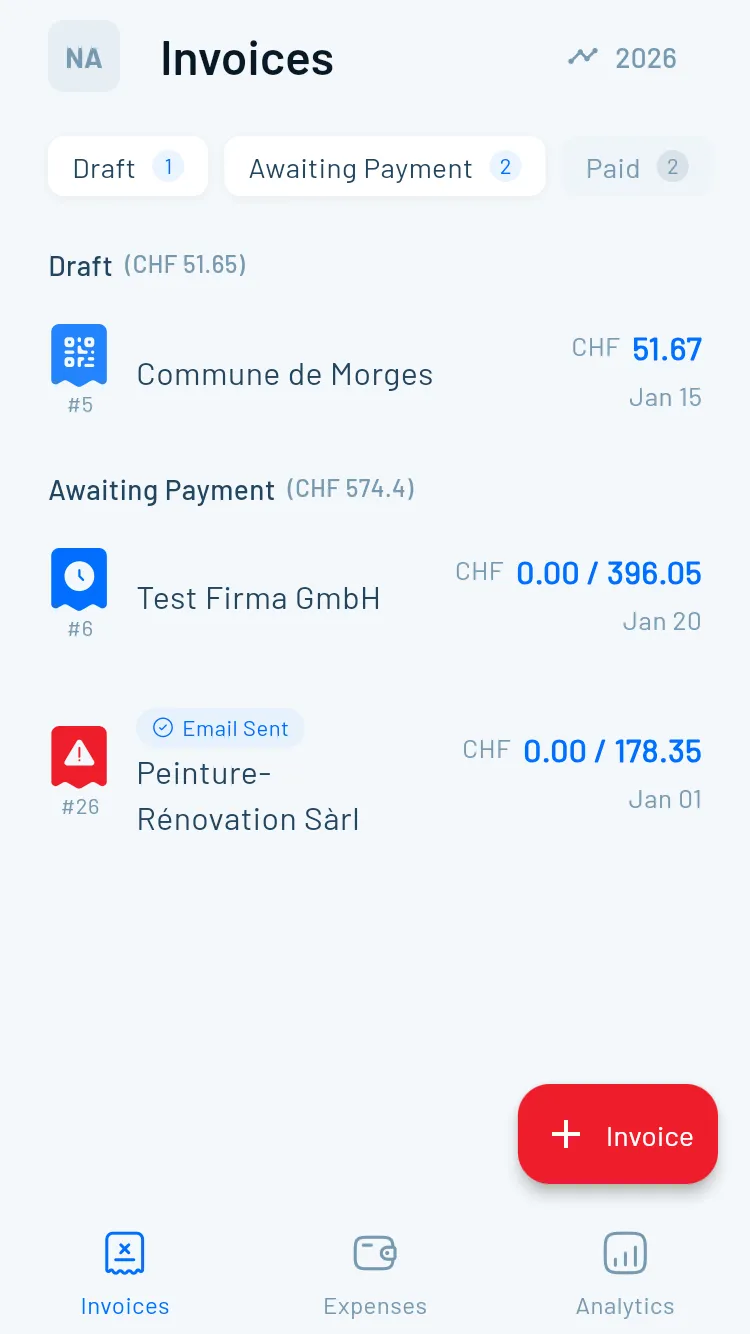
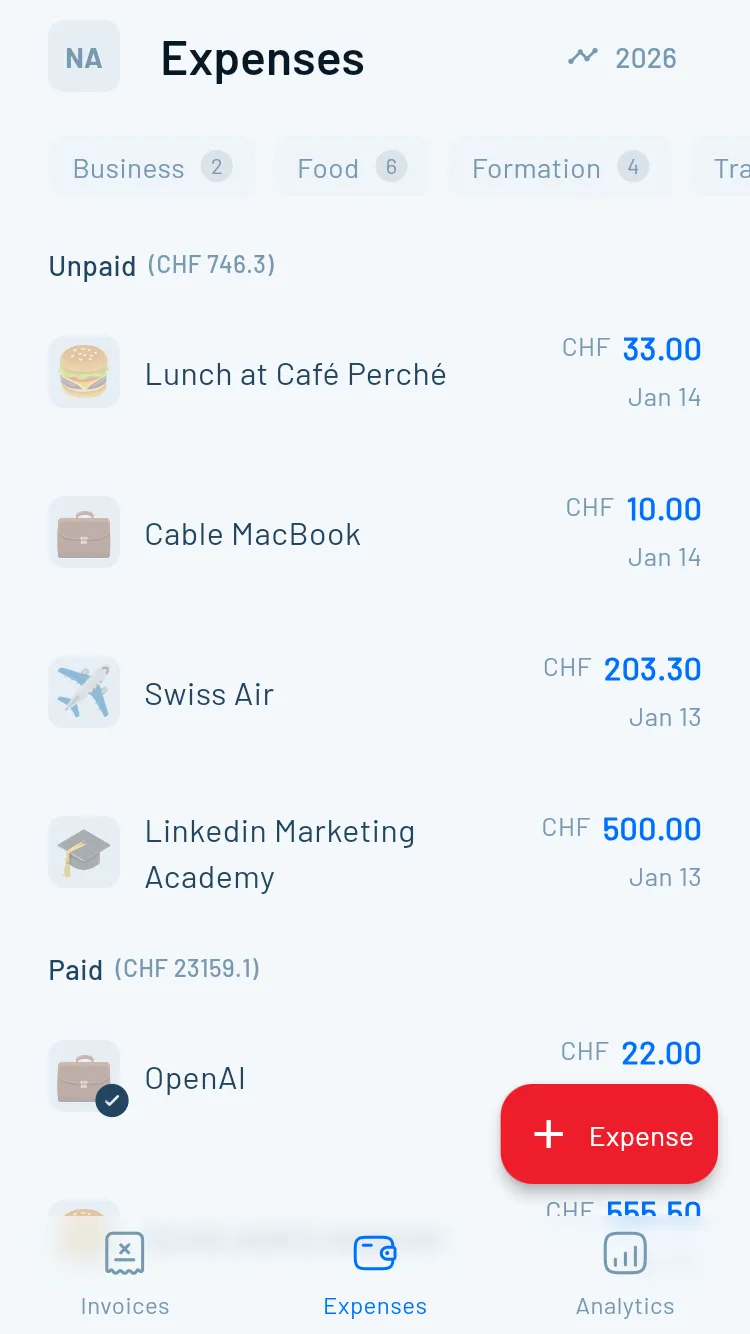
Software like Magic Heidi offers Switzerland-compliant tools for simple business structures.

  • Run a simple sole proprietorship
  • Have a manageable number of invoices and receipts
  • Have no employees (no payroll complexity)
  • Have bookkeeping knowledge
  • Want maximum control and minimal costs
Magic Heidi mobile invoicing
Switch to a fiduciary

Time for professional help when:

At these milestones, many businesses bring in a fiduciary.

  • you hire employees (payroll becomes complex)
  • you no longer want to prepare VAT returns yourself
  • you incorporate as a GmbH or AG (stricter requirements)
  • you expand internationally (cross-border taxes)
  • your time is worth more elsewhere (opportunity costs)
Business growth indicators

Hybrid approach: the best of both worlds

Many businesses use a hybrid model:

  • Invoices and expenses: Handle with software like Magic Heidi
  • VAT returns: Prepare the figures in your software and file them yourself, or have a fiduciary check them first
  • Annual financial statements: Professional preparation and tax optimisation
  • Strategic planning: Quarterly reviews with expert advice

This approach minimises costs while ensuring compliance and strategic financial management. You keep control of day-to-day business while experts handle complex regulatory requirements.

Magic Heidi offers Switzerland-compliant features including:

Try Magic Heidi for free and find out whether it meets your needs before you commit to full fiduciary services.

Transition process

The switch: What to expect

Understand the typical transition timeline and preparation requirements.

Weeks 1-2: Onboarding

Provide company documents, grant bank access, upload historical records, set up software access and training.

Weeks 3-4: Data migration

Previous transactions imported and categorised, opening balances verified, chart of accounts configured, first reconciliation.

Weeks 5-6: Regular operation

Monthly closing established, VAT return prepared, regular communication rhythm set, questions clarified.

Learning curve

Allow 2-3 months until you feel fully comfortable. Most firms offer training, video tutorials and responsive support.

What you need to provide

When switching to a new digital fiduciary, prepare these documents:

  • Commercial register extract
  • Company articles of association
  • Prior-year financial statements and tax returns
  • Bank access details (for read-only API access)
  • Existing supplier and customer lists
  • Employment contracts and payroll details
  • Current debt or leasing agreements

Organised records speed up onboarding and shorten the transition period.

Industry-specific

Industry-specific considerations

Different sectors have different bookkeeping challenges. Here is what to look for depending on your industry.

Restaurants and hospitality

High transaction volume with complex cash management and seasonal fluctuations.

  • Daily cash register reconciliation
  • Inventory management modules
  • Staff turnover in payroll
  • Expertise in seasonal fluctuations

Tech startups

IP valuation, stock options, R&D deductions and investor reporting requirements.

  • Startup lifecycle experience
  • Stock option accounting
  • R&D deductions
  • Venture capital reporting

Retail and e-commerce

Multi-channel sales reconciliation with inventory across locations and online payments.

  • E-commerce platform integrations
  • Multi-location inventory
  • Stripe and PayPal reconciliation
  • Cross-border VAT (EU sales)

Consulting and professional services

Time tracking, project accounting and management of unbilled work with minimal complexity.

  • Project-based reporting
  • Time-to-invoice workflows
  • Advance payment handling
  • Simple, cost-efficient solutions
FAQ

Frequently asked questions

How long do I have to keep bookkeeping records?

10 years for all business books, receipts and annual reports under the Swiss Code of Obligations. Digital fiduciaries handle this automatically with secure cloud archiving.

When do I have to register for VAT?

When your annual revenue from taxable services exceeds CHF 100'000. Your fiduciary should monitor this and initiate registration before you reach the threshold.

Can I switch fiduciaries mid-year?

Yes. Most switches happen at year end for cleaner transitions, but mid-year switches are possible. Allow 4-6 weeks for the full transition. Your new fiduciary typically coordinates with the old one.

What happens in a tax audit?

Professional fiduciaries handle tax audits as part of their service. They represent you, provide documentation and negotiate with the authorities. Check whether this is included in your contract.

Do digital fiduciaries meet in person?

Most offer hybrid models: digital platforms for daily work, in-person or video meetings for quarterly reviews and strategic discussions. Clarify expectations in advance.

What happens to my data if the fiduciary closes?

Reputable fiduciaries have proper succession plans and professional liability insurance. Your data belongs to you – you can export it at any time. Choose providers with clear data ownership policies.

How do I know whether the prices are fair?

Get 3-4 quotes for comparable services and compare what each includes. Significantly lower prices can point to limited services; significantly higher ones should be justified by clear added value.

Future trends

The future of fiduciary services

The digital transformation keeps accelerating. These developments are emerging.

AI-assisted categorisation

Transactions are increasingly classified automatically, manual data entry is declining.

Predictive analytics

Cash flow forecasts, anomaly detection and trend analyses integrated into platforms.

Blockchain integration

Immutable audit trails and smart contract automation for increased security.

Voice interfaces

Ask your bookkeeping system questions and get instant answers through AI assistants.

Automated compliance

Regulatory changes are automatically integrated into your bookkeeping processes.

Strategic advice

The fiduciary's role shifts from data entry to strategic financial insights and business advice.

The fiduciary's role is shifting from data entry to strategic advice. The best digital fiduciaries are not just faster – they deliver insights that help you make better business decisions every day.

Your action plan

  1. Assess your needs - Transaction volume, employees, industry complexity
  2. Set a budget - Based on several quotes that match your transaction volume
  3. Research 3-4 firms - Through the professional associations or through recommendations from your circle
  4. Arrange consultations - Ask the key questions from this guide
  5. Check references - Talk to 2-3 current clients from similar industries
  6. Review service contracts - Understand what is included and the termination terms
  7. Start with a quarterly engagement - Test the relationship before long-term commitment

For simpler needs, check whether bookkeeping software like Magic Heidi offers sufficient functionality before you commit to full fiduciary services.

The right digital fiduciary becomes a strategic partner – not just a compliance necessity. Choose carefully, and you gain financial clarity that enables better business decisions every day.

Looking for Switzerland-compliant bookkeeping software? Try Magic Heidi for free and discover the app for Swiss self-employed people – from the QR-bill through expenses to the VAT figures.

Ready to choose your digital fiduciary?

Magic Heidi is not a fiduciary, but the app for invoices, expenses and VAT figures – a clean foundation for working with your fiduciary in Lausanne.