Erfolgsrechnung in der Schweiz einfach und wirklich nützlich erklärt
Was sie zeigt, wie eine Schweizer Erfolgsrechnung aufgebaut ist, wann sie Pflicht wird und wie Sie ein Beispiel lesen, ohne zuerst Buchhalter werden zu müssen.
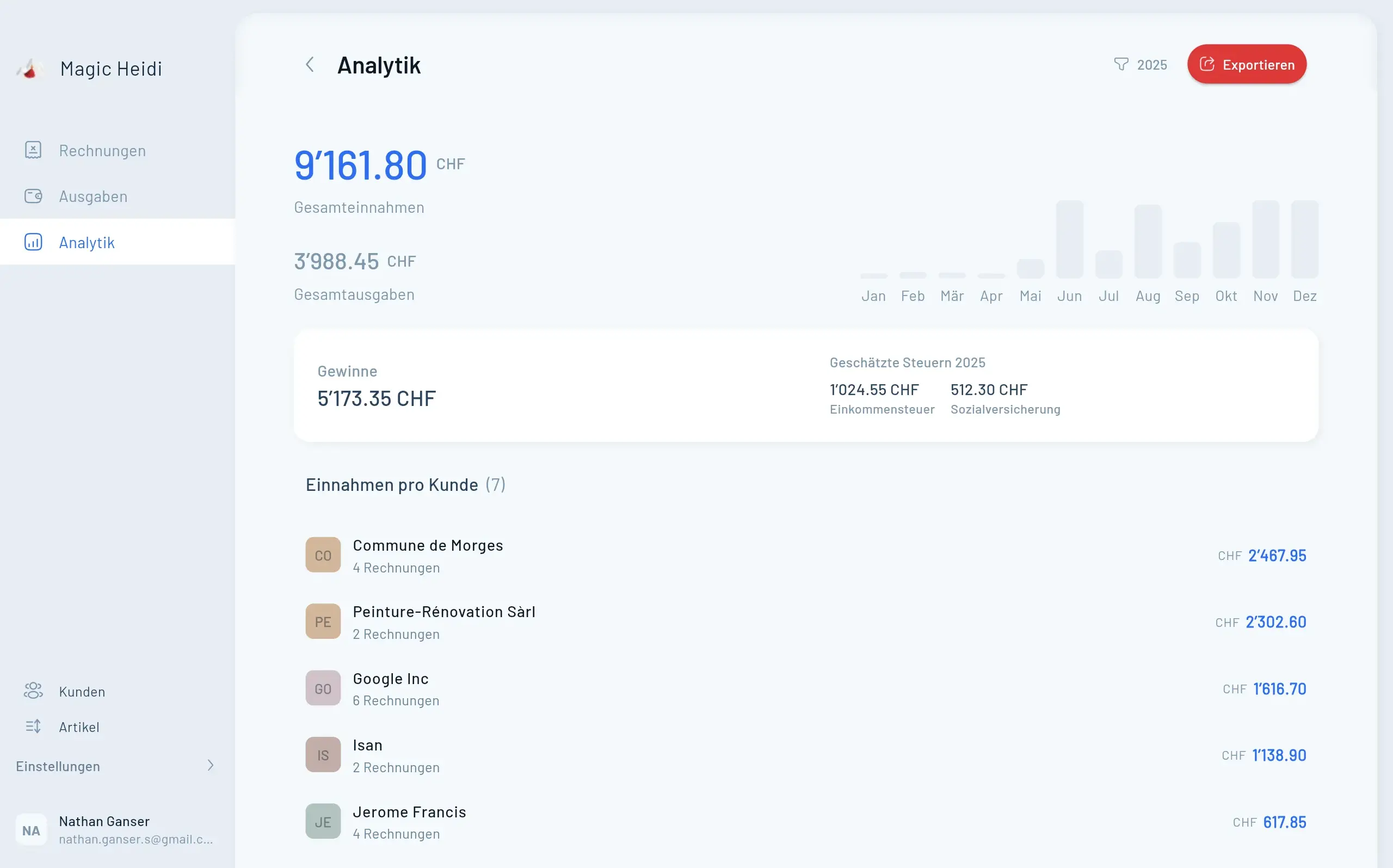
Kurzantwort: Die Erfolgsrechnung zeigt, ob Ihr Unternehmen in einer Periode Gewinn oder Verlust gemacht hat. Sie stellt Ertrag und Aufwand gegenüber. Der Saldo daraus ist das Jahresergebnis.
Wer nach erfolgsrechnung sucht, will meistens eine schnelle Antwort auf fünf praktische Fragen:
- Was ist eine Erfolgsrechnung überhaupt?
- Wie sieht ein typischer Aufbau in der Schweiz aus?
- Was ist der Unterschied zu Bilanz und GuV?
- Wann brauche ich sie als Einzelfirma, Freelancer, GmbH oder AG wirklich?
- Wie liest man ein Beispiel, ohne an Fachwörtern hängen zu bleiben?
Genau darauf konzentriert sich dieser Leitfaden.
Hinweis: Diese Seite bietet allgemeine Informationen und ersetzt keine Rechts-, Steuer- oder Treuhandberatung. Entscheidend sind immer Rechtsform, Umsatz, Branche und Ihr konkreter Fall.
Erfolgsrechnung in 60 Sekunden
Wenn Sie nur kurz Orientierung brauchen, reichen diese vier Punkte.
Sie zeigt die Leistung
Die Erfolgsrechnung beantwortet die Frage, ob Ihr Geschäft in einer Periode wirtschaftlich funktioniert hat.
- Ertrag minus Aufwand
- Gewinn oder Verlust
- für Monat, Quartal oder Jahr
Sie ist nicht die Bilanz
Die Bilanz zeigt den Stand an einem Datum. Die Erfolgsrechnung zeigt die Entwicklung über einen Zeitraum.
- Bilanz = Stichtag
- Erfolgsrechnung = Periode
- beide gehören oft zusammen
Sie hat in der Schweiz Mindestpositionen
Art. 959b OR gibt vor, wie die Erfolgsrechnung mindestens gegliedert sein muss.
- Produktionserfolgsrechnung
- Absatzerfolgsrechnung
- Jahresgewinn oder Jahresverlust
Sie ist mehr als Pflicht
Auch kleine Unternehmen nutzen sie, um Preise, Kostenblöcke und Trends besser zu verstehen.
- Marge prüfen
- Kosten vergleichen
- Gespräche mit Treuhand und Bank vorbereiten
Was ist eine Erfolgsrechnung?
Die Erfolgsrechnung ist der Teil der Rechnungslegung, der zeigt, was in einer Periode wirtschaftlich passiert ist.
Ganz einfach:
- Ertrag = was Ihr Unternehmen eingenommen oder erwirtschaftet hat
- Aufwand = was nötig war, um diesen Ertrag zu erzielen
- Saldo = Gewinn oder Verlust
Damit beantwortet die Erfolgsrechnung nicht die Frage, wie viel Geld gerade auf dem Bankkonto liegt. Sie beantwortet die Frage, ob das Geschäft rentabel war.
Gerade deshalb ist sie für Selbständige so wertvoll: Umsatz allein klingt gut, sagt aber noch nicht, ob am Ende wirklich etwas übrig bleibt.
Erfolgsrechnung, GuV, Income Statement und Bilanz: was ist der Unterschied?
Diese Begriffe tauchen in Suchergebnissen oft nebeneinander auf:
| Begriff | Was gemeint ist | Praktische Einordnung |
|---|---|---|
| Erfolgsrechnung | Schweizer Begriff für die Gegenüberstellung von Ertrag und Aufwand | Standardbegriff in der Schweiz |
| GuV / Gewinn- und Verlustrechnung | Deutscher Begriff für fast dieselbe Logik | Inhaltlich sehr nah |
| Income Statement / P&L | Englische Begriffe | häufig in Software, Reporting und internationalen Gesprächen |
| Bilanz | zeigt Vermögen, Schulden und Eigenkapital zu einem Stichtag | beantwortet eine andere Frage |
| Jahresabschluss | das ganze Abschlusspaket, zu dem die Erfolgsrechnung nur einen Teil beisteuert | siehe Jahresabschluss Schweiz |
Die einfachste Merkhilfe lautet:
- Bilanz = Foto zum Stichtag
- Erfolgsrechnung = Film über die Periode
Und noch eine Abgrenzung, weil sie oft vermischt wird: Die Erfolgsrechnung ist nicht der Jahresabschluss. Sie ist ein Bestandteil davon. Was am Ende des Geschäftsjahres insgesamt zu erledigen ist, steht in Jahresabschluss Schweiz; was eine kleine Einzelfirma konkret abgeben muss, in Jahresabschluss Einzelfirma Schweiz.
Wichtig im Alltag: Eine gute Erfolgsrechnung bedeutet nicht automatisch, dass genug Geld auf dem Konto liegt. Offene Forderungen, Investitionen oder Privatbezüge können die Liquidität trotzdem belasten.
So ist eine Schweizer Erfolgsrechnung aufgebaut
Online wird oft nur erklärt, dass Ertrag und Aufwand gegenübergestellt werden. Für Suchende ist aber entscheidender, welche Blöcke wirklich in der Erfolgsrechnung auftauchen.

Aufbau der Erfolgsrechnung nach Schweizer Recht
Die rechtliche Grundlage steht im Obligationenrecht:
- Art. 958 OR verlangt eine Jahresrechnung, die die wirtschaftliche Lage so darstellt, dass Dritte sich ein zuverlässiges Urteil bilden können.
- Zur Jahresrechnung gehören Bilanz, Erfolgsrechnung und Anhang.
- Die Mindestgliederung der Erfolgsrechnung steht in Art. 959b OR.
Das Schweizer KMU-Portal hält ausserdem fest:
- Die Erfolgsrechnung besteht aus den beiden Hauptteilen Ertrag und Aufwand.
- Der Saldo daraus ist das Ergebnis des Geschäftsjahres.
- In der Praxis ist die Produktionserfolgsrechnung am weitesten verbreitet.
Die typische Logik einer mehrstufigen Erfolgsrechnung
Für viele kleine Unternehmen ist diese Leselogik am nützlichsten:
| Stufe | Worum es geht | Typische Positionen |
|---|---|---|
| 1. Ertrag | Was wurde verkauft oder fakturiert? | Nettoerlöse, weitere betriebliche Erträge |
| 2. Direkte Kosten | Was war nötig, um die Leistung zu erbringen? | Material, Waren, Drittleistungen |
| 3. Personal und Betrieb | Was kostet der laufende Betrieb? | Löhne, Miete, Software, Versicherungen |
| 4. Abschreibungen | Welche Anschaffungen werden über Zeit verteilt? | Fahrzeuge, Geräte, Einrichtung |
| 5. Finanzielle und ausserordentliche Effekte | Was kommt nicht direkt aus dem Kerngeschäft? | Finanzertrag, Finanzaufwand, ausserordentliche Positionen |
| 6. Steuern und Ergebnis | Was bleibt unterm Strich? | direkte Steuern, Jahresgewinn, Jahresverlust |
Produktionserfolgsrechnung vs. Absatzerfolgsrechnung
Für Suchende ist die Unterscheidung meist nur dann wichtig, wenn sie einen formellen Abschluss erstellen oder eine Vorlage verstehen möchten:
- Produktionserfolgsrechnung: zeigt die Aufwände stärker nach Kostenarten und ist in der Schweiz am gebräuchlichsten.
- Absatzerfolgsrechnung: orientiert sich stärker an den verkauften Leistungen und deren Herstellungskosten.
Wenn Sie eine Erfolgsrechnung für eine Einzelfirma oder ein kleines Dienstleistungsunternehmen lesen wollen, genügt meistens das Verständnis der Produktionserfolgsrechnung.
Erfolgsrechnung Beispiel: so lesen Sie die Zahlen richtig
Nehmen wir ein kleines Schweizer Dienstleistungsunternehmen mit folgendem Jahresbild:
| Position | Betrag |
|---|---|
| Nettoerlöse aus Dienstleistungen | CHF 180'000 |
| Material- und Fremdleistungskosten | CHF 12'000 |
| Bruttoergebnis | CHF 168'000 |
| Personalaufwand | CHF 55'000 |
| Übriger betrieblicher Aufwand | CHF 38'000 |
| Abschreibungen | CHF 5'000 |
| Betriebsergebnis (EBIT) | CHF 70'000 |
| Finanzaufwand / -ertrag netto | CHF -1'000 |
| Direkte Steuern | CHF 9'000 |
| Jahresgewinn | CHF 60'000 |
Was lässt sich daraus konkret lesen?
- Das Kerngeschäft trägt.
- Der grösste Kostenblock liegt beim Personalaufwand.
- Nach den eigentlichen Betriebskosten bleibt noch genug übrig, um Finanzierungskosten und Steuern zu tragen.
- Die wichtigste Anschlussfrage ist nicht nur die Schlusszahl, sondern die Entwicklung über mehrere Perioden.
Genau dort wird die Erfolgsrechnung wirklich nützlich: Wenn Sie Monate, Quartale oder Jahre vergleichen, sehen Sie, wo die Marge entsteht oder verloren geht.
Schema zum Kopieren: eine einfache Erfolgsrechnung
Wenn Sie nur eine einfache Struktur brauchen, reicht oft dieses Denkschema:
- Nettoerlöse aus Lieferungen und Leistungen
- minus Material- und Warenaufwand / Drittleistungen
- minus Personalaufwand
- minus übriger betrieblicher Aufwand
- minus Abschreibungen
- plus/minus Finanzerfolg
- plus/minus ausserordentliche Positionen
- minus direkte Steuern
- = Jahresgewinn oder Jahresverlust
Das ersetzt keine vollständige OR-Gliederung, hilft aber sofort beim Lesen und bei der ersten eigenen Einordnung.
Wann ist eine Erfolgsrechnung in der Schweiz Pflicht?
Gerade online werden zwei Schwellen oft vermischt: ordentliche Buchführung und MWST-Pflicht. Für Suchende ist diese Unterscheidung entscheidend.
Einzelfirma, Freelancer, GmbH und AG: was gilt konkret?
Für Einzelunternehmen und Personengesellschaften gilt in der Schweiz grundsätzlich:
Unter CHF 500'000 Umsatz
Oft genügt mindestens eine vereinfachte Buchhaltung über Einnahmen, Ausgaben und Vermögenslage. Das heisst: Nicht jede selbständige Person muss sofort eine formelle Erfolgsrechnung im vollen Abschlussstil führen.
Ab CHF 500'000 Umsatz
Dann wird die ordentliche Buchhaltung mit Jahresrechnung relevant. In diesem Rahmen gehört die Erfolgsrechnung verbindlich dazu.
Bei AG oder GmbH
Juristische Personen arbeiten unabhängig von der typischen Freelancer-Logik mit einer formelleren Rechnungslegung. Dort ist die Erfolgsrechnung Teil des normalen Abschlusses.
Die MWST-Schwelle ist separat
Die MWST-Pflicht hängt grundsätzlich an der Schwelle von CHF 100'000 Umsatz aus steuerbaren Leistungen pro Jahr. Diese Schwelle ist nicht dieselbe wie die Schwelle für die ordentliche Buchführung.
Gerade für Freelancer ist das wichtig:
- Sie können bereits MWST-pflichtig sein,
- obwohl für die Buchführung unter Umständen noch eine vereinfachte Lösung genügt.
Praktisch lohnt sich eine sauber lesbare Erfolgsrechnung oft trotzdem schon früher, weil sie Preisgestaltung, Kostenkontrolle und Gespräche mit Treuhand oder Bank deutlich erleichtert.
5 typische Fehler bei der Erfolgsrechnung
Nicht die Fachbegriffe sind das Problem, sondern die falsche Interpretation der Zahlen.
Gewinn mit Liquidität verwechseln
Ein positives Ergebnis bedeutet nicht automatisch, dass genug Geld auf dem Konto liegt.Direkte und indirekte Kosten mischen
Dann verlieren Bruttoergebnis und Betriebsergebnis ihre Aussagekraft.Perioden unsauber abgrenzen
Spät verbuchte Rechnungen oder falsche Zeiträume verzerren das Bild deutlich.Nur auf die Schlusszahl schauen
Ohne Zwischenergebnisse bleibt unklar, wo die Marge verloren geht.Erfolgsrechnung nur einmal pro Jahr ansehen
Für Selbständige ist eine monatliche oder quartalsweise Sicht oft viel nützlicher als der Blick erst beim Abschluss.Wie Selbständige die Erfolgsrechnung sinnvoll nutzen
Viele sehen ihre Erfolgsrechnung erst dann, wenn die Treuhand sie schickt. Das ist meistens zu spät.
Besser ist diese Routine:
1. Regelmässig anschauen
Sie müssen nicht jeden Monat einen perfekten Jahresabschluss simulieren. Aber ein wiederkehrender Blick auf Ertrag, Aufwand und Ergebnis schafft Klarheit.
2. Kostenblöcke vergleichen
Wenn der Umsatz steigt, der Gewinn aber nicht, liegt das Problem oft bei:
- zu tiefen Preisen
- zu hohem Fremdleistungsanteil
- unkontrollierten Software- und Betriebskosten
- oder zu viel unbezahlter administrativer Arbeit
3. Bilanz und Erfolgsrechnung zusammendenken
Wenn die Erfolgsrechnung gut aussieht, die Liquidität aber knapp bleibt, prüfen Sie Debitoren, Investitionen, Privatbezüge oder andere Faktoren ausserhalb der Erfolgsrechnung.
4. Aus der laufenden Buchhaltung echte Auswertungen machen
Wer Rechnungen, Belege und Zahlungen sauber erfasst, kann die Erfolgsrechnung viel schneller sinnvoll lesen. Genau deshalb lohnt sich eine ruhige Struktur im Alltag und nicht erst am Jahresende.
Wenn Sie den Aufbau der Konten dahinter besser verstehen möchten, ist dieser Anschluss sinnvoll: Kontenplan Schweiz. Für den ganzen Abschlussprozess passt ergänzend: Jahresabschluss Schweiz.
Häufige Fragen zur Erfolgsrechnung Schweiz
Was ist der Unterschied zwischen Erfolgsrechnung und GuV?
Inhaltlich fast keiner. In der Schweiz spricht man meist von Erfolgsrechnung, in Deutschland eher von Gewinn- und Verlustrechnung. Gemeint ist dieselbe Grundlogik: Ertrag minus Aufwand ergibt Gewinn oder Verlust.
Was ist der Unterschied zwischen Bilanz und Erfolgsrechnung?
Die Bilanz zeigt Vermögen, Schulden und Eigenkapital zu einem Stichtag. Die Erfolgsrechnung zeigt die wirtschaftliche Leistung über einen Zeitraum. Bilanz ist die Momentaufnahme, Erfolgsrechnung die Periodensicht.
Wie ist eine Erfolgsrechnung aufgebaut?
Typisch beginnt sie mit den Nettoerlösen, zieht direkte Kosten, Personalaufwand, übrigen Betriebsaufwand, Abschreibungen und den Finanzerfolg ab oder hinzu und endet nach Steuern mit Jahresgewinn oder Jahresverlust. Die Mindestgliederung richtet sich in der Schweiz nach Art. 959b OR.
Braucht eine Einzelfirma in der Schweiz immer eine Erfolgsrechnung?
Nicht immer in voller Form. Einzelunternehmen und Personengesellschaften müssen ab CHF 500'000 Umsatz grundsätzlich eine ordentliche Buchhaltung mit Jahresrechnung führen. Darunter genügt oft mindestens eine vereinfachte Buchhaltung.
Hängt die Erfolgsrechnung mit der MWST-Pflicht zusammen?
Nur indirekt. Die MWST-Pflicht ist eine eigene Frage und hängt grundsätzlich an der Schwelle von CHF 100'000 Umsatz aus steuerbaren Leistungen. Diese Schwelle ist nicht dieselbe wie die Schwelle für die ordentliche Buchführung.
Ist Gewinn dasselbe wie Geld auf dem Konto?
Nein. Eine Erfolgsrechnung kann gut aussehen, obwohl offene Rechnungen, Investitionen oder Privatbezüge die Liquidität belasten. Gewinn und Cash sind nicht dasselbe.
Sie möchten Zahlen, die nicht erst am Jahresende Sinn ergeben?
Mit Magic Heidi behalten Selbständige Rechnungen, Ausgaben, MWST und laufende Auswertungen an einem Ort im Blick, ohne unnötige ERP-Komplexität.
Weiterführend:
- Jahresabschluss Schweiz verstehen
- Buchhaltung Schweiz verstehen
- Kontenplan Schweiz
- Bilanz einfach erklärt
Offizielle Grundlagen und Quellen: KMU-Portal zur Erfolgsrechnung · Art. 958 OR · Art. 959b OR
Wenn Sie nur eine Sache aus diesem Artikel mitnehmen, dann diese:
Die Erfolgsrechnung ist nicht nur ein Dokument für den Abschluss. Sie ist die klarste Antwort auf die Frage, ob Ihr Geschäft wirtschaftlich wirklich trägt.