 Magic Heidi
 Ja, du kannst als Privatperson in der Schweiz eine Rechnung stellen. Du brauchst dafür keine Firma, keine MWST-Nummer und keinen Handelsregistereintrag, sondern nur 7 Pflichtangaben und (am besten) einen QR-Code für die Zahlung. Hier ist, wie du eine korrekte Schweizer Rechnung in 5 Minuten schreibst, mit Vorlage, Beispielen und allen wichtigen Regeln auf einen Blick.
Anleitung 2026
Rechnung schreiben & erstellen Schweiz: die komplette Anleitung
Als Privatperson, ohne Firma, ohne MWST-Nummer: 7 Pflichtangaben, ein QR-Code, fertig in 5 Minuten.
Key Takeaways
Das Wichtigste auf einen Blick
Die fünf Punkte, die du brauchst, bevor du deine erste Schweizer Rechnung verschickst.
7 Pflichtangaben
Absender, Empfänger, Datum, Leistungsbeschreibung, Betrag in CHF, Zahlungsangaben (IBAN oder QR-Code) und, falls MWST-pflichtig, UID-Nummer plus MWST-Satz.
Privatperson erlaubt
Du darfst Rechnungen stellen, solange du unter CHF 100'000 Jahresumsatz bleibst und nicht regelmässig nur für einen Auftraggeber arbeitest.
QR-Rechnung Pflicht
Seit Oktober 2022 ersetzt die QR-Rechnung den orangen und roten Einzahlungsschein. Ohne QR-Code oder klare IBAN ist die Rechnung nicht zahlbar.
10 Jahre aufbewahren
Art. 958f OR verlangt, dass du Rechnungen 10 Jahre aufbewahrst. Einkommen gehört in deine Steuererklärung, auch wenn es nur CHF 200 sind.
Vorlage oder Software
Für die ersten Rechnungen reicht eine Word-Vorlage oder ein Online-Generator. Ab 10 Rechnungen pro Monat wird Software günstiger und sauberer.
Schnellstart
Rechnung schreiben in 5 Minuten
Zwei kostenlose Wege zu einer fertigen Schweizer Rechnung. Beide gratis, beide ohne Anmeldung.
Hol dir jetzt deine Schweizer Rechnung
Direkt im Browser ausfüllen oder als Word-Vorlage herunterladen. Beide Wege erzeugen eine konforme QR-Rechnung.
Mach es jetzt: Rechnung schreiben in 5 Minuten
Wenn du gerade keine Lust auf Theorie hast, hier sind die zwei schnellsten Wege zu einer fertigen Schweizer Rechnung:
- Direkt online erstellen, kein Login nötig: Mit unserem QR-Rechnungsgenerator füllst du das Formular aus, lädst die PDF herunter und schickst sie deinem Kunden. Dauer: rund 3 Minuten.
- Vorlage herunterladen und in Word ausfüllen: Wenn du lieber selber gestaltest, hol dir die Rechnungsvorlage Schweiz als Word- oder Excel-Datei und passe sie an dein Layout an.
Beide Wege sind 100 % gratis und für Privatpersonen, Freelancer und kleine Einzelfirmen geeignet. Wenn du regelmässig (mehr als einmal pro Monat) Rechnungen schreibst, lohnt sich später ein richtiges Rechnungsprogramm für Selbständige, das Kunden, Rechnungsnummern und Zahlungen automatisch verwaltet.
Lies weiter, wenn du verstehen willst, was genau auf eine Schweizer Rechnung gehört, wann du die MWST aufführen darfst, wann du als Privatperson "zu sehr Freelancer" wirst und wie du typische Fehler vermeidest.
Die 7 Pflichtangaben auf einer Schweizer Rechnung
Das Schweizer Obligationenrecht (OR Art. 957a) verlangt, dass eine Rechnung als Buchungsbeleg dient. Das heisst: Sie muss eindeutig identifizierbar, vollständig und nachvollziehbar sein. Konkret gehören diese 7 Angaben auf jede Schweizer Rechnung, egal ob du Privatperson oder Einzelfirma bist.
Pflichtangaben
Die 7 Angaben, die jede Rechnung braucht
Vom Absender bis zur MWST: was gehört aufs Dokument, was darfst du weglassen, und wo lauern die teuren Anfängerfehler.
Absender (Name + Adresse)
Voller Name oder Firmenname plus komplette Adresse mit Strasse, PLZ und Ort. Pseudonyme reichen nicht. Beispiel: Anna Müller, Bahnhofstrasse 12, 8001 Zürich.
Empfänger (Name + Adresse)
Bei Firmen mit Rechtsform (AG, GmbH), bei Privatpersonen voller Name plus Adresse. Ab CHF 400 verlangt die ESTV den vollen Empfängernamen.
Rechnungs- und Leistungsdatum
Rechnungsdatum = Tag der Ausstellung. Leistungsdatum = Tag oder Zeitraum der Arbeit. Bei mehreren Einsätzen: 'Leistungszeitraum 1.–31. März 2026'.
Leistungsbeschreibung
Präzise statt schwammig. 'Beratung' reicht nicht. 'Strategieworkshop am 12.3.2026, 4 Stunden zu CHF 150/h' reicht. Detailpositionen wirken professioneller.
Betrag in CHF
Schweizer Franken ist Standard. Bei Auslandkunden EUR/USD erlaubt, Wechselkurs festhalten. Schreib 'CHF 1'250.00' oder 'CHF 1'250.–', nie nur die Zahl.
Zahlungsangaben (IBAN/QR)
Entweder QR-Rechnung nach Swiss QR-Standard oder IBAN-Nummer im Klartext mit Bank- und Kontoinhabername. Standard-Zahlungsfrist: 30 Tage netto.
UID + MWST-Satz (nur wenn pflichtig)
Über CHF 100'000 Umsatz oder freiwillig angemeldet: CHE-Nummer mit MWST, Satz (8.1 % Normal), MWST-Betrag und Netto/Brutto separat. Sonst gar nichts zur MWST schreiben.
Rechnungsnummer (empfohlen)
Keine gesetzliche Pflicht für Privatpersonen, aber praktisch Standard. Einfach durchnummerieren (2026-001, 2026-002) oder Datum-basiert (20260512-01).
1. Vollständiger Name und Adresse des Absenders
Dein voller Name (oder dein Firmenname, falls du einen hast) und deine komplette Adresse mit Strasse, PLZ und Ort. Pseudonyme oder Künstlernamen reichen nicht. Wenn du eine UID-Nummer (CHE-123.456.789) hast, kommt sie auch dazu.
Beispiel:
Anna Müller, Bahnhofstrasse 12, 8001 Zürich
2. Vollständiger Name und Adresse des Empfängers
Wer bekommt die Rechnung? Bei Geschäftskunden die Firma mit Rechtsform (AG, GmbH) und genauer Adresse. Bei Privatpersonen reicht der volle Name plus Adresse. Wenn die Rechnung über CHF 400 liegt und es um steuerlich abzugsfähige Ausgaben geht, will die ESTV (Eidgenössische Steuerverwaltung) ohnehin den vollen Empfängernamen sehen.
Beispiel:
Bäckerei Bühlmann GmbH, Dorfstrasse 8, 3014 Bern
Ausnahme: Bei einer Kleinbetragsrechnung bis CHF 400 (typisch: die Quittung im Laden) darfst du auf die Angaben zum Empfänger verzichten (Art. 26 Abs. 3 MWSTG).
3. Rechnungsdatum und Leistungsdatum
Das Rechnungsdatum ist der Tag, an dem du die Rechnung ausstellst. Das Leistungsdatum ist der Tag (oder der Zeitraum), an dem du die Arbeit gemacht hast. Bei einer einzelnen Leistung darf beides identisch sein. Bei mehreren Einsätzen schreibst du "Leistungszeitraum: 1. März bis 31. März 2026".
Diese zwei Daten sind wichtig, weil die ESTV bei einer Steuerkontrolle wissen will, in welchem Geschäftsjahr du den Umsatz verbuchen musst.
4. Eine klare, eindeutige Leistungsbeschreibung
Schreib so präzise, dass jemand, der weder dich noch deinen Kunden kennt, in zwei Jahren noch versteht, was du gemacht hast. "Beratung" reicht nicht. "Strategieworkshop am 12. März 2026, 4 Stunden zu CHF 150/h" reicht.
Mit Detailpositionen wirkt deine Rechnung ausserdem professioneller, und du beugst Streitigkeiten vor.
5. Betrag in Schweizer Franken (CHF)
CHF ist die Standardwährung. Wenn dein Kunde im Ausland sitzt, darfst du in EUR oder USD fakturieren, musst aber den Wechselkurs am Rechnungsdatum festhalten und das Schweizer Bankkonto für den Zahlungseingang nennen. Steuerlich rechnest du den Betrag immer in CHF um. Fakturierst du Dienstleistungen an ein Unternehmen im EU-Ausland, gilt mehrwertsteuerlich meist das Reverse-Charge-Verfahren: Dein Kunde versteuert die Leistung in seinem Land, du vermerkst "Reverse Charge" auf der Rechnung.
Schreib den Betrag immer ausgeschrieben: "CHF 1'250.00" oder "CHF 1'250.–". Kein nur "1250" ohne Währung.
6. Zahlungsangaben (IBAN oder QR-Code)
Ohne Zahlungsinformationen wird die Rechnung nicht bezahlt. Du brauchst eine der folgenden Optionen:
- QR-Rechnung (Standard seit Oktober 2022): Ein QR-Code mit allen Zahlungsdaten, den dein Kunde im E-Banking einscannt. Wie du sie in 30 Sekunden gratis erzeugst, zeigt der Guide QR-Rechnung erstellen.
- IBAN-Nummer im Klartext: CH-Konto-Nummer, Name der Bank und dein Name als Kontoinhaber.
Zahlungsfrist ist Standard 30 Tage (also "zahlbar innert 30 Tagen netto"). Verlangst du eine kürzere Frist, schreib es konkret hin: "zahlbar bis 15. April 2026".
7. UID-Nummer und MWST-Satz (nur wenn MWST-pflichtig)
Wenn du MWST-pflichtig bist (über CHF 100'000 Jahresumsatz oder freiwillig angemeldet), brauchst du:
- Deine UID-Nummer mit MWST-Ergänzung: CHE-123.456.789 MWST
- Den MWST-Satz (8.1 % Normal, 2.6 % reduziert, 3.8 % Beherbergung, Stand 2024/2026)
- Den MWST-Betrag separat ausgewiesen
- Nettobetrag und Bruttobetrag separat
Bist du nicht MWST-pflichtig, schreibst du nichts zum Thema MWST hin. Eine fiktive UID oder ein MWST-Hinweis ohne Eintrag ist strafbar (mehr dazu unten). Welcher Satz für welche Leistung gilt und was sich bei den Sätzen demnächst ändert, findest du in der Übersicht Aktuelle MWST-Sätze Schweiz. Zum schnellen Nachrechnen von Netto, Brutto und MWST-Betrag gibt es den kostenlosen MWST-Rechner.
Empfehlung: Rechnungsnummer
Keine gesetzliche Pflicht für Privatpersonen, aber praktisch Standard und sehr empfohlen. Sie hilft dir und deinem Kunden, die Zahlung später eindeutig zuzuordnen. Format: einfach durchnummerieren (2026-001, 2026-002 ...) oder Datum-basiert (20260512-01).
Rechnung erstellen: welcher Weg passt zu dir?
Du hast vier praktische Optionen, um eine Schweizer Rechnung zu erstellen. Welche passt, hängt davon ab, wie oft du fakturierst.
Tools
Welche Lösung passt zu deinem Volumen?
Vier Wege, eine Schweizer Rechnung zu erstellen. Wähle nach Häufigkeit und Aufwand.
| Option | Wann es passt | Aufwand pro Rechnung | Kosten |
|---|---|---|---|
| Word- oder Excel-Vorlage | 1–5 Rechnungen pro Jahr | 15–30 Min. (inkl. externer QR) | Gratis |
| Online-Generator (ohne Login) | 1–10 Rechnungen pro Monat | 3–5 Minuten | Gratis |
| PDF-Vorlage zum Ausfüllen | Einmalige Verkäufe | 10 Minuten | Gratis |
| Software-Abo mit Kundenverwaltung | Ab 5–10 Rechnungen/Monat | 1–2 Minuten | Ab CHF 6/Monat |
Für die Word- oder Excel-Variante hol dir unsere Rechnungsvorlage Schweiz (verfügbar als Word, Excel und PDF, mit und ohne MWST). Vorteil: volle Kontrolle über Layout und Farben. Nachteil: Du musst den QR-Code separat erzeugen, weil Word/Excel das nicht kann.
Für den schnellen, einmaligen Fall ist der Online-Rechnungsgenerator die einfachste Wahl. Du füllst ein Formular aus, der Generator erzeugt automatisch den QR-Code nach Schweizer Norm und liefert dir eine fertige PDF. Die Nutzung ist gratis, ohne Login.
Sobald du mehr als ein paar Rechnungen pro Monat schreibst, machen die Vorteile einer richtigen Software den Unterschied: gespeicherte Kunden, automatische Nummerierung, MWST-Berechnung, Mahnwesen und Zahlungsüberwachung. Mehr dazu auf der Übersicht zu unserer Rechnungssoftware für Schweizer Freelancer. Und falls du KMU-Systeme wie bexio evaluierst: Der Vergleich der besten bexio Alternativen für Selbständige zeigt, welches Tool zu welcher Firmengrösse passt.
QR-Rechnung
Swiss QR-Rechnung in Sekunden
Seit 1. Oktober 2022 der Schweizer Standard. Magic Heidi generiert den QR-Code automatisch bei jeder Rechnung. Mehr zur QR-Rechnung →
Swiss QR-Code Standard
SIX-konform, von allen Schweizer Banken akzeptiert. Dein Kunde scannt, alle Felder sind gefüllt.
Eine Sekunde zum Zahlen
Keine IBAN abtippen, keine Tippfehler, keine fehlgeleiteten Zahlungen mehr.
PDF mit Zahlungsteil
QR-Code auf der unteren Hälfte oder separater Seite, exakt nach Schweizer Norm gedruckt.
QR-Rechnung erstellen: Schweizer Standard seit Oktober 2022
Seit dem 1. Oktober 2022 ist der orange (ESR) und rote Einzahlungsschein vollständig abgeschafft. Schweizer Banken nehmen ihn nicht mehr an. Was du heute auf einer Schweizer Rechnung brauchst, ist entweder ein QR-Code nach Swiss QR-Code-Standard oder eine klar formatierte IBAN-Angabe im Text. Den modernen QR-Einzahlungsschein erstellst du gratis in unserem Generator.
Quelle: SIX Group, Swiss QR-Bill.
Was ist die QR-Rechnung?
Die QR-Rechnung ist eine moderne Schweizer Zahlungsmethode. Auf der unteren Hälfte des Rechnungsdokuments (oder als separate Seite) ist ein Zahlungsteil mit einem Swiss QR-Code abgedruckt. Der QR-Code enthält:
- IBAN des Empfängers (deine Kontonummer)
- Name und Adresse des Empfängers (dein Name)
- Name und Adresse des Zahlers (dein Kunde)
- Betrag und Währung
- Optional: Referenznummer und Zahlungszweck
Dein Kunde scannt den Code mit seiner E-Banking-App, alle Felder werden automatisch gefüllt, und er bestätigt mit einem Klick. Keine IBAN abtippen, keine Tippfehler, keine fehlgeleiteten Zahlungen.
Brauche ich eine QR-IBAN oder reicht die normale IBAN?
Beides funktioniert. Privatpersonen verwenden in der Regel ihre normale IBAN (CH...). Eine QR-IBAN ist eine spezielle IBAN, die deine Bank dir für Rechnungen mit QR-Referenznummer (QRR) ausstellt. Sie ist nur dann nötig, wenn du strukturierte Referenznummern für die automatische Verbuchung beim Empfänger nutzen willst (typisch für Unternehmen mit vielen Rechnungen).
Für eine Privatperson, die ein paar Rechnungen im Jahr stellt: normale IBAN genügt.
Wie erstelle ich einen QR-Code?
Du hast drei Wege:
- Online-Generator (z. B. unser QR-Generator): Du gibst deine Daten ein und bekommst eine fertige PDF inklusive Swiss QR-Code.
- Rechnungsprogramm: Eine Software wie Magic Heidi generiert den QR-Code automatisch beim Erstellen jeder Rechnung.
- E-Banking deiner Bank: Viele Banken (UBS, Raiffeisen, ZKB, PostFinance ...) bieten in ihrer App eine "QR-Rechnung erstellen"-Funktion an, mit der du eine PDF herunterladen kannst.
Was du nicht mehr verwenden darfst: alte Einzahlungsscheine, manuell gezeichnete QR-Codes oder Generatoren, die den Schweizer Standard nicht einhalten.
Rechnung ohne MWST: wann, warum, wie
Die meisten Privatpersonen und kleinen Einzelfirmen sind nicht MWST-pflichtig. Wer unter CHF 100'000 weltweitem Jahresumsatz bleibt, ist von der Mehrwertsteuer befreit (MWSTG Art. 10, Quelle: estv.admin.ch). Wie das Schweizer MWST-System insgesamt funktioniert — Pflicht, Sätze, Abrechnung — erklärt unser Überblick MWST Schweiz.
Wann darfst du keine MWST aufführen?
Wenn du nicht beim Bund (ESTV) für die MWST registriert bist, darfst du auf deiner Rechnung:
- Keine MWST aufschlagen (kein "+ 8.1 % MWST")
- Keine UID-Nummer mit MWST-Erweiterung aufführen (CHE-123.456.789 MWST)
- Keine MWST-Beträge separat ausweisen
Tust du es trotzdem, schuldest du der ESTV die ausgewiesene MWST trotzdem, auch wenn du sie nie offiziell hättest erheben dürfen. Das nennt sich "fakturierte MWST" und ist ein klassischer, teurer Anfängerfehler.
Die richtige Formulierung "ohne MWST"
Du musst nichts hinschreiben, wenn du nicht MWST-pflichtig bist. Wer es trotzdem klarstellen möchte (vor allem bei Geschäftskunden, die nachfragen könnten), nutzt einen dieser Standardsätze unter dem Rechnungstotal:
"Keine MWST gemäss Art. 10 Abs. 2 MWSTG (Umsatz unter CHF 100'000)."
"Nicht mehrwertsteuerpflichtig."
"Rechnungssteller ist nicht im Schweizer MWST-Register eingetragen."
Damit ist die Sache für deinen Kunden und sein Treuhandbüro eindeutig.
Wann lohnt sich freiwillige MWST-Anmeldung?
Wer hauptsächlich Geschäftskunden hat (B2B) und viele Vorsteuern auf Einkäufen zahlt (Material, Software, Geräte), kann sich freiwillig für die MWST registrieren, auch unter CHF 100'000. Dann darfst du die Vorsteuer auf deinen Einkäufen zurückfordern. Für Privatpersonen und Freelancer mit wenig Material lohnt es sich selten. Detaillierte Entscheidungshilfe in unserem Guide zu MWST für Schweizer Freelancer.
Rechnung als Privatperson stellen: was geht, was nicht
In der Schweiz ist es vollkommen legal, als Privatperson Rechnungen zu schreiben. Du brauchst dafür keine Firma, keine Handelsregister-Eintragung und keine Bewilligung, solange du nicht in regulierten Branchen tätig bist (Anwalt, Arzt, Treuhänder, Architekt mit Stempel ...).
Wer darf als Privatperson eine Rechnung stellen?
Praktisch jede in der Schweiz wohnhafte Person. Typische Situationen:
- Du verkaufst ein gebrauchtes Möbel auf Tutti oder Anibis.
- Du hilfst gegen Bezahlung beim Umzug eines Nachbarn.
- Du gibst gelegentlich Nachhilfe, machst Babysitting, fotografierst eine Hochzeit.
- Du hast einen Nebenjob bei einer Firma, die dich nicht anstellen will, sondern auf Rechnung bezahlen möchte.
In allen vier Fällen darfst du eine Rechnung schreiben. Du musst aber die zwei Schwellen kennen, ab denen sich deine Situation administrativ ändert.
Die zwei wichtigen Schwellen
CHF 100'000 Jahresumsatz: Wenn dein gesamter Umsatz aus selbständiger Tätigkeit (alle Auftraggeber zusammen, weltweit) diese Grenze übersteigt, wirst du MWST-pflichtig. Bis zu diesem Betrag darfst du komplett ohne MWST fakturieren.
CHF 2'500 pro Auftraggeber pro Jahr: Wenn du regelmässig für eine Firma arbeitest und über CHF 2'500 pro Jahr erhältst, muss diese Firma dich entweder als Arbeitnehmer anstellen oder du wirst von der Ausgleichskasse als selbständig eingestuft (Quelle: ahv-iv.ch, Merkblatt 2.02). Bei nur gelegentlichen Aufträgen (z. B. einmaliger Auftrag) gilt die Schwelle nicht.
Wer regelmässig für 2-3 verschiedene Auftraggeber arbeitet und mehrere Tausend Franken im Jahr verdient, sollte die Einzelfirma gründen in der Schweiz prüfen. Es ist kein Riesen-Akt: keine Handelsregister-Pflicht unter CHF 100'000 Umsatz, keine Mindestkapital-Anforderung, und du behältst dein gewohntes Steuerregime.
Praxisbeispiele
Vier reale Beispiele aus dem Alltag
So sieht eine Privatrechnung in typischen Schweizer Situationen konkret aus.
Möbel verkaufen (Privatverkauf)
Esstisch-Set für CHF 450 auf Tutti. Käufer will Rechnung für seine Buchhaltung. Beschreibung 'Verkauf gebrauchter Esstisch und 4 Stühle', CHF 450, keine MWST. Privates Vermögen, kein steuerbares Einkommen, keine UID nötig.
Gelegenheitsjob (Marktstand)
Mitarbeit Aufbau Marktstand am Wochenende, 8 Stunden, CHF 350. Veranstalterin zahlt auf Rechnung. Steuerbares Einkommen in der Steuererklärung unter 'Übrige Einkünfte' oder 'Selbständige Erwerbstätigkeit'.
Nachhilfe & Fotografie
3 Stunden Mathe-Nachhilfe pro Woche zu CHF 60/h, 25 Wochen = CHF 4'500/Jahr. Pro Quartal Rechnung an die Eltern. Weit unter CHF 100'000 (keine MWST), aber AHV-Pflicht über CHF 2'500/Jahr/Auftraggeber.
Rechnung an eine Firma
Logo-Design für eine GmbH, CHF 800. Privatrechnung ohne MWST. Hinweis 'Rechnungssteller ist nicht mehrwertsteuerpflichtig (Art. 10 Abs. 2 MWSTG)'. Firma verbucht den Aufwand voll, kann aber keine Vorsteuer abziehen.
Vier reale Beispiele
Möbel verkaufen (Privatverkauf): Du verkaufst dein altes Esstisch-Set für CHF 450 auf Tutti. Der Käufer will eine Rechnung für seine Buchhaltung. Du schreibst eine Rechnung mit deinen Daten, seinen Daten, der Beschreibung "Verkauf gebrauchter Esstisch und 4 Stühle" und CHF 450. Keine MWST. Steuerlich: privates Vermögen, kein steuerbares Einkommen. Du brauchst keine UID, keine Anmeldung.
Gelegenheitsjob (Aushilfe an einer Veranstaltung): Du hast an einem Wochenende beim Aufbau eines Marktstandes geholfen. Honorar: CHF 350. Die Veranstalterin zahlt nicht via Lohn, sondern auf Rechnung. Du schreibst eine Privatrechnung, "Mitarbeit Aufbau Marktstand, 12.–13. April 2026, 8 Stunden", CHF 350, IBAN. Das CHF 350 ist steuerbares Einkommen und gehört in deine Steuererklärung unter "Übrige Einkünfte" oder "Selbständige Erwerbstätigkeit".
Nachhilfe, Fotografie, Beratung: Du hilfst zweimal pro Woche einem Gymnasiasten in Mathe (CHF 60/h, 3 Stunden/Woche, 25 Wochen pro Jahr = CHF 4'500/Jahr). Pro Quartal schickst du eine Rechnung an die Eltern. Wenn du das nur für eine Familie machst, prüfst du, ob die Ausgleichskasse dich als Arbeitnehmer einstuft. Hast du 3-4 verschiedene Familien, bist du klar selbständig. CHF 4'500 sind weit unter CHF 100'000, also keine MWST. Aber: AHV-Beitragspflicht über CHF 2'500/Jahr/Auftraggeber.
Rechnung an eine Firma: Du machst als Privatperson ein Logo-Design für eine GmbH. Honorar: CHF 800. Die Firma zahlt auf Rechnung und braucht die Rechnung für ihre Buchhaltung (Aufwand). Du schreibst Privatrechnung ohne MWST und nennst es zur Sicherheit in einer Notiz: "Rechnungssteller ist nicht mehrwertsteuerpflichtig (Art. 10 Abs. 2 MWSTG)". Die Firma kann den Aufwand voll verbuchen, aber keine Vorsteuer abziehen (weil du keine MWST aufschlägst).
Wann wirst du selbständig? Die Kriterien der Ausgleichskasse
Ab welchem Umsatz oder Aktivitätslevel betrachtet dich die Ausgleichskasse als selbständig erwerbstätig? Es gibt keine fixe Umsatzgrenze. Stattdessen prüft die zuständige Ausgleichskasse fünf Kriterien (Quelle: Merkblatt 2.02 Ausgleichskassen):
AHV-Kriterien
Fünf Kriterien der Ausgleichskasse
Wer drei davon erfüllt und über CHF 2'500/Jahr verdient, gilt als selbständig erwerbstätig.
Auftritt am Markt
Hast du eine Webseite, eine Visitenkarte, ein klar definiertes Angebot?
Mehrere Auftraggeber
Arbeitest du für 2-3 verschiedene Kunden oder nur einen?
Eigenes wirtschaftliches Risiko
Trägst du Kosten und Verluste selber?
Eigenes Arbeitsmaterial
Hast du eigene Geräte, Räume, Verträge?
Weisungsfreiheit
Bestimmst du, wann, wo und wie du arbeitest?
Wer regelmässig auf Rechnung arbeitet, drei Kriterien erfüllt und über CHF 2'500/Jahr verdient, sollte sich bei der kantonalen Ausgleichskasse melden und um eine Einstufung "selbständig erwerbstätig" bitten. Sonst riskierst du, dass deine Auftraggeber rückwirkend AHV-Beiträge zahlen müssen, was sie dir nicht gerne verzeihen.
Mehr dazu im ausführlichen Leitfaden Einzelfirma gründen in der Schweiz.
Steuern, Buchhaltung und Aufbewahrung
Auch als Privatperson musst du Einkommen aus Rechnungen versteuern und gewisse Dokumente aufbewahren. Das vergisst leider die Mehrheit der Hobby-Fakturierer.
Einkommen deklarieren in der Steuererklärung
Jeder Franken, den du mit Rechnungen einnimmst, ist steuerbar. Punkt. Der Mythos "unter CHF 1'000 muss man nichts deklarieren" stimmt nicht. Wo du ihn einträgst, hängt vom Charakter ab:
- Gelegentliche, einmalige Einnahmen (z. B. einmaliger Aushilfsjob): Rubrik "Übrige Einkünfte".
- Regelmässige selbständige Tätigkeit: Rubrik "Einkünfte aus selbständiger Erwerbstätigkeit". Dann musst du Abschluss mit Einnahmen und Ausgaben einreichen.
Falls du nicht sicher bist, frag deine Gemeindesteuerverwaltung. Schweizer Steuerämter sind erstaunlich hilfsbereit und beantworten die meisten Fragen direkt am Telefon, ohne Kosten.
10 Jahre Aufbewahrungspflicht (OR Art. 958f)
Auch wenn du als Privatperson nicht buchführungspflichtig bist, gilt im Streitfall: Belege und Rechnungen 10 Jahre aufbewahren. Das gilt für:
- Ausgestellte Rechnungen (deine Kopie)
- Eingegangene Belege zu beruflichen Ausgaben (Material, Software ...)
- Zahlungsbestätigungen
- Bankauszüge mit Bezug zum Auftrag
Digitales Aufbewahren ist erlaubt, solange die Dokumente unverändert lesbar bleiben. Eine KI-gestützte Belegerfassung wandelt fotografierte Quittungen automatisch in durchsuchbare PDFs um und sortiert sie nach Datum. Das reicht aus Sicht der ESTV.
Wenn deine Bank Zahlungen automatisch zuordnen soll
Sobald du mehr als 5 Rechnungen pro Monat verschickst, lohnt sich ein automatischer Bankabgleich: Du importierst dein E-Banking-CSV oder camt.053, die Software ordnet die Zahlungen den offenen Rechnungen zu und markiert sie als bezahlt. Spart locker eine Stunde Admin-Zeit pro Monat.
Belegerfassung
Belege scannen, statt sortieren
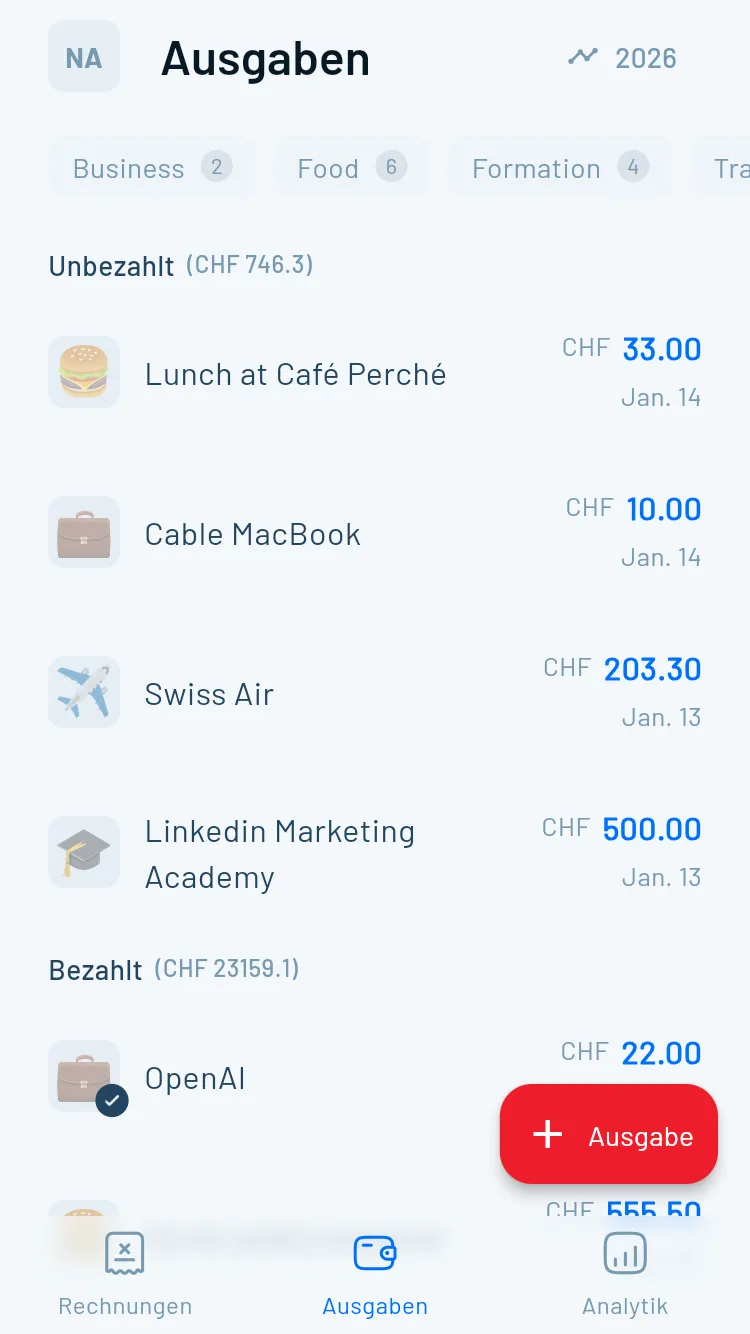
Foto vom Beleg, KI liest Datum, Betrag und MWST heraus. Reicht für die 10-Jahres-Aufbewahrungspflicht. Mehr zum KI-Belegscan →
Häufige Fehler beim Rechnung schreiben in der Schweiz
In meiner Erfahrung wiederholen sich die Fehler immer wieder. Sechs Klassiker, die du leicht vermeidest — jeder davon kann teuer werden.
Häufige Fehler
Sechs Klassiker, die du leicht vermeidest
Diese Fehler wiederholen sich immer wieder. Jeder davon kann teuer werden.
MWST ohne Registrierung aufschlagen
Klingt nach mehr Einnahmen, ist aber strafbar und führt zu Nachforderungen der ESTV. Wer nicht registriert ist, schreibt nichts zur MWST.
Falsche oder erfundene UID-Nummer
Eine Fantasie-UID auf der Rechnung gilt als Urkundenfälschung. Hast du keine, lass das Feld weg.
Schwammige Leistungsbeschreibung
'Beratung' oder 'Diverses' reicht in 5 Jahren bei einer Steuerkontrolle nicht. Schreib präzise.
Alte Einzahlungsscheine verwenden
Orange/rote Scheine sind seit Oktober 2022 ungültig. Schweizer Banken weisen die Zahlung ab. Verwende QR-Rechnung oder klare IBAN.
Einkommen nicht deklarieren
Egal wie klein, egal ob nur CHF 200. Im schlimmsten Fall Steuerhinterziehung mit Strafe und Nachzahlung plus Verzugszinsen.
Belege wegwerfen oder nicht ordnen
Im Streitfall ist der Beleg dein einziges Druckmittel. Speichere alles digital ab, es kostet nichts und schützt dich.
Wenn das Rechnung schreiben zur Routine wird
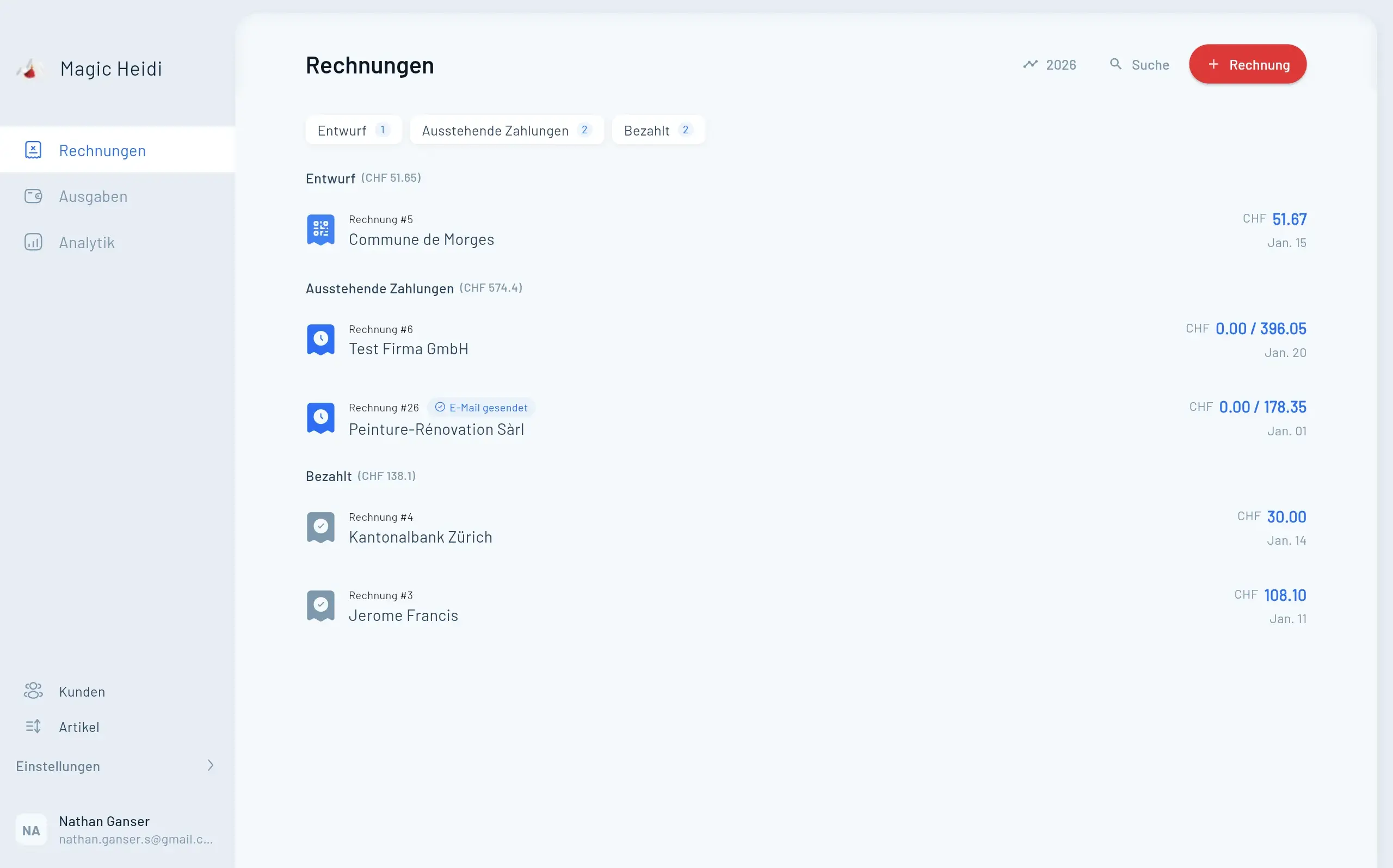
Ein Rechnungsgenerator ist perfekt für die erste Rechnung. Sobald das Rechnung schreiben aber zum monatlichen Ritual wird, tippst du dieselben Informationen immer wieder neu ein: Adresse des Kunden, deine IBAN, jede einzelne Position. Eine Lösung, die deine Kunden speichert, bringt die nächste Rechnung in unter zwei Minuten zum Empfänger.
Von Zeiterfassung bis Mahnungen: was den Alltag wirklich spart
Für Freiberufler, Selbständige und Schweizer KMU lohnt sich der Blick auf diese Funktionen:
- Neue Rechnung in wenigen Klicks: Kunde wählen, Leistung, Menge und Preis eintragen, fertig. Rechnungsbetrag und MWST werden automatisch berechnet.
- Fortlaufende Rechnungsnummer: Das Programm nummeriert automatisch weiter, keine doppelten oder fehlenden Nummern mehr.
- Wiederkehrende Rechnungen: Abos und Retainer stellst du einmal ein, danach läuft die Rechnungserstellung von selbst.
- Automatisches Mahnwesen: Du siehst in Echtzeit, welche Rechnungen bezahlt sind, und verschickst Mahnungen direkt aus der App.
- Zeiterfassung: Stunden direkt in der App erfassen und ohne Excel-Umweg in eine Rechnung umwandeln.
- Individuelles Rechnungsdesign: Logo, Farben und Layout anpassen. Eine individuelle Rechnung sorgt für einen professionellen Auftritt und hinterlässt bei deinen Kunden einen bleibenden Eindruck.
- Elektronische Rechnungen: PDF per E-Mail senden oder ausdrucken und per Post verschicken, je nachdem, was dein Kunde bevorzugt.
Nur Rechnungen — oder gleich die ganzen Bücher?
Für die meisten Selbständigen reicht ein schlankes Werkzeug fürs Fakturieren: Rechnungen schreiben, verschicken, Zahlungen abgleichen. Das deckt unser Rechnungsprogramm für die Schweiz ab. Wenn zusätzlich Belege, Spesen und die MWST-Abrechnung dazukommen, führt der Weg zur Buchhaltungssoftware Schweiz. Doppelte Buchführung brauchst du erst, wenn dein Unternehmen buchführungspflichtig ist. Magic Heidi ist bewusst für kleine Unternehmen und Einzelfirmen gebaut: Der Einstieg ist gratis, deine Rechnungen sind auch im Gratis-Plan konforme QR-Rechnungen, und du zahlst erst, wenn du mehr Volumen brauchst.
FAQ
Häufig gestellte Fragen
Kann man als Privatperson in der Schweiz eine Rechnung schreiben?
Ja. Privatpersonen dürfen in der Schweiz Rechnungen schreiben, ohne eine Firma zu gründen oder sich anzumelden. Pflicht sind die 7 Standardangaben (Absender, Empfänger, Datum, Leistungsbeschreibung, Betrag in CHF, Zahlungsangaben, MWST nur falls registriert). Solange du unter CHF 100'000 Jahresumsatz bleibst, fakturierst du ohne MWST.
Wie viel darf ich als Privatperson in Rechnung stellen?
Es gibt keinen Maximalbetrag pro Rechnung. Aber ab CHF 100'000 Jahresumsatz wirst du MWST-pflichtig. Ab CHF 2'500/Jahr/Auftraggeber zahlt deine Auftraggeber-Firma AHV-Beiträge auf deine Honorare oder muss dich anstellen. Wer regelmässig auf Rechnung arbeitet, gilt aus AHV-Sicht als selbständig erwerbstätig und sollte die Einzelfirma gründen prüfen (siehe /einzelfirma-grunden-schweiz).
Wie mache ich eine Rechnung?
In drei Schritten: Öffne eine Vorlage oder einen Online-Generator, trag Absender, Empfänger, Datum, Leistungsbeschreibung, Betrag in CHF und deine Zahlungsangaben ein, und speichere das Ganze als PDF. Verschicke die Rechnung anschliessend per E-Mail. Mit dem Generator unter /qr-rechnung-erstellen dauert das rund 3 Minuten, inklusive Swiss QR-Code.
Wie kann ich selber eine Rechnung erstellen?
Am einfachsten mit einer Word- oder Excel-Vorlage oder direkt online im Browser. Wichtig sind die sieben Angaben: Absender, Empfänger, Rechnungsdatum, Leistungsbeschreibung, Betrag in CHF, IBAN oder QR-Code, und MWST-Angaben nur, falls du registriert bist. Wer regelmässig fakturiert, spart mit Magic Heidi pro Rechnung 10–15 Minuten.
Wo kann ich kostenlos eine Rechnung erstellen?
Mit dem kostenlosen Rechnungsgenerator von Magic Heidi unter /qr-rechnung-erstellen, ohne Login und ohne Registrierung. Alternativ gibt es unter /rechnungsvorlage eine gratis Vorlage als Word- oder Excel-Datei. Beide Wege erzeugen eine konforme Schweizer Rechnung mit QR-Code.
Wie erstelle ich als Privatperson eine Rechnung?
Genau gleich wie ein Unternehmen, nur ohne MWST und ohne UID-Nummer: dein Name und deine Adresse, Name und Adresse des Kunden, Datum, Leistungsbeschreibung, Betrag in CHF und deine IBAN oder ein QR-Code. Bleib unter CHF 100'000 Jahresumsatz und deklariere das Einkommen in der Steuererklärung.
Was muss auf einer Rechnung aus der Schweiz stehen?
Sieben Pflichtangaben: voller Name und Adresse des Absenders, voller Name und Adresse des Empfängers, Rechnungsdatum und Leistungsdatum, klare Leistungsbeschreibung, Betrag in CHF, Zahlungsangaben (IBAN oder QR-Code), sowie UID-Nummer und MWST-Satz nur, falls du beim Bund für die MWST registriert bist. Eine Rechnungsnummer ist nicht Pflicht, aber sehr empfohlen.
Brauche ich für eine Schweizer Rechnung einen QR-Code?
Seit Oktober 2022 ist die QR-Rechnung der Schweizer Standard. Ein QR-Code ist nicht zwingend Pflicht, aber sehr empfohlen, weil Kunden via E-Banking-Scan in 5 Sekunden zahlen können. Wenn du keinen QR-Code drauf hast, muss deine IBAN sehr klar lesbar im Rechnungstext stehen. Den QR-Code generierst du gratis unter /qr-rechnung-erstellen oder mit einem Rechnungsprogramm.
Wie schreibe ich eine Rechnung ohne MWST in der Schweiz?
Wenn du nicht beim Bund für die MWST registriert bist (also unter CHF 100'000 Jahresumsatz und nicht freiwillig angemeldet), schreibst du gar nichts zum Thema MWST hin. Optional kannst du den Hinweis 'Keine MWST gemäss Art. 10 Abs. 2 MWSTG' unter den Total-Betrag setzen. Wichtig: Schlag keine MWST drauf und gib keine UID-Nummer mit MWST-Ergänzung an, sonst schuldest du der ESTV die ausgewiesene MWST.
Wie lange muss ich Rechnungen aufbewahren?
10 Jahre, gemäss Art. 958f Obligationenrecht. Das gilt für deine eigenen ausgestellten Rechnungen, eingegangene Belege zu Geschäftsausgaben und Zahlungsbestätigungen. Digitale Aufbewahrung ist erlaubt, solange die Dokumente unverändert lesbar bleiben.
Kann ich als Privatperson eine Rechnung an eine Firma stellen?
Ja, problemlos. Die Firma kann den Aufwand voll verbuchen. Sie kann aber keine Vorsteuer (MWST) abziehen, weil du als nicht-registrierte Person auch keine MWST aufgeschlagen hast. Schreib idealerweise 'Nicht mehrwertsteuerpflichtig (Art. 10 Abs. 2 MWSTG)' unter dem Total, damit das Treuhandbüro der Firma deine Rechnung sauber verbuchen kann.
Was ist der Unterschied zwischen einer Privatrechnung und einer Geschäftsrechnung?
Eine Privatrechnung wird von einer natürlichen Person ohne Firma ausgestellt, in der Regel ohne MWST, ohne UID-Nummer und ohne Pflicht zur doppelten Buchführung. Eine Geschäftsrechnung kommt von einer Einzelfirma oder Gesellschaft (GmbH, AG), oft mit MWST, mit UID-Nummer und ist Teil der ordentlichen Buchhaltung. Inhaltlich sehen beide ähnlich aus, der Unterschied liegt in der rechtlichen Stellung des Absenders und den steuerlichen Konsequenzen.
Fazit: Rechnung schreiben in der Schweiz ist einfacher, als die meisten denken
Eine Rechnung in der Schweiz zu schreiben braucht keinen Treuhänder, keine teure Software und keine Firma. Sie braucht 7 saubere Angaben, einen QR-Code oder eine klare IBAN und das Selbstvertrauen, deine Arbeit ordentlich abzurechnen. Wer unter CHF 100'000 Jahresumsatz und unter den AHV-Schwellen bleibt, kann die Rechnungsstellung als Privatperson völlig legal selbst übernehmen.
Für die ersten paar Rechnungen reicht eine kostenlose Schweizer Vorlage oder unser Generator ohne Login; geht der Rechnung ein Angebot voraus, gibt es die passende Offerte Vorlage Schweiz ebenfalls gratis in Word, Excel und PDF. Sobald du regelmässig fakturierst und deine Kunden, Zahlungen und Belege im Griff behalten willst, schaust du dir am besten gleich eine richtige Rechnungssoftware für Schweizer Freelancer an. Magic Heidi ist von Schweizer Freelancern für Schweizer Freelancer gebaut, mit allen Pflichtfeldern standardmässig drin, automatischer QR-Code-Generierung und einem fairen Preismodell, das du auf der Preisseite findest.
Hast du eine konkrete Frage zu deiner ersten Rechnung? Schreib uns. Wer Magic Heidi gebaut hat, beantwortet die E-Mails noch selber. — Nathan Ganser, Gründer von Magic Heidi.
Jetzt starten
Bereit für deine erste Schweizer Rechnung?
Wähle den Weg, der zu deinem Volumen passt. Beide gratis, beide ohne Anmeldung, beide mit QR-Code.
Rechnung in 5 Minuten erstellen
Online-Generator, Word-Vorlage oder volle Rechnungslösung mit Kundenverwaltung.