 Magic Heidi
 Hauptbuch Schweiz: was es ist und wann es für kleine Unternehmen wirklich nützlich wird
Wer nach dem Hauptbuch in der Schweiz sucht, will meist keine trockene Definition. Die eigentliche Frage ist praktischer: Worin unterscheidet sich das Hauptbuch vom Journal, wann braucht man es wirklich und wie hilft es dabei, Konten, Salden und Abschluss sauber zu verstehen?
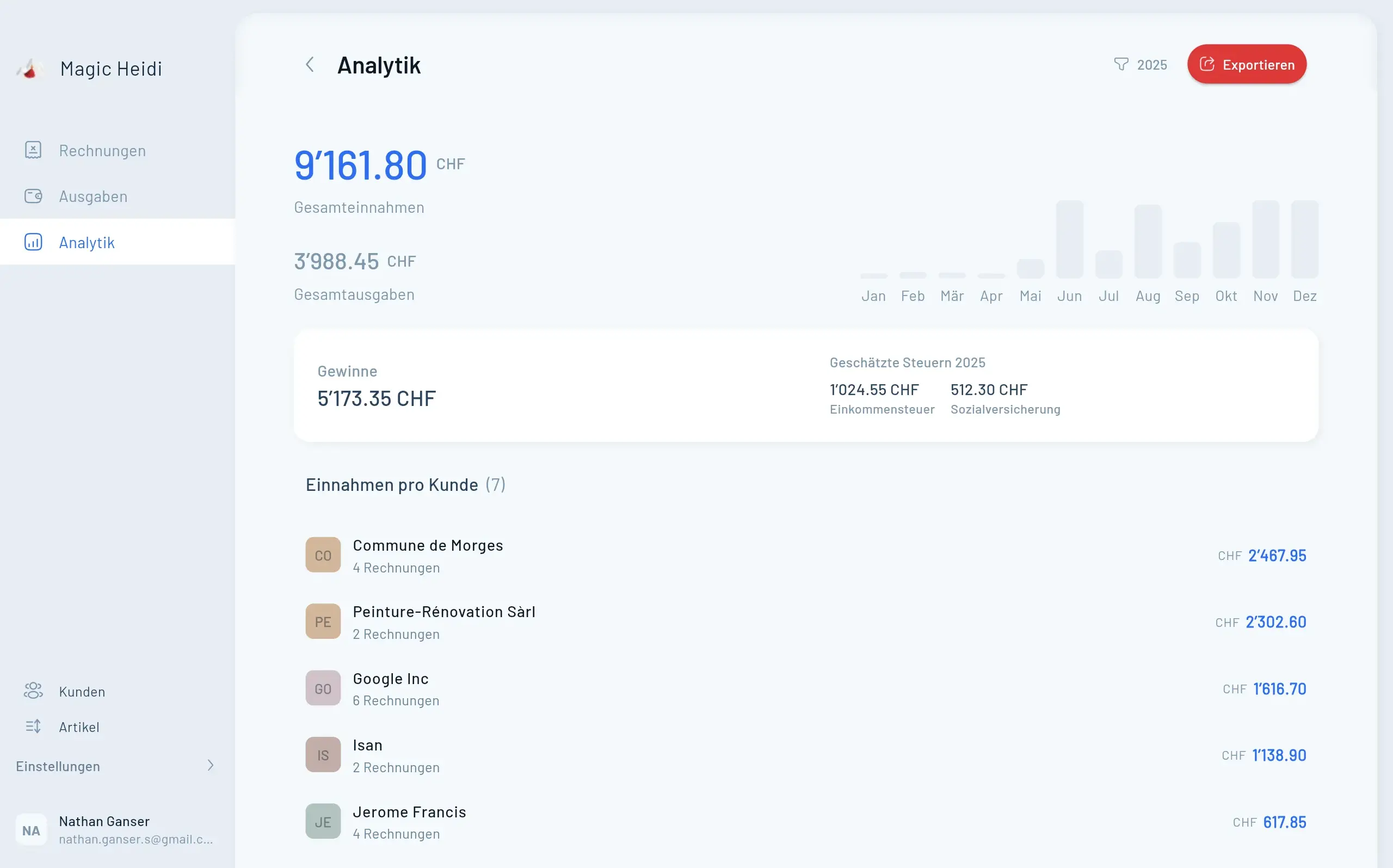
Kurzantwort: Das Hauptbuch ist die nach Konten geordnete Sicht Ihrer Buchhaltung. Während das Buchungsjournal zeigt, wann ein Geschäftsvorfall erfasst wurde, zeigt das Hauptbuch, auf welchem Konto sich dieser Vorgang auswirkt, wie sich der Saldo verändert und welche Konten am Ende in Bilanz und Erfolgsrechnung einfliessen.
Für viele sehr kleine Schweizer Einzelfirmen unter CHF 500'000 Umsatz ist ein formales Hauptbuch nicht vom ersten Tag an das wichtigste Problem. Sobald Sie aber mit mehreren Rechnungen, Zahlungen, Debitoren, Kreditoren, MWST oder periodischen Abschlüssen arbeiten, wird das Hauptbuch schnell wertvoll, weil es die entscheidende Frage beantwortet:
- Wie entwickelt sich ein bestimmtes Konto?
- Woher kommt ein Saldo?
- Welche Buchungen stecken hinter Forderungen, Bank, Aufwand oder Ertrag?
- Sind Abschluss und Auswertungen logisch nachvollziehbar?
Wenn Sie zuerst die chronologische Sicht brauchen, lesen Sie ergänzend Buchungsjournal Schweiz. Diese Seite konzentriert sich auf die kontenbezogene Sicht.
Was das Hauptbuch im Alltag besser macht
Das Hauptbuch ist nicht bloss ein Lehrbuchbegriff. Es wird genau dann nützlich, wenn aus einer Liste von Buchungen eine verständliche Buchhaltung werden soll.
Konten statt Chronologie
Sie sehen Bewegungen pro Konto statt nur eine lange Liste von Buchungen.Salden werden erklärbar
Bank, Debitoren oder Aufwand lassen sich bis zur einzelnen Buchung zurückverfolgen.Abschluss wird greifbarer
Bilanz und Erfolgsrechnung entstehen nicht aus dem Nichts, sondern aus den Konten des Hauptbuchs.Treuhand und Kontrolle werden leichter
Rückfragen lassen sich schneller beantworten, weil Kontoentwicklung und Gegenbuchungen sichtbar bleiben.Was ist ein Hauptbuch?
Das Hauptbuch ist das zentrale Kontenwerk der Buchhaltung. Es sammelt die Buchungen nicht chronologisch, sondern nach Sachkonten.
Kontenbezogene Sicht
Jedes Konto zeigt seine eigenen Bewegungen und seinen laufenden Saldo.
Verbindung zum Journal
Die Buchung entsteht zuerst im Journal und erscheint danach in den betroffenen Konten des Hauptbuchs.
Basis für Abschlüsse
Bilanz und Erfolgsrechnung bauen auf den Konten und Salden des Hauptbuchs auf.
Nicht jedes Unternehmen gleich
Welche Konten im Hauptbuch vorkommen, hängt von Rechtsform, Branche und Komplexität ab.
Was andere Quellen in DE, FR, IT und EN fast gleich beschreiben
Die Recherche über die vier Sprachräume zeigt ein sehr stabiles Muster:
- Deutsch: Das Hauptbuch wird als zentrales Kontenwerk beschrieben, in dem alle Buchungen eines Geschäftsjahres nach Sachbereichen geordnet erscheinen.
- Französisch: Das grand livre ist das Buch, in dem Bewegungen nach Konten zusammenlaufen, während das Journal die chronologische Reihenfolge zeigt.
- Italienisch: Das libro mastro gilt als Ergänzung zum giornale und zeigt die Bewegungen strukturiert nach Konto statt nach Datum.
- Englisch: Das general ledger ist das zentrale System von Konten, auf dessen Basis Finanzberichte und Kontoabstimmungen möglich werden.
Die Begriffe ändern sich, aber die Kernlogik bleibt gleich:
Das Journal beantwortet die Frage „Was ist wann passiert?“. Das Hauptbuch beantwortet die Frage „Auf welchem Konto wirkt sich das aus?“
Genau diese Unterscheidung hilft Schweizer Selbständigen oft mehr als jede abstrakte Definition.
Unterschied zwischen Journal und Hauptbuch
Viele Suchende verwechseln beide Begriffe, weil sie zur gleichen Buchhaltung gehören. Für die Praxis hilft diese einfache Trennung:
| Sicht | Frage | Typisches Ergebnis |
|---|---|---|
| Journal | Was wurde wann gebucht? | Chronologische Liste aller Geschäftsvorfälle |
| Hauptbuch | Welches Konto wurde wie verändert? | Kontoauszüge und Salden pro Sachkonto |
Ein Beispiel macht den Unterschied klar:
Sie stellen am 3. April eine Rechnung über CHF 1'200.
- Im Journal erscheint die Buchung an diesem Datum in der Reihenfolge aller anderen Buchungen.
- Im Hauptbuch taucht dieselbe Buchung gleichzeitig auf dem Konto Debitoren und auf dem Konto Dienstleistungsertrag auf.
Wenn die Zahlung am 5. April eingeht:
- Im Journal kommt eine neue Buchung mit neuem Datum dazu.
- Im Hauptbuch sehen Sie die Bewegung nun auf Bank und erneut auf Debitoren.
Darum ist das Hauptbuch so wichtig, wenn Sie Kontosalden verstehen oder prüfen wollen.
Wenn Sie zuerst die Journal-Logik verstehen wollen, finden Sie hier die passende Ergänzung: Buchungsjournal Schweiz.
Journal, Hauptbuch, Kontenplan: welches Werkzeug beantwortet welche Frage?
Diese drei Begriffe gehören zusammen, sind aber nicht dasselbe.
| Begriff | Wofür er da ist | Wann er besonders hilft |
|---|---|---|
| Kontenplan | Er legt fest, welche Konten Ihr Unternehmen überhaupt verwendet. | Wenn Sie Ihre Buchhaltung sauber strukturieren wollen. |
| Buchungsjournal | Es zeigt alle Geschäftsvorfälle in chronologischer Reihenfolge. | Wenn Sie nachvollziehen wollen, was wann erfasst wurde. |
| Hauptbuch | Es zeigt die Bewegungen und Salden pro Konto. | Wenn Sie Konten prüfen, abstimmen oder Abschlüsse verstehen wollen. |
Was im Hauptbuch typischerweise sichtbar ist
Ein gutes Hauptbuch muss nicht kompliziert aussehen. Es muss vor allem nachvollziehbar machen, wie sich ein Konto über die Zeit verändert.
Diese Elemente machen ein Hauptbuch nützlich
Die konkrete Darstellung variiert je nach Software, doch inhaltlich tauchen fast immer dieselben Bausteine auf.
Kontobezeichnung
Sie sehen sofort, um welches Sachkonto es geht, zum Beispiel Bank, Debitoren oder Ertrag.
- Konto klar benannt
- oft mit Kontonummer
- passt zum Kontenplan
- für Dritte verständlich
Buchungsdatum und Text
Jede Kontobewegung bleibt mit Datum und Buchungstext nachvollziehbar.
- Datum sichtbar
- kurzer Beschreibungstext
- Verweis auf Ursprung
- keine unlesbaren Sammelblöcke
Soll, Haben und Betrag
Das Hauptbuch zeigt, wie sich das Konto rechnerisch verändert.
- Betrag je Buchung
- Soll- oder Haben-Seite
- Bewegung logisch einordenbar
- auch Gegenkonto oft sichtbar
Laufender Saldo
Gerade dieser Punkt macht das Hauptbuch operativ so wertvoll.
- Saldo nach jeder Bewegung
- Entwicklung pro Konto
- Abweichungen schneller erkennbar
- für Abstimmungen hilfreich
Beleg- oder Referenzbezug
Eine Kontozeile sollte auf Journal und Beleg zurückführbar bleiben.
- Rechnungs- oder Belegnummer
- bank- oder zahlungsbezogener Bezug
- keine isolierten Salden ohne Ursprung
- bessere Prüfbarkeit
Brauche ich als Einzelfirma in der Schweiz ein Hauptbuch?
Nicht jede Einzelfirma braucht vom ersten Tag an dieselbe Tiefe. Das KMU-Portal des Bundes hält fest:
- Einzelfirmen und Personengesellschaften über CHF 500'000 Umsatz müssen eine ordentliche Buchführung führen.
- Unterhalb dieser Schwelle reicht mindestens eine vereinfachte Buchhaltung mit Einnahmen, Ausgaben und Vermögenslage.
Das heisst aber nicht, dass ein Hauptbuch für kleine Unternehmen nutzlos wäre. Im Gegenteil: Es wird oft schon vor der formalen Schwelle praktisch wichtig, wenn sich Ihre Buchhaltung nicht mehr mit einer losen Einnahmen-Ausgaben-Liste erklären lässt.
Ein Hauptbuch wird besonders nützlich, wenn:
- Sie mehrere offene Kundenrechnungen verwalten
- Sie Bankbewegungen gegen Debitoren oder Kreditoren abstimmen müssen
- Sie MWST sauber nachvollziehen möchten
- Sie mit periodischen Auswertungen oder Abschlüssen arbeiten
- Ihr Treuhänder nicht nur Belege, sondern Kontoentwicklungen sehen will
Die ehrlichere Antwort lautet also:
Nicht jede kleine Firma braucht sofort ein „grosses“ Hauptbuch-Setup. Aber jede wachsende Buchhaltung profitiert davon, Kontenbewegungen sauber sichtbar zu machen.
Wenn Sie Ihre Kontostruktur zuerst sauber aufbauen möchten, passt dazu Kontenplan Schweiz.
Was in der Schweiz rund um Bücher und Aufbewahrung wirklich zählt
Für die Praxis ist nicht nur wichtig, dass Konten existieren, sondern dass Buchungen, Konten und Belege zusammen nachvollziehbar bleiben.
CHF 500'000 Umsatzschwelle
Darüber wird die ordentliche Buchführung für Einzelfirmen und Personengesellschaften zum klaren Thema.
10 Jahre Aufbewahrung
Geschäftsbücher und Belege müssen langfristig verfügbar bleiben.
Elektronische Aufbewahrung ist möglich
Entscheidend sind Lesbarkeit, Zugriff und Rückverfolgbarkeit.
Hilfsbücher bleiben Ergänzung
Debitoren-, Kreditoren- oder Anlagenbuchhaltung liefern Details, die im Hauptbuch zusammenlaufen.
Beispiel: wie das Hauptbuch eine Frage beantwortet, die das Journal allein nicht löst
Stellen wir uns vor, Ihr Konto 1100 Debitoren zeigt Ende Monat einen höheren Saldo als erwartet.
Mit dem Journal sehen Sie zwar alle Buchungen in zeitlicher Reihenfolge. Das hilft bei der Chronologie, aber nicht sofort bei der Frage, welche offenen Forderungen genau noch im Konto stecken.
Mit dem Hauptbuch des Kontos Debitoren sehen Sie direkt:
- welche Rechnungen eingebucht wurden
- welche Zahlungen verbucht wurden
- ob eine Gutschrift oder Korrektur fehlt
- wie sich der laufende Saldo entwickelt hat
Genau darum ist das Hauptbuch für Abstimmungen so nützlich. Es verwandelt eine diffuse Frage wie „Warum stimmt mein Saldo nicht?“ in eine konkrete Kontosicht.
Dasselbe gilt für:
- Bankkonten, wenn Zahlungen nicht sauber zugeordnet wurden
- Aufwandkonten, wenn Ausgaben falsch kategorisiert wurden
- MWST-Konten, wenn Vorsteuer und Umsatzsteuer unklar laufen
- Kreditoren, wenn offene Lieferantenrechnungen den Saldo erklären sollen
Häufige Missverständnisse rund ums Hauptbuch
1. „Das Hauptbuch ist nur etwas für grosse Firmen“
Nein. Grosse Firmen brauchen es zwingender und oft detaillierter. Aber auch kleine Firmen profitieren davon, sobald mehrere Konten, Rechnungen und Abstimmungen im Spiel sind.
2. „Das Hauptbuch ist einfach eine Liste aller Buchungen“
Nicht ganz. Das wäre eher die Journal-Sicht. Das Hauptbuch ordnet dieselben Bewegungen nach Konto.
3. „Wenn ich einen Kontenplan habe, habe ich automatisch das Hauptbuch verstanden“
Auch nicht. Der Kontenplan ist die Struktur. Das Hauptbuch zeigt, was in dieser Struktur tatsächlich passiert ist.
4. „Ein Saldo allein reicht“
Gerade nicht. Ein Saldo ohne nachvollziehbare Bewegungen ist für Rückfragen, Treuhand und Abschluss oft zu wenig. Die Stärke des Hauptbuchs liegt in der Verbindung von Buchung + Konto + Saldoentwicklung.
Typische Fehler beim
Hauptbuch verstehen
Die Probleme entstehen meist nicht im Abschluss, sondern viel früher: bei unklaren Konten, fehlenden Gegenbuchungen oder Salden ohne Kontext.
Dann ist unklar, ob man die Chronologie oder die Kontoentwicklung prüft.
Ohne die Bewegungen dahinter bleiben Abweichungen schwer erklärbar.
Ein Konto wird wenig nützlich, wenn Buchungen nicht auf ihren Ursprung zurückführen.
Ein schlechtes Hauptbuch ist oft eher ein Problem des Kontenplans als des Buchungsprinzips.
Häufige Fragen zum Hauptbuch in der Schweiz
Was ist der Unterschied zwischen Hauptbuch und Buchungsjournal?
Das Buchungsjournal zeigt Geschäftsvorfälle chronologisch. Das Hauptbuch zeigt dieselben Bewegungen nach Konten sortiert und macht dadurch Salden und Kontoentwicklungen sichtbar.
Ist das Hauptbuch in der Schweiz Pflicht?
Die Pflicht richtet sich nicht isoliert nach dem Wort Hauptbuch, sondern nach den Regeln zur Buchführung im Schweizer Obligationenrecht. Für ordentliche Buchführung ist eine kontenbezogene Struktur zentral. Kleinere Einzelfirmen unter CHF 500'000 Umsatz dürfen mindestens vereinfacht buchen, profitieren aber oft trotzdem von einer Hauptbuch-Logik.
Wofür brauche ich das Hauptbuch konkret?
Vor allem für Kontenabstimmungen, Abschlussvorbereitung, Rückfragen zu Salden, Debitoren- und Kreditorenübersichten sowie die saubere Einordnung von Aufwand, Ertrag, Bank und MWST.
Kann ich ein Hauptbuch digital führen?
Ja. In der Schweiz ist die elektronische Aufbewahrung von Geschäftsbüchern grundsätzlich möglich, sofern Lesbarkeit, Zugriff und Rückverfolgbarkeit sichergestellt bleiben.
Welche Konten sieht man im Hauptbuch?
Typisch sind Bank, Kasse, Debitoren, Kreditoren, MWST, Eigenkapital, Ertragskonten und Aufwandkonten. Welche Konten genau erscheinen, hängt vom Kontenplan Ihres Unternehmens ab.
Brauche ich als Freelancer schon ein Hauptbuch?
Nicht immer in komplexer Form. Aber sobald Sie regelmässig Rechnungen, Zahlungen und Belege strukturieren müssen, wird eine kontenbezogene Sicht sehr hilfreich.
Konten verstehen statt nur Zahlen sammeln
Mit Magic Heidi behalten Sie Rechnungen, Zahlungen und Buchhaltungslogik an einem Ort im Blick, damit aus Buchungen auch verständliche Konten und Auswertungen werden.

Weiterführend:
- Buchungsjournal Schweiz
- Kontenplan Schweiz
- Buchungssatz Schweiz
- Debitorenbuchhaltung Schweiz
- Buchhaltung Schweiz
Quellen und Referenzen:
- KMU-Portal EN: Compulsory accounting
- KMU-Portal EN: Electronic bookkeeping
- KMU-Portal EN: How to organize accounting
- bexio DE: Das Hauptbuch einfach erklärt
- bexio FR: Le grand livre expliqué simplement
- bexio IT: Il libro mastro spiegato in modo semplice
- KMU-Portal EN: What accounting model should you use?
Geprüft im April 2026. Diese Seite bietet allgemeine Informationen und ersetzt keine individuelle Treuhand-, Steuer- oder Rechtsberatung.