Debtors Switzerland: what the term really means and when debtor accounting starts to matter
If you have issued customer invoices that are still unpaid, you are already dealing with debtors. The real question is not the definition. It is whether you can still track open invoices, incoming payments, and liquidity clearly enough without a proper debtor view.
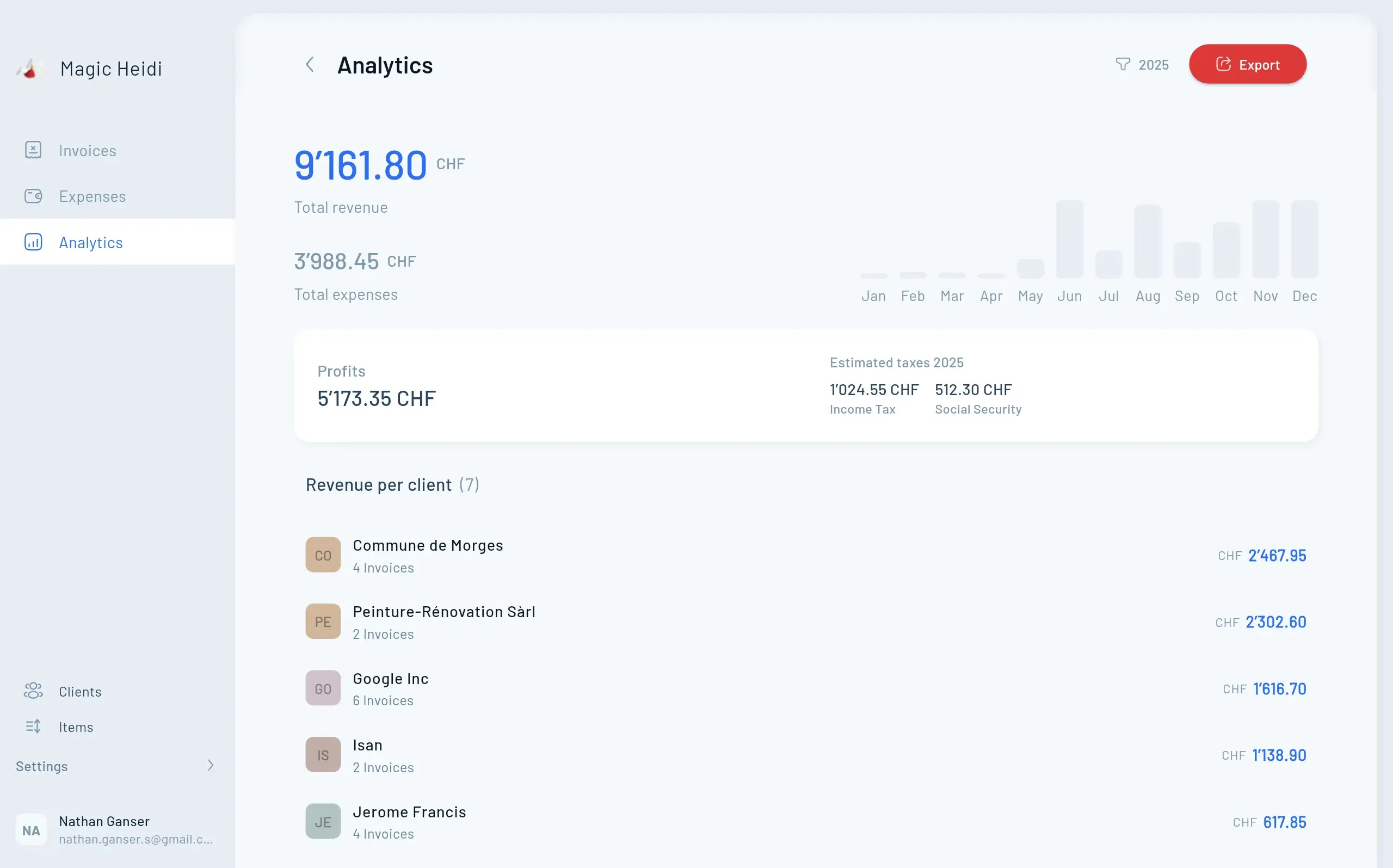
Quick answer: in Swiss accounting, debtors usually means customers who still owe you money for invoices you have already issued. In current accounting language, that usually sits under trade receivables. A debtor accounting view helps you see which invoices are still open, what has already been paid, which balances are overdue, and how those receivables affect liquidity.
If you are searching for debtors switzerland, you usually want one of these answers quickly:
- are debtors an asset or a liability?
- what is the difference between debtors and creditors?
- what does a debtor account actually show?
- when does a sole proprietor in Switzerland need more than a simple open-invoice list?
- how do debtors affect cash flow and not just accounting?
This page is written for that practical job, not for textbook jargon.
This page gives general practical information and does not replace fiduciary, tax, or legal advice for your specific case.
Debtors become a problem when revenue and cash stop matching
Many Swiss small businesses do not struggle because they forgot to invoice. They struggle because they cannot see clearly what is still unpaid, what is overdue, and what that means for liquidity.
Open invoices
You know what you billed, but not always what is still outstanding.Late payments
Without a debtor view, payment reminders usually start too late.Liquidity pressure
Turnover looks fine on paper while cash still has not arrived.Messy bookkeeping
Revenue, receipts, credit notes, and overdue balances get mixed together.What are debtors in Switzerland?
In practical terms, debtors are customer receivables from goods or services already delivered but not yet paid.
The Swiss SME Portal's German glossary defines Debitoren as claims a company has against customers for goods delivered or services already rendered. The Italian glossary describes debitori (conto debitori) as the funds owed by debtors that are relevant in company accounting and arise from sales and services that were not paid immediately. The idea is the same in English and French competitor coverage as well.
In plain English:
- you issue an invoice;
- the client has not paid yet;
- the amount still due belongs to your debtors;
- in more formal accounting language, that is usually trade receivables.
This is why the terms often overlap:
- debtors = the unpaid customer side of the story;
- accounts receivable = the same idea in more international English accounting language;
- trade receivables = the balance-sheet wording you will often see in Swiss account plans.
The official SME account plan used in Swiss business guidance places trade receivables in account range 1100-1109, which also helps answer the next common question: debtors usually sit in current assets, not liabilities.
Debtors, creditors, and trade receivables: do not mix them up
Most searchers are not looking for abstract terminology. They want the clean difference between money customers owe you and money you owe suppliers.
| Term | What it means | Where it usually sits |
|---|---|---|
| Debtors | Customers who still owe you payment | current assets |
| Creditors | Suppliers you still have to pay | short-term liabilities |
| Trade receivables | the formal accounting label often used for debtor balances | current assets / receivables account |
A simple way to remember it:
- debtors point to money coming in later;
- creditors point to money going out later;
- trade receivables is the more formal account name often used for debtor balances.
If you want a lighter Swiss bookkeeping setup overall, start with Swiss accounting software for freelancers. If you are comparing tools first, Best accounting software Switzerland is the broader buyer guide.
What a debtor account actually shows
A debtor account is useful because it turns unpaid invoices from a vague feeling into something you can read, explain, and act on.
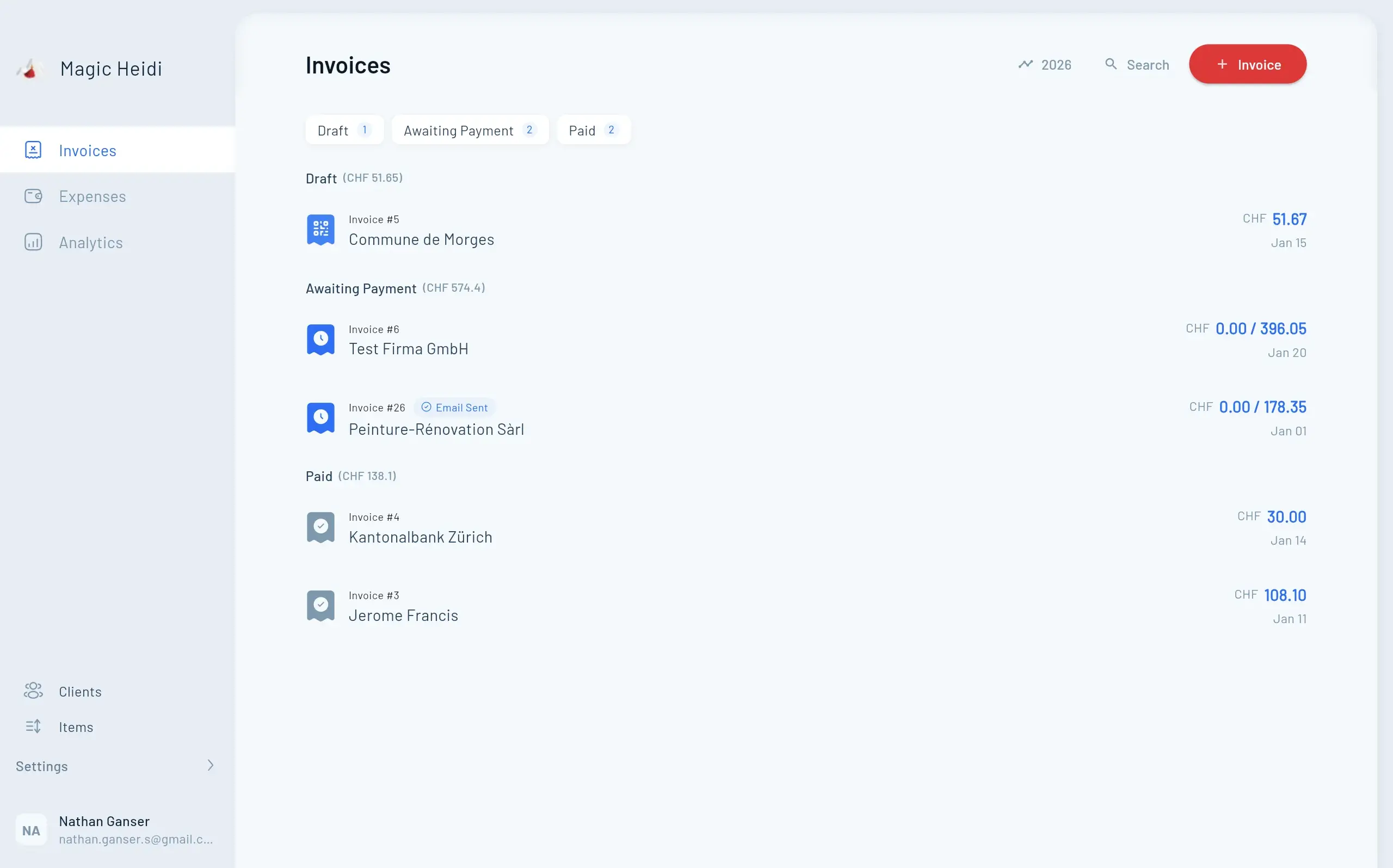
Across English, German, French, and Italian source material, one idea keeps repeating: a debtor view becomes useful when you track receivables per customer, not just as one lump sum.
A typical debtor account helps you see:
- which customer still owes money;
- which invoice created the receivable;
- whether part of the amount has already been paid;
- whether the balance is overdue;
- whether a credit note or correction has reduced the open amount.
Example:
| Date | Movement | Debit | Credit | Debtor balance |
|---|---|---|---|---|
| 03.04.2026 | Invoice to Client A | CHF 1'200 | CHF 1'200 | |
| 10.04.2026 | Partial payment | CHF 800 | CHF 400 | |
| 18.04.2026 | Final payment | CHF 400 | CHF 0 |
That is the practical difference between "we sent invoices" and "we actually understand our receivables".
The French bexio article makes this especially clear: debtor accounting is a sub-ledger view that shows unpaid customer invoices and also covers credit notes. The English version says the same thing in simpler terms: it helps you identify open invoices, late payers, and liquidity risk.
What others consistently write in DE / FR / IT / EN
The wording changes, but the core accounting logic is remarkably consistent across Swiss sources and competitor coverage.
German sources
The Swiss SME glossary defines debtors as claims against customers from deliveries or services already provided.
- customer claims
- already delivered work
- still unpaid
- receivable logic
French sources
French competitor coverage frames debtor accounting as an auxiliary ledger used to track unpaid invoices, incoming payments, and reminders.
- unpaid invoices
- incoming payments
- credit notes
- liquidity
Italian sources
The Italian SME glossary focuses on amounts owed from sales and services not paid immediately, which is a very practical business definition.
- funds owed
- sales and services
- not paid immediately
- relevant for accounting
English sources
English Swiss content usually translates the concept into debtors, accounts receivable, receivables turnover, and debtor payment term.
- accounts receivable
- debtor days
- payment behaviour
- cash-flow visibility
The most useful synthesis is this:
debtors are not just an accounting definition. They are a working view of how much billed revenue has not turned into cash yet.
That is why the topic appears in bookkeeping pages, account-plan material, and liquidity guidance, not only in glossaries.
When does debtor accounting really matter in Switzerland?
The answer is not just legal. It is also operational.
Few invoices, fast payments
A freelancer with a handful of recurring clients can often manage with a simple open-invoice view, as long as it stays current.
Many invoices each month
Once invoice volume rises, it becomes much harder to follow partial payments, due dates, and reminders without separate debtor tracking.
Late payers are common
If clients pay late, debtor accounting becomes a cash-flow tool, not just a bookkeeping detail.
You work with a fiduciary
A cleaner debtor structure makes balances, corrections, and year-end explanations far easier.
::
The Swiss SME Portal's Compulsory accounting guidance says that sole proprietorships and partnerships with turnover below CHF 500'000 may use simplified accounting, which must at least include income, expenses, and assets. Legal entities and larger businesses need full accounts under the Code of Obligations.
That matters because many owners confuse two different questions:
- Do I legally need full accounting?
- Do I practically need a better debtor view?
Those are not the same thing.
A sole proprietor under CHF 500'000 may still be legally allowed to keep things simpler. But once there are:
- multiple customer invoices open at the same time;
- partial payments;
- overdue balances;
- reminders or dunning steps;
- credit notes;
- or regular collaboration with an accountant or fiduciary,
then debtor accounting starts to pay for itself because it keeps the receivable side readable.
The French bexio coverage goes a step further and notes that debtor accounting is optional in principle, but where full double-entry accounting applies, debtor accounting forms part of the auxiliary records expected in practice. That is a useful Swiss nuance: not every tiny business needs a heavyweight receivables process from day one, but businesses under fuller accounting obligations usually need more than a casual spreadsheet.
Three common Swiss cases: when debtors stay simple and when they stop being simple
The same accounting concept has very different weight depending on the business model.
| Business profile | Main debtor risk | Most sensible setup |
|---|---|---|
| Freelancer with 5 recurring clients | forgetting one overdue invoice or residual balance | clear open-invoice tracking with payment status |
| Agency or studio with many invoices | partial payments, late payers, slow reminders | debtor view per client with due dates and follow-up |
| GmbH or larger SME | balances that are hard to explain at month-end or year-end | structured debtor accounting linked to the general ledger |
Why debtors matter for cash flow, not just bookkeeping
This is the part many glossaries skip and real businesses care about most.
The Swiss SME Portal's Business monitoring indicators page connects debtors directly to liquidity. It explains that liquidity depends on how quickly invoices are issued and how punctually customers pay. It also points to two useful indicators:
- receivables turnover;
- debtor payment term (often called debtor days).
That is helpful because it turns debtors into something measurable.
If your payment terms are 30 days but your average debtor payment term drifts well beyond that, you are not just looking at an accounting detail. You are looking at pressure on working cash.
This is one reason debtor accounting becomes important earlier than many founders expect. It helps answer questions like:
- are unpaid invoices growing faster than revenue?
- which clients are consistently late?
- how much of this month's turnover is still not in the bank?
- do we need reminders sooner?
If you only look at revenue and bank balance separately, you often miss the connection. Debtors make that connection visible.
Common mistakes with debtors
The definition is easy. The operational mistakes are where businesses lose time and cash.
An issued invoice is not the same thing as money already received.
If incoming payments are not matched properly, debtor balances stay wrong.
Without a current debtor view, overdue follow-up usually begins after the delay has already become expensive.
Both extremes create friction. The setup should match your real invoice complexity.
So do you need a separate debtor process?
A good rule of thumb is:
- No, not necessarily if you issue very few invoices, get paid quickly, and can still explain every open balance easily.
- Probably yes if open invoices are piling up, clients pay in stages, reminders matter, or liquidity feels less predictable than turnover suggests.
The goal is not to make a Swiss freelancer behave like a large finance department. The goal is to avoid the moment when unpaid invoices become invisible until month-end.
That is exactly where software usually starts to beat a manual list: it connects invoices, payments, open balances, and reminders in one place instead of forcing you to reconstruct them later.
Frequently asked questions about debtors in Switzerland
Are debtors an asset or a liability?
In normal business accounting, debtors sit in current assets because they represent money customers still owe your business.
Is debtor accounting the same as accounts receivable accounting?
In practice, yes. Swiss English often uses both expressions for the same receivables-focused part of accounting.
What is the difference between debtors and creditors?
Debtors owe money to you as a supplier or service provider. Creditors are suppliers you still have to pay.
Does every Swiss sole proprietor need formal debtor accounting?
Not always. Small businesses with low complexity can often manage with a simpler setup. But once open invoices, partial payments, and reminders become regular, a structured debtor view becomes very useful.
What does a debtor account show?
It shows how a specific customer receivable was created, reduced by payments or credit notes, and what balance remains open.
Why do debtors matter for liquidity?
Because invoiced revenue is not cash until the customer pays. Debtors show how much of your billed work is still waiting to turn into money in the bank.
Want to see invoices, payments, and open balances without rebuilding the picture by hand?
Magic Heidi helps Swiss freelancers and small businesses keep invoices, expenses, and accounting clearer day to day, so debtors stop becoming a month-end surprise.
Read next:
- Swiss accounting software for freelancers
- Creditors in Switzerland
- Best accounting software Switzerland
- Swiss expense report template
Sources and references:
- SME Portal DE: Debitoren - Forderungen aus Lieferungen und Leistungen
- SME Portal IT glossary: Debitori (conto debitori)
- SME Portal EN: Compulsory accounting
- SME Portal EN: Business monitoring indicators
- SME account plan EN PDF
- bexio EN: Debtors in accounting explained in simple terms
- bexio FR: Les débiteurs et leur comptabilité
In short: in Switzerland, debtors are not just a glossary term. They are the bridge between invoices already issued and money not yet received. As soon as that bridge starts carrying real volume, debtor accounting becomes much more than a bookkeeping nice-to-have.
Verified in April 2026.