Creditors Switzerland: what the term really means and when a proper accounts payable view starts to matter
If your business receives supplier invoices that are still unpaid, you are already dealing with creditors. The real issue is not the definition. It is whether you can still track due dates, discounts, VAT-relevant invoices, and outgoing payments clearly enough without a proper creditor view.
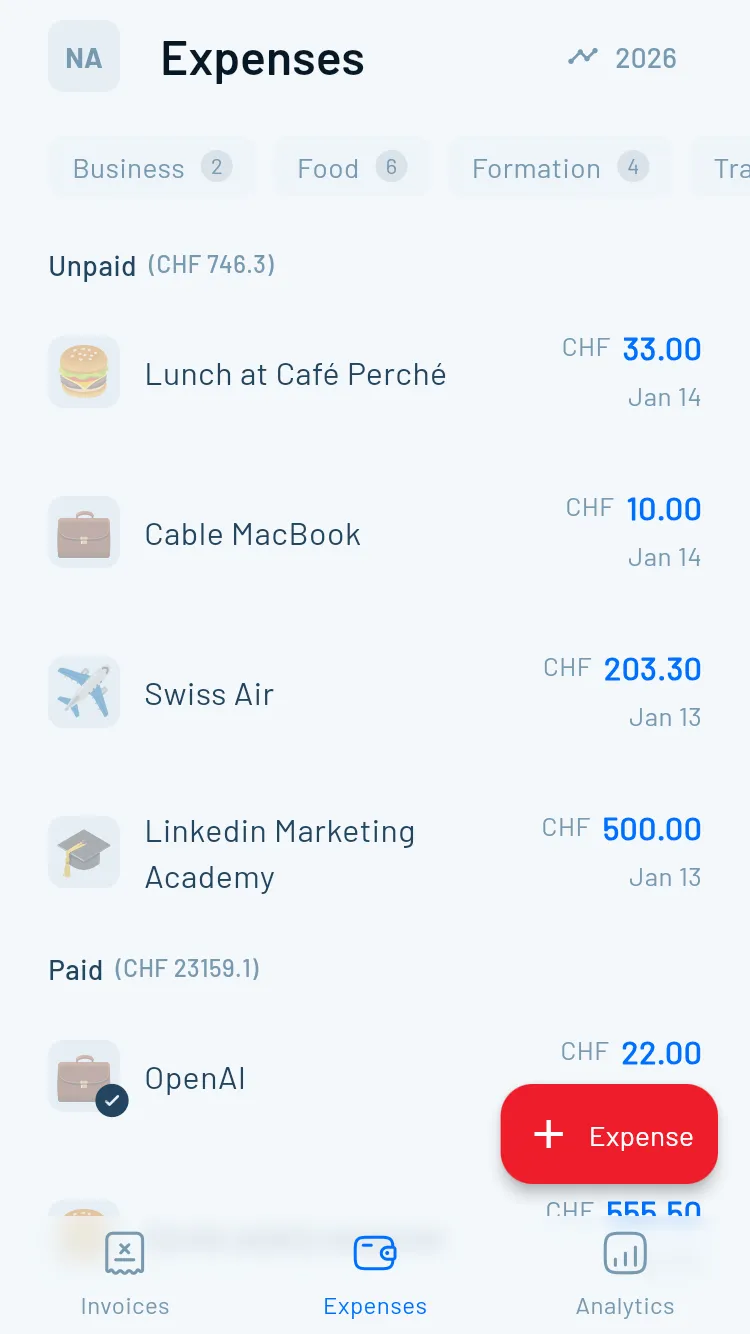
Quick answer: in Swiss accounting, creditors usually means suppliers or service providers you still owe money to. In practice, that usually sits under liabilities from deliveries and services or, in English, accounts payable. A proper creditor view helps you see which supplier invoices are still open, when they fall due, where discount dates matter, whether the invoice is formally usable for input-tax purposes, and how upcoming payments affect liquidity.
If you are searching for creditors switzerland, you usually want one of these answers quickly:
- are creditors an asset or a liability?
- what is the difference between creditors and debtors?
- what does a creditor account actually show?
- when does a Swiss sole proprietor need more than a simple list of incoming invoices?
- why do payment terms, discounts, and supplier invoices matter for cash flow?
This page is written for that practical job, not for textbook jargon.
This page gives general practical information and does not replace fiduciary, tax, or legal advice for your specific case.
Creditors become a problem when incoming invoices and outgoing cash stop matching
Many Swiss small businesses do not struggle because they forgot an expense. They struggle because they cannot see clearly which supplier invoices are still open, what is due next, and which payment decisions are about to hit liquidity.
Supplier invoices
Invoices arrive by email, PDF, scan, or post and quickly end up in different places.Due dates and discounts
Without a current creditor view, payment deadlines and skonto opportunities are easy to miss.Liquidity pressure
You know expenses exist, but not always when they will actually leave the bank account.Messy bookkeeping
Input VAT, expense evidence, approvals, and payment status get mixed together.What are creditors in Switzerland?
In practical terms, creditors are the suppliers, service providers, and other counterparties you still have to pay.
The Swiss SME Portal's English glossary defines a creditor as a person or business to whom something is owed. The German glossary says the same thing for Gläubiger / Kreditor, and the French glossary defines a créancier the same way. That is the core idea across languages.
In plain English:
- you receive goods or services;
- the supplier issues an invoice;
- you have not paid it yet;
- until payment, that balance belongs to your creditors.
This is why the terms often overlap:
- creditors = the supplier side of unpaid obligations;
- accounts payable = the more international English term used in software and finance teams;
- liabilities from deliveries and services = the more formal balance-sheet style wording you will often see in Swiss account plans.
The official Swiss SME chart of accounts places Verbindlichkeiten aus Lieferungen und Leistungen (Kreditoren) under short-term liabilities, typically around account 2000. That also answers the first common classification question: creditors usually sit in current liabilities, not assets.
Creditors, debtors, and accounts payable: do not mix them up
Most searchers are not looking for abstract terminology. They want the clean difference between money you still owe suppliers and money customers still owe you.
| Term | What it means | Where it usually sits |
|---|---|---|
| Creditors | suppliers or service providers you still have to pay | current liabilities |
| Debtors | customers who still owe you payment | current assets |
| Accounts payable | the English finance term commonly used for creditor balances | supplier liabilities / payables ledger |
A simple way to remember it:
- creditors point to money going out later;
- debtors point to money coming in later;
- accounts payable is the English workflow name often used for the creditor side.
If you want the customer side of the same picture, Debtors in Switzerland is the companion guide.
What a creditor account actually shows
A creditor account is useful because it turns supplier obligations from a vague list of bills into something you can read, explain, and manage.
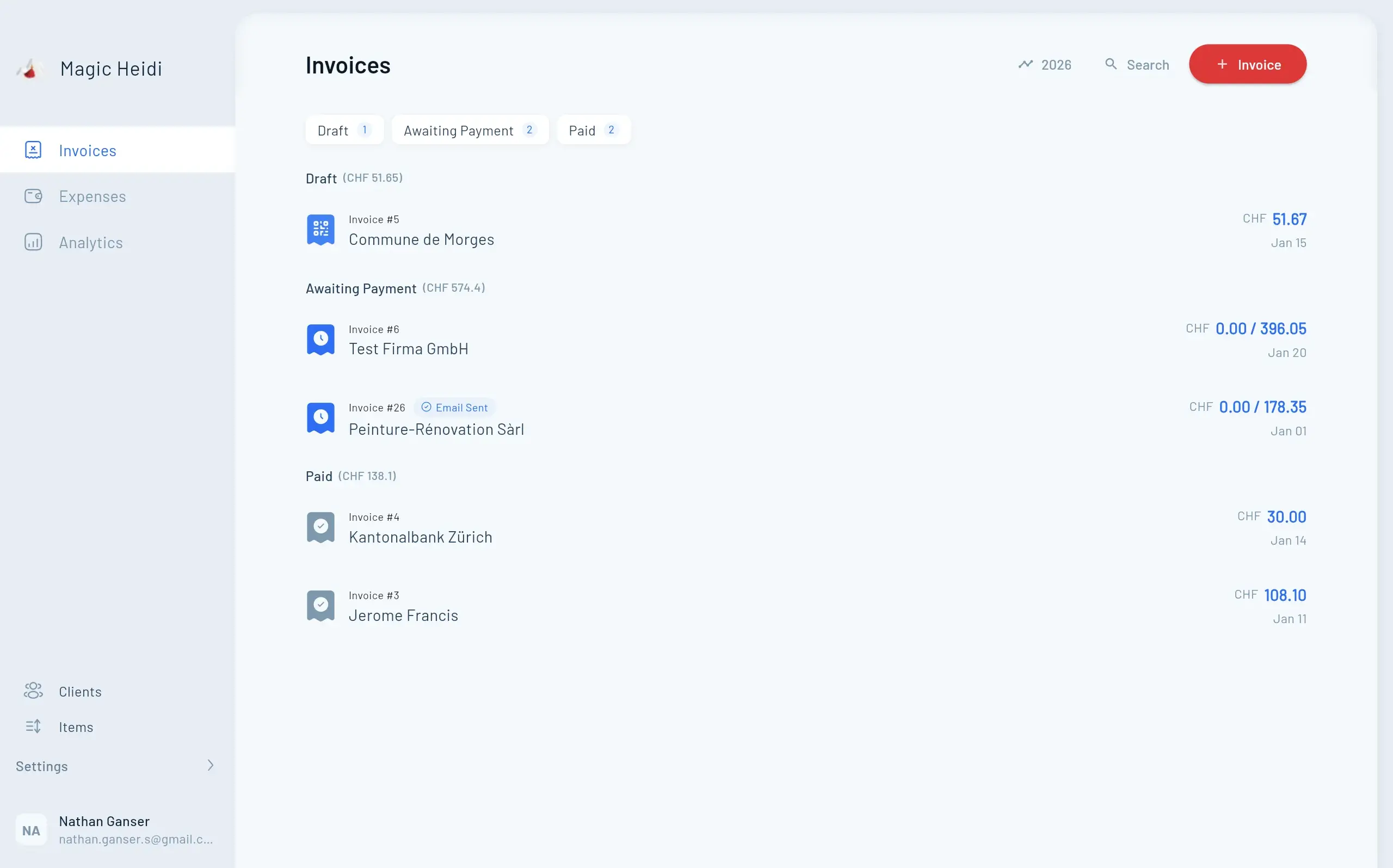
Across German, French, Italian, and English source material, one idea keeps repeating: a creditor view becomes useful when you track obligations per supplier, not just as a pile of incoming invoices.
A typical creditor account or accounts payable view helps you see:
- which supplier invoice created the liability;
- when the invoice falls due;
- whether an early-payment discount applies;
- whether part of the amount has already been paid;
- whether the invoice is formally complete enough for VAT and bookkeeping purposes;
- whether a credit note or correction changed the balance.
Example:
| Date | Movement | Debit | Credit | Open creditor balance |
|---|---|---|---|---|
| 03.04.2026 | Supplier invoice for software | CHF 480 | CHF 480 | |
| 10.04.2026 | Partial payment | CHF 200 | CHF 280 | |
| 14.04.2026 | Supplier credit note | CHF 30 | CHF 250 | |
| 28.04.2026 | Final payment | CHF 250 | CHF 0 |
That is the practical difference between "we had some expenses" and "we actually understand what is still payable".
The Swiss SME Portal's Italian guidance on accounting models makes this operational point very clearly: in debtor and creditor accounting, a separate account is kept for each customer or supplier, and all movements such as invoices and payments are recorded there before totals are carried into the general ledger.
What others consistently write in DE / FR / IT / EN
The wording changes, but the practical accounting logic is remarkably consistent across official Swiss guidance and Swiss software coverage.
German sources
German Swiss coverage focuses on liabilities toward suppliers, structured invoice checks, payment deadlines, and the role of creditor accounting in liquidity planning.
- incoming invoice capture
- payment deadlines
- short-term liabilities
- reporting and overview
French sources
French competitor coverage describes creditor accounting as a sub-ledger that groups supplier debts, open invoices, due dates, and bank reconciliation.
- supplier debts
- open invoices
- days payable
- bank matching
Italian sources
Italian Swiss material stresses supplier accounts, invoice payments, and the point at which many invoices make separate debtor and creditor accounting advisable.
- one account per supplier
- invoice and payment movements
- open-invoice method vs sub-ledger
- practical threshold by volume
English sources
English Swiss software pages usually frame the same topic as accounts payable, centering document entry, approval, payment, and proactive cash-use planning.
- accounts payable
- document release
- supplier entry
- planned use of funds
The most useful synthesis is this:
creditors are not just a glossary term. They are the working view of bills you have already incurred but have not yet turned into cash outflow.
That is why the topic shows up in bookkeeping guidance, VAT invoice rules, payment-process pages, and liquidity material instead of only in dictionaries.
When does creditor accounting really matter in Switzerland?
The answer is not just legal. It is also operational.
Few supplier invoices
A freelancer with a handful of recurring bills can often manage with a simple open-invoice view, as long as it stays current.
Many invoices each month
Once invoice volume rises, it becomes much harder to track due dates, partial payments, and discounts without a separate creditor view.
VAT-relevant supplier invoices
If input tax matters, invoice quality and supporting evidence matter as much as payment status.
Tighter cash planning
If liquidity feels less predictable than your expense list suggests, creditor accounting becomes a planning tool, not just an accounting label.
::
The Swiss SME Portal's English guidance on compulsory accounting says legal entities and sole proprietorships or partnerships above CHF 500'000 turnover must keep full accounts, while smaller sole proprietorships and partnerships may use simplified accounting that includes at least income, expenses, and assets.
That matters because many founders confuse two different questions:
- Do I legally need full accounting?
- Do I practically need a better creditor view?
Those are not the same thing.
A sole proprietor below CHF 500'000 may still be legally allowed to keep things simpler. But the Swiss SME Portal's Italian guidance adds a very practical nuance: if the number of invoices and payments becomes substantial, separate debtor and creditor accounting is recommended because the open-invoice method becomes harder to manage.
That is the real Swiss answer for many freelancers and small teams:
- legal simplicity may still be allowed;
- operational simplicity may already be gone.
As soon as there are:
- multiple supplier invoices open at the same time;
- different payment terms;
- early-payment discounts;
- invoice approvals;
- input-tax questions;
- or month-end surprises about what still needs to be paid,
then creditor accounting starts to pay for itself because it keeps the payable side readable.
Three common Swiss cases: when creditors stay simple and when they stop being simple
The same accounting concept carries very different weight depending on invoice volume and business model.
| Business profile | Main creditor risk | Most sensible setup |
|---|---|---|
| Freelancer with a few monthly supplier bills | missing one due date or one VAT-relevant invoice detail | clear incoming-invoice tracking with payment status |
| Agency or small team with many subscriptions and suppliers | late payments, duplicate invoices, lost discounts | creditor view per supplier with due dates and approvals |
| GmbH or larger SME | month-end liabilities that are hard to explain or reconcile | structured accounts payable linked to the general ledger |
Why creditors matter for cash flow, not just bookkeeping
This is the part many glossaries skip and real businesses care about most.
A supplier invoice is not just an expense record. It is a future cash outflow with a date attached.
That is why creditor accounting becomes important earlier than many founders expect. It helps answer questions like:
- how much of next month's cash is already committed?
- which payments can wait until term and which should be paid early for a discount?
- where are we paying too late and damaging supplier trust?
- how many invoices are still open but not visible in the bank yet?
Official Swiss guidance also adds an important invoice-quality point. The SME Portal's Italian VAT page says a supplier invoice that meets the formal VAT invoicing criteria generally allows deduction of input tax, and it recommends always asking suppliers for a correct invoice. In practice, that means creditor accounting is not only about paying bills. It is also about making sure the supporting invoice is usable.
Swiss software coverage makes the same cash-planning point from a different angle. Abacus describes accounts payable as a way to manage liabilities transparently and plan the use of funds proactively, while also making use of agreed payment periods and discount dates.
So the real business value is not merely "we recorded an expense". It is "we know what we owe, when we owe it, and what that means for liquidity".
Common mistakes with creditors
The definition is easy. The operational mistakes are where businesses lose time, discounts, and cash visibility.
That hides upcoming liabilities until the money has already left the account.
A payable without timing is only half-managed.
If formal invoice details are missing, VAT and evidence issues appear later.
Expense recognition and payment status are connected, but they are not the same thing.
So do you need a separate creditor process?
A good rule of thumb is:
- No, not necessarily if you receive very few supplier invoices, pay them quickly, and can still explain every open payable without reconstructing it from email and bank exports.
- Probably yes if invoice volume is growing, payment dates matter, discounts matter, VAT support matters, or your month-end liabilities keep surprising you.
The goal is not to make a Swiss freelancer behave like a large finance department. The goal is to avoid the moment when unpaid supplier invoices become invisible until they create stress.
That is exactly where software usually starts to beat a manual list: it connects invoice receipt, payment timing, VAT evidence, and bank outflow in one place instead of forcing you to rebuild the picture later.
Frequently asked questions about creditors in Switzerland
Are creditors an asset or a liability?
In normal business accounting, creditors sit in current liabilities because they represent amounts your business still owes suppliers or service providers.
Is creditor accounting the same as accounts payable?
In practice, yes. Accounts payable is the common English workflow term for the creditor side of accounting.
What is the difference between creditors and debtors?
Creditors are suppliers you still have to pay. Debtors are customers who still have to pay you.
Does every Swiss sole proprietor need formal creditor accounting?
Not always. Small businesses with low invoice volume can often manage with a simpler setup. But once incoming invoices, due dates, discounts, and reconciliations become regular, a structured creditor view becomes very useful.
What does a creditor account show?
It shows how a supplier liability was created, whether it is due, whether anything has already been paid or credited, and what balance remains open.
Why do supplier invoices matter for VAT too?
Because formally correct supplier invoices are generally required to support input-tax deduction. So the payable process is also part of document quality and evidence quality.
Want supplier invoices, payment dates, and outgoing cash to stay readable without rebuilding the story by hand?
Magic Heidi helps Swiss freelancers and small businesses keep invoices, expenses, and accounting clearer day to day, so creditors stop becoming a month-end surprise.
Read next:
Sources and references:
- SME Portal EN glossary: Creditor
- SME Portal EN: Compulsory accounting
- SME Portal DE glossary: Gläubiger
- SME Portal FR glossary: Créancier
- SME Portal IT: What type of accounting should you use?
- SME Portal IT: Invoice requirements and input-tax relevance
- Official Swiss SME chart of accounts school version (DE)
- bexio DE: Kreditorenbuchhaltung einfach erklärt
- bexio FR: Tout comprendre sur les créanciers
- bexio IT: I creditori spiegati in modo semplice
- Abacus EN: Accounts Payable overview
In short: in Switzerland, creditors are not just a glossary label. They are the bridge between supplier invoices already received and cash not yet paid out. As soon as that bridge starts carrying real volume, a proper accounts payable view becomes much more than a bookkeeping nice-to-have.
Verified in April 2026.