Legal Guide

Essential Contracts Every Swiss Freelancer Needs

Protect your income, define boundaries, and prove your self-employed status with the right legal documents. A complete guide to contracts, compliance, and avoiding common pitfalls.

Swiss Business Contracts

You've landed a new client. They're ready to work with you. But before you start, there's one critical step: getting the right contract in place.

In Switzerland, working without proper legal documentation isn't just risky—it can cost you money, damage client relationships, and even jeopardize your self-employed status with AHV authorities. Over 60% of freelancers have dealt with payment disputes or scope disagreements, often because there was no formal written agreement.

This guide covers everything Swiss freelancers need to know about contracts and legal documents—from understanding different contract types to avoiding common pitfalls that could classify you as "fake self-employed."

Why Legal Documents Matter

The right contract does three things that protect your freelance business and establish your legitimacy as a self-employed professional in Switzerland.

💰

Protects Your Income

Clear payment terms mean fewer late payments and disputes. You'll know exactly what you're owed and when.
🎯

Defines Boundaries

Scope creep ends when your contract specifies deliverables. No more "just one more thing" requests.

Proves Your Status

AHV compensation offices require proof that your business has started. Client contracts are key documentation.

Before diving into specific contracts, you need to understand how Swiss law views your work.

The Selbstständigkeit vs. Scheinselbstständigkeit Challenge

Swiss authorities increasingly scrutinize whether someone is truly self-employed or "fake self-employed" (Scheinselbstständigkeit). This matters because it affects:

  • Social insurance obligations (AHV/IV/EO)
  • Unemployment insurance eligibility
  • Tax treatment
  • Client liability for employee benefits

AHV offices check each activity individually. You could be recognized as self-employed for one client but considered employed for another. The decisive factor? Your actual economic circumstances.

Proving You're Genuinely Self-Employed

AHV compensation offices look for these signs of genuine self-employment:

  • Multiple clients (not dependent on a single income source)
  • Your own business infrastructure (website, business cards, office space)
  • Financial risk (you invest in equipment, bear business expenses)
  • Independence in how you work (you control when and where)
  • Contracts with multiple clients showing different working relationships

Your contracts should reflect these realities while avoiding language that makes you look like an employee.

Essential Elements

What Every Strong Freelancer Contract Needs

Regardless of which type you use, every solid freelancer contract should include these critical elements to protect both parties.

Scope & Payment

Define Exactly What You're Delivering

Be specific about deliverables, payment terms, timelines, and what's excluded. Vague language leads to disputes and scope creep.

  • Detailed scope of work with specific deliverables
  • Total fee or hourly rate in CHF with payment schedule
  • Payment deadline (typically Net 30 days in Switzerland)
  • Late payment fees and VAT treatment
  • Timeline with milestones and final delivery deadline
Contract Documentation
Protection & Rights

Protect Your Work and Independence

Clear terms about intellectual property, confidentiality, and your self-employed status prevent legal complications down the road.

  • Intellectual property ownership and usage rights
  • Confidentiality and non-disclosure provisions
  • Language affirming your independent contractor status
  • Termination conditions and notice periods
  • Liability limitations and Swiss law jurisdiction
Legal Protection

Beyond client contracts, these documents protect your business:

Non-Disclosure Agreement (NDA)

A standalone NDA is essential when:

  • Discussing project details before a contract is signed
  • Sharing sensitive information in initial meetings
  • Working with multiple parties on confidential projects

Many freelancers have a standard NDA they send before detailed project discussions.

Terms of Service

If you sell products, courses, or standardized services, you need Terms of Service covering:

  • What you provide
  • Payment and refund policies
  • User responsibilities
  • Liability limitations
  • Dispute resolution

Invoice Templates with Clear Terms

Your invoices should reference your contract and include:

  • Payment terms from your agreement
  • Your business details (UID number if VAT-registered)
  • Clear description matching contracted work
  • Swiss QR bill (mandatory since 2020)

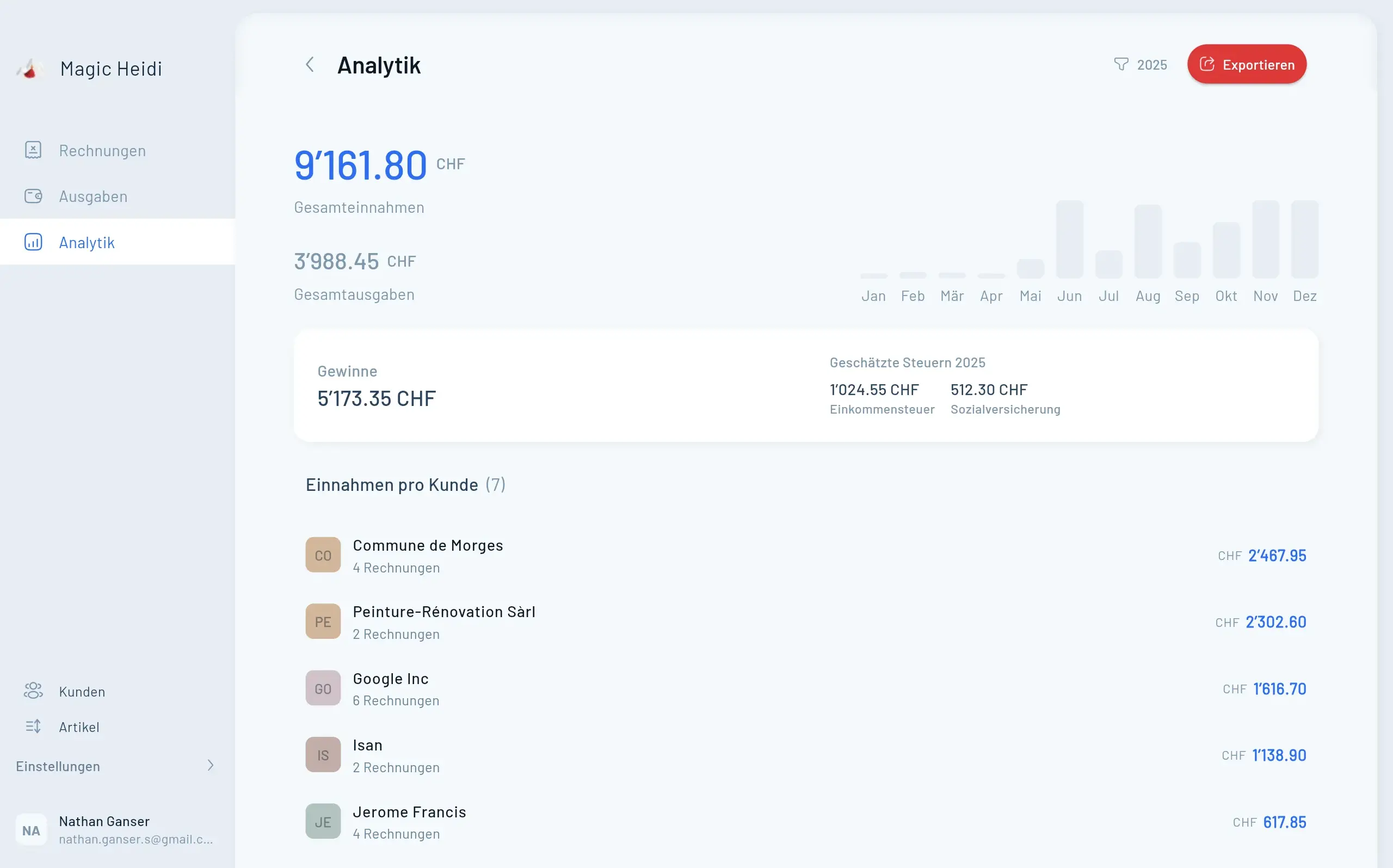
Magic Heidi generates compliant Swiss invoices automatically, ensuring you meet all legal requirements without manual formatting.

Swiss-Specific Legal Requirements

Working as a freelancer in Switzerland comes with specific obligations that your contracts must support and reflect.

📋 Social Insurance Proof
🔢 UID Number Required
🗂️ Canton Registration
🌍 4 Official Languages
🇨🇭
AHV/IV/EO Registration

Prove your business with client contracts and invoices when registering

💰
VAT Compliance

Register if turnover exceeds CHF 100,000 and update contract terms

🏛️
Canton Requirements

Check local business registration and permit requirements

🌐
Multi-Language Options

Consider contracts in German, French, or English based on client region

Best Practices

Contract Management Best Practices

Having the right contracts is step one. Managing them effectively is step two. Always send contracts before starting work, use legally valid digital signatures, and store documents securely with Swiss-hosted cloud backup.

Document Management

When to Consult a Swiss Lawyer

While templates handle most situations, consult a lawyer when:

  • Drafting contracts for high-value projects (over CHF 50,000)
  • Working with international clients on complex deliverables
  • Facing classification questions about self-employment status
  • Creating contracts for licensed professions (medical, legal, financial)
  • Dealing with intellectual property disputes
  • Establishing partnership or collaboration agreements
  • Your work involves significant liability risk

A few hundred francs for legal review can prevent thousands in disputes.


How Magic Heidi Supports Your Complete Freelance Business

Managing contracts alongside invoicing, expenses, and accounting creates administrative overhead. Magic Heidi streamlines your entire business operations in one platform.

Integrated workflow:

  • Create proposals and contracts for new clients
  • Convert accepted projects into invoices automatically
  • Track payment status tied to specific contracts
  • Generate expense reports for project costs
  • Manage accounting in compliance with Swiss tax requirements

Built for Swiss freelancers:

  • Multi-language support (German, French, Italian, English)
  • Swiss QR bill generation
  • AHV-compliant documentation
  • Canton-specific tax calculations
  • Data stored exclusively on Swiss servers in Zürich
FAQ

Frequently Asked Questions

Do I legally need a written contract as a freelancer in Switzerland?

Not always—verbal contracts are legally binding. However, proving the terms of a verbal agreement is nearly impossible in disputes. Written contracts are essential for protecting yourself and establishing clear expectations.

What's the difference between Dienstvertrag and Werkvertrag?

A Dienstvertrag pays you for providing a service (like 20 hours of consulting), while a Werkvertrag pays you only for delivering a specific finished product (like a completed website). The key distinction is whether payment depends on effort or result.

How do I avoid being classified as Scheinselbstständigkeit (fake self-employment)?

Demonstrate genuine independence: work for multiple clients, use your own equipment, control your schedule, bear financial risk, and ensure your contracts reflect independent work rather than employee-like arrangements.

Are contract templates legally sufficient, or do I need a lawyer?

Swiss-specific templates work for most standard situations. Consult a lawyer for high-value contracts, complex projects, licensed professions, or when facing self-employment classification questions.

Can I work with international clients using Swiss contracts?

Yes, but include a clause specifying that Swiss law governs the contract. For clients outside Switzerland, consider which country's courts have jurisdiction in disputes. Many international clients are comfortable with Swiss law.

How do I handle VAT in my freelancer contracts?

If not VAT-registered, note "VAT-exempt as per Article 10 MWSTG." If registered, include your UID number and specify whether prices include or exclude VAT (common practice is to show prices excluding VAT, then add it).

What social insurance documents do I need as a Swiss freelancer?

When registering as self-employed with AHV, provide: client contracts proving you have business relationships, invoices showing active business, possibly your business plan, and other documentation of your independent enterprise.

Should I use the same contract for all clients?

Start with a solid template, but customize for each client based on project type, scope, and specific requirements. Different projects (Werkvertrag vs. Dienstvertrag) need different contract approaches.

Take Control of Your Freelance Business

The right contracts protect your income, define professional boundaries, and establish your legitimate self-employed status. Start with Magic Heidi—the complete toolkit Swiss freelancers need for contracts, invoices, and accounting.

Disclaimer: This article provides general information about contracts and legal documents for educational purposes. It does not constitute legal advice. Swiss law is complex and varies by canton. Consult a qualified Swiss lawyer for specific legal questions about your freelance business.