
Swiss Business Guide

Bookkeeping in Switzerland: Everything SMEs Need to Know

Bookkeeping isn't just compliance—it's the foundation for bank loans, cash flow forecasting, and avoiding costly penalties. Get clear answers on Swiss requirements, costs, and the right approach for your business.

Swiss Business Office

Bookkeeping isn't just about compliance in Switzerland—it's the foundation that lets you secure bank loans, forecast cash flow, and avoid costly penalties. Yet many Swiss business owners struggle with questions like "Do I really need double-entry bookkeeping?" or "Should I outsource or use software?"

This guide gives you clear answers. You'll learn exactly what Swiss law requires, what your options cost, and how to choose the right approach for your business.

Electronic Storage

Digital Records: What You Need to Know

You can store records electronically without special authorization—but they must be non-modifiable, accessible, complete, and backed up. Simple cloud storage without version control doesn't meet Swiss requirements.

Secure Digital Storage
Accounting Methods

Simplified vs. Double-Entry Bookkeeping

Understanding the difference helps you choose the right approach for your business.

FeatureSimplified (Cash-Based)Double-Entry
Who Can UseSole proprietors under CHF 500K All businesses
ComplexitySimple checkbook registerEvery transaction affects 2+ accounts
Financial Visibility Limited insights Complete picture
Bank/Investor Ready Basic only Professional statements
Error Detection Manual review needed Built-in reconciliation
Time InvestmentLowerHigher (but worth it)
Implementation Options

Your Three Options: DIY, Software, or Outsource

Choose the approach that matches your business size, complexity, and accounting expertise.

Option 1

Do It Yourself with Software

Best for sole proprietors under CHF 500K, service businesses with simple transactions, and owners with basic accounting knowledge.

  • bexio: CHF 30-100/month - Most recommended for growing SMEs
  • Banana Accounting: CHF 69-198 one-time - Great for solo entrepreneurs
  • CashCtrl: Free basic version - Perfect for tight budgets
  • Crésus: CHF 20/month rental - Swiss-developed with local support
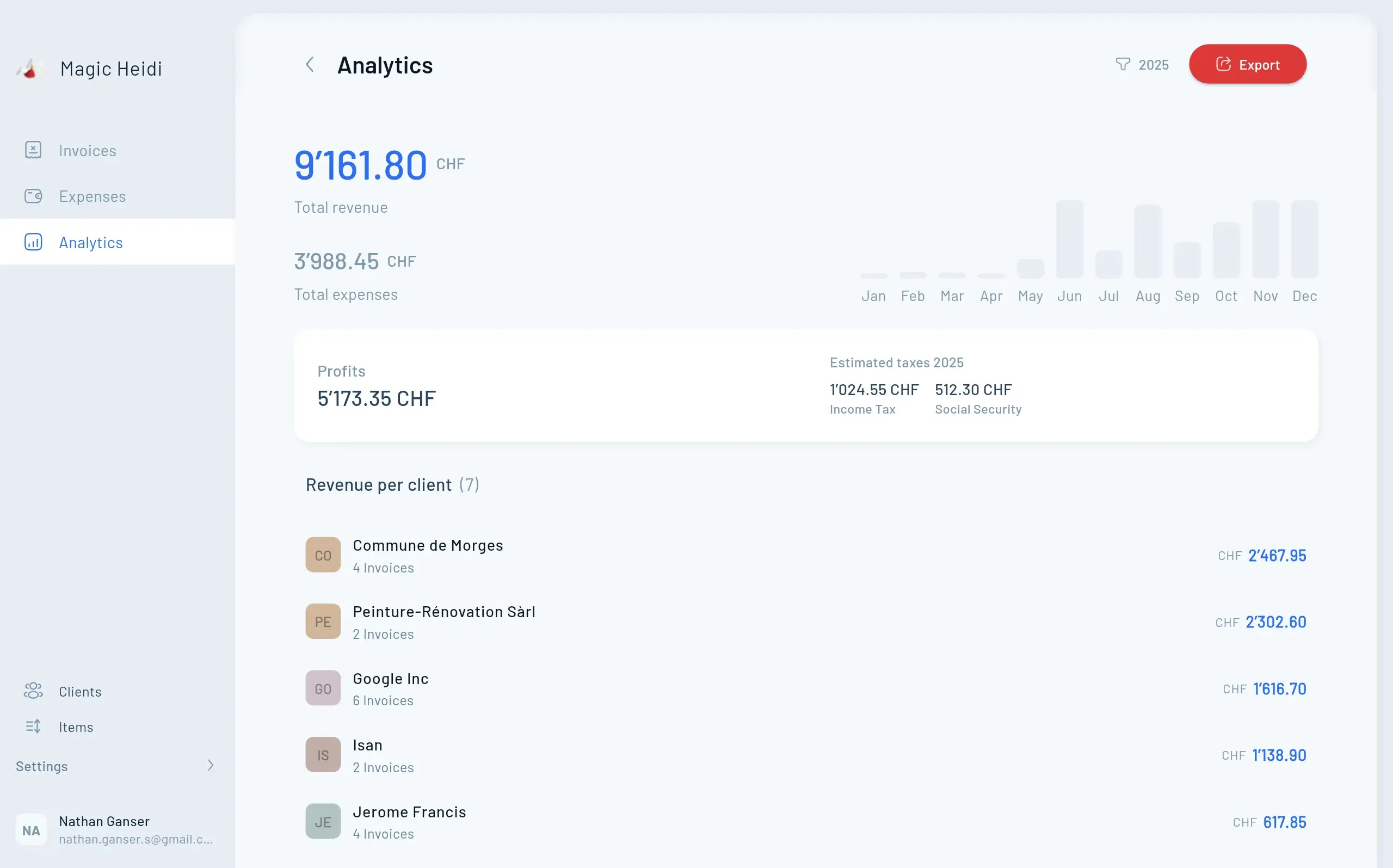
Accounting Software Dashboard
Option 2

Hybrid Approach

Use software for daily bookkeeping, hire professionals for reviews, VAT submissions, and year-end statements. Total cost: CHF 1,000-2,500/year.

  • Monthly or quarterly professional reviews
  • VAT submission assistance
  • Year-end financial statements
  • Tax return preparation support
Swiss Entrepreneur
Option 3

Full Outsourcing to Fiduciary

Hand everything to professionals. Costs range from CHF 150/month (solo freelancer) to CHF 3,000+/month (SME with 4-20 employees).

  • Guaranteed Swiss compliance
  • Complete time savings for business focus
  • Expert financial advice included
  • Professional statements for banks and investors
Professional Bookkeeping

Common Bookkeeping Mistakes
That Cost Swiss Businesses

Beyond penalties, poor bookkeeping means you're flying blind—you won't know your actual profit margins, cash position, or when to hire or cut costs.

💳

Mixing Personal & Business

Using business accounts for personal expenses creates documentation nightmares. Open separate accounts from day one.
📅

Waiting Until Year-End

Monthly recording prevents December panic and catches errors when fresh. Late bookkeeping means late VAT filings and penalties.
🧾

Missing Small Receipts

That CHF 15 coffee with a client? Deductible. Small amounts add up to thousands in lost deductions annually.
💰

Incorrect VAT Recording

Wrong VAT rates (7.7% standard, 2.5% reduced, 3.7% accommodation) cause reconciliation problems and trigger audits.
📁

Poor Document Organization

Tax authorities can request 10-year-old records. If you can't produce them, you face penalties—even if legitimate.
🏦

Skipping Bank Reconciliation

Monthly reconciliation catches duplicate charges, fraud, and recording errors. Skip it and your reports become unreliable.

What Happens If You Don't Keep Proper Records?

Swiss law treats bookkeeping violations seriously.

Penalties include:

  • Tax reassessments based on estimated (usually inflated) income
  • Late filing fees for VAT returns
  • Potential criminal proceedings for serious violations
  • Inability to claim legitimate tax deductions
  • Bank loan rejections (banks require clean financial statements)
  • Investor skepticism (no one invests without audit-proof books)

Beyond penalties, poor bookkeeping means you're flying blind. You won't know:

  • Your actual profit margins
  • Which products or services make money
  • Your true cash position
  • When to hire or cut costs
FAQ

Frequently Asked Questions

Do I need an auditor?

Not necessarily. Mandatory audits only apply to companies exceeding two of these thresholds: CHF 20M balance sheet, CHF 40M turnover, or 250 full-time employees. Smaller companies can opt out if all shareholders agree. However, banks often require audited statements for significant loans.

Can I do my bookkeeping in English?

Yes. Swiss law permits accounting in German, French, Italian, Romansh, or English. Use the language that makes sense for your business and stakeholders.

What if my company has no transactions?

You still must file a 'nil return' and maintain minimal records. Even dormant companies have obligations to the commercial register and tax authorities.

When should I switch from simplified to double-entry bookkeeping?

Switch before you hit CHF 500,000 in turnover, ideally at your fiscal year-end. Switching mid-year requires restating prior transactions, which creates extra work and cost.

Can I deduct bookkeeping costs?

Yes. Software subscriptions, fiduciary fees, and related professional services are fully deductible business expenses.

How do I choose an outsourcing partner?

Ask about their specialization in your business type, who will handle your account, response times, what's included in fees, industry experience, and whether you can access your data anytime. Check references—good relationships last years.

Take Control of Your Swiss Bookkeeping Today

Proper bookkeeping transforms from a dreaded obligation into a competitive advantage. You make better decisions, avoid costly surprises, and sleep better knowing you're fully compliant with Swiss law.