EUR to CHF Exchange Rate: Smart Currency Management for Swiss Businesses
Live rates, 2026 forecasts, and practical strategies to minimize conversion costs and manage currency risk effectively.
Current Rate: 1 EUR = 0.9219 CHF | 1 CHF = 1.0848 EUR
The Euro-Swiss Franc exchange rate affects hundreds of thousands of Swiss businesses and cross-border workers daily. Whether you're invoicing EU clients, managing expenses in multiple currencies, or working across borders, understanding EUR/CHF dynamics is essential for your bottom line.
This guide goes beyond basic conversion—it shows you how to minimize costs, manage currency risk, and integrate exchange rates into your accounting workflow.
What's Happening with EUR/CHF in 2026?
The Swiss Franc continues to strengthen against the Euro. Over the past decade, the Euro has lost 13.4% of its purchasing power against CHF.
The Swiss Franc retains its safe-haven status. While the Eurozone faces economic headwinds, Switzerland's stability keeps the Franc attractive to investors.
What this means for your business: Budget conservatively for EUR expenses. If you invoice in Euros but report in CHF, expect continued pressure on margins unless you adjust pricing or hedge currency risk.
Understanding Currency Drivers
Major factors shaping the EUR/CHF exchange rate in 2026
Swiss National Bank Policy
The SNB's December 2025 decision to keep rates at 0% signals confidence in Switzerland's economic stability—but also their vigilance.
- Interest rate differential with ECB supports CHF strength
- SNB ready to intervene if CHF strengthens too rapidly
- Inflation forecasts of 0.2% (2025), 0.3% (2026), 0.6% (2027)
- Exceptional price stability creates predictable environment
Safe-Haven Flows
During global uncertainty, investors flee to safety—and the Swiss Franc is a classic refuge.
- European debt crisis saw major CHF surges
- COVID-19 pandemic strengthened CHF despite disruption
- 2025 geopolitical tensions create ongoing volatility
- Calm markets tend to weaken CHF slightly
Economic Performance Gap
Switzerland's economy consistently outperforms the Eurozone average in stability, employment, and productivity.
- Swiss GDP growth stable at ~1%
- Swiss unemployment historically low at 2-3%
- Swiss inflation (0.3%) far below Eurozone rates
- Long-term performance gap supports CHF strength
Stop Losing Money on Currency Conversions
If you work in Switzerland but live in France, Germany, Italy, or Austria, poor exchange management can cost you 120 EUR monthly—nearly 1,500 EUR annually.

Minimize Your Conversion Costs
Banks often hide margins in their rates. When the real market rate is 1 CHF = 1.05 EUR, your bank might offer 1.03 EUR. That 2% difference adds up fast.
Dollar-Cost Averaging
Automate salary conversion immediately upon receipt to smooth out rate fluctuations
Transparent Services
Specialized services can save 70-80% vs traditional bank costs
Timing Matters
Best rates typically 3-4 PM GMT due to high liquidity
Tax Planning
Use official exchange rates for tax declarations, not bank rates
Managing EUR/CHF in Your Accounting System
Currency conversion isn't just about getting a good rate—it's about accurate financial reporting and tax compliance.
- 🧾Invoicing EU Clients
Use exchange rate on invoice date for revenue recognition
- 💳Recording Expenses
Document EUR expenses with CHF values for your books
- 📊Year-End Statements
Apply Swiss accounting standards for exchange differences
- 🔄Exchange Gains/Losses
Track rate differences as income or expenses on P&L
- Invoice #3
Magic Heidi
CHF 500
Jan 29
- Invoice #2
Webbiger LTD
CHF 2000
Jan 24
- Invoice #1
John Doe
CHF 600
Jan 20
Invoicing EU Clients in Euros
When you invoice a German client 5,000 EUR, what's that worth in your CHF accounting system?
Example: You invoice €5,000 on January 15 when 1 EUR = 0.93 CHF (5,376 CHF). Payment arrives February 10 when 1 EUR = 0.91 CHF (5,495 CHF). You record 119 CHF as foreign exchange income.
Key principles:
- Use the exchange rate on the date of the invoice for revenue recognition
- If payment comes weeks later at a different rate, the difference is an exchange gain or loss
- Document your rate source (SNB, bank, accounting software) for audit trails
Year-End Financial Statements
Swiss accounting standards require specific treatment:
- Monetary assets/liabilities (cash, receivables, payables): Use the exchange rate on your balance sheet date
- Non-monetary assets (equipment, inventory): Use the rate from the original purchase date
- Exchange differences: Post as income (gains) or expenses (losses) on your P&L
Practical Tips: Minimize Exchange Costs
Banks make billions on hidden forex fees. Here's how to keep more of your money.
Specialized forex services 70-80% cheaper than banks
Best rates during 3-4 PM GMT market overlap
Execute automatically when target rate hits
Lock in rates with forward contracts for big payments
When Hedging Makes Sense
Consider forward contracts for:
- Large equipment purchases from EU suppliers
- Multi-month contracts with EU clients
- Predictable recurring expenses in EUR
- Businesses that can't absorb rate fluctuations
Skip hedging for:
- Small, irregular transactions
- Short timeframes (under 30 days)
- Natural hedges (both EUR income and expenses)
Learning from EUR/CHF History
The Euro launched in 1999. Switzerland's decision to remain outside the EU and Eurozone created today's currency dynamic.
How Software Simplifies Currency Management
Manual currency tracking is time-consuming and error-prone. Modern accounting platforms automate the entire process.
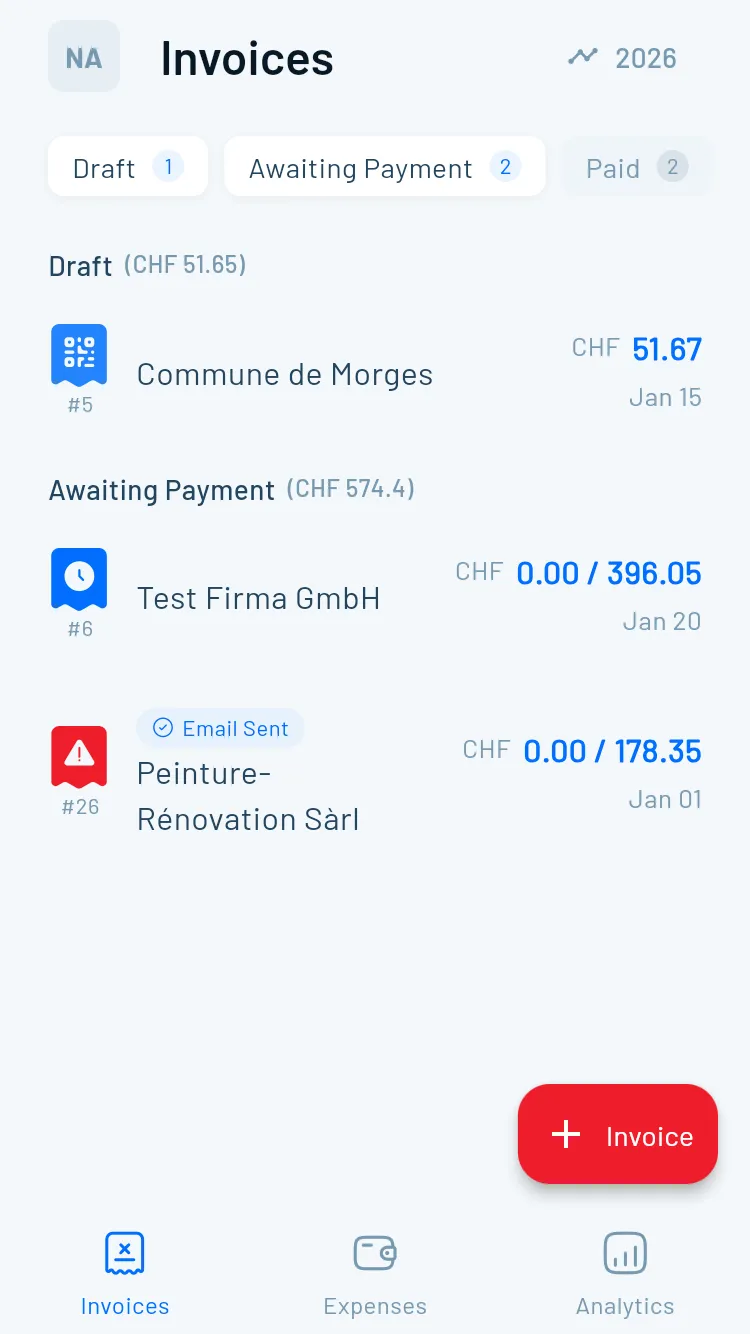
Automatic Currency Management Features
Stop manual rate lookups and calculations. Smart software handles it all.
Real-Time Rate Updates
Your software fetches real-time rates throughout the day. When you create an invoice or record an expense, the current rate applies automatically.
- No more searching for exchange rates online
- Eliminates manual calculations and data entry errors
- Always uses current, accurate rates
- Automatic rate documentation for audits
Multi-Currency Reports
Generate P&L and balance sheets that automatically convert foreign transactions to your base currency (CHF).
- Track currency exposure at a glance
- See EUR receivables outstanding
- Monitor exchange risk in real-time
- Understand rate impact on bottom line
Bank Integration
Import bank statements in both CHF and EUR. Your software recognizes transactions in different currencies and converts them appropriately.
- Automatic currency recognition
- Real-time CHF conversion
- Complete audit trail
- Seamless multi-currency reconciliation
Frequently Asked Currency Questions
How often does the EUR/CHF rate update?
The forex market operates 24 hours a day, 5 days a week. Rates change every minute while markets are open. Good currency converters update every few minutes during market hours.
Is the Swiss Franc stronger than the Euro?
Currently, yes. 1 CHF equals 1.08 EUR, meaning the Franc has more purchasing power. This hasn't always been the case—rates fluctuate—but the 10-year trend strongly favors CHF.
Can I use Euros in Switzerland?
Many tourist-oriented shops and restaurants near borders accept Euros, but you'll receive change in CHF and face a marked-up exchange rate. For regular purchases, always use CHF—you'll get better value.
What exchange rate should I use for accounting?
Use the rate on the transaction date for most items. For balance sheet items (cash, receivables, payables), use the rate on your statement date. Document your rate source and methodology for consistency.
Should I open a EUR bank account for my Swiss business?
If you regularly invoice EU clients or pay EU suppliers, a EUR account makes sense. You can accumulate EUR and convert in bulk when rates are favorable, rather than converting every transaction individually.
How do cross-border workers save on exchange fees?
Automate salary conversion immediately upon receipt (Dollar-Cost Averaging), use specialized low-fee services instead of retail banks, and consider multi-currency accounts that offer real market rates.
2026 Rate Predictions
UBS outlook: EUR/CHF to edge higher to 0.94, with gradual CHF appreciation toward 0.91 by year-end 2026
Risks to This Forecast
Downside (CHF weakens):
- ECB raises rates faster than expected
- Eurozone economic recovery accelerates
- Resolution of geopolitical tensions reduces safe-haven demand
Upside (CHF strengthens):
- Global recession fears grow
- Eurozone debt concerns resurface
- SNB intervenes less aggressively than expected
Business planning implication: Budget for CHF at 0.91-0.94 per EUR. If your business is sensitive to exchange rates, build a 5% buffer into your assumptions.
Simplify Multi-Currency Accounting with Magic Heidi
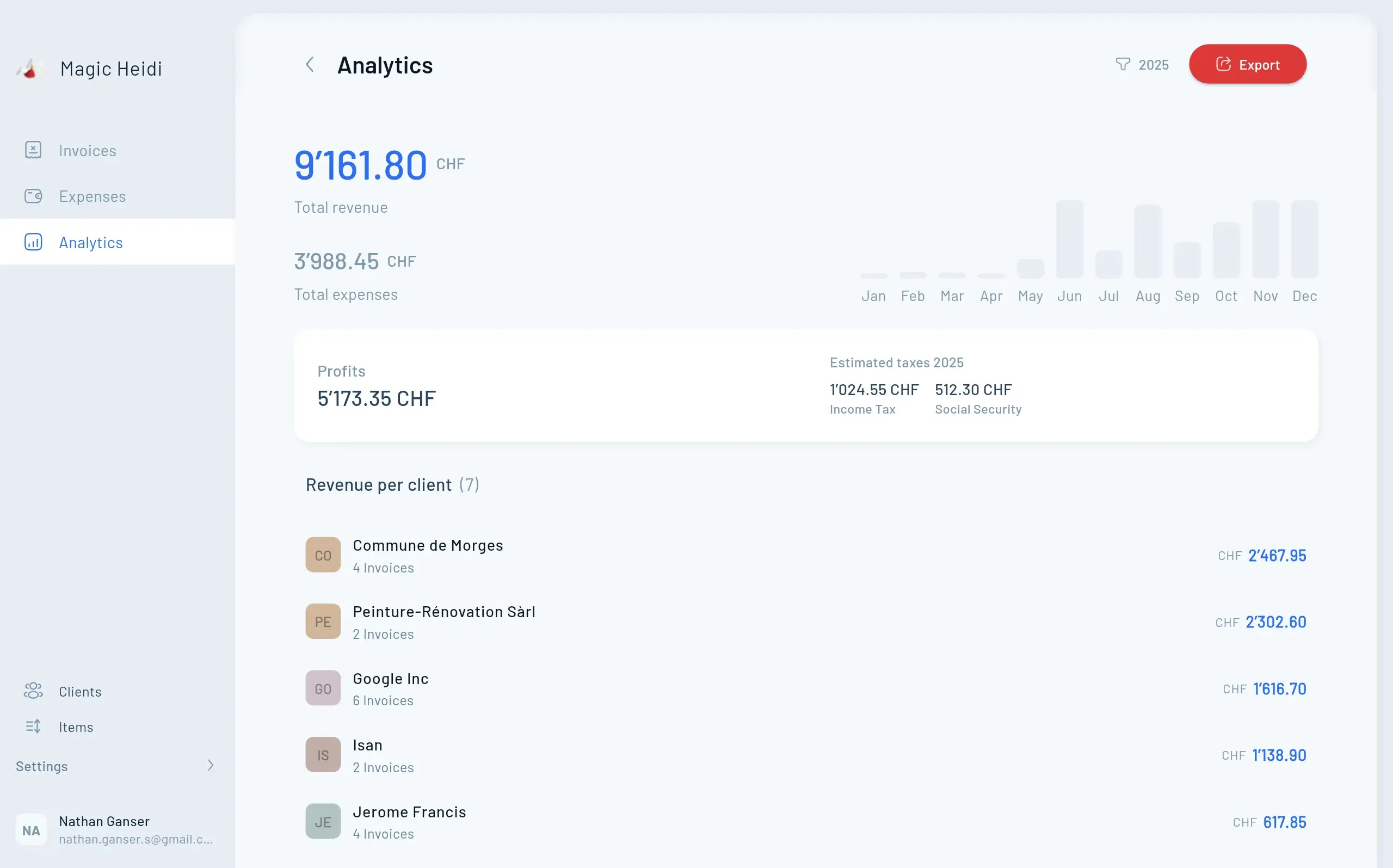
Magic Heidi integrates live EUR/CHF rates directly into your Swiss accounting workflow. Create invoices in multiple currencies, track expenses across borders, and generate compliant financial reports—all with automatic currency conversion.
Built for Swiss businesses:
- Real-time exchange rates for accurate invoicing
- Automatic CHF conversion for all transactions
- Multi-currency VAT management
- Bank statement imports in EUR and CHF
- Audit-ready documentation
Stop juggling currency converters, spreadsheets, and manual calculations. Magic Heidi handles it automatically while you focus on growing your business.
Exchange rates update regularly throughout the trading day. Rates shown are indicative and may vary by provider. For critical financial decisions, consult with a qualified financial advisor or accountant.