Spesen Software: Ihr kompletter Guide zur automatisierten Spesenabrechnung
Verblasste Belege jagen. Wochenlang auf Rückerstattungen warten. Stunden mit Spesenberichten verbringen. Kommt Ihnen das bekannt vor? Sie sind nicht allein—ein Drittel aller Unternehmen verlässt sich noch auf manuelle Spesenerfassung mit Excel und Papierbelegen.
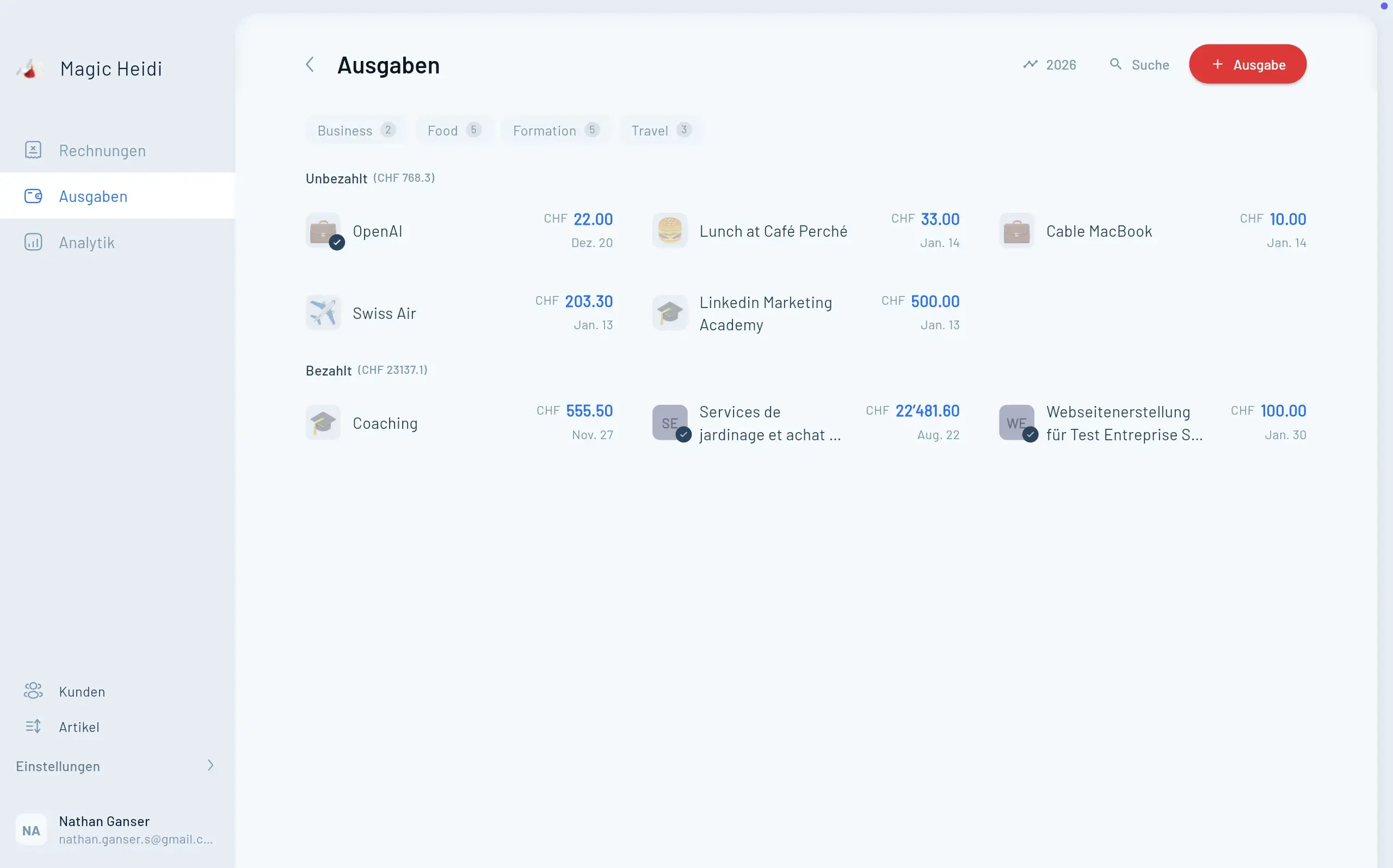
Aber hier die Realität: Manuelle Spesenverwaltung kostet Ihr Unternehmen jährlich tausende Stunden und verpasste Abzüge. Währenddessen haben Unternehmen mit automatisierter Spesen Software ihre Bearbeitungszeit um 70% reduziert und bis zu 4.250 Stunden jährlich eingespart.
Dieser Guide erklärt alles, was Sie über Spesen Software wissen müssen—was sie ist, wie sie funktioniert, welche Funktionen wichtig sind und wie Sie die richtige Lösung für Ihr Unternehmen finden.
Was ist Spesen Software?
Spesen Software ist ein digitales Tool, das Geschäftsausgaben automatisch erfasst, organisiert und in einer zentralen Plattform überwacht. Statt Belege manuell in Excel einzutragen, erfasst die Software Spesen automatisch und verwaltet alles von der Einreichung bis zur Rückerstattung.
Beleg erfassen
Mitarbeiter fotografiert Beleg mit dem Smartphone
Auto-Datenextraktion
Software scannt und extrahiert Informationen automatisch
Intelligente Kategorisierung
System kategorisiert Spesen und prüft Firmenrichtlinien
Automatische Freigabe
Spesen werden automatisch zur Rückerstattung weitergeleitet
Buchhaltungs-Sync
Daten synchronisieren direkt mit Ihrer Buchhaltung
Warum manuelle Spesenerfassung scheitert
Bevor wir zu den Funktionen kommen, schauen wir uns an, warum manuelle Methoden scheitern und Ihr Unternehmen jährlich tausende kosten.
Verlorene Belege summieren sich
Papierbelege verblassen, reissen oder verschwinden. Wenn Belege fehlen, verlieren Sie wertvolle Steuerabzüge und präzise Finanzunterlagen.Rückerstattungen dauern ewig
Mitarbeiter warten wochenlang auf Rückerstattung. Manuelle Freigabeprozesse und Dateneingabe verursachen Verzögerungen, die automatisierte Systeme komplett eliminieren.Keine Echtzeit-Übersicht
60% der Finanzverantwortlichen haben keine Übersicht über Ausgaben. Ohne Echtzeitdaten erkennen Sie Mehrausgaben erst, wenn es zu spät ist.Kleine Ausgaben verschwinden
Der 2-Franken-Kaffee oder die 15-Franken-Büromaterialien summieren sich. Wenn unerfasst, verpassen Sie legitime Abzüge und genaue Ausgabendaten.Manuelle Fehler kosten Geld
Tippfehler, inkonsistente Formate und Duplikate schaffen Compliance-Probleme und Alpträume bei Prüfungen.Richtlinien-Durchsetzung unmöglich
Inkonsistente manuelle Prüfung führt zu Richtlinienverstössen, finanziellen Unstimmigkeiten und sogar Betrug.Hauptfunktionen von Spesen Software
Die besten Spesen-Plattformen bieten diese Kernfunktionen, die die Ausgabenverwaltung Ihres Unternehmens transformieren.
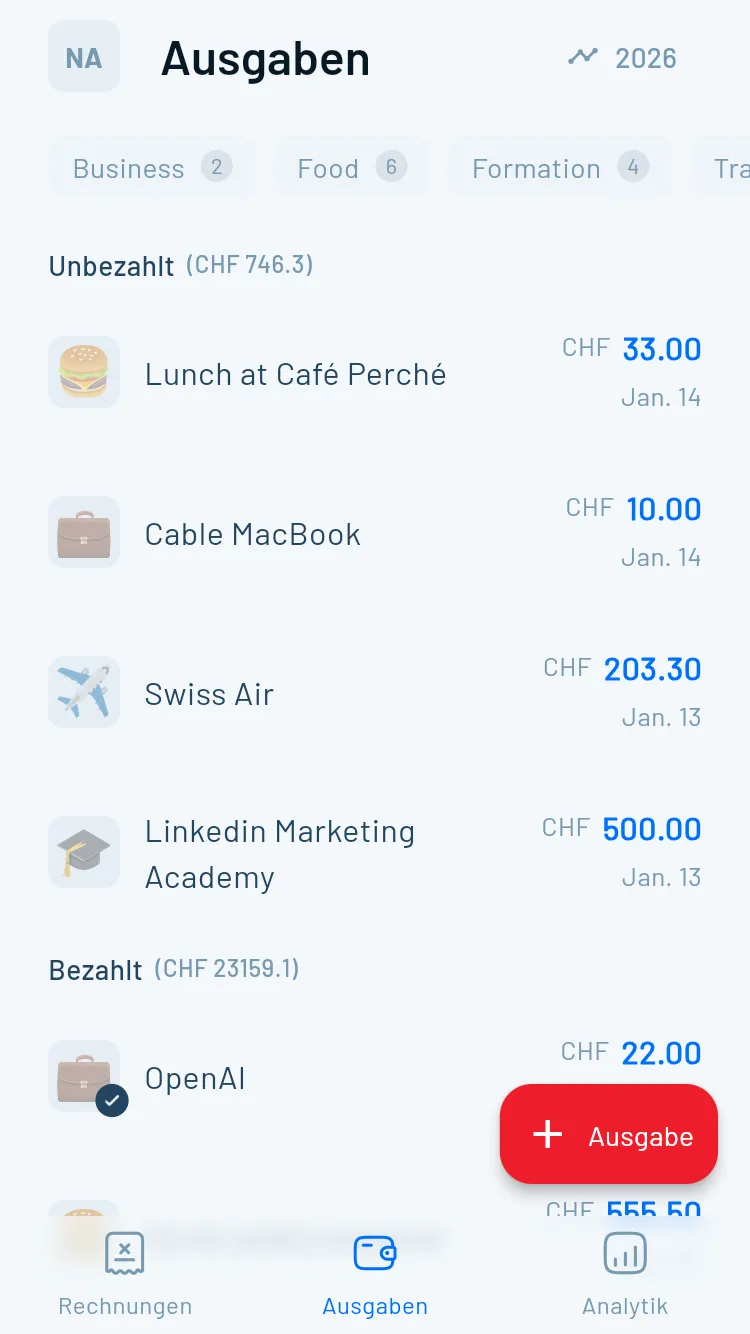
Was moderne
Spesen Software auszeichnet
Führende Plattformen bieten diese bahnbrechenden Funktionen, die manuelle Arbeit eliminieren und vollständige Ausgabentransparenz schaffen.
Automatische Belegerfassung mit OCR
KI-gestützte optische Zeichenerkennung (OCR) liest und extrahiert Informationen aus Belegen und Rechnungen sofort, unabhängig vom Format. Mitarbeiter fotografieren einfach mit dem Smartphone—keine manuelle Dateneingabe nötig.
- Anbietername und Details
- Transaktionsdatum und Betrag
- Verwendete Zahlungsmethode
- Automatische Spesenkategorie
Intelligente Spesenkategorisierung
Moderne Spesen Software nutzt KI, um Ausgaben automatisch anhand historischer Daten, Ausgabenmustern und Kontextinformationen zu kategorisieren. Das System lernt aus vergangenen Transaktionen Ihres Unternehmens, um neue Spesen präzise und konsistent zu kategorisieren.
- Keine manuelle Sortierung mehr
- Standardisierte Kategorien unternehmensweit
- Konsistente Finanzberichte
- Einfachere Steuervorbereitung und Abzüge
Echtzeit-Reporting & Dashboards
Anders als bei manuellen Systemen, wo Sie auf Monatsabschlüsse warten, bietet Spesen Software Echtzeit-Transparenz über Ausgaben, während sie anfallen. Finanzteams können Spesen über Live-Dashboards überwachen.
- Aktuelle Ausgaben nach Abteilung oder Projekt
- Budget-Ist-Vergleiche
- Ausgabentrends und Muster
- Richtlinienverstösse sofort markiert
Richtlinien-Compliance & Betrugserkennung
Führende Plattformen setzen Spesenrichtlinien automatisch beim Kauf durch, nicht Wochen später bei der manuellen Prüfung. Die Software blockiert oder markiert fragwürdige Transaktionen sofort.
- Spesen über Richtliniengrenzen
- Duplikatserkennung
- Warnungen bei ungewöhnlichen Mustern
- Fehlende Belege sofort gemeldet
Mobile-First Design
Über 50% der Spesenberichte kommen heute über Mobile Apps. Bis 2025 werden schätzungsweise 75% der Unternehmen primär mobile Spesen Apps nutzen. Die besten Lösungen bieten volle Funktionalität auf Smartphones.
- Belege sofort erfassen
- Spesen unterwegs einreichen
- Freigabestatus jederzeit prüfen
- Rückerstattungen in Echtzeit verfolgen
Buchhaltungs-Integration
Spesen Software integriert nahtlos mit gängigen Buchhaltungsplattformen wie QuickBooks, Xero und NetSuite. Integration sorgt für automatische Datensynchronisation und eliminiert Doppeleingaben.
- Automatische Datensynchronisation
- Elimination von Doppeleingaben
- Konsistente Finanzunterlagen
- Optimierter Monatsabschluss
Vorteile, die für Ihr Unternehmen zählen
Die richtige Spesen Software liefert messbare Verbesserungen, die Ihre Finanzprozesse transformieren.
- ⚡70% Zeitreduktion
Unternehmen reduzieren Spesenbearbeitung um 70% durch Automatisierung
- 💰4.250 Stunden gespart
Durchschnittliche jährliche Zeitersparnis für Buchhaltungsteams
- ✅Null Eingabefehler
Automatische Datenerfassung eliminiert menschliche Fehler
- 🚀Tage statt Wochen
Mitarbeiter erhalten Rückerstattungen in Tagen statt Wochen
- Rechnung #3
Magic Heidi
CHF 500
Jan 29
- Rechnung #2
Webbiger LTD
CHF 2000
Jan 24
- Rechnung #1
John Doe
CHF 600
Jan 20
Aktuelle Trends in der Spesenverwaltung
Die Spesen-Landschaft hat sich mit KI und Automatisierung deutlich weiterentwickelt.
KI & Machine Learning
Künstliche Intelligenz übernimmt Belegscanning, Kategorisierung, Betrugserkennung und prädiktive Analysen automatisch.
Prädiktive Analysen
Fortschrittliche Systeme analysieren historische Daten, um zukünftige Ausgaben vorherzusagen und potenzielle Mehrausgaben frühzeitig zu erkennen.
Echtzeit-Verarbeitung
Sofortige Spesenerfassung und Freigabe. Alles passiert in Echtzeit und ermöglicht schnellere Entscheidungen.
Verbesserte Sicherheit
Robuste Sicherheitsfunktionen inkl. Datenverschlüsselung, Multi-Faktor-Authentifizierung und regelmässige Sicherheitsaudits.
Wie Sie die richtige Spesen Software wählen
Die richtige Lösung zu finden erfordert die Bewertung mehrerer Schlüsselfaktoren, die mit Ihren Geschäftsanforderungen und Wachstumsplänen übereinstimmen.
Bewerten Sie Ihre Unternehmensgrösse und Bedürfnisse
Kleinunternehmen und Grossbetriebe haben unterschiedliche Anforderungen:
- 1-5 Mitarbeiter: Kostenlose oder Basis-Pläne können ausreichen
- 10-50 Mitarbeiter: Standard-Pläne (CHF 5.000-15.000/Jahr)
- 50-150 Mitarbeiter: Mittelklasse-Lösungen (CHF 20.000-40.000/Jahr)
- 150-500 Mitarbeiter: Professional-Pläne (CHF 50.000-150.000/Jahr)
- 500+ Mitarbeiter: Enterprise-Lösungen (über CHF 150.000/Jahr)
Berücksichtigen Sie Ihre aktuelle Grösse und das erwartete Wachstum bei der Plattformwahl.
Bewerten Sie Integrationsmöglichkeiten
Ihre Spesen Software muss nahtlos mit bestehenden Systemen integrieren:
- Buchhaltungssoftware (QuickBooks, Xero, NetSuite)
- ERP-Systeme
- Lohnabrechnungsplattformen
- Firmenkreditkarten-Anbieter
- Reisebuchungssysteme
Nahtlose Integration eliminiert Datensilos und reduziert manuelle Arbeit.
Priorisieren Sie Benutzerfreundlichkeit
Eine einfache, intuitive Oberfläche fördert die Akzeptanz bei Mitarbeitern. Komplexe Systeme schrecken ab und führen zu inkonsistenter Nutzung. Achten Sie auf:
- Klares, modernes Design
- Einfache Navigation
- Minimale Klicks für Aufgaben
- Klare Anleitungen und Führung
- Reaktionsschneller Kundensupport
Testen Sie die Oberfläche während Testphasen, um sicherzustellen, dass sie Anforderungen erfüllt.
Besondere Überlegungen für
Schweizer Unternehmen
Wenn Sie in der Schweiz tätig sind, berücksichtigen Sie diese spezifischen Anforderungen, um sicherzustellen, dass Ihre Spesen Software lokale Compliance- und Betriebsanforderungen erfüllt.
Schweizer Franken (CHF) plus andere Währungen für internationale Geschäfte
Unterstützung für Deutsch, Französisch und Italienisch mindestens
Korrekte Handhabung von MWST-Anforderungen und Schweizer Steuervorschriften
Unterstützung für das Schweizer QR-Rechnungs-Zahlungssystem
Best Practices für die Implementierung
Die erfolgreiche Einführung von Spesen Software erfordert Planung und einen phasenweisen Ansatz für die Akzeptanz.
Phase 1 (Tage 1-30)
Setup und Konfiguration - Kategorien, Richtlinien, Workflows, Integrationen und Benutzerrechte konfigurieren.
Phase 2 (Tage 31-60)
Schulung und Rollout - Finanzteam schulen, Mitarbeiter-Sessions durchführen, Guides erstellen und mit Pilotgruppe starten.
Phase 3 (Tage 61-90)
Optimierung - Feedback sammeln, Richtlinien verfeinern, Akzeptanz überwachen, Probleme beheben und ROI messen.
Häufig gestellte Fragen
Was ist der Unterschied zwischen Spesen Software und Buchhaltungssoftware?
Spesen Software fokussiert sich speziell auf die Erfassung, Kategorisierung und Verwaltung von Geschäftsausgaben. Buchhaltungssoftware verwaltet breitere Finanzbereiche wie Rechnungsstellung, Kreditoren/Debitoren, Lohnabrechnung und Finanzberichte. Viele Unternehmen nutzen beides, wobei die Spesen Software Daten ins Buchhaltungssystem einspeist.
Was kostet Spesen Software typischerweise?
Preise reichen von kostenlosen Plänen für sehr kleine Teams bis zu Enterprise-Lösungen über CHF 150.000 jährlich. Bezahlte Einstiegspläne beginnen bei CHF 5-15 pro Benutzer pro Monat. Die meisten Unternehmen mit 10-50 Mitarbeitern geben CHF 5.000-15.000 jährlich aus. Die Preisgestaltung hängt von Nutzerzahl, benötigten Funktionen und Unternehmensgrösse ab.
Werden Mitarbeiter es tatsächlich nutzen?
Ja, wenn Sie benutzerfreundliche Software mit mobilen Funktionen wählen. Moderne Lösungen machen die Speseneinreichung einfacher als manuelle Methoden. Der Schlüssel ist die Wahl intuitiver Software und angemessenes Training. Wenn Mitarbeiter ein Belegfoto machen und Spesen in Sekunden einreichen können, sind die Akzeptanzraten hoch.
Wie lange dauert die Implementierung?
Basis-Setup kann in Tagen erfolgen, aber vollständige Implementierung dauert typischerweise 30-90 Tage. Dies umfasst Systemkonfiguration, Integrations-Setup, Mitarbeiterschulung und Workflow-Optimierung. Komplexere Grossunternehmen benötigen möglicherweise längere Implementierungszeiten.
Kann es mit unserer bestehenden Buchhaltungssoftware integrieren?
Die meisten modernen Spesen-Plattformen integrieren mit gängiger Buchhaltungssoftware wie QuickBooks, Xero, Sage und NetSuite. Prüfen Sie Integrationsmöglichkeiten vor dem Kauf und bestätigen Sie, dass Ihre spezifische Buchhaltungssoftware-Version unterstützt wird.
Ist cloud-basiert oder on-premise besser?
Cloud-basierte Lösungen sind heute Standard und bieten signifikante Vorteile: automatische Updates, mobiler Zugriff, niedrigere Anfangskosten, einfachere Skalierbarkeit und reduzierte IT-Belastung. On-Premise-Lösungen sind selten und typischerweise nur für Grossunternehmen mit spezifischen Sicherheits- oder regulatorischen Anforderungen notwendig.
Wie handhabt es verschiedene Währungen?
Qualitativ hochwertige Spesen Software unterstützt mehrere Währungen mit automatischen Wechselkurs-Updates. Dies ist essentiell für internationale Unternehmen oder Firmen mit reisenden Mitarbeitern. Prüfen Sie Multi-Währungs-Support, wenn Sie global tätig sind.
Was passiert mit unseren Daten, wenn wir den Anbieter wechseln?
Seriöse Anbieter erlauben den Export Ihrer Daten in Standardformaten (CSV, Excel, PDF). Bestätigen Sie vor der Anmeldung die verfügbaren Exportoptionen und Datenbesitz-Richtlinien. Ihre Finanzdaten gehören Ihnen und sollten portabel sein.
Bereit, Ihre Spesenverwaltung zu automatisieren?
Manuelle Spesenerfassung verschwendet Zeit, kostet Geld und frustriert alle Beteiligten. Moderne Spesen Software eliminiert diese Probleme und bietet gleichzeitig Echtzeit-Transparenz und Kontrolle über Unternehmensausgaben. Starten Sie heute Ihre kostenlose Testversion und schliessen Sie sich Unternehmen an, die jährlich tausende Stunden sparen.
Nächste Schritte
- Bewerten Sie Ihre aktuellen Probleme bei der Spesenverwaltung
- Definieren Sie Ihre Must-Have-Funktionen und Anforderungen
- Recherchieren Sie Lösungen, die zu Ihrer Unternehmensgrösse und Bedürfnissen passen
- Fordern Sie Demos von 2-3 Top-Kandidaten an
- Testen Sie die Software mit einer Pilotgruppe vor dem vollständigen Rollout
Die Investition in qualitativ hochwertige Spesen Software amortisiert sich schnell durch Zeitersparnis, reduzierte Fehler und erfasste Abzüge. Lassen Sie nicht einen weiteren Monat verstreichen, während Ihr Team in manueller Spesenverwaltung ertrinkt.
Starten Sie heute Ihre Suche nach der richtigen Spesen-Lösung und schliessen Sie sich den Unternehmen an, die bereits tausende Stunden sparen und gleichzeitig vollständige Transparenz über ihre Ausgaben gewinnen.