
Complete Guide 2026

Swiss Salary 2026: What You Actually Earn (and Keep)

Switzerland offers some of the highest salaries in the world. But between cantonal taxes, social security contributions, and mandatory health insurance, what looks impressive on paper changes dramatically by the time it reaches your bank account.

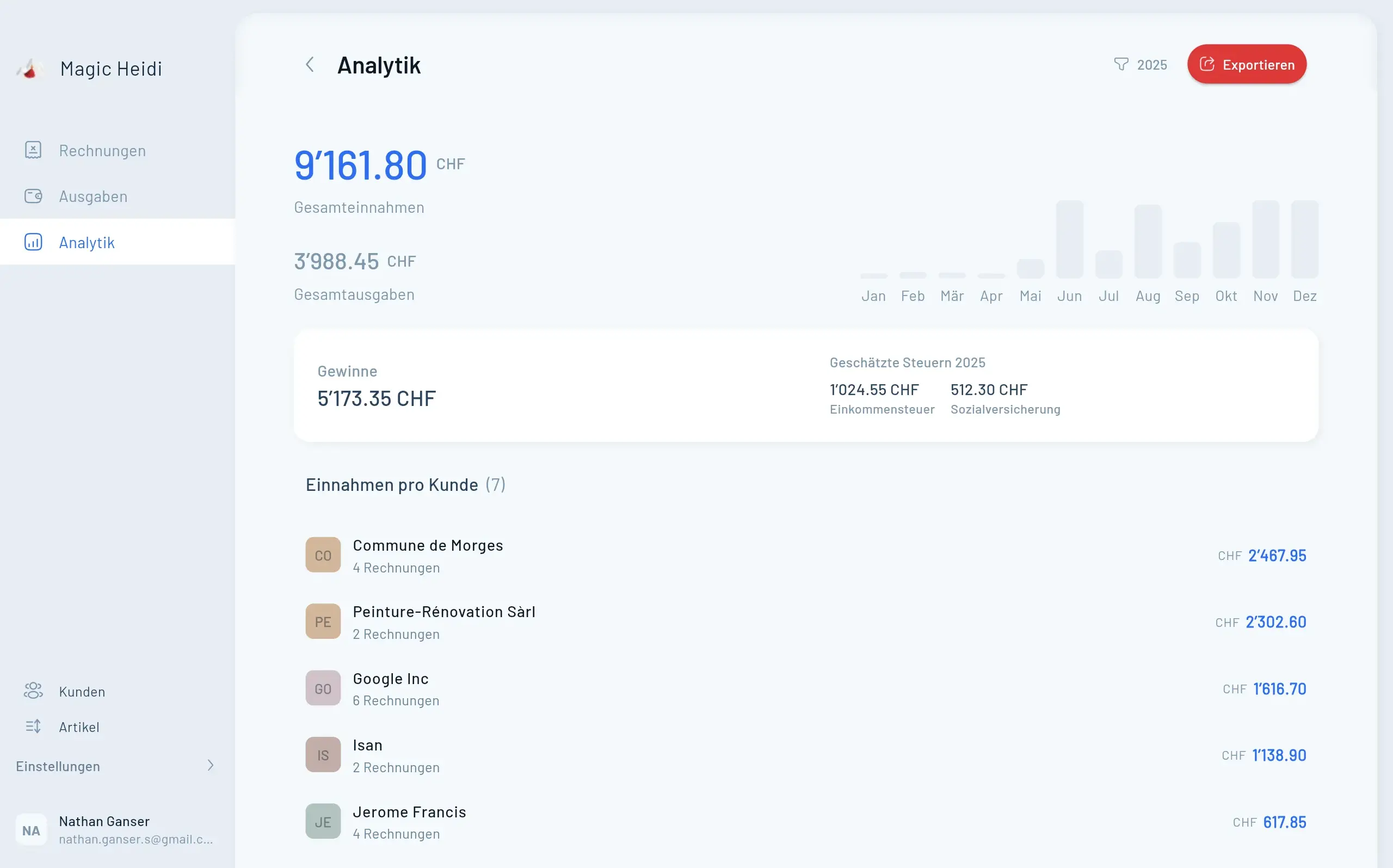
Swiss salary and income analytics

Navigate Swiss Salary Complexity.
Maximize Your Income.

Whether you're a freelancer setting your rates, an employee negotiating compensation, or someone considering self-employment, understanding Swiss salary structures is essential for making informed decisions about your income in 2026.

💰

High gross salaries

CHF 95,000 average annual income
📊

Regional variance

Up to CHF 20,000 difference by canton
🎯

Hidden costs

Taxes, insurance, and deductions

Quick Swiss Salary Facts (2026)

  • Median monthly salary: CHF 6,800 (CHF 81,600/year)
  • Average employee salary: CHF 95,000/year
  • Average freelancer income: CHF 75,000-100,000/year
  • Typical freelance hourly rate: CHF 80-120
  • Lowest tax canton: Schwyz (22.59%)
  • Highest tax canton: Geneva (43.33%)
Salary Structures

Understanding Swiss Salary Structures

The median gross wage in Switzerland stands at CHF 6,800 per month for full-time work. This translates to over CHF 80,000 annually. But median tells only part of the story—the average salary exceeds CHF 95,000 per year, pushed higher by six-figure earners in finance and pharmaceuticals.

Swiss business professional
Regional Analysis

Salary by Canton: Where You Work Matters

Your location dramatically impacts both your gross salary and take-home pay.

Highest-Paying Cantons

Strategic Location Choices

Where Switzerland's top salaries and tax advantages converge.

  • Zurich: Leading in absolute salary numbers, driven by finance, tech, and corporate headquarters
  • Zug: Exceptional for high earners with low tax rates (22.67%) and corporate advantages
  • Basel-Stadt: Premium salaries from pharmaceutical giants like Roche and Novartis
  • Geneva: High gross salaries but Switzerland's highest tax rates (43.33%)

Swiss cantons landscape
Tax Comparison

Canton Tax Rates Impact

A CHF 100,000 salary in Schwyz yields roughly CHF 20,000 more in take-home pay than in Geneva.

  • Low-tax: Schwyz (22.59%), Zug (22.67%), Nidwalden (24.30%)
  • High-tax: Geneva (43.33%), Vaud (41.50%), Bern (41.07%)
  • Strategic advantage: Canton choice is a critical business decision for freelancers
  • Total burden: Includes federal, cantonal, and municipal taxes
Swiss tax comparison
Industry Salaries

Salary by Industry and Role

Comprehensive breakdown of Swiss salaries across major sectors and specializations.

Industry / RoleMid-LevelSenior LevelTop Specialists
Software DevelopersCHF 90-110KCHF 110-140KCHF 140-180K
AI/ML EngineersCHF 120-150KCHF 150-180KCHF 180-300K+
Banking & FinanceCHF 100-150KCHF 150-250K+CHF 250K+ (with bonus)
General PractitionersCHF 180-220KCHF 220-250K
Specialized PhysiciansCHF 250-300KCHF 300-350KCHF 350-400K+
Pharma ScientistsCHF 100-130KCHF 130-180KCHF 180K+
Marketing ProfessionalsCHF 70-100KCHF 100-130KCHF 130-150K
Hospitality & ServicesCHF 50-60KCHF 60-70KCHF 70-80K

Freelancer Rates: Typical Ranges by Specialization

Creative & Marketing:

  • Designers: CHF 80-120/hour
  • Copywriters: CHF 90-130/hour
  • Marketing Consultants: CHF 100-150/hour

Technology:

  • Web Developers: CHF 90-130/hour
  • Software Engineers: CHF 100-150/hour
  • IT Consultants: CHF 120-180/hour

Business Services:

  • Business Consultants: CHF 120-200/hour
  • Financial Advisors: CHF 150-250/hour
  • Legal Consultants: CHF 180-300/hour
Rate Calculation

Calculating Your Freelance Rate

Setting appropriate freelance rates requires accounting for all costs employees take for granted. Start with your desired annual income, then add every business cost, and divide by actual billable hours.

Professional freelance invoicing

Example Rate Calculation

Let's calculate a realistic freelance rate:

Desired net income: CHF 75,000
Social security and pension: CHF 10,000
Health insurance: CHF 5,000
Business expenses: CHF 8,000
Total annual need: CHF 98,000

Billable hours per year: 1,300 (not 2,000)
Base required rate: CHF 75/hour

Add 20% margin for negotiation and difficult projects
Final target rate: CHF 90/hour

This ensures you actually earn your desired CHF 75,000 net income after all costs.

Freelancer Registration.
Legal Requirements.

You must register as self-employed when earning above CHF 2,300 annually from freelance work. Proper registration ensures legal compliance and access to social security benefits.

💼 Self-Employed Status
🔒 Legal Compliance
💰 VAT Ready
📱 Professional Tools
📋
AVS Registration

Register with cantonal office

🛡️
Insurance Coverage

Liability and accident insurance

🧾
Compliant Invoicing

Swiss QR-bill requirements

📊
Expense Tracking

Detailed records for deductions

VAT Obligations for Freelancers

Once your annual turnover exceeds CHF 100,000, you must register for VAT:

  • Notify the Federal Tax Administration
  • Charge VAT on invoices (7.7% standard rate)
  • File regular VAT returns (quarterly or biannually)
  • Maintain detailed records of all transactions

Exempt sectors: Healthcare, insurance, education remain VAT-exempt regardless of turnover.

Voluntary registration: Below CHF 100,000, you can register voluntarily if it benefits your business structure—particularly if your clients are primarily businesses who can reclaim VAT.

Deductions Explained

From Gross to Net: Understanding Deductions

Swiss gross salaries undergo multiple deductions before reaching your account. Understanding each layer helps you calculate your actual take-home pay.

Swiss salary deductions breakdown

Health Insurance: Not Deducted, But Essential

Switzerland requires everyone to have basic health insurance, but this is not deducted from salary. You pay directly to your insurance provider.

Expected costs:

  • Adults: CHF 350-500/month
  • Annual: CHF 4,200-6,000
  • Varies by: Canton, deductible choice, insurance model

This amount comes from your net salary, reducing your actual disposable income further.

Real Examples

Net Salary Examples

Real calculations showing the journey from gross to actual disposable income.

Deduction TypeEmployee (CHF 80K, Zurich)Freelancer (CHF 100K, Zug)
Gross IncomeCHF 80,000CHF 100,000
Federal/Cantonal/Municipal Tax−CHF 12,000−CHF 20,000
Social Security−CHF 4,240 (employee portion)−CHF 10,000 (full)
Pension Fund−CHF 5,600 (employee portion)−CHF 7,000 (voluntary)
Business Expenses−CHF 8,000
Net IncomeCHF 58,000CHF 55,000
Less Health Insurance−CHF 6,000−CHF 6,000
Disposable IncomeCHF 52,000CHF 49,000

Why Freelancers Need Higher Gross Income

These examples demonstrate why freelancers need significantly higher gross income to match employee take-home pay:

  • Freelancer earning CHF 100,000 takes home ~CHF 49,000
  • Employee earning CHF 80,000 takes home ~CHF 52,000

The freelancer earns 25% more gross but takes home 6% less than the employee. This is why freelance rates must be 30-50% higher than equivalent employee salaries.

Living Costs

Cost of Living Context

Swiss salaries make sense only in the context of Swiss prices. Despite high costs, salaries provide strong purchasing power, especially for professionals earning above median.

Swiss cost of living

Cross-Border Advantage

Cross-border workers from neighboring countries particularly benefit: earning Swiss salaries while living in lower-cost areas of France, Germany, or Italy.

This can effectively increase purchasing power by 30-50% compared to living in Switzerland, while maintaining the high Swiss income.

Salary Trends and Growth in 2026

Swiss wages increased 2% in September 2025 over the previous year, outpacing inflation and representing real wage growth. Labor market stability continues to support salary increases.

📊 Market Stability
💰 Growing Salaries
🚀 Tech Demand
🇨🇭 Swiss Advantage
📈
Real Wage Growth

2% increase outpacing inflation

💼
Union Targets

2-2.5% salary increases called for 2026

🎯
Low Unemployment

2-3% unemployment supports growth

🤖
Tech Premium

AI/ML roles up 5-8% annually

Freelancer Tools

Practical Tips for Freelancers

Professional strategies for setting rates, managing invoices, and optimizing your freelance business in Switzerland.

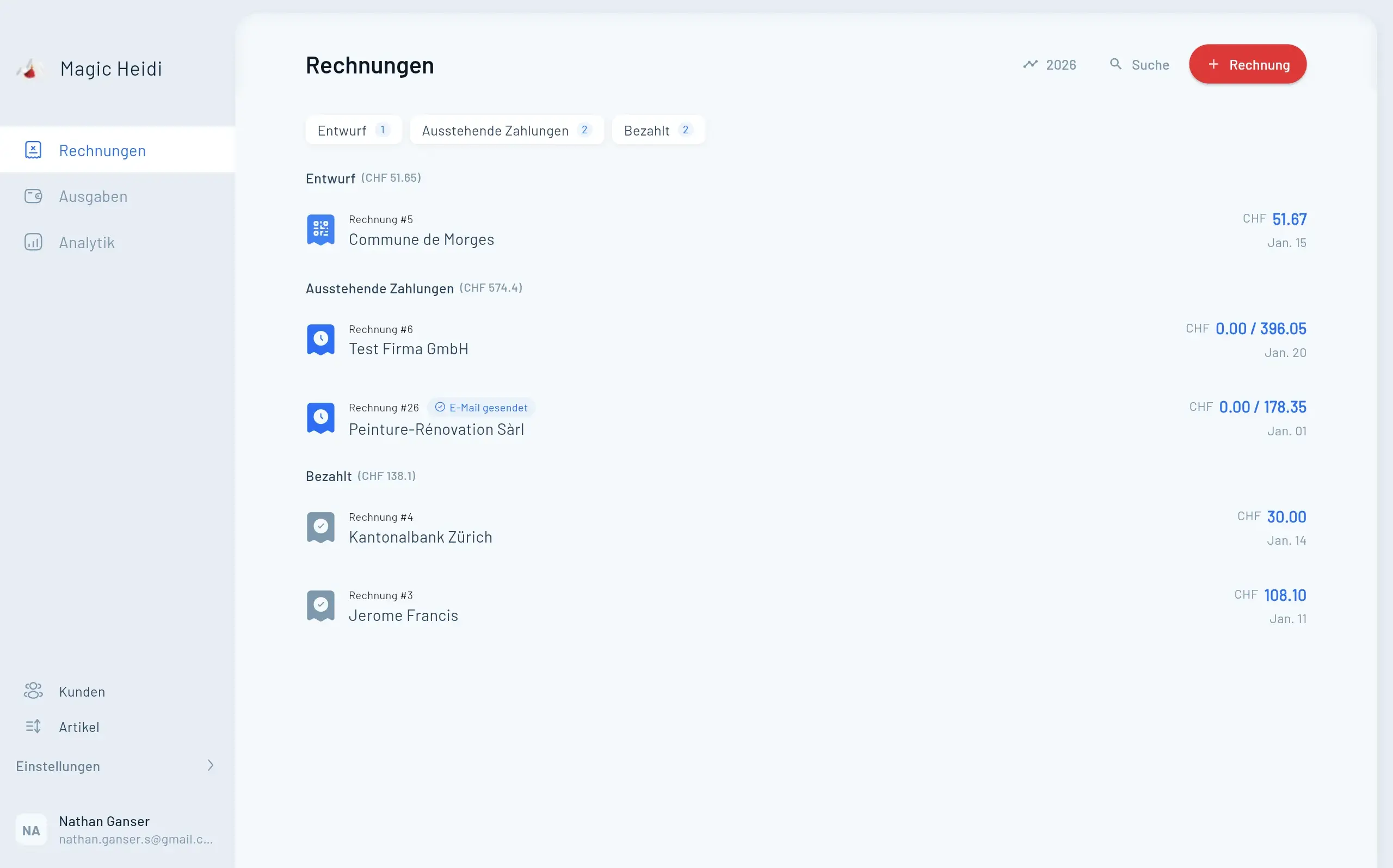
Professional freelance invoicing with Magic Heidi

Deductible Business Expenses

Track these expenses meticulously—they reduce your taxable income:

  • Home office expenses: Proportional rent and utilities
  • Equipment and software: Computers, subscriptions, tools
  • Professional development: Training, courses, certifications
  • Business travel and meals: Client meetings, conferences
  • Marketing and advertising: Website, business cards, ads
  • Professional insurance: Liability, legal protection
  • Professional fees: Accountant, lawyer, consultants

Proper expense tracking can save you thousands in taxes annually.

Professional Tools

Manage Your Freelance Finances in 30 Seconds

Tracking income, expenses, and invoicing becomes complex as your freelance business grows. Professional tools help you maintain compliance while minimizing administrative burden.

  • 🧾
    QR-Bill Compliant

    Automatic Swiss-compliant invoicing

  • 📸
    AI Expense Scanning

    Snap receipts, auto-extract data

  • 📊
    Financial Tracking

    Monitor income and expenses

  • 💰
    VAT Management

    Ready when you reach CHF 100K

Rechnungen
  • Rechnung #3

    Magic Heidi

    CHF 500

    Jan 29

  • Rechnung #2

    Webbiger LTD

    CHF 2000

    Jan 24

  • Rechnung #1

    John Doe

    CHF 600

    Jan 20

Key Takeaways

Swiss salaries offer strong earning potential, but understanding the complete picture matters:

Median salary reaches CHF 6,800/month, but location and industry create significant variance

Freelancers need 30-50% higher gross income to match employee take-home pay

Canton choice dramatically impacts net income—up to CHF 20,000 difference annually

Healthcare, tech, and finance sectors offer highest compensation

All costs must factor into freelance rate calculations—social security, pension, health insurance

Professional tools become essential as income grows for compliance and efficiency

Whether you're employed or freelancing, knowing your true market value and understanding the Swiss system helps you make better career and financial decisions.

Start Managing Your Freelance Income Professionally

Magic Heidi helps Swiss freelancers invoice professionally, track expenses, and manage their income—all in compliance with Swiss requirements including QR-bills and VAT.

Common Questions

Frequently Asked Questions

What is the average salary in Switzerland?

The median gross salary is CHF 6,800 per month (CHF 81,600 annually). The arithmetic average exceeds CHF 95,000 per year, influenced by high earners in finance and pharma.

How much do freelancers earn in Switzerland?

Swiss freelancers earn CHF 75,000-100,000 on average, with experienced professionals in specialized fields reaching CHF 150,000-200,000. Top freelance earners make CHF 194,000+.

Which canton has the highest salaries?

Zurich, Zug, and Basel-Stadt offer the highest salaries, driven by finance, tech, and pharmaceutical industries. However, Zug provides the best net income due to low tax rates (22.67%).

What hourly rate should I charge as a freelancer?

Typical freelance rates range from CHF 80-120/hour. Specialized consultants and tech professionals charge CHF 120-180/hour. Calculate your rate based on desired annual income plus all business costs, divided by realistic billable hours (1,200-1,500/year).

When must I register as self-employed?

You must register when earning above CHF 2,300 annually from self-employment. Register with your cantonal AVS compensation office to establish legal self-employed status and access social security benefits.

When do I need to charge VAT?

VAT registration becomes mandatory when annual turnover exceeds CHF 100,000. You can register voluntarily below this threshold if beneficial for your business structure—particularly if your clients are primarily businesses who can reclaim VAT.

How much tax do I pay on my salary?

Total tax burden ranges from 22.59% (Schwyz) to 43.33% (Geneva) depending on canton and income level. This includes federal, cantonal, and municipal taxes plus social security contributions. A CHF 100,000 salary in Schwyz yields roughly CHF 20,000 more take-home than in Geneva.

{ "What's better": "employment or freelancing in Switzerland?", "answer": "Employment provides stability, employer-paid benefits (matching pension, half social security, accident insurance), and lower administrative burden. Freelancing offers higher gross income potential, flexibility, and tax optimization opportunities. Choice depends on personal priorities and risk tolerance." }

How do I calculate my net salary in Switzerland?

Subtract federal, cantonal, and municipal taxes (~20-43%), social security contributions (~5-10% for employees, ~10% for freelancers), and pension contributions (~7-10%) from gross salary. Then budget CHF 350-500/month for health insurance paid separately. Net disposable income is typically 60-75% of gross.

Do Swiss salaries include a 13th month?

Most Swiss employment contracts include a 13th-month salary, paid annually (often in December). This effectively increases your annual income by 8.3% over 12 equal payments and is standard practice across industries.