Deposit Invoice Switzerland: Take an upfront payment cleanly
For Swiss freelancers and small businesses that want to protect cash flow, document deposits properly, and avoid messy final invoicing.
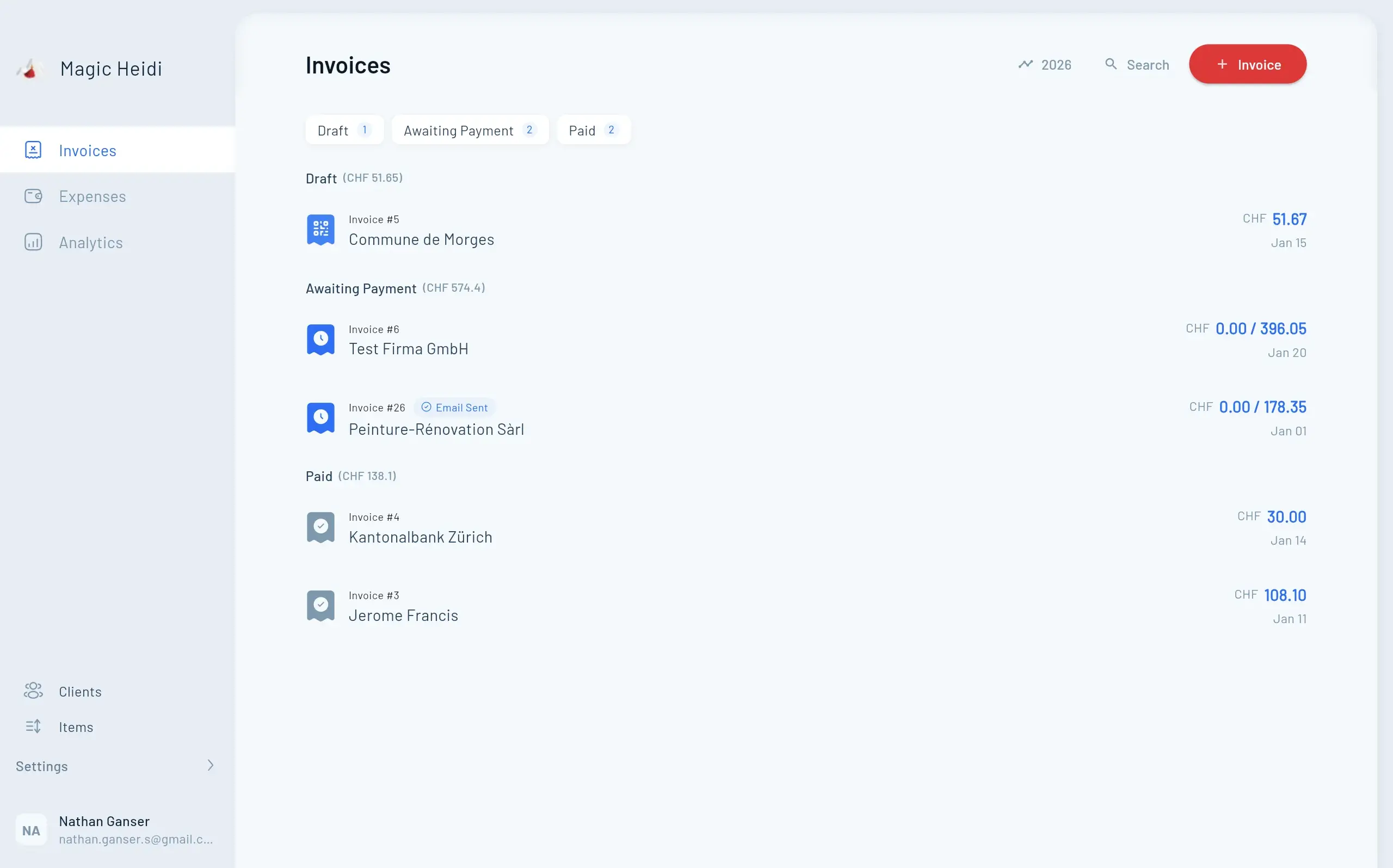
The client said yes. The project is moving. But before you block out weeks of work, buy materials, or start incurring costs, you want part of the budget secured.
That is exactly where a deposit invoice helps. In Switzerland, it gives you a clean way to request an advance payment, document it properly, and then deduct it clearly from the final invoice later on.
The important part is this: a deposit invoice should not feel like an improvised email with bank details. It should connect back to the quote or project, show a clear amount, follow your VAT logic if you are VAT-registered, and make the final reconciliation obvious for both the client and your bookkeeping.
This page blends the formal Swiss invoicing basics with the practical deposit-handling patterns that consistently show up in strong German, French, Italian, and English guidance on the topic.
What this page helps you do
People searching this topic usually want practical answers, not theory.
Know when a deposit makes sense
Long projects, upfront costs, capacity reservationBuild the invoice properly
Clear reference, amount, purpose, and due dateFinish the job cleanly
Deduct the deposit transparently on the final invoiceWhat is a deposit invoice?
It is an invoice that requests an upfront partial payment before the full project is completed or before the total final amount is billed.
Deposit invoice
Requests an advance on the total project value. It is later credited on the final invoice.
Partial invoice
Bills for a clearly completed stage or milestone that has already been delivered.
Final invoice
The full closing invoice for the project after subtracting previous deposits or interim payments.
Pro forma document
Useful for information, but less suitable when you want to formalize a real payable advance.
The practical rule:
Use a deposit invoice when the client has confirmed the work, but you do not want to invoice the entire project upfront.
Typical Swiss use cases:
- projects that run over several weeks or months
- work that requires advance purchases or third-party costs
- bookings where your time or production slot must be reserved
- larger first-time client engagements where you want to reduce payment risk
What stands out across German, French, Italian, and English content on this topic is the same core framing: the document is mainly a cash-flow and risk-control tool. The language changes, but the workflow stays the same:
- German: Akontorechnung
- French: facture d'acompte
- Italian: fattura di acconto
- English: deposit invoice
What to include on a deposit invoice
In practice, it should be as clean as any normal invoice, with an extra layer of project reference and later reconciliation.
Parties and project reference
The document should connect clearly to the client and the agreed work.
- Your business name and address
- The client's name and address
- Invoice date and invoice number
- Reference to the quote, order, or project
Amount and purpose
The client should instantly understand what they are paying for.
- Clear wording such as “deposit invoice”
- Fixed amount or agreed percentage
- Short service or project description
- Due date and payment method
Swiss invoicing logic
The biggest mistakes usually happen around VAT consistency and final deduction.
- Keep VAT treatment consistent if VAT applies
- Add Swiss QR-bill or clear bank details
- Track issued deposits internally
- Deduct them clearly on the final invoice
When a deposit invoice is especially useful
Not every assignment needs one, but in these cases it usually improves both clarity and cash flow.
- 🎨Project-based work
Design, consulting, IT, video, photo, architecture, and other multi-step jobs
- 🧰Upfront costs
When you need to purchase tools, materials, licenses, or subcontracted work before delivery
- 📅Reserved capacity
When you are holding time, dates, or delivery slots for the client
- 🤝New clients
A good way to reduce non-payment risk without turning the relationship hostile
- Invoice #3
Magic Heidi
CHF 500
Jan 29
- Invoice #2
Webbiger LTD
CHF 2000
Jan 24
- Invoice #1
John Doe
CHF 600
Jan 20
Deposit first, final invoice later
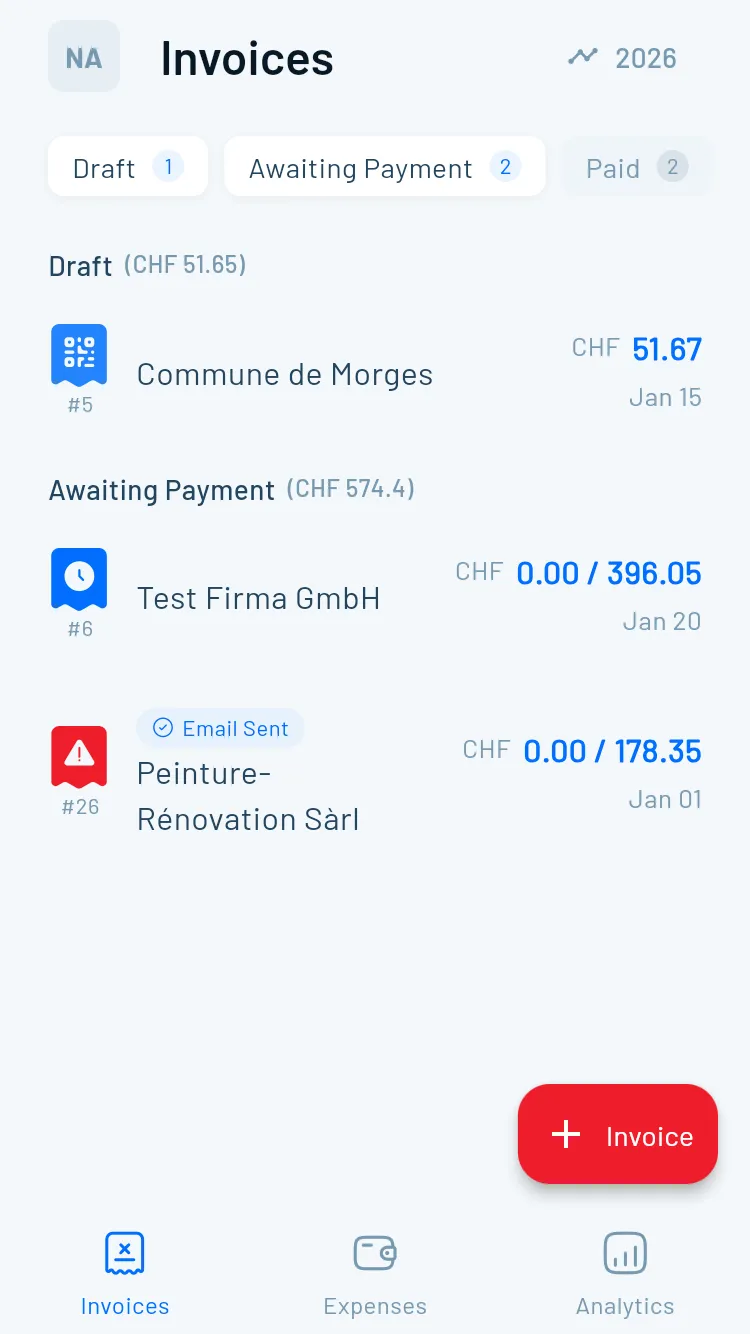
The cleanest structure is simple: quote or agreement, then deposit invoice, then the work, then a final invoice that clearly deducts what has already been billed and paid.
Deposit invoice vs. partial invoice
They sound similar, but they solve different billing situations.
Which invoice fits which case?
Keeping the difference clear makes your communication, accounting, and final billing much easier.
| Topic | Deposit invoice | Partial invoice | Final invoice |
|---|---|---|---|
| Purpose | Advance payment | Completed stage | Total closeout |
| Timing | Before the project is finished | After a milestone is delivered | At the end |
| Reference point | Quote / order / project | Specific stage | Whole project and earlier invoices |
| What happens next? | Gets credited on the final invoice | Stands as a billed milestone | Deducts deposits and prior payments |
How to write the final invoice properly
The most common mistake does not happen on the deposit invoice itself. It happens on the closing invoice.
A strong final invoice should show:
- the total project amount
- the deposit invoice already issued
- the amount already paid
- the remaining balance due
Simple structure:
Project total                               CHF 4,000.00
less deposit invoice INV-2026-014           CHF 1,200.00
Balance due                                 CHF 2,800.00
If you are VAT-registered, keep the VAT treatment consistent between the deposit and the final invoice. The main goal is that the client and your bookkeeping can both see exactly what was already billed and collected.
What other guides say
across languages
Good content on this topic does not treat the deposit invoice as a legal abstraction. It treats it as part of the real quote → deposit → final invoice workflow.
Usually explain the difference between Akonto, Teilrechnung, and Schlussrechnung
Often emphasize linking the invoice back to the devis and handling TVA consistently
Focus heavily on acconti, partial payments, and the final saldo invoice
Usually frame the topic around cash-flow protection and cleaner project billing
Common questions about deposit invoices
Is a deposit invoice the same as a partial invoice?
No. A deposit invoice requests an advance on the whole project. A partial invoice usually bills for a completed stage that has already been delivered.
Should I reference the quote or order?
Yes. That reference makes the document easier to understand now and much easier to reconcile later on the final invoice.
How much should I ask for as a deposit?
There is no fixed legal percentage. In practice, the amount depends on your upfront costs, project risk, client type, and what was agreed before work starts.
How should I handle VAT?
If you are VAT-registered, keep the VAT treatment consistent across the deposit and final invoice. If you are not VAT-registered, do not add VAT just because the client is paying in advance.
Can I use a pro forma instead?
Sometimes for information, yes. But if you want a proper, payable advance request that fits neatly into your invoicing workflow, a real deposit invoice is usually the better document.
How do I deduct the deposit on the final invoice?
Show the number, date, and amount of the earlier deposit invoice, then present the remaining balance clearly so the client does not have to work it out themselves.
Handle deposits without spreadsheet chaos
Create a quote, request a deposit, and then generate a final invoice that deducts it cleanly — all inside one Swiss invoicing workflow.