 Magic Heidi
 Projekt- vs. Stundensatz: Was funktioniert wirklich?
Festpreisprojekte wirken sicher, scheitern aber oft. Stundensätze bestrafen Effizienz. So wählen Sie das richtige Preismodell für Ihr Freelance-Business 2025.

Sie haben wahrscheinlich widersprüchliche Ratschläge gehört: «Nie nach Stunden abrechnen» versus «Festpreisprojekte sind immer Verlustgeschäfte».
Nach Jahren als Freelancer und in der Projektleitung einer Webagentur weiss ich: Keines der Extreme stimmt. Das passende Preismodell hängt von Ihrer Erfahrung, Ihrem Kunden und Ihrem Projekttyp ab.
Worauf es wirklich ankommt: Verstehen, wann welches Modell funktioniert, wie Sie die Katastrophen vermeiden, die der Projektpreisgestaltung ihren schlechten Ruf geben, und wie Sie Ihre Preisstrategie mit wachsender Erfahrung weiterentwickeln.
Warum Kunden auf Festpreise drängen
Die meisten Kunden fragen nach einem Festpreis, bevor die Arbeit beginnt. Verständlich – sie wollen Budgetsicherheit.
Das Problem? Diese nachvollziehbare Anfrage wird zur Falle für unerfahrene Freelancer.
Das unmögliche Schätzproblem
Ein Kunde fragte mich einmal: «Was würde es kosten, eine App wie Facebook zu bauen?» Extremes Beispiel, aber die Grundproblematik ist real. Projektzeiten akkurat zu schätzen ist selbst für erfahrene Profis unglaublich schwierig.
Teure Offerten
Grosse Agenturen verlangen 10-20% der Gesamtkosten allein für detaillierte SpezifikationenKostspielige Fehler
Bei Stundensätzen von 120-180 CHF kostet Sie eine 20-Stunden-Fehlschätzung über 2'400 CHFFalsche Anreize
Festpreise ohne klare Grenzen erzeugen Druck, Abstriche zu machen und Arbeit zu überstürzenDie wahren Kosten falsch umgesetzter Festpreise
In meiner Agenturzeit massen wir die Projektrentabilität mit einer einfachen Formel:
Verrechnete Stunden ÷ Tatsächlich geleistete Stunden
Da der Verkauf den Preis bereits fixiert hatte, blieb nur eine Variable: Arbeitsstunden minimieren.
Das schuf toxische Anreize:
- So schnell wie möglich programmieren (Qualität wird zweitrangig)
- Alle Änderungswünsche ablehnen, die nicht in der Originalspezifikation stehen
- Unsichtbare Arbeit streichen wie Tests, Fehlerbehandlung und Dokumentation
Wenn ein Projekt das Budget überschritt, explodierten die Spannungen. Projektleiter sahen die Rentabilität einbrechen und versuchten, den Zeitaufwand zu minimieren. Kunden fühlten sich vernachlässigt. Beide Seiten waren frustriert.
Die falschen Anreize sind das eigentliche Problem – nicht die Projektpreisgestaltung an sich.
Die versteckten Probleme der Stundenabrechnung
Bevor wir die Stundenabrechnung zur Lösung krönen, sollten wir ihre ernsthaften Schwächen anerkennen.
Warum Stundenabrechnung scheitert
Drei grundlegende Probleme beim Tausch von Zeit gegen Geld.
Die Effizienzstrafe
Sie verbringen Jahre damit, Ihr Handwerk zu perfektionieren. Ein Projekt, das früher 40 Stunden dauerte, schaffen Sie jetzt in 15 Stunden. Sie haben Ihre Effizienz verdreifacht. Mit Stundenabrechnung verdienen Sie ein Drittel weniger für dasselbe Ergebnis.
- Ihre Belohnung fürs Besserwerden? Weniger Einkommen pro Projekt
- Erfahrung wird zum finanziellen Nachteil
- Kein Anreiz, Systeme aufzubauen oder Prozesse zu verbessern
Die Skalierungsgrenze
Mit Stundenabrechnung tauschen Sie Zeit gegen Geld. Ein Jahr hat nur begrenzt verrechenbare Stunden.
- 48 Arbeitswochen × 28 verrechenbare Stunden = maximal 1'344 Stunden
- Bei 150 CHF/Stunde liegt die Obergrenze bei 201'600 CHF vor Steuern
- Nur zwei Wachstumswege: Stundensatz erhöhen oder Freizeit opfern
- Beide führen zu Kundenwiderstand oder Burnout
Kundenwahrnehmung
Manche Kunden fixieren sich auf Stunden statt Ergebnisse. Sie hinterfragen jeden Posten.
- «Hat dieses Meeting wirklich 2 Stunden gedauert?»
- «Warum hat diese Funktion 6 Stunden gebraucht?»
- Die Beziehung wird transaktional
- Sie verteidigen Stundenrapporte statt an Ergebnissen zu arbeiten
Was die Daten wirklich zeigen
Aktuelle Daten aus dem Schweizer und französischen Markt zeigen überraschende Muster:
- Schweizer Freelancer-Stundensätze lagen 2021 im Schnitt bei 137.68 CHF, ein Rückgang von 9,4% gegenüber Vorjahren
- Scope Creep kostet Unternehmen durchschnittlich £5'830 pro Monat, wobei 58% es unangenehm finden, das anzusprechen
- Erfahrene französische Freelancer empfehlen den Wechsel zu Projektpreisen für langfristig höhere Rentabilität
- Der Mindest-Stundensatz in der Schweiz sollte bei 100 CHF liegen, und «nur etwa die Hälfte bleibt nach Steuern und Overhead»
Die Daten deuten auf ein Reifegradmodell hin: Anfänger sollten stündlich abrechnen, um akkurates Schätzen zu lernen, während erfahrene Freelancer mit Projekt- oder wertbasierter Preisgestaltung mehr verdienen.
Scope Creep verhindern
Das Katastrophenszenario, das Menschen bei Projektpreisen fürchten, ist nicht das Modell selbst – es ist unkontrollierter Scope Creep. Scope Creep entsteht, wenn Projektanforderungen wachsen, ohne Preis oder Zeitplan anzupassen.
- 📋Spezifische Lieferobjekte definieren
Genaue Zahlen angeben: Seiten, Funktionen, Wortanzahl, Korrekturschleifen
- 📝Strukturierte Verträge nutzen
Festhalten, was enthalten ist, was nicht, und wie Änderungen behandelt werden
- 🔄Change Orders einführen
Optionen präsentieren und schriftliche Freigabe einholen vor Umsetzung
- 💬Fortschritt kommunizieren
Updates bei Meilensteinen teilen, um überraschende Änderungswünsche zu vermeiden
- Rechnung #3
Magic Heidi
CHF 500
Jan 29
- Rechnung #2
Webbiger LTD
CHF 2000
Jan 24
- Rechnung #1
John Doe
CHF 600
Jan 20
Das Preis-Reifegradmodell
Die richtige Preisstrategie entwickelt sich mit Ihrer Erfahrung.
Stufe 1: Einsteiger (0-1 Jahr)
Empfohlen: Stundensatz mit Stundenobergrenze
Legen Sie einen Stundensatz fest (mindestens 100 CHF in der Schweiz) mit einer Projektobergrenze. Tracken Sie alles – diese Daten werden unbezahlbar.
- Sie wissen noch nicht, wie lange Aufgaben wirklich dauern
- Kunden vertrauen Ihnen keine grossen Festpreise an
- Sie brauchen Daten für bessere Schätzungen
- Beispiel: 40-50 Stunden à 120 CHF/Stunde, max. 60 Stunden
Stufe 2: Wachsend (1-3 Jahre)
Empfohlen: Tagessätze oder kleine Festpreisprojekte
Sie haben jetzt historische Daten. Tagessätze von 960-1'120 CHF/Tag für Generalisten, 1'440-1'760 CHF/Tag für Spezialisten.
- Sie kennen typische Projektdauern
- Tagessätze (TJM) werden attraktiv
- Bieten Sie Festpreise für klar definierte Projekte
- Sie haben ähnliche Arbeit bereits gemacht
Stufe 3: Etabliert (3-5 Jahre)
Empfohlen: Projektbasiert mit klarem Scope
Sie können akkurat schätzen und haben Prozesse, Templates und Systeme. Sie profitieren von Effizienzsteigerungen.
- 100% Nutzen aus Produktivitätsverbesserungen
- Anreiz zu optimieren und automatisieren
- Nur Festpreise für bekannte Projekte offerieren
- Historische Daten unterstützen akkurate Schätzungen
Stufe 4: Experte (5+ Jahre)
Empfohlen: Wertbasierte Preise + Retainer
Kunden engagieren Sie für Ergebnisse. Preisgestaltung basierend auf 15-25% des erwarteten Wertzuwachses im ersten Jahr.
- Preis basiert auf geschaffenem Wert, nicht Stunden
- Monatliche Retainer bieten Stabilität
- Ausrichtung am Kundenerfolg
- Beispiel: 40'000 CHF für 200'000 CHF Umsatzsteigerung
Alle Preisoptionen verstehen
Wählen Sie das Modell, das zu Ihrem Erfahrungsstand, Projekttyp und Ihrer Kundenbeziehung passt.
| Modell | Optimal für | Schweizer Tarife | Struktur |
|---|---|---|---|
| Stundenabrechnung | Unklarer Scope, neue Kunden, Wartungsarbeiten | 100-220 CHF/Stunde | Zeit erfassen, monatlich fakturieren |
| Tagessätze (TJM) | Langzeitverträge, Beratungsmandate | 960-1'760 CHF/Tag | Ähnlich wie Stunden, flexibler Tagesablauf |
| Projektbasiert | Klar definierte Lieferobjekte, wiederholbare Leistungen | Stunden × Satz × 1.2 | 50% Anzahlung, 50% bei Abschluss |
| Wertbasiert | Projekte mit hoher Wirkung, messbare Ergebnisse | 15-25% des Werts | Basiert auf Ergebnissen, nicht Aufwand |
| Retainer | Laufende Beziehungen, wiederkehrende Arbeit | Feste Monatspauschale | Monatlich wiederkehrend, 30-90 Tage Kündigungsfrist |
| Hybridmodell | Komplexe Projekte mit unklaren Elementen | Grundpreis + Stunden | Fester Kern + Stunden für Änderungen |
Ihren Schweizer Freelance-Stundensatz berechnen
Raten Sie nicht bei Ihren Tarifen. Berechnen Sie sie basierend auf Ihren finanziellen Bedürfnissen.
Grundformel
(Gewünschtes Jahreseinkommen + Geschäftsausgaben) ÷ Verrechenbare Stunden pro Jahr
Beispielrechnung:
- Gewünschtes Einkommen: 100'000 CHF
- Geschäftsausgaben: 20'000 CHF (Versicherung, Software, Büro, Marketing)
- Gesamtbedarf: 120'000 CHF
- Verrechenbare Stunden: 1'344 (28 Stunden/Woche × 48 Wochen)
- Mindest-Stundensatz: 89 CHF
Aber das beinhaltet keine Sozialabgaben...
Schweiz-spezifische Faktoren
Sozialabgaben:
- AHV/IV/EO (Sozialversicherung): ~10% des Einkommens
- Pensionskasse (BVG): Entweder über Säule 3a oder Auffangeinrichtung
- Unfallversicherung (UVG): Obligatorisch
- Krankenversicherung: Mindestens 300-600 CHF/Monat
Realistische Rechnung:
- Benötigter Umsatz: 120'000 CHF
- Sozialabgaben (~10%): 12'000 CHF
- Versicherungen: 9'600 CHF
- Gesamtbedarf: 141'600 CHF
- Realistisches Minimum: 105 CHF/Stunde
Und denken Sie daran: Das ist Ihr Minimum zum Kostendecken. Für Gewinn und Wachstum rechnen Sie 20-30% drauf.
Realistische Schweizer Tarife:
- Junior (0-2 Jahre): 100-120 CHF/Stunde
- Mid-Level (2-5 Jahre): 120-160 CHF/Stunde
- Senior (5+ Jahre): 160-220+ CHF/Stunde
Warnsignale:
Wann Sie absagen sollten
Bestimmte Warnsignale zeigen an, dass Sie den Auftrag ablehnen sollten – unabhängig vom Preismodell.
Verlangt Festpreis ohne Spezifikationsdokument
Hinterfragt Ihre Integrität bei der Zeiterfassung bereits vorab
Will 30'000 CHF Arbeit für 5'000 CHF
Entscheidet allein danach, wer am günstigsten ist
Ihre Entscheidung treffen: Ein Framework
Stellen Sie sich diese Fragen:
Zum Projekt:
- Kann ich die Lieferobjekte präzise definieren?
- Habe ich ähnliche Arbeit bereits gemacht?
- Wird sich der Scope wahrscheinlich ändern?
Zum Kunden:
- Ist das eine neue oder bestehende Beziehung?
- Versteht er den Wert, den ich liefere?
- Ist er organisiert mit klaren Entscheidungswegen?
Zu Ihnen selbst:
- Wie hoch ist mein Erfahrungsstand?
- Kann ich diese Arbeit akkurat schätzen?
- Habe ich Systeme, um effizient zu arbeiten?
Entscheidungsmatrix:
| Ihre Situation | Empfohlenes Modell |
|---|---|
| Neuer Kunde + unklarer Scope | Stundensatz mit Obergrenze |
| Bestehender Kunde + klar definiertes Projekt | Festpreis |
| Langzeitbeziehung + laufende Arbeit | Retainer |
| Projekt mit hoher Wirkung + messbarer ROI | Wertbasiert |
| Wiederholbare Leistung + bewährter Prozess | Festpreis |
| Komplexes Projekt + gewisse Unsicherheit | Hybridmodell |
Von Stundensatz zu Projektpreis wechseln
Wenn Sie aktuell nach Stunden abrechnen und wechseln möchten, folgen Sie diesen Schritten.
Schritt 1: Akribisch tracken
Erfassen Sie Ihre nächsten drei Projekte im Detail. Berechnen Sie Gesamtstunden und Umsatz pro Projekt.
- Jede geleistete Stunde erfassen
- Unerwartete Zeitfresser notieren
- Tatsächliche Rentabilität berechnen
Schritt 2: Muster erkennen
Welche Projekttypen brauchen ähnlich viel Zeit? Wo haben Sie Prozesse, die die Arbeit beschleunigen?
- Nach wiederholbaren Projekttypen suchen
- Ihre Effizienzgewinne notieren
- Durchschnittliche Dauern berechnen
Schritt 3: Pakete erstellen
Bauen Sie Festpreispakete auf Basis Ihrer Daten. Beispiel: «Website Starter: 8'000 CHF» für 50-60 Stunden à 140 CHF/Stunde.
- Klare Leistungen definieren
- Grenzen von Anfang an setzen
- Puffer für Korrekturen einplanen
Schritt 4: Hybrid testen
Bieten Sie ein Basispaket mit stündlichen Zusatzleistungen an. Das schützt Sie und den Kunden.
- Kernlieferungen zum Festpreis
- Änderungen nach Aufwand
- Klarer Change-Order-Prozess
Schritt 5: Gespräche neu ausrichten
Statt «Ich berechne 150 CHF/Stunde» diskutieren Sie «Ich kann Ihnen helfen, [konkretes Ergebnis] für [Preis] zu erreichen.»
- Fokus auf Ergebnisse, nicht Aufwand
- Geschäftswert besprechen
- Preis basierend auf Resultaten
Tools für jedes Preismodell
Ob Sie nach Stunden, Projekt oder wertbasiert abrechnen – Sie brauchen Systeme für Zeiterfassung, Schweiz-konforme Rechnungen und Rentabilitätsüberwachung.
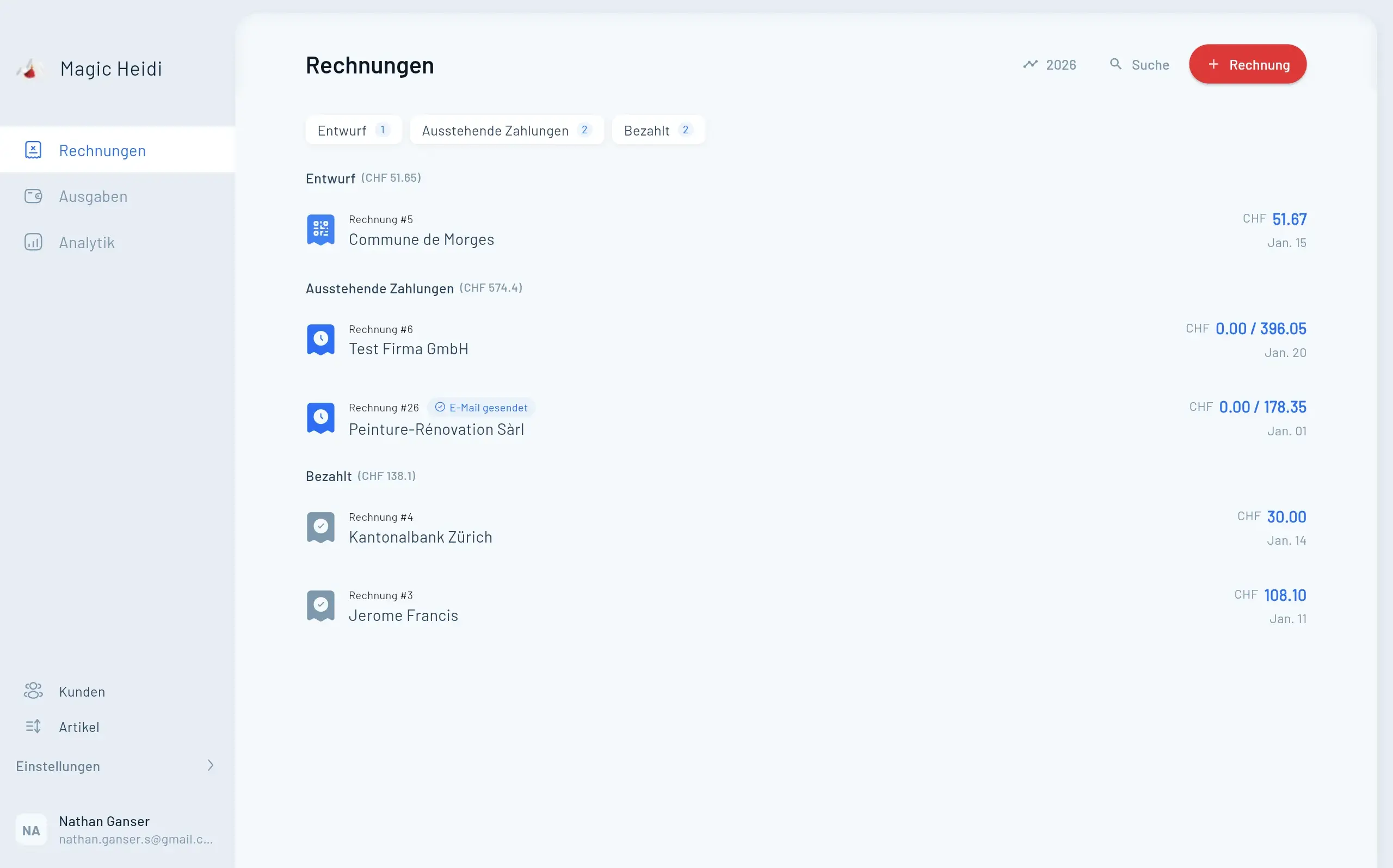
Magic Heidi unterstützt alle Preismodelle
Erfassen Sie Zeit auch bei Projektpreisen (Sie brauchen die Daten), erstellen Sie professionelle QR-Rechnungen, verwalten Sie Ausgaben und überwachen Sie die Projektrentabilität – alles in einer Schweiz-konformen Plattform.
- ⏱️Multiplattform-Zeiterfassung
Desktop-, Mobile- und Web-Apps synchronisieren automatisch
- 🧾Schweizer QR-Rechnungen
Konforme Fakturierung in Sekunden, jedes Preismodell
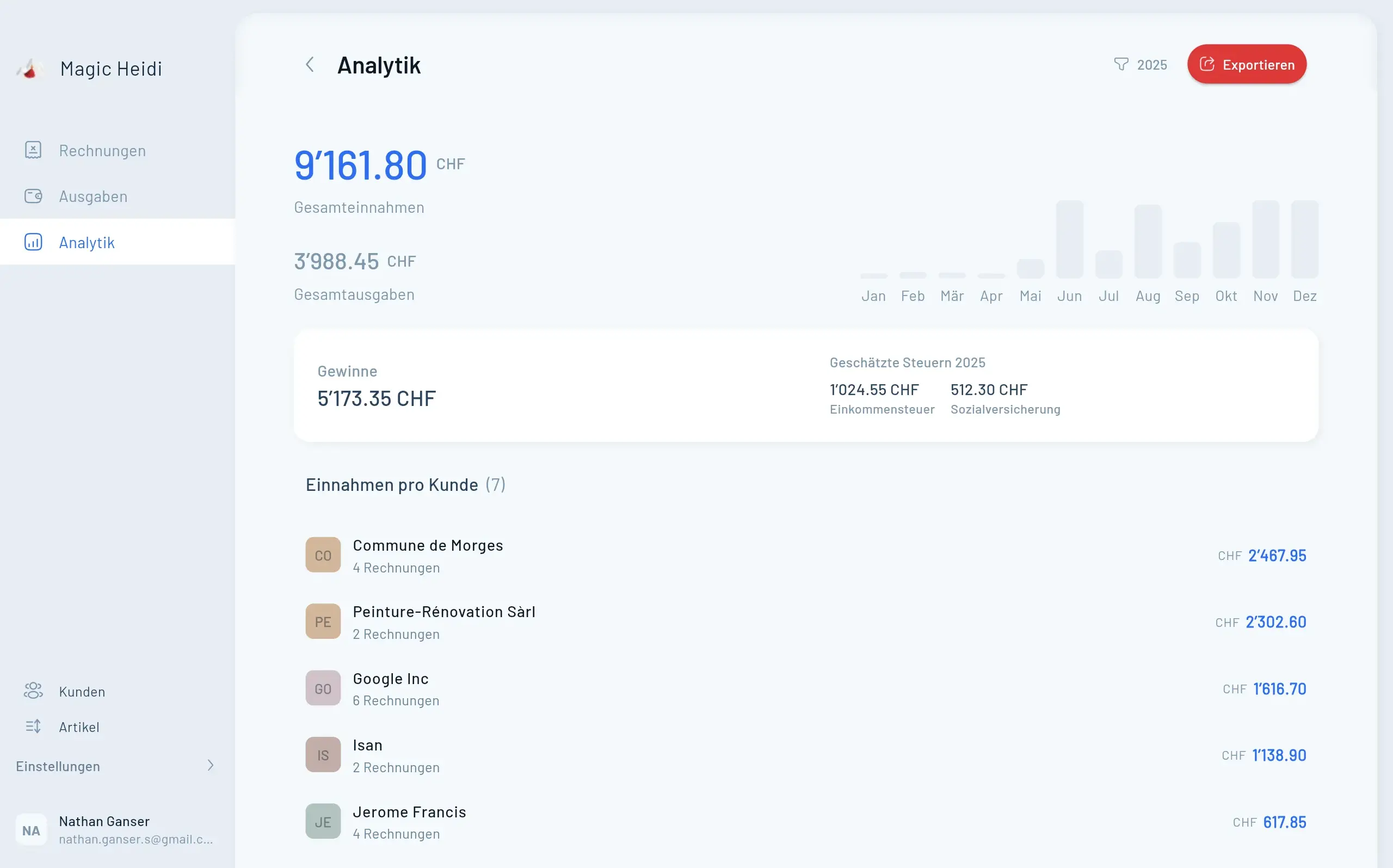
- 📊Projektrentabilität
Stundenbudgets setzen, um Scope Creep zu verhindern
- 💰Flexible Preisgestaltung
Stündlich, fix oder gemischt – fakturieren Sie wie Sie wollen
- Rechnung #3
Magic Heidi
CHF 500
Jan 29
- Rechnung #2
Webbiger LTD
CHF 2000
Jan 24
- Rechnung #1
John Doe
CHF 600
Jan 20
Das Fazit
Es gibt kein universelles «Niemals» oder «Immer» bei der Freelance-Preisgestaltung.
Stundenabrechnung schützt Anfänger, während sie akkurates Schätzen lernen. Projektpreise belohnen erfahrene Profis für Effizienz. Wertbasierte Preise richten Sie auf höchstem Niveau am Kundenerfolg aus.
Die echten Schlüssel zum Preisstrategie-Erfolg:
- Scope Creep verhindern durch klare Verträge und Kommunikation
- Ihr Modell weiterentwickeln mit wachsender Erfahrung und Datenbasis
- Tarife kalkulieren basierend auf Ihren realen Kosten und gewünschtem Einkommen
- Kunden wählen, die Ergebnisse über Preis stellen
- Richtige Tools nutzen zur Rentabilitätskontrolle unabhängig vom Modell
Starten Sie, wo Sie stehen. Wenn Sie neu sind, rechnen Sie stündlich mit Projektobergrenzen ab. Tracken Sie alles. Bauen Sie Ihre Datenbasis auf. Mit wachsender Erfahrung wechseln Sie zu Modellen, die Ihre Effizienz und Expertise belohnen.
Das Ziel ist nicht, die Preismodell-Debatte zu gewinnen – es ist, das zu verdienen, was Sie wert sind, während Sie Kunden aussergewöhnlichen Mehrwert liefern. Das richtige Modell hilft Ihnen bei beidem.
Bereit, Ihre Freelance-Finanzen professionell zu managen?
Testen Sie Magic Heidi kostenlos. Schweiz-konforme Fakturierung, Zeiterfassung, Ausgabenverwaltung und Projektrentabilität – für Stunden-, Projekt- und wertbasierte Preismodelle.