 Magic Heidi
 So erstellen Sie Schweizer‑konforme Rechnungen für Revolut Business
mit Magic Heidi (Schritt für Schritt)
Schweizer‑konforme Rechnungen für Revolut Business in Minuten erstellen. Was auf eine Schweizer Rechnung gehört, wo die Revolut Zahlungsreferenz hinkommt und wie Sie mit CHF IBAN vs. Nicht‑Schweizer IBAN umgehen (QR‑Rechnung vs. internationale Bankverbindung).
Revolut Business ist ideal für Schweizer Freelancer und kleine Unternehmen mit internationaler Ausrichtung: Multiwährungs‑Konten, schnelle Währungswechsel, moderne Karten und saubere Exporte.
Aber das Rechnungswesen in der Schweiz hat sehr spezifische Anforderungen—und Revolut bringt eine zusätzliche Besonderheit: Je nachdem, wie Ihr CHF‑Konto eingerichtet ist, müssen Sie eventuell eine Zahlungsreferenz angeben, damit eingehende Überweisungen korrekt zugeordnet werden können.
Diese Anleitung zeigt Ihnen, wie Sie Schweizer‑konforme Rechnungen mit Magic Heidi erstellen – mit den richtigen Rechnungsfeldern, den richtigen Bankdaten und der richtigen Referenz, damit Kunden Sie zuverlässig in CHF bezahlen können (und Sie revisionssicher bleiben).
Hinweis: Dieser Artikel bietet allgemeine Rechnungsstellungs‑Hinweise für die Schweiz. Für MWST/TVA und grenzüberschreitende Spezialfälle bestätigen Sie Details mit Ihrer Treuhandstelle/Ihrem Treuhänder.
Warum Revolut Business Rechnungsstellung in der Schweiz schiefgehen kann
(und wie Sie es verhindern)
Zwei wiederkehrende Probleme verursachen die meisten verspäteten Zahlungen und Abstimmungs‑Probleme: fehlende Referenzen und nicht übereinstimmende Schweizer Zahlungserwartungen.
Referenz erforderlich (manchmal)
Einige Revolut CHF‑Empfangseinstellungen benötigen eine Zahlungsreferenz für korrektes Routing/Matching.QR‑Rechnungs‑Erwartungen
Schweizer Kunden erwarten oft einen QR‑Zahlteil—aber nicht alle Bankdaten sind QR‑kompatibel.Abstimmungs‑Probleme
Fehlende/bearbeitete Referenzen führen zu nicht zugeordneten Überweisungen und manuellen Nachfragen.Warum Revolut Business Rechnungsstellung in der Schweiz schiefgehen kann (und wie Sie es verhindern)
Wenn Sie an ein klassisches Schweizer Bankkonto gewöhnt sind, gehen Sie vielleicht davon aus, dass Ihre Rechnung nur eine IBAN und Ihren Firmennamen benötigt. Mit Revolut Business treten zwei häufige Probleme auf:
1) Ihr CHF‑Konto benötigt möglicherweise eine Zahlungsreferenz
Einige Revolut‑Setups (insbesondere CHF‑Empfangsdetails) können eine spezifische Zahlungsreferenz für korrektes Routing und Abstimmung erfordern. Wenn die Referenz fehlt oder falsch kopiert wird, riskieren Sie:
- Zahlungen, die ohne klare Zuordnung ankommen
- manuelle Abstimmungsprobleme
- Verzögerungen, während Sie (oder der Kunde) nachforschen
2) QR‑Rechnungs‑Erwartungen vs. Nicht‑Schweizer Bankdaten
Schweizer Kunden erwarten zunehmend einen QR‑Zahlteil (QR‑Rechnung). Aber QR‑Rechnungen haben Kompatibilitäts‑Regeln. Wenn Sie Nicht‑Schweizer Bankdaten verwenden (z.B. eine Nicht‑CH IBAN) oder Details, die nicht QR‑Rechnungs‑kompatibel sind, müssen Sie möglicherweise mit klassischen internationalen Überweisungs‑Details fakturieren statt mit einem Schweizer QR‑Code.
Magic Heidi ist für Schweizer Rechnungsstellungs‑Realitäten konzipiert, einschliesslich der Möglichkeit, Bankdaten + Zahlungsreferenz sauber auf Ihrer Rechnung anzugeben.
Schweizer Rechnungskonformität
(schnell und praktisch)
Was eine Rechnung typischerweise
- 🏷️Anbieter‑ & Kundenidentität
Vollständige rechtliche Namen und Adressen (idealerweise inklusive Land).
- 🔢Fortlaufende Nummerierung
Eindeutige, konsistente Rechnungsnummern (keine Duplikate).
- 📅Datum, Zahlungsziel, Totale
Rechnungsdatum, Fälligkeitsdatum/Zahlungsziel, klare Subtotale/Totale und Währung.
- 🧾MWST‑Klarheit (falls zutreffend)
MWST‑Nummer und Sätze/Beträge—oder eine klare Angabe, wenn keine MWST erhoben wird.
- Rechnung #3
Magic Heidi
CHF 500
Jan 29
- Rechnung #2
Webbiger LTD
CHF 2000
Jan 24
- Rechnung #1
John Doe
CHF 600
Jan 20
Schweizer Rechnungskonformitäts‑Checkliste (schnell und praktisch)
Erforderliche Rechnungselemente (Schweiz)
Eine ordentliche Schweizer Rechnung enthält typischerweise:
- Anbieter‑Details: rechtlicher Name, Adresse (und idealerweise Land)
- Kunden‑Details: Name/Firmenname und Adresse
- Rechnungsdatum
- Eindeutige, fortlaufende Rechnungsnummer (konsistentes Nummerierungssystem)
- Beschreibung der Produkte/Dienstleistungen (was Sie geliefert haben)
- Menge/Stückpreis (wo relevant)
- Subtotal / Totalbetrag
- Währung (CHF, EUR, etc.)
- Zahlungskonditionen (z.B. zahlbar innert 10 Tagen / 30 Tagen)
- Zahlungsdetails (Bankverbindung und erforderliche Referenz)
- MWST (MWST/TVA) Info falls zutreffend:
- MWST‑Nummer falls Sie MWST‑pflichtig sind
- MWST‑Satz/‑Sätze und MWST‑Betrag/‑Beträge, oder eine klare Angabe, wenn keine MWST erhoben wird (abhängig von Ihrer Situation)
Aufbewahrung: Rechnungen 10 Jahre aufbewahren
In der Schweiz sind Unternehmen üblicherweise verpflichtet, Buchhaltungsunterlagen (einschliesslich Rechnungen) 10 Jahre lang aufzubewahren. Verwenden Sie ein System, das Ihnen hilft, Rechnungen zu exportieren, zu archivieren und bei Bedarf abzurufen.
Für eine ausführlichere Checkliste siehe Magic Heidis Leitfaden:
Rechnungen für die Schweiz erstellen: Ein umfassender Leitfaden (interne Ressource).
Konforme Revolut Business Rechnungen
in Magic Heidi erstellen
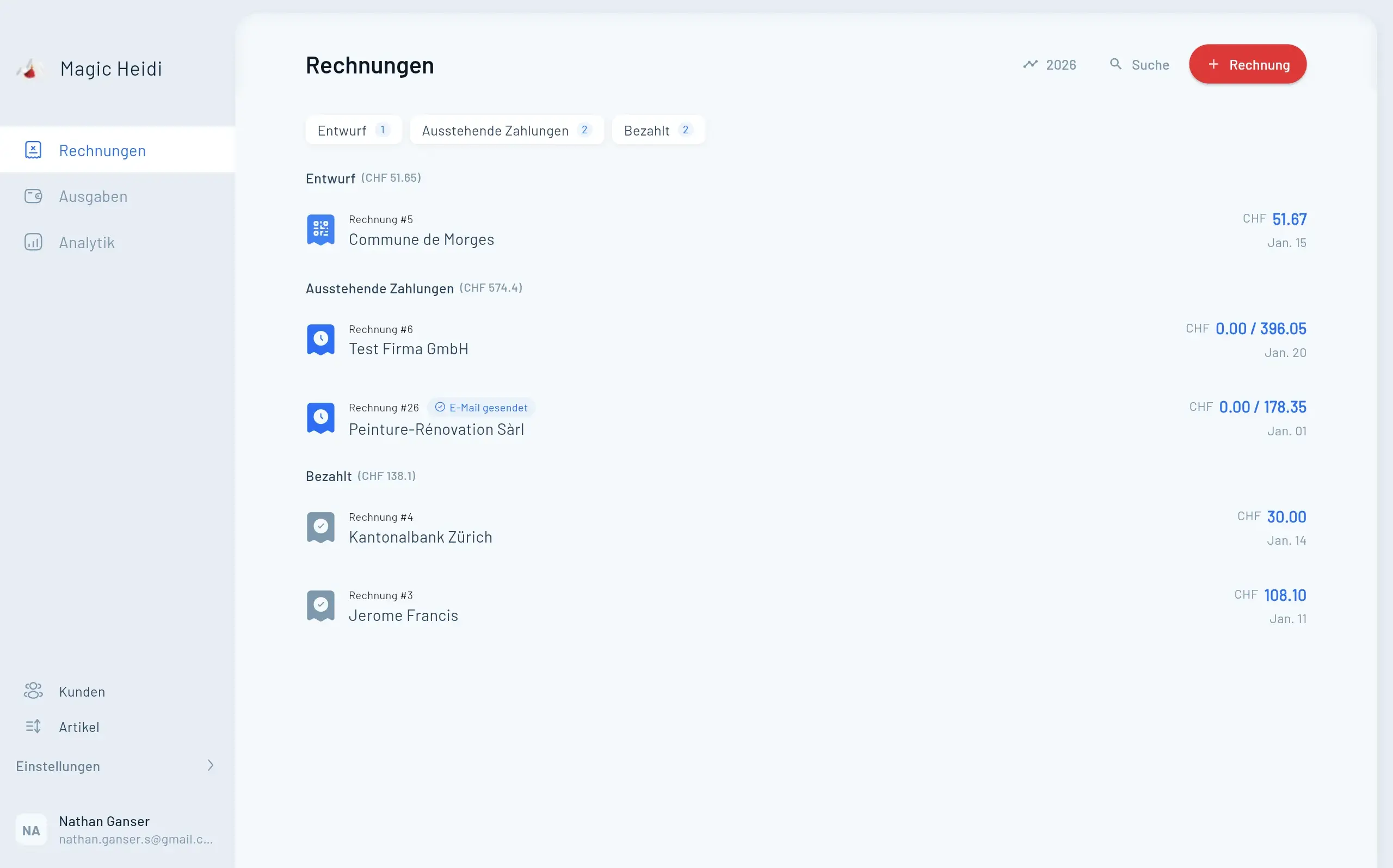
Richten Sie Ihre Firmenidentität einmal ein, fügen Sie Revolut Zahlungsdetails hinzu (einschliesslich erforderlicher Referenz) und erstellen Sie Schweizer‑konforme Rechnungen als saubere PDFs.
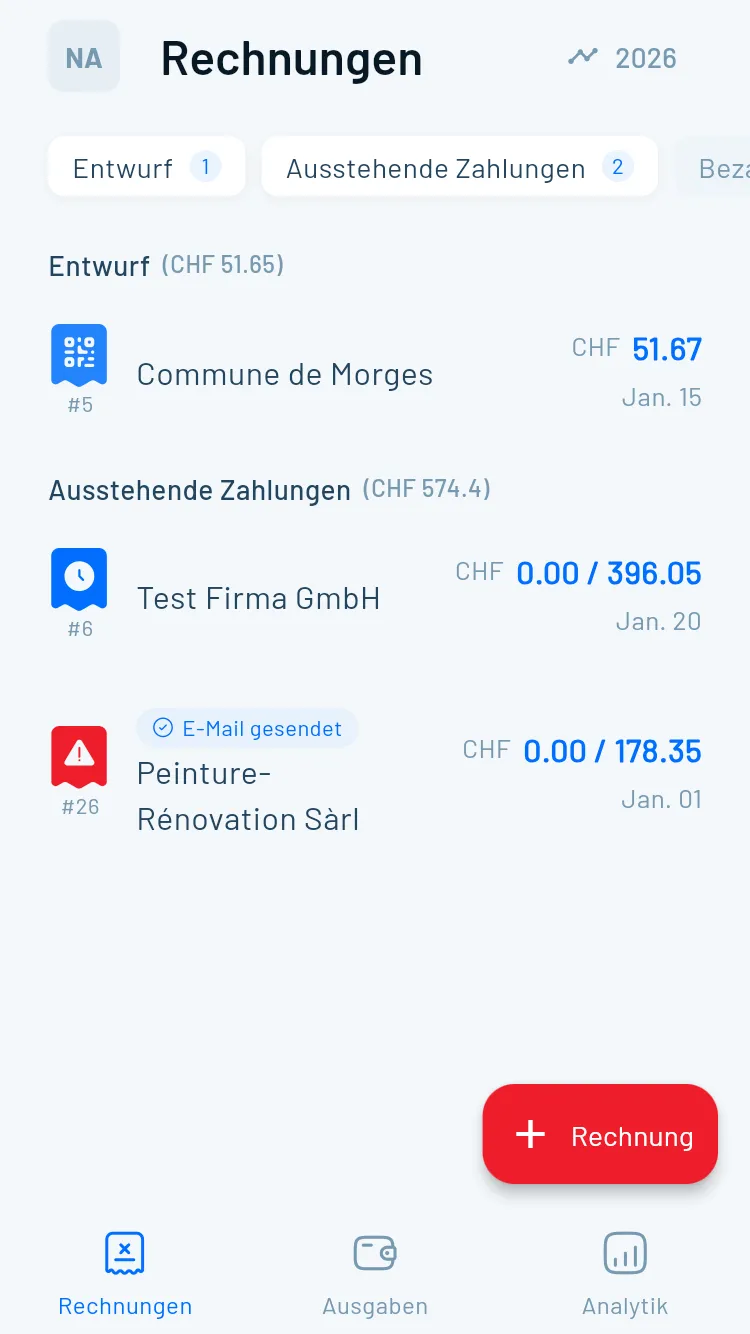
Schritt für Schritt: Konforme Revolut Business Rechnungen in Magic Heidi erstellen
Das Ziel ist einfach:
- Firmenidentität einmal einrichten
- Revolut Zahlungsdetails hinzufügen (einschliesslich erforderlicher Referenz)
- Rechnungen erstellen, die Schweizer‑erwartete Felder enthalten (und den korrekten Zahlungsabschnitt)
Schritt 1: Ihre Geschäftsdaten hinzufügen (damit jede Rechnung konsistent ist)
In Magic Heidi füllen Sie zunächst Ihr Aussteller/Anbieter‑Profil aus:
- Firmen‑/rechtlicher Name (oder Ihr eigener Name, wenn Sie Einzelunternehmer sind)
- Adresse (Strasse, PLZ, Ort, Land)
- E‑Mail / Telefon (optional aber empfohlen für Zahlungsfragen)
- MWST‑Nummer (nur wenn Sie MWST‑pflichtig sind)
Warum das wichtig ist: Schweizer Konformität bezieht sich nicht nur auf die Zahlung. Klare Anbieteridentität + konsistente Rechnungsnummerierung sind die Grundlagen, die Kunden‑Rückfragen und zukünftige Revisions‑Reibungen reduzieren.
Schritt 2: Rechnungsnummerierung konfigurieren (fortlaufend und eindeutig)
Legen Sie ein Rechnungsnummerierungs‑Schema fest, das Sie weiter verwenden werden (Beispielmuster):
2026-001,2026-002, … (Jahr + Sequenz)MH-000123(Präfix + Sequenz)
Best Practice: Vermeiden Sie es, Nummern willkürlich mitten im Jahr zurückzusetzen und vermeiden Sie Duplikate. Eine saubere Sequenz erleichtert die Buchhaltung und wirkt professionell auf Schweizer Kunden.
Schritt 3: Ihre Revolut Business Bankdaten in Magic Heidi hinzufügen
Fügen Sie nun die Zahlungsdetails hinzu, die Ihr Kunde für die Zahlung verwenden wird.
In Magic Heidi suchen Sie nach Rechnungseinstellungen wie:
- Rechnungen anpassen
- Zahlungsdetails
- Bankverbindung
Hinzufügen:
- Kontoinhaber‑Name (sollte mit Ihrem Revolut Business Profil übereinstimmen)
- IBAN (CHF IBAN, wenn Sie so CHF empfangen)
- BIC/SWIFT (falls relevant)
- Bankname (optional aber hilfreich)
- Währung (z.B. CHF)
Wichtig: Revoluts Zahlungsreferenz hinzufügen (falls erforderlich)
Wenn Revolut eine Zahlungsreferenz für eingehende Überweisungen bereitstellt (oder benötigt), fügen Sie diese in das entsprechende Zahlungsreferenz‑Feld (oder Äquivalent) in Magic Heidi ein.
Was auf der Rechnung stehen sollte (empfohlen):
- Eine klare Bezeichnung wie: Zahlungsreferenz:
XXXXXX - Eine kurze Anweisung: "Bitte geben Sie diese Referenz bei Ihrer Banküberweisung an."
Warum das zu schnellerer Zahlung führt: Kunden müssen nicht raten, wofür die Referenz ist—und Sie vermeiden nicht zugeordnete Überweisungen.
Tipp: Halten Sie die Referenz kopierbar. Vermeiden Sie Zeilenumbrüche mitten in der Referenz‑Zeichenkette.
Schritt 4: Ihre Rechnung erstellen (CHF und internationale Währungen)
Beim Erstellen einer neuen Rechnung in Magic Heidi:
- Wählen Sie den Kunden
- Fügen Sie Positionszeilen hinzu (Dienstleistungs‑/Produktbeschreibungen)
- Bestätigen Sie die Währung (CHF/EUR/USD nach Bedarf)
- Prüfen Sie Zahlungskonditionen (Fälligkeitsdatum)
- Erstellen Sie das Rechnungs‑PDF
Wie "Schweizer‑konform" im finalen PDF aussieht
Vor dem Versenden prüfen Sie, ob das PDF enthält:
- Rechnungsnummer + Datum
- Ihre vollständigen Anbieter‑Details
- Kunden‑Details
- klare Totale (und MWST‑Zeilen falls zutreffend)
- korrekte Bankdaten
- Zahlungsreferenz klar angezeigt (falls erforderlich)
Diese 20‑Sekunden‑Prüfung verhindert 80% der "können Sie die Rechnung nochmals senden?"‑Nachrichten.
QR‑Rechnung vs. internationale Überweisung:
den richtigen Zahlungsabschnitt wählen
Schweizer Kunden bevorzugen oft QR‑Zahlungen, aber Revolut Zahlungsdetails können je nach Setup klassische Überweisungs‑Anweisungen erfordern.
Wann QR‑Rechnung üblicherweise geeignet ist
Verwenden Sie einen QR‑Zahlteil, wenn Ihre CHF‑Details Schweizer/QR‑kompatibel sind und die Referenz‑Regeln QR‑Anforderungen entsprechen.
- Schweizer‑kompatible CHF Zahlungsdetails
- QR‑kompatible IBAN/Referenz‑Typ
- Funktioniert gut für Schweizer Kunden, die lokal zahlen
- Klarer, scannbarer Zahlungsablauf
Wann internationale Überweisungs‑Details zu verwenden sind
Bevorzugen Sie klassische Banküberweisungs‑Anweisungen, wenn Sie eine Nicht‑Schweizer IBAN haben oder wenn QR‑Zahlungs‑Kompatibilität unklar ist.
- Nicht‑CH IBAN (oder nicht QR‑kompatible Details)
- Internationale Kunden, die via SWIFT zahlen
- IBAN + BIC/SWIFT + Begünstigten‑Info enthalten
- Immer noch konform, wenn Rechnungsfelder vollständig sind
Häufige Sonderfälle (und wie Sie damit umgehen)
Sonderfall 1: Ihr Revolut Konto zeigt Nicht‑Schweizer Bankdaten
Wenn Revolut eine IBAN bereitstellt, die nicht Schweizer ist (Nicht‑CH), kann das Schweizer Kunden verwirren—besonders wenn sie eine QR‑Rechnung erwartet haben.
Was zu tun ist:
- In Magic Heidi wechseln Sie zu Benutzerdefinierte Bankdaten
- Fügen Sie die vollständige IBAN + BIC/SWIFT und Begünstigten‑Adresse hinzu
- Fügen Sie einen kurzen Hinweis auf der Rechnung hinzu wie:
- "Internationale Banküberweisung (SWIFT) — bitte Zahlungsreferenz angeben."
Ergebnis: Kunden können trotzdem zuverlässig zahlen, und Ihre Rechnung bleibt strukturiert und konform.
Sonderfall 2: Ihr Kunde ist ausserhalb der Schweiz
Schweizer Konformität bezieht sich auf die Rechnung, die Sie als Schweizer Unternehmen ausstellen—nicht auf den Standort des Kunden. Sie können trotzdem eine solide Schweizer Rechnung an einen internationalen Kunden ausstellen.
Tun:
- geben Sie die Währung klar an
- verwenden Sie internationale Überweisungs‑Details, wenn das für den Kunden einfacher ist
- beschreiben Sie Dienstleistungen präzise (hilfreich für grenzüberschreitende Buchhaltung)
Seien Sie vorsichtig mit MWST: Ob Sie Schweizer MWST erheben, hängt von Ihrer MWST‑Registrierung und den Ort‑der‑Leistung‑Regeln ab. Bei Unsicherheit bestätigen Sie mit Ihrem Treuhänder.
Sonderfall 3: Sie fakturieren in EUR/USD, sind aber in der Schweiz ansässig
Das ist üblich für remote‑first Unternehmen.
Best Practice:
- Stellen Sie sicher, dass die Rechnung die Währung klar angibt
- Stellen Sie sicher, dass Zahlungsdetails mit dem Währungskonto übereinstimmen, auf das Sie empfangen möchten
- Halten Sie Ihre Nummerierung, Daten und Anbieter/Kunden‑Felder konsistent (das ist der Konformitäts‑Kern)
Revolut Business unterstützt Rechnungsstellung und Zahlungen in mehreren Währungen abhängig von Methode und Setup; prüfen Sie Revoluts aktuelle Dokumentation für die aktuellen Währungsoptionen.
Sonderfall 4: Zahlungen kommen an, aber Sie können sie nicht Rechnungen zuordnen
Das liegt normalerweise an einem dieser Probleme:
- der Kunde hat die Zahlungsreferenz weggelassen
- die Referenz wurde bearbeitet/gekürzt
- Rechnungsnummer dupliziert oder unklar
- mehrere Rechnungen teilen identische Beträge und keine Referenz
Lösung:
- Machen Sie die Referenz und Rechnungsnummer gut sichtbar
- Fügen Sie eine Ein‑Zeilen‑Anweisung hinzu: "Bitte Rechnungsnummer + Zahlungsreferenz verwenden."
- Verwenden Sie Magic Heidis konsistente Nummerierung, um Mehrdeutigkeiten zu reduzieren
Revolut Business Rechnungsstellung in der Schweiz
(Magic Heidi Edition)
Was macht eine Rechnung konform in der Schweiz?
Eine Schweizer‑konforme Rechnung enthält generell Anbieter/Kunden‑Details, Rechnungsdatum, eindeutige fortlaufende Rechnungsnummer, klare Beschreibung der Waren/Dienstleistungen, Totale, Währung und (falls zutreffend) MWST‑Details. Sie sollten Rechnungen auch 10 Jahre lang aufbewahren.
Muss ich eine MWST‑Nummer (MWST/TVA) auf der Rechnung angeben?
Nur wenn Sie MWST‑pflichtig sind. Wenn Sie nicht registriert sind, zeigen Sie typischerweise keine MWST‑Nummer. MWST‑Behandlung kann je nach Szenario variieren, bestätigen Sie daher Sonderfälle mit einer Treuhandstelle.
Wo platziere ich Revoluts Zahlungsreferenz auf der Rechnung?
Platzieren Sie sie in Magic Heidis Zahlungsreferenz‑Feld (oder im Zahlungsanweisungs‑Abschnitt Ihrer Rechnung), damit sie klar auf dem PDF erscheint. Fügen Sie eine kurze Anweisung hinzu, die den Kunden bittet, sie bei der Überweisung anzugeben. Das ist besonders wichtig, wenn Revoluts CHF‑Empfangs‑Setup auf einer Referenz für korrektes Routing/Matching basiert.
Kann ich eine Schweizer QR‑Rechnung mit Revolut Business verwenden?
Manchmal—aber es hängt davon ab, ob Ihre Revolut CHF Zahlungsdetails QR‑Rechnungs‑kompatibel sind. Wenn Sie Nicht‑Schweizer Bankdaten oder Details haben, die QR‑Regeln nicht unterstützen, verwenden Sie stattdessen benutzerdefinierte/internationale Überweisungs‑Details.
Kann ich in CHF, EUR und USD fakturieren?
Ja in vielen Fällen. Ihre Rechnung sollte die Währung klar angeben und passende Zahlungsdetails bereitstellen. Revolut Business unterstützt mehrere Rechnungswährungen abhängig von Ihrem Setup und Zahlungsmethode—prüfen Sie Revoluts aktuelle Hilfe‑Dokumentation für die neuesten unterstützten Optionen.
Erstellt Revolut Business selbst Rechnungen?
Revolut kann Rechnungen für Revoluts eigene Gebühren/Kosten bereitstellen (Ihre Abonnement‑/Gebühren‑Dokumentation). Das ist etwas anderes als Verkaufsrechnungen, die Sie an Kunden senden. Für Schweizer‑Stil Verkaufsrechnungen mit den richtigen Feldern und Referenzen ist ein Rechnungs‑Tool wie Magic Heidi typischerweise die bessere Lösung.
Nächster Schritt: Revolut + Buchhaltung schmerzlos halten (optional, aber lohnenswert)
Sobald Sie konsistente Rechnungen versenden, möchten Sie wahrscheinlich die Verwaltung optimieren:
- Transaktionen aus Revolut Business für Abstimmung exportieren
- Tools via Zapier/Make verbinden, wo verfügbar
- Rechnungen und Zahlungsreferenzen konsistent halten, damit das Matching einfach ist
Wenn Revolut Ihr Hauptgeschäftskonto ist, möchten Sie vielleicht auch Magic Heidis Revolut Business Ressourcen und Integrations‑Übersicht prüfen:
- Revolut Business Übersicht (interne Ressource)
Erstellen Sie heute Ihre erste Revolut‑fertige
Schweizer Rechnung
Richten Sie Ihre Vorlage einmal ein, fügen Sie Ihre Revolut Zahlungsdetails + Referenz hinzu und versenden Sie Schweizer‑konforme PDFs in Minuten—damit Kunden schneller zahlen und Sie weniger Zeit mit Verwaltung verbringen.