 Magic Heidi
 Schweizer QR-Rechnungen mit Revolut Business erstellen (Komplette Anleitung)
Schritt für Schritt für Schweizer Selbstständige und KMU: Konforme Rechnungen mit Revolut Business erstellen, IBAN/Zahlungsreferenzen richtig einsetzen, QR-Rechnungen generieren und sich auf die strukturierte Adresspflicht ab November 2025 vorbereiten.
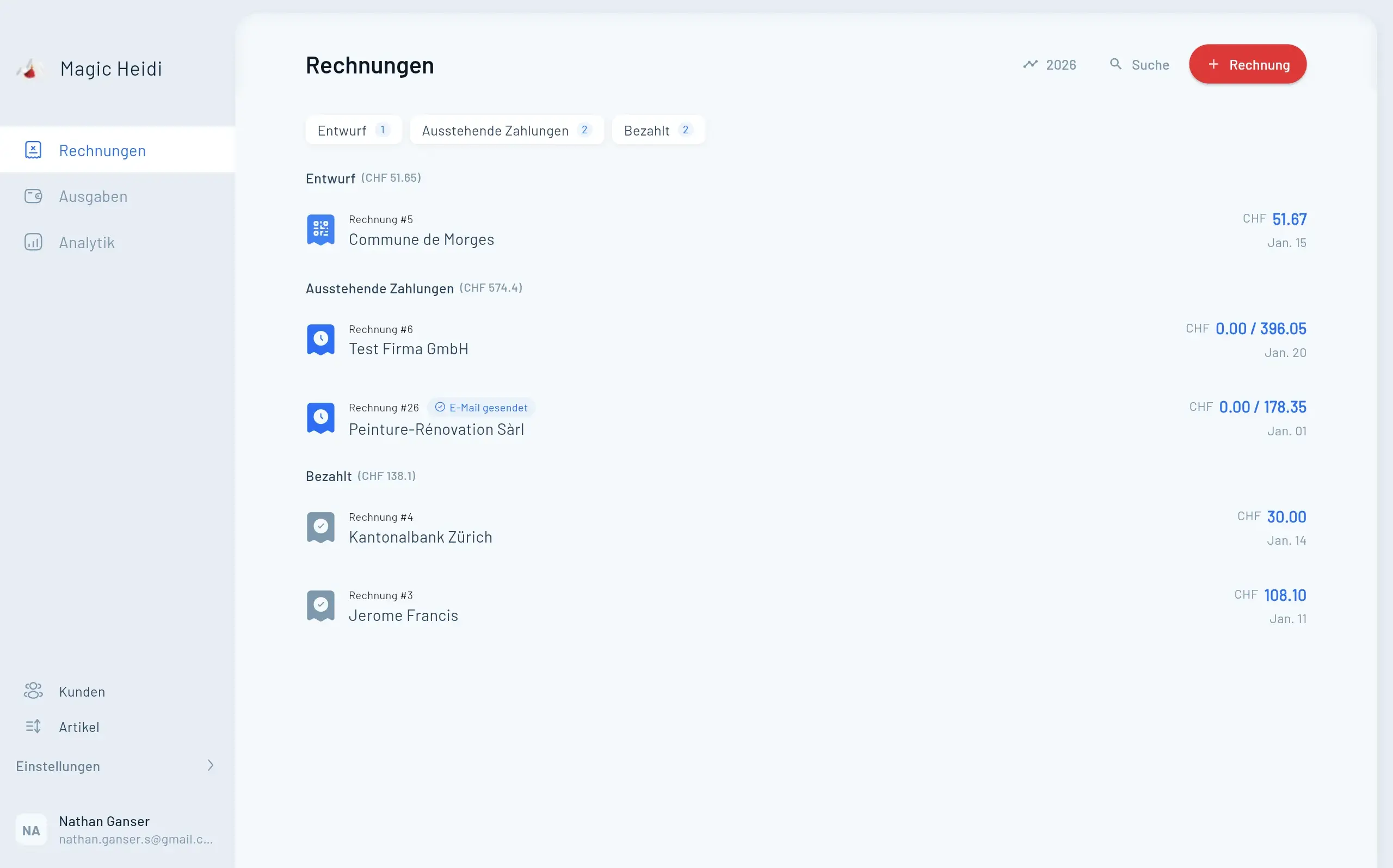
Schweizer QR-Rechnungen mit Revolut Business erstellen – Anleitung mit Magic Heidi
Wenn Sie Ihr Unternehmen in der Schweiz führen und Revolut Business für Zahlungen nutzen, kann die Rechnungsstellung unerwartet kompliziert werden – insbesondere wenn Sie konforme Schweizer Rechnungen ausstellen möchten, die Ihre Kunden einfach bezahlen können und die Sie ohne manuelle Arbeit zuordnen können.
Dieser Ratgeber erklärt Schritt für Schritt, wie Sie konforme Schweizer Rechnungen (inkl. QR-Rechnung wenn möglich) mit Revolut Business + Magic Heidi erstellen und die häufigsten Stolpersteine vermeiden: gemeinsame IBAN-Zuordnung, fehlende Zahlungsreferenzen, ausländische IBAN-Einschränkungen und die Pflicht zur strukturierten Adresse ab November 2025.
Warum Revolut Business die Schweizer Rechnungsstellung erschweren kann
Revolut Business ist beliebt für CHF- und grenzüberschreitende Transaktionen, aber Schweizer Rechnungsstellung hat einige unverzichtbare Anforderungen – besonders wenn Sie eine reibungslose Zahlungszuordnung wünschen.
Das Hauptproblem: Zahlungszuordnung hängt oft von der Referenz ab
In der Schweiz verlassen sich viele Unternehmen auf Rechnungsreferenzen, um eingehende Zahlungen automatisch dem richtigen Kunden und der richtigen Rechnung zuzuordnen.
Bei Revolut Business können CHF-Setups Reibung erzeugen, weil:
- Die Begünstigten-Kontodaten, die Sie Kunden geben, funktionieren möglicherweise nicht wie ein „klassischer Schweizer Bank-Workflow".
- In manchen Revolut-Konfigurationen wird eine Zahlungsreferenz essenziell, um sicherzustellen, dass Sie erkennen können, welche Rechnung (und von wem) bezahlt wurde – besonders bei mehreren Zahlungseingängen.
Deshalb ist eine „konforme Schweizer Rechnung" in der Praxis nicht nur eine Frage der Pflichtfelder – es geht auch um Zahlungsabstimmung (sofort wissen, was bezahlt wurde).
Checkliste „konforme Schweizer Rechnung" (vor dem Versand)
Nutzen Sie diese Checkliste, um abgelehnte Zahlungen, Kundenrückfragen und Abstimmungsprobleme zu reduzieren.
Rechnungsgrundlagen (immer erforderlich)
- Ihr Firmenname + vollständige Adresse (Verkäufer)
- Kundenname + vollständige Adresse (Käufer)
- Rechnungsdatum
- Fälligkeitsdatum / Zahlungsbedingungen
- Rechnungsnummer (eindeutig, konsistente Nummerierung)
- Leistungsbeschreibung
- Beträge (netto, MwSt. falls zutreffend, Bruttobetrag)
- Währung (üblicherweise CHF; EUR ist möglich, beeinflusst aber QR-Optionen)
Zahlungsinformationen (wo Revolut oft den Unterschied macht)
- IBAN (und ob es CH/LI oder ausländisch ist wie LT/GB)
- Kontoinhaber-Name
- Klare Zahlungsreferenz (idealerweise pro Rechnung generiert)
- Bei QR-Rechnung: korrekter Referenztyp (falls zutreffend)
QR-Rechnung-Bereitschaft (wenn Sie QR-Codes auf Schweizer Rechnungen wünschen)
Eine Schweizer QR-Rechnung hat spezifische Anforderungen (Währung, Adressen, Kontoformat, Referenztypen). Ob Sie eine gültige QR-Rechnung ausstellen können, hängt stark von Ihrer IBAN und Ihrem Setup ab.
Schnelle Entscheidungstabelle: Kann ich mit Revolut Business eine QR-Rechnung erstellen?
Das ist der schnellste Weg, um Zeit zu sparen.
| Ihre Revolut Business IBAN beginnt mit… | QR-Rechnung auf Schweizer Rechnungen? | Was tun |
|---|---|---|
| CH (Schweiz) | Ja (typischerweise) | QR-Rechnung verwenden und klare Referenz pro Rechnung angeben |
| LI (Liechtenstein) | Oft ja (kontextabhängig) | Berechtigung bestätigen; fortfahren wenn Tool gültige QR-Rechnung generiert |
| LT / GB / andere nicht-CH/LI IBAN | Meist keine QR-Rechnung | Standard-Rechnung mit Bankdaten als Text verwenden (und starke Referenz) |
Wenn Ihre IBAN nicht schweizerisch ist, ist der sicherste Ansatz, eine klassische Rechnung mit Bankdaten in Textform und einer eindeutigen Zahlungsreferenz auszustellen (damit Sie Zahlungen trotzdem zuordnen können).
Schritt für Schritt: Magic Heidi für Revolut Business-Rechnungen einrichten (Schweiz)
Magic Heidi ist für Schweizer Rechnungsworkflows konzipiert (inkl. QR-Rechnungen wo möglich). Das Setup unten konzentriert sich auf das Wichtigste für Revolut Business-Nutzer: korrekte Firmendaten, korrekte Bankdaten und Referenzen.
Tipp: Einmal einrichten, dann wird die Rechnungsstellung zu einem wiederholbaren, reibungslosen Workflow.
1) Ihre Firmendaten hinzufügen (muss korrekt sein für Compliance und QR-Rechnung)
Gehen Sie in Magic Heidi zu Ihren Rechnungseinstellungen/Profil und vervollständigen Sie:
- Offizieller Firmenname
- Firmenadresse (Strasse, Hausnummer, PLZ, Ort, Land)
- E-Mail / Telefon (optional aber hilfreich)
- UID-Nummer (falls zutreffend)
Wichtig: Strukturierte Adressfelder verwenden (nicht eine einzige Freitext-Zeile)
Das ist mehr als „nice to have". Schweizer QR-Rechnungs-Standards werden strenger: Strukturierte Adressen werden ab November 2025 obligatorisch (mehr dazu weiter unten).
Stellen Sie sicher, dass Ihre Adresse eingegeben wird als:
- Strasse
- Hausnummer
- PLZ
- Ort
- Land
Machen Sie dasselbe für Ihre Kunden wann immer möglich.
2) Ihre Revolut Business-Bankdaten hinzufügen (und entscheiden, wie Sie QR vs. Nicht-QR handhaben)
Gehen Sie zur Rechnungsanpassung/Zahlungseinstellungen und fügen Sie hinzu:
- Kontoinhaber-Name (wie in Revolut angezeigt)
- IBAN
- BIC/SWIFT (falls nötig für internationale Zahler)
- Bankname (optional aber kann Kundenfragen reduzieren)
Wenn Sie eine CH-IBAN haben (bester Fall für Schweizer Rechnungsstellung)
Sie können normalerweise eine QR-Rechnung direkt auf Ihrer Rechnung generieren (vorausgesetzt alle anderen QR-Anforderungen sind erfüllt).
Wenn Sie eine ausländische IBAN haben (LT/GB/etc.)
Erzwingen Sie keinen QR-Code, der nicht validiert wird. Stattdessen:
- Zeigen Sie Bankdaten als Text
- Verwenden Sie eine klare, eindeutige Referenz pro Rechnung (siehe nächster Schritt)
3) Starken Zahlungsreferenz-Workflow aktivieren oder festlegen (kritisch bei Revolut)
Für Revolut Business-Nutzer ist die Zahlungsreferenz der Punkt, an dem Sie Zeit gewinnen oder verlieren.
Konfigurieren Sie in Magic Heidi Rechnungsreferenzen so, dass jede Rechnung enthält:
- Eine eindeutige Referenz-Zeichenfolge (pro Rechnung)
- Eine Referenz, die Kunden einfach kopieren/einfügen können
- Eine Referenz, nach der Sie in Revolut-Transaktionen suchen können
Empfohlener Ansatz: Rechnungsnummer in die Referenz einbeziehen (und optional Kundenname oder ID), z.B.Rechnung MH-2026-00123
Das erleichtert die Identifizierung von Zahlungen selbst wenn Kunden nicht via QR zahlen.
4) Ihre Rechnungsvorlage erstellen (Schweiz-freundlich und kundenfreundlich)
Im Rechnungsanpassungsbereich festlegen:
- Standardsprache (FR/DE/EN je nach Kundenstamm)
- Standardwährung (CHF für Schweizer Kunden ist am einfachsten)
- Zahlungsbedingungen (z.B. 10 Tage, 30 Tage)
- Fussnoten (z.B. „Bitte Referenz bei Zahlung angeben.")
Ein einfacher aber wirksamer Schweizer Zahlungshinweis ist:
„Bitte verwenden Sie die auf dieser Rechnung angegebene Zahlungsreferenz, um eine korrekte Zuordnung Ihrer Zahlung sicherzustellen."
5) Ihre erste Rechnung erstellen (und prüfen, was der Kunde sehen wird)
Beim Erstellen einer Rechnung:
- Kunden auswählen (sicherstellen, dass Adresse vollständig/strukturiert ist)
- Positionen hinzufügen
- MwSt.-Behandlung bestätigen (falls zutreffend)
- Zahlungsblock bestätigen:
- QR-Rechnung erscheint nur wenn berechtigt
- Andernfalls erscheinen Bankdaten als Text + Referenz
Vor dem Versand PDF-Vorschau prüfen:
- Sind Adressen vollständig?
- Ist Währung korrekt?
- Ist Zahlungsreferenz deutlich sichtbar?
- Falls QR vorhanden: Sieht es wie ein Standard-Schweizer QR-Rechnungs-Abschnitt aus?
Häufige Sonderfälle (und wie Sie diese korrekt handhaben)
Sonderfall 1: „Meine Revolut-IBAN ist nicht schweizerisch – kann ich trotzdem eine Schweizer QR-Rechnung versenden?"
In den meisten Fällen nein – eine gültige Schweizer QR-Rechnung basiert in der Regel auf Schweizer/Liechtenstein-kompatiblen Kontodaten und QR-Rechnungs-Regeln.
Was stattdessen tun:
- Normale Rechnung (PDF) ausstellen
- IBAN/BIC als Text anzeigen
- Unmissverständliche Referenz hinzufügen
- Eventuell einzeilige Anweisung für internationale Überweisungen hinzufügen, falls Ihre Kunden im Ausland sind
Das hält Sie konform und vermeidet Zahlungsablehnungen.
Sonderfall 2: Internationale Kunden zahlen von ausserhalb der Schweiz
Selbst bei Schweizer QR-Rechnungen werden manche internationale Zahler kein QR-Scanning nutzen. Stellen Sie sicher, dass Ihre Rechnung enthält:
- IBAN
- BIC/SWIFT (hilfreich für internationale Banken)
- Kontoinhaber-Name
- Referenz
Eine QR-Rechnung kann trotzdem nützlich für Schweizer Kunden sein, während internationale Kunden die Text-Bankdaten verwenden können.
Sonderfall 3: Kunden zahlen ohne Referenz
Das passiert. Reduzieren Sie es mit:
- Fettgedrucktem Referenz-Label beim Zahlungsabschnitt
- Kurzer Anweisung in der Rechnungsfusszeile
- Konsistentem Rechnungsnummern-Schema
Falls es trotzdem passiert, können Sie normalerweise abgleichen nach:
- Betrag
- Kundenname
- Rechnungsdatum-Bereich
…aber das ist genau die manuelle Arbeit, die Sie vermeiden möchten.
Sonderfall 4: Kunden möchten am Postschalter zahlen
Schweizer Zahlungsworkflows und AML-Überlegungen erfordern zunehmend vollständige Empfängerinformationen. Praktisch:
- Stellen Sie sicher, dass Ihre Empfängeradresse vollständig und korrekt formatiert ist
- Vermeiden Sie fehlendes Land/Ort/PLZ
Wenn Ihre Kunden noch auf Postschalter-Zahlungen angewiesen sind, behandeln Sie Adressvollständigkeit als obligatorisch – nicht optional.
Schweizer QR-Rechnungs-Grundlagen für Revolut-Nutzer (IBAN vs. QR-IBAN, Referenzen erklärt)
Sie müssen kein Zahlungsexperte werden – aber diese Grundlagen zu verstehen hilft Ihnen, nicht-konforme Rechnungen und fehlgeschlagene Zahlungen zu vermeiden.
IBAN vs. QR-IBAN (was ist der Unterschied?)
- IBAN: Standard-internationale Bankkontonummer für Überweisungen.
- QR-IBAN: eine spezielle IBAN, die speziell mit bestimmten QR-Rechnungs-Referenztypen verwendet wird (häufig verknüpft mit strukturierten Referenz-Workflows).
Ob Sie IBAN oder QR-IBAN verwenden sollten, hängt von Ihrem Bank-/Zahlungssetup und dem Referenztyp ab, den Sie verwenden. Wenn Sie unsicher sind, ist der sicherste Weg:
- Standard-IBAN + klare Referenz verwenden (besonders bei Revolut)
- QR-Rechnung nur verwenden, wenn Ihr Tool eine gültige QR-Rechnung für Ihr Kontosetup generiert
Referenztypen (warum sie wichtig sind)
In der Schweizer Rechnungsstellung helfen Referenzen, Zahlungen automatisch zuzuordnen. Gängige Konzepte umfassen:
- Keine Referenz (NON): am einfachsten, aber schwächere Abstimmung.
- Creditor Reference (SCOR): strukturiertes Referenzformat, das international in manchen Kontexten verwendet wird.
- QR-Referenz (QRR): wird in QR-Rechnungs-Workflows mit spezifischen Anforderungen verwendet.
Für die meisten Revolut Business-Nutzer ist das praktische Ziel:
- Eine Referenz bereitstellen, die konsistent funktioniert, klar angezeigt wird und eindeutig pro Rechnung ist.
Magic Heidis Wert hier ist operativ: Es hilft Ihnen, zu standardisieren, wie Referenzen auf Rechnungen erscheinen, damit Sie den Prozess nicht jedes Mal neu erfinden.
Kritisches Update: Strukturierte Adressen in QR-Codes werden ab November 2025 obligatorisch
Schweizer QR-Rechnungs-Standards entwickeln sich weiter. Eine der wichtigsten bevorstehenden Änderungen für „Rechnungskonformität" ist:
Ab November 2025 erfordern QR-Rechnungen strukturierte Adressen
Das bedeutet, Adressen müssen in strukturiertem Format (separate Felder) kodiert werden, nicht als unstrukturierter mehrzeiliger Freitext.
Was Sie jetzt tun sollten (damit Sie später nicht in Panik geraten):
- Stellen Sie sicher, dass Ihr Rechnungstool Adressen in strukturierten Feldern speichert:
- Strasse
- Hausnummer
- PLZ
- Ort
- Land
- Aktualisieren Sie Ihre Kundendatenbank: unvollständige Adressen bereinigen.
- Wenn Sie Adressen aus E-Mail-Signaturen kopieren/einfügen, wandeln Sie diese in strukturierte Felder um.
Warum das wichtig ist: Selbst wenn Ihre Rechnung „gut aussieht", kann eine QR-Rechnung die Validierung oder Verarbeitung nicht bestehen, wenn zugrundeliegende QR-Daten die neuen Strukturanforderungen nicht erfüllen.
Best Practices für Compliance und schnellere Zahlung (Schweiz + Revolut)
CHF als Standard für Schweizer Kunden beibehalten
CHF ist der einfachste Weg für Schweizer QR-Workflows und reduziert Kundenfragen.
Ihre Referenz unmissverständlich machen
Platzieren Sie sie:
- Im Zahlungsabschnitt
- In der Rechnungsfusszeile
- Neben der Summe (optional)
Und halten Sie die Formulierung von Rechnung zu Rechnung konsistent.
Konsistente Nummerierung verwenden und durchsuchbar halten
Ein Format wie 2026-001, 2026-002 (oder MH-2026-0001) hilft Ihnen:
- Rechnungen schnell finden
- Zahlungen schnell zuordnen
- Duplikate vermeiden
Workflow einmal validieren, dann standardisieren
„Improvisieren" Sie nicht pro Rechnung. Machen Sie ein sorgfältiges Setup, dann wiederverwenden Sie:
- dieselbe Vorlage
- denselben Zahlungsblock-Stil
- dieselbe Referenz-Logik
FAQ: Revolut Business + Schweizer Rechnungen (QR-Rechnung und Compliance)
Brauche ich auf jeder Rechnung mit Revolut Business eine Zahlungsreferenz?
Wenn Sie zuverlässige Abstimmung wünschen, ja – Sie sollten eine Zahlungsreferenz als obligatorisch behandeln. Es reduziert manuelles Abgleichen und hilft, „nicht identifizierte Zahlung"-Situationen zu vermeiden.
Kann ich eine Schweizer QR-Rechnung ausstellen, wenn meine Revolut-IBAN nicht CH/LI ist?
Typischerweise nein. Wenn Ihre Revolut-IBAN ausländisch ist (z.B. LT/GB), ist die sicherere konforme Option eine Standard-Rechnung mit Bankdaten als Text plus starke Referenz.
Was ist der Unterschied zwischen IBAN und QR-IBAN?
Eine IBAN ist die Standard-Kontonummer für Überweisungen. Eine QR-IBAN ist ein spezialisiertes Format, das in bestimmten QR-Rechnungs-Referenzszenarien verwendet wird. Ob Sie sie benötigen, hängt vom QR-Rechnungs-/Referenz-Setup ab, das Ihre Bank unterstützt.
Welche Referenz sollte ich verwenden: SCOR, QRR oder keine Referenz?
Es hängt von Ihrem Zahlungssetup und dem ab, was Ihr Rechnungstool unterstützt. Operativ ist der Schlüssel, dass die Referenz:
- eindeutig pro Rechnung ist
- klar angezeigt wird
- konsistent von Kunden bei Zahlung verwendet wird
Was genau ändert sich im November 2025 für Schweizer QR-Rechnungen?
Strukturierte Adressen werden in QR-Codes obligatorisch. Stellen Sie sicher, dass Ihr Rechnungstool und Kundenadressdaten strukturiert sind (Strasse, Nummer, PLZ, Ort, Land).
Können meine Kunden noch am Postschalter zahlen?
Oft ja, aber Postschalter-Zahlungen sind sensibler bei unvollständigen Empfängerinformationen. Um Probleme zu vermeiden, stellen Sie sicher, dass Adressen vollständig und korrekt formatiert sind.
Kann ich in EUR mit einem Schweizer Rechnungstool fakturieren?
Ja, Sie können in EUR fakturieren, aber QR-Rechnungs-/Zahlungsworkflows können sich unterscheiden. Für Schweizer Kunden bleibt CHF die einfachste und kompatibelste Wahl.
Was kostet Magic Heidi – gibt es einen kostenlosen Plan?
Magic Heidi bietet eine kostenlose Version mit begrenzter Nutzung und kostenpflichtige Pläne für laufende Rechnungsstellungsbedürfnisse. Für aktuelle Preise und Plan-Limits prüfen Sie die offizielle Preisseite.
Den versteckten Wachstumsblocker beheben: Ihre englische URL gibt 404 zurück
Falls Sie dies lesen, weil die /en/-Version des Artikels fehlte: Ein englischer-Pfad-404 kann Sie Rankings, Backlinks und Conversions kosten.
Best Practice: Veröffentlichen Sie diese englische Version unter dem beabsichtigten /en/blog/...-Pfad oder implementieren Sie eine 301-Weiterleitung zur kanonischen Live-URL und fügen Sie korrekte canonical + hreflang-Tags hinzu, wenn Sie mehrere Sprachen pflegen.
Bereit, mit Revolut Business in der Schweiz selbstbewusst zu fakturieren?
Wenn Sie Schweiz-freundliche Rechnungsstellung wünschen, die für echte Zahlungsworkflows gebaut ist – nicht nur hübsche PDFs – richten Sie Magic Heidi einmal mit Ihren Revolut Business-Daten ein, dann erstellen Sie Rechnungen, die:
- die richtigen Bankdaten enthalten
- eine klare Zahlungsreferenz anzeigen
- eine QR-Rechnung generieren, wenn berechtigt
- Sie bereit halten für November 2025 strukturierte Adress-Anforderungen
Nächster Schritt: Erstellen Sie Ihr Magic Heidi-Konto, verbinden Sie Ihre Rechnungseinstellungen und senden Sie sich selbst eine Test-Rechnung, um den vollständigen Zahlungsblock (QR vs. Nicht-QR) zu überprüfen, bevor Sie Kunden im grossen Stil fakturieren.
Magic Heidi Funktionen für Schweizer Rechnungsstellung entdecken
Rechnungsstellung, KI-Belegscanning, MwSt.-Verwaltung und Preise ansehen.